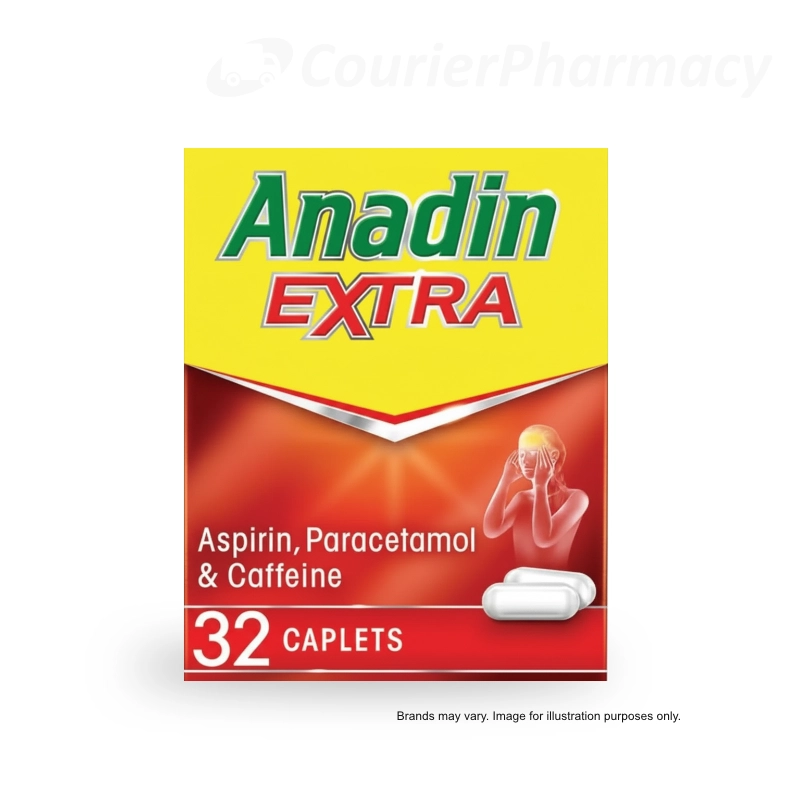
Anadin Extra is a white, capsule-shaped tablet with a break bar on one side and the letters ‘A’ and ‘E’ debossed on the other. Each tablet contains three active ingredients: aspirin 300mg (a non-steroidal anti-inflammatory drug), paracetamol 200mg (an analgesic and antipyretic), and caffeine 45mg (an analgesic adjuvant).
The combination approach means each active is present at a moderate dose rather than the full 500-600mg single-active adult dose. However, the three ingredients work through different mechanisms that add up to effective pain relief. This combination format means Anadin Extra has more contraindications and interactions than a single-active analgesic like plain paracetamol, so it’s important to check suitability before taking.
How the triple action works
Pain and inflammation involve several different chemical pathways in the body. Anadin Extra’s three active ingredients target them in different ways. In particular, aspirin blocks the cyclo-oxygenase (COX) enzymes in the body. This reduces production of prostaglandins, chemical messengers that make nerves more sensitive to pain and drive inflammation at the site of tissue damage.
Additionally, paracetamol works mainly in the central nervous system to reduce pain perception and lower fever. It’s exact mechanism is complex but includes effects on prostaglandin synthesis in the brain and on descending pain pathways.
Caffeine is not itself a painkiller but acts as an adjuvant. Clinical evidence suggests that adding around 65-200mg of caffeine to a standard analgesic dose improves pain relief for a small but meaningful proportion of patients (about 5-10% more people getting good pain relief). Anadin Extra provides 45mg of caffeine per tablet (90mg in the standard 2-tablet dose).
Furthermore, caffeine may also help by counteracting the mild drowsiness some people experience with pain. As a result, the three ingredients together often work better than any one alone at the doses provided.
A pharmacy medicine, not a prescribed one
Anadin Extra is a pharmacy medicine (P) with smaller packs available for General Sale (GSL). Firstly, this means it can be bought without a prescription, but larger packs are supplied via pharmacies where pharmacist support is available.
The pharmacist may ask a few questions to check the product is suitable. For example, about your medical history, other medicines you take, or whether you’re pregnant. However, this brief conversation isn’t a barrier. It’s there to keep you safe, particularly around aspirin’s bleeding and gastric-irritation effects, and around paracetamol overdose risk.
Furthermore, at Courier Pharmacy, if the product isn’t suitable for you, our team will explain why and suggest a better alternative. As a result, buying Anadin Extra from a pharmacy is a supported purchase rather than a prescribing event.
Key features and specifications
Active ingredients per tablet: aspirin 300mg + paracetamol 200mg + caffeine 45mg
A widely-used triple-action combination analgesic for adult pain relief
Anadin Extra Tablets are one of the UK’s most well-known combination pain-relief medicines. Firstly, each tablet contains three active ingredients working together: aspirin (300mg) which reduces inflammation and pain at its source, paracetamol (200mg) which blocks pain signals centrally in the brain and reduces fever, and caffeine (45mg) which acts as an analgesic adjuvant to enhance the pain-relieving effect and can help pain relief onset feel faster.
This triple-action combination is licensed for adult short-term relief of headache, migraine, muscular and body aches, period pain, toothache, sore throat, and the pain and fever associated with cold and flu. However, Anadin Extra is not for use in children under 16 (because aspirin carries a rare but serious risk of Reye’s syndrome in this age group), and is not suitable in pregnancy, breastfeeding, or with certain medical conditions and other medicines.
At Courier Pharmacy, Anadin Extra is supplied with pharmacist support — if you’re unsure whether it’s suitable for your symptoms, our pharmacy team will help you decide the right option.
When to see a doctor rather than self-medicate
Anadin Extra is designed for short-term relief of everyday pain. However, some symptoms need medical assessment rather than pain relief alone.
Sudden severe headache, worst-ever headache, or headache with neck stiffness, rash, confusion, or drowsiness — call 999 or go to A&E
Chest pain, breathlessness, or one-sided weakness — call 999
Pain that persists longer than 3 days for fever, or longer than 10 days for pain, despite Anadin Extra
Fever above 39°C not settling, or lasting more than 3 days
If you’re unsure whether Anadin Extra is right for you, call NHS 111 or ask the Courier Pharmacy team
Five key takeaways
Anadin Extra Tablets are a triple-action combination analgesic containing aspirin 300mg, paracetamol 200mg, and caffeine 45mg per tablet.
Licensed for adult short-term relief of headache, migraine, muscular and body aches, period pain, toothache, sore throat, and cold and flu pain and fever.
Adult dose: 2 tablets every 4 hours as needed; maximum 8 tablets in 24 hours; do not exceed the stated dose.
Not for children under 16 (aspirin carries a risk of Reye’s syndrome), and not for use in pregnancy, breastfeeding, or in patients with peptic ulcer, bleeding disorders, severe kidney/liver disease, or aspirin-sensitive asthma.
Anadin Extra is a pharmacy medicine (P) — smaller packs are available for general sale. Ask the Courier Pharmacy team if you’re unsure whether it’s suitable for you.
What is Anadin Extra Tablets: overview
Where Anadin Extra fits in over-the-counter pain relief
The UK’s pharmacy shelves offer many analgesic options, and Anadin Extra is one of a category of combination products designed to relieve everyday pain more effectively than single-active alternatives at moderate doses. In particular, plain paracetamol (500mg-1g per dose) is often the first choice because of its favourable safety profile, and plain ibuprofen (200-400mg per dose) is a common second choice where inflammation matters (muscle sprains, dental pain, period pain).
Combination products like Anadin Extra can be useful where single-active options haven’t given enough relief, particularly for tension-type headache or migraine, where the addition of caffeine to a standard analgesic may improve response for some patients. Additionally, Anadin Extra provides moderate doses of aspirin and paracetamol together rather than either at a full single-active dose, which means patients get more mechanistic coverage but at somewhat lower doses of each individual active.
Anadin Extra vs Anadin Original vs Anadin Paracetamol
The Anadin brand covers several different formulations, each with different active ingredients. In particular, Anadin Original contains aspirin 300mg + caffeine 15mg (a two-active combination without paracetamol). Additionally, Anadin Extra (this product) contains aspirin 300mg + paracetamol 200mg + caffeine 45mg. However, Anadin Paracetamol contains paracetamol 500mg alone (a single-active option). Furthermore, Anadin Joint Pain and Anadin Ultra both contain ibuprofen (200mg and 400mg respectively) — these are NSAIDs like aspirin but with different clinical profiles. Above all, these products are not interchangeable — choose based on symptoms, other medicines you take, and your medical history. As a result, if you’re unsure which Anadin (or which OTC analgesic more broadly) fits your situation, ask the pharmacist.
Short-term use only, not for chronic pain
Anadin Extra is licensed for short-term relief of acute pain and fever, not for continuous long-term use. In particular, do not take it for more than 3 days for fever, or more than 10 days for pain, without medical advice. Additionally, regular use of any painkiller (more than 15 days a month for paracetamol/NSAIDs, or 10 days a month for combination or opioid products) can cause medication-overuse headache, where the painkillers themselves become the cause of headache. However, if you have pain that keeps coming back, or that needs regular painkillers to control, this warrants medical assessment rather than continued self-medication. Above all, if your symptoms haven’t resolved after the recommended duration, contact your GP or NHS 111 for further advice.
Self-medication with pharmacist support
Because Anadin Extra is a pharmacy medicine, buying it at Courier Pharmacy comes with pharmacist support built in. In particular, the pharmacist can check that Anadin Extra is suitable for your symptoms, that you’re not taking any medicines it interacts with, and that no contraindications apply. Additionally, if a different product would be safer or more effective for your specific situation, we’ll tell you. However, self-medication is only appropriate for uncomplicated, short-term acute pain in adults who are otherwise well — if symptoms are severe, unusual, or accompanied by other concerning features (see When to see a doctor section above), medical assessment is more appropriate than any OTC painkiller. As a result, our approach is to support informed self-medication where it’s appropriate and steer you to a doctor where it isn’t.
Why choose Courier Pharmacy for your Anadin Extra Tablets
Registered, independent, and patient-led
Courier Pharmacy is a UK-registered independent pharmacy. The General Pharmaceutical Council regulates us. Firstly, even for a well-known pharmacy medicine like Anadin Extra, pharmacist support matters, because a small conversation about your medical history, other medicines, and current symptoms can prevent avoidable harm.
In adiiton, we treat every request as an opportunity to check that the product is a good fit, rather than a simple retail transaction. As a result, buying Anadin Extra from us comes with the reassurance that a UK-qualified pharmacist has thought about your specific situation.
Dr Ada Jex-Cori, our brand pharmacist
Our brand pharmacist is Dr Ada Jex-Cori. She represents the spirit of what we do. Named for Ada Lovelace, Sophia Jex-Blake, and Gerty Cori, she stands for evidence-led, unafraid-of-questions medicine. Her message is straightforward. You’re not broken. The system is. We’re here to change that.
Care that keeps showing up
Pharmacy-medicine purchases aren’t one-off transactions when done properly. Furthermore, we’re here to answer follow-up questions if the product isn’t working as expected, if you notice unexpected side effects, or if your symptoms change. Additionally, if pain isn’t responding to Anadin Extra, we can help you think about whether a different OTC option, a GP appointment, or an NHS 111 call is the right next step. However, we won’t sell repeated packs to someone who really needs medical assessment — that’s not care, it’s just retail.
Free fortnightly Sunday drop-in clinics in Derby
Healthcare shouldn’t only happen when you’re paying for it. Every fortnight, we run free drop-in talks at Insomnia Coffee Shop on Burton Road, Derby, on Sunday from 10am to 12 noon. Anyone can come. No appointment. No cost. No pressure. We cover mental health, hormones, skincare, hair loss, and more.
Buy Anadin Extra Tablets (Pharmacy Medicine) from Courier Pharmacy
Anadin Extra is a pharmacy medicine (P). You can order at courierpharmacy.co.uk. Firstly, add the pack size you need to your basket. Then, a brief pharmacist check ensures the product is suitable for you (no contraindications, no significant interactions with anything else you’re taking). Additionally, we dispense and deliver promptly.
Add the pack size you need to your basket at courierpharmacy.co.uk
A brief pharmacist suitability check may be conducted for larger P packs
Your order is dispensed and dispatched promptly
Follow the dosage instructions carefully; contact us if you have questions
If Anadin Extra isn’t the right choice for your situation, we’ll explain why and suggest better routes — a different OTC analgesic (plain paracetamol, ibuprofen, or a different combination), a visit to your GP, or NHS 111. Above all, we won’t dispense a pack that isn’t suitable for you just because it was requested.
Summary
A pharmacy-sold combination analgesic containing three complementary actives (aspirin, paracetamol, and caffeine) in one tablet.
Adult dose: 2 tablets every 4 hours as needed; maximum 8 tablets in 24 hours; not more than 3 days for fever or 10 days for pain without medical advice.
Sits within the wider Anadin range alongside Anadin Original (aspirin + caffeine), Anadin Paracetamol (paracetamol only), Anadin Joint Pain and Anadin Ultra (both ibuprofen), and Anadin Extra Soluble Tablets (dissolvable version).
Not for children under 16 (Reye’s syndrome risk from aspirin), pregnancy, breastfeeding, or patients with peptic ulcer, active gastrointestinal bleeding, aspirin-sensitive asthma, bleeding disorders, or severe kidney/liver disease.
Suitable for acute short-term pain relief but not for chronic pain — persistent pain needs medical assessment rather than repeated pain-relief use.
Active ingredients in Anadin Extra Tablets
Aspirin 300mg
Aspirin (acetylsalicylic acid) is a non-steroidal anti-inflammatory drug (NSAID). In particular, at the 300mg dose in each Anadin Extra tablet, it works by inhibiting cyclo-oxygenase (COX) enzymes, which reduces production of prostaglandins — chemical messengers that make nerve endings more sensitive to pain and drive inflammation and fever.
However, aspirin's effect on platelets (thin, sticky blood cells involved in clotting) is longer-lasting and can increase bleeding risk, which is why aspirin is contraindicated in patients with active peptic ulcer, bleeding disorders, or on anticoagulants without medical supervision. Additionally, aspirin can trigger asthma symptoms in aspirin-sensitive patients (this affects about 10-20% of adults with asthma).
Furthermore, aspirin is contraindicated in children under 16 because of the risk of Reye's syndrome — a rare but serious condition affecting the liver and brain, associated with aspirin use during viral illness. As a result, Anadin Extra is licensed for adult use only.
Paracetamol 200mg
Paracetamol (acetaminophen) is a widely-used analgesic and antipyretic. In particular, at the 200mg dose in each Anadin Extra tablet, it works mainly in the central nervous system to reduce pain perception and lower body temperature; its exact mechanism is complex but includes effects on prostaglandin synthesis in the brain and on descending pain pathways.
However, paracetamol has a narrower safety margin than commonly assumed — the standard maximum adult dose is 4g (4000mg) in 24 hours from all sources, and doses only slightly above this can cause delayed but serious liver damage.
Additionally, in Anadin Extra the paracetamol contribution across the maximum dose (8 tablets) is 1600mg — well within the 4g daily maximum — but this leaves relatively little room for adding other paracetamol-containing products like cold and flu remedies or co-codamol. Furthermore, patients with liver disease, chronic alcohol use, malnourishment, or on certain other medicines have an even narrower safety margin. Above all, do not exceed the stated dose and always check the labels of other medicines for paracetamol content.
Caffeine 45mg
Caffeine is a central nervous system stimulant included in Anadin Extra as an analgesic adjuvant — a substance that enhances the effect of another medicine without being a painkiller itself. In particular, clinical trial evidence (including a large 2014 Cochrane systematic review) shows that adding around 65-200mg of caffeine to a standard analgesic dose (paracetamol, ibuprofen, or aspirin) provides small additional pain relief for a modest but meaningful proportion of patients. However, at 45mg per Anadin Extra tablet (90mg in the standard 2-tablet dose), the caffeine content is roughly equivalent to one small cup of coffee. Additionally, if you also drink coffee, tea, or caffeinated soft drinks while taking Anadin Extra, your total caffeine intake could reach levels that cause jitters, palpitations, or difficulty sleeping. Furthermore, at very high total daily caffeine intake, caffeine can itself cause headache. As a result, be aware of caffeine from all sources while taking Anadin Extra.
What is Anadin Extra Tablets for?
Headache and tension-type headache
Anadin Extra is commonly used for adult tension-type headache — the most common headache type, typically described as a bilateral tight band or pressure sensation. In particular, its combination formula (with caffeine adjuvant) can be more effective for tension-type headache than paracetamol or aspirin alone at the doses provided.
However, occasional tension-type headache typically responds well to simple analgesics like paracetamol or ibuprofen, so Anadin Extra is often a second choice when simpler options haven't given enough relief. Additionally, frequent tension-type headache (more than 15 days a month, or requiring painkillers more than 10-15 days a month) needs GP assessment rather than repeated over-the-counter treatment because of the risk of medication-overuse headache. As a result, occasional short-term use is where Anadin Extra fits best for headache.
Migraine
Anadin Extra is also used for adult migraine attacks. In particular, aspirin at higher doses (600-900mg) is one of the recommended NICE first-line acute migraine treatments, and combination products with caffeine may improve response for some patients. However, for migraine specifically, taking the dose early in the attack works better than delayed dosing, and adding an anti-emetic (an anti-sickness medicine like buccal prochlorperazine or oral metoclopramide) may improve both the nausea and the absorption of the painkiller.
If migraine attacks are frequent (more than a few times a month) or severely disabling, GP assessment for triptan therapy or preventive treatment is warranted. Furthermore, always take Anadin Extra with plenty of water — dehydration can worsen migraine. As a result, Anadin Extra can help occasional migraine but isn't the treatment of choice for frequent or severe attacks.
Muscular pain, period pain, dental pain, sore throat
Anadin Extra is licensed for adult short-term relief of these common everyday pains. In particular, for period pain (dysmenorrhoea), NSAIDs like the aspirin component work by reducing the prostaglandins that cause uterine contractions and pain — this is why NSAID-containing products often help period pain more than paracetamol alone.
However, for muscular and joint pain, plain ibuprofen (200-400mg) may be a more direct choice as it's a stronger NSAID at a comparable dose. Additionally, for dental pain, Anadin Extra can provide temporary relief but doesn't treat the underlying cause (dental infection, abscess, or damage) — see a dentist for definitive treatment. Furthermore, for sore throat, the pain-relief effect helps symptom management while the underlying viral or bacterial cause resolves; if sore throat lasts more than a week, is very severe, or is accompanied by high fever, medical assessment matters. As a result, Anadin Extra covers a broad range of everyday adult pain but each condition has its own considerations.
Cold and flu pain and fever
Anadin Extra can help relieve the aches, pains, and fever associated with colds and flu. In particular, the combination provides analgesia (for headache, muscle aches) and fever reduction (paracetamol and aspirin both reduce fever). However, unlike some cold and flu combination products, Anadin Extra doesn't contain a decongestant (like phenylephrine or pseudoephedrine), an antihistamine, or a cough suppressant, so it doesn't address nasal congestion, runny nose, or cough.
Additionally, do not combine Anadin Extra with other cold and flu remedies that contain paracetamol or aspirin — this can cause dangerous overdose. Furthermore, most colds resolve within 7-10 days without treatment; if symptoms persist longer, worsen, or if breathing difficulty develops, medical assessment is warranted. Above all, in vulnerable groups (elderly, immunocompromised, pregnant), or when concerned about flu, contact your GP or NHS 111 early rather than relying on OTC symptomatic treatment.
What Anadin Extra isn't for
Anadin Extra is not for chronic pain, long-term pain management, or serious acute conditions. In particular, it isn't licensed for children under 16 (Reye's syndrome risk), pregnancy (especially third trimester), or breastfeeding. Additionally, it isn't a treatment for underlying conditions — it relieves symptoms while the underlying cause is being addressed separately. However, if pain is severe, sudden, unusual, or accompanied by other concerning features (fever above 39°C not settling, one-sided weakness, chest pain, worst-ever headache), Anadin Extra is not the right response — medical assessment is. Furthermore, some pain conditions (chronic back pain, arthritis, neuropathic pain, migraine prevention) need specialist assessment and different treatments. As a result, Anadin Extra is one tool for short-term acute pain in otherwise-well adults, not a solution for all pain.
How does Anadin Extra work?
Aspirin's effect on prostaglandins
Prostaglandins are chemical messengers made by nearly every cell in the body when tissue is injured or inflamed. In particular, they sensitise nerve endings to pain, drive inflammation, and (in the brain's temperature-control centre) cause fever. However, aspirin blocks the COX enzymes that make prostaglandins, so less prostaglandin is made and pain, inflammation, and fever all reduce. Additionally, this is why aspirin works at the site of tissue injury (peripheral action) as well as centrally. Furthermore, this is also why aspirin can irritate the stomach lining — some prostaglandins protect the stomach, and reducing them exposes the stomach to acid. As a result, aspirin's mechanism gives both its benefits and its risks.
Paracetamol's central action
Paracetamol's mechanism is less clear-cut than aspirin's. In particular, it appears to work mainly in the central nervous system rather than at the site of tissue injury. However, its effects include modest reduction of prostaglandin synthesis in the brain, activation of descending pain-modulation pathways, and (indirectly) effects on the endocannabinoid and serotonergic systems. Additionally, this is why paracetamol relieves pain and fever without significant anti-inflammatory effect at the site of injury. Furthermore, this different mechanism is what makes the combination with aspirin more effective than either alone — the two actives cover complementary pain pathways.
Caffeine's adjuvant effect
Caffeine isn't a painkiller in its own right but enhances the effect of paracetamol and aspirin when combined. In particular, the exact mechanism is debated but likely involves blocking adenosine receptors (adenosine is involved in pain signalling) and enhancing analgesic uptake into the brain. However, the effect size is modest — clinical evidence suggests 5-10% more patients get good pain relief with a caffeine-containing combination than with the analgesic alone. Additionally, caffeine may also counteract some of the mild drowsiness that comes with pain. Furthermore, caffeine's onset is rapid (within 30-60 minutes), which can make the analgesic combination feel like it's working faster. As a result, the adjuvant effect is real but modest — not a substitute for choosing the right underlying analgesic for the pain.
Why the combination is often better than any active alone
Aspirin, paracetamol, and caffeine each work through different pathways, so combining them at moderate doses often gives more effective pain relief than any single active at a full dose. In particular, aspirin acts at the site of tissue injury (peripheral prostaglandin blockade) while paracetamol acts centrally in the brain and spinal cord — the two together cover complementary pain-transmission mechanisms. However, adding caffeine as an adjuvant slightly boosts the analgesic effect of both. Additionally, the moderate doses of each active mean the combination doesn't provide a full single-active dose of any one component — plain paracetamol 500mg-1g may provide better paracetamol effect, and plain aspirin 600-900mg may provide better anti-inflammatory effect for specific conditions. As a result, the combination fits a middle ground: modest doses of complementary actives, useful for general everyday pain but not the strongest option for any specific pain type.
How to take Anadin Extra Tablets
Adult dose (16 years and over)
The standard adult dose is 2 tablets taken with water every 4 hours as needed for pain relief. In particular, do not take more than 8 tablets in any 24-hour period, and leave at least 4 hours between doses. However, do not take Anadin Extra continuously for more than 3 days for fever, or more than 10 days for pain, without seeking medical advice. Additionally, take the lowest dose that controls your symptoms for the shortest time necessary — Anadin Extra is designed for short-term acute pain, not for continuous long-term use. Furthermore, if pain persists or worsens despite Anadin Extra, contact your GP or NHS 111 for further assessment. Above all, do not exceed the stated dose — paracetamol overdose (even at doses only slightly above the maximum) can cause delayed and serious liver damage that may not become apparent for days.
How quickly it works
Anadin Extra usually starts to relieve pain within 30 to 60 minutes of taking it. In particular, the caffeine component may help pain relief feel like it kicks in a little faster than paracetamol or aspirin alone. However, full effect for headache or migraine may take up to 1 to 2 hours. Additionally, taking Anadin Extra with a small glass of water (and, if appropriate, some food) can reduce mild stomach irritation from the aspirin. As a result, don't take another dose within the 4-hour window even if the first dose feels slow to work.
Missed doses and stopping
Anadin Extra is taken as needed for pain rather than on a fixed schedule, so there's no 'missed dose' concern in the way there is for regular medicines. In particular, take a dose when pain returns, provided at least 4 hours have passed since the last dose and you haven't already had 8 tablets in the last 24 hours. Additionally, you can stop taking Anadin Extra whenever your symptoms have resolved — there's no need to taper. However, if you find yourself using Anadin Extra (or any painkiller) regularly for more than a few days a week, this can lead to medication-overuse headache, and it's worth speaking to your GP or pharmacist about the underlying cause of the pain.
Do not take with other paracetamol or aspirin products
Above all, do not take Anadin Extra alongside any other product containing paracetamol or aspirin, because this can quickly cause a dangerous overdose. In particular, paracetamol is present in many over-the-counter cold and flu remedies, combined analgesics, and prescription pain-relief products (co-codamol, co-dydramol) — always check the ingredients label before taking anything alongside Anadin Extra. Additionally, aspirin appears in some cardio-protective low-dose products (75mg 'baby aspirin') and other combination remedies. However, ibuprofen and other NSAIDs should also not be taken alongside Anadin Extra because of the increased risk of stomach ulcers and bleeding. As a result, if in doubt, ask your pharmacist before combining medicines.
Warnings and precautions for Anadin Extra Tablets
Not for children under 16 (Reye's syndrome risk)
Above all, Anadin Extra must not be given to children or adolescents under 16 years of age. In particular, aspirin has been linked to Reye's syndrome — a rare but serious condition affecting the liver and brain, most commonly occurring in children given aspirin during viral illness (chickenpox, flu, colds). However, Reye's syndrome carries a high mortality and long-term neurological consequences in survivors. Additionally, since the removal of aspirin from paediatric use, the incidence of Reye's syndrome has dropped dramatically. Furthermore, for pain and fever in children under 16, plain paracetamol or plain ibuprofen (both age-adjusted to the correct dose) are the standard options; ask the pharmacist for age-appropriate advice. As a result, this is an absolute contraindication, not a caution.
Pregnancy (do not use, particularly third trimester)
Anadin Extra is not recommended during pregnancy, and is contraindicated in the third trimester. In particular, aspirin in the third trimester can prolong labour and delay delivery, increase the risk of bleeding in both parent and newborn, and cause premature closure of the ductus arteriosus (an important fetal blood vessel) in the baby. However, in earlier pregnancy, aspirin has been linked to a small increased risk of miscarriage and fetal abnormalities in some studies. Additionally, paracetamol at standard doses is generally considered the safer OTC analgesic in pregnancy, though even paracetamol use in pregnancy is under ongoing epidemiological review and should be at the lowest effective dose for the shortest time. Furthermore, if you're pregnant and need pain relief, discuss with your midwife, GP, or pharmacist rather than self-medicating with Anadin Extra.
Breastfeeding (do not use)
Anadin Extra is not recommended during breastfeeding. In particular, aspirin appears in breast milk and regular high doses may affect neonatal clotting. However, aspirin also carries a theoretical risk of contributing to Reye's syndrome in breastfed infants (particularly if the infant is unwell). Additionally, caffeine also passes into breast milk and can cause irritability, poor sleep, or feeding difficulty in some infants. Furthermore, paracetamol is generally considered safe during breastfeeding at standard doses. As a result, if pain relief is needed while breastfeeding, plain paracetamol is the more appropriate OTC choice — ask your pharmacist or GP for guidance.
Peptic ulcer, gastritis, or GI bleeding history
Do not take Anadin Extra if you have an active peptic ulcer, active gastrointestinal bleeding, or a history of these conditions. In particular, aspirin reduces the stomach's protective prostaglandin production, exposing the gastric lining to damage from stomach acid. However, this can cause new ulcers, gastritis, or bleeding, particularly with regular use, higher doses, or in patients already at risk. Additionally, symptoms may not always be obvious — silent GI bleeding can present as unexplained tiredness or dark, tarry stools. Furthermore, if you have any history of peptic ulcer disease, GI bleeding, or unexplained iron-deficiency anaemia, choose a non-NSAID analgesic (plain paracetamol) instead. As a result, disclose any GI history when buying Anadin Extra.
Asthma (aspirin-sensitive)
Some patients with asthma are sensitive to aspirin and NSAIDs — this affects around 10-20% of adults with asthma. In particular, aspirin can trigger a severe asthma attack in these patients, sometimes with facial swelling (angioedema) and other allergic-type features. However, if you have asthma, especially with nasal polyps or a history of aspirin sensitivity, do not take Anadin Extra without first discussing with your GP or pharmacist. Additionally, if you've previously had any breathing, allergic, or angioedema-type reaction to aspirin, ibuprofen, or another NSAID, do not take Anadin Extra. As a result, plain paracetamol is the safer OTC analgesic choice in aspirin-sensitive asthma.
Bleeding disorders and anticoagulants
Anadin Extra is contraindicated in patients with bleeding disorders (haemophilia, other clotting factor deficiencies, thrombocytopenia). In particular, aspirin inhibits platelet function for the platelet's lifespan (about 7-10 days), which prolongs bleeding time and increases bleeding risk. However, patients on warfarin, DOACs (rivaroxaban, apixaban, edoxaban, dabigatran), or heparin should not take Anadin Extra without specific medical advice — the combination substantially raises bleeding risk. Additionally, if you're taking low-dose (75mg) 'cardio-protective' aspirin daily, adding Anadin Extra doesn't provide additional cardiac benefit but adds NSAID-related risks. Furthermore, if you notice unusual bleeding, bruising, blood in stools, or dark tarry stools while taking Anadin Extra, stop and seek medical advice. As a result, always tell the pharmacist about any anticoagulant or antiplatelet medicine you take.
Severe hepatic or renal impairment
Anadin Extra is contraindicated in severe liver disease and severe kidney disease. In particular, paracetamol clearance is reduced in liver impairment, raising the risk of hepatotoxicity even at standard doses. However, aspirin can worsen kidney function in patients with pre-existing renal disease, and NSAIDs can precipitate acute kidney injury in dehydrated patients or those on ACE inhibitors and diuretics. Additionally, if you have moderate liver or kidney impairment, medical assessment is needed before taking Anadin Extra. As a result, disclose any liver or kidney conditions when buying.
Above all, paracetamol overdose can cause delayed but serious liver damage that may not become apparent for days. In particular, symptoms in the first 24 hours may be absent or mild (nausea, vomiting, sweating), but liver damage develops over 48-96 hours and can progress to fatal liver failure without treatment. However, effective treatment (intravenous acetylcysteine) is available if given early — this is why any suspected paracetamol overdose is a medical emergency regardless of how well you feel. Additionally, overdose can occur unintentionally if paracetamol from multiple products is combined — for example Anadin Extra plus a cold and flu remedy plus co-codamol can easily exceed the safe daily maximum. Furthermore, always check the ingredients label of any medicine you take alongside Anadin Extra for paracetamol content. Above all, if you or someone else has taken more Anadin Extra than the stated dose (even a small amount above the maximum), call NHS 111 or go to A&E immediately — do not wait for symptoms to appear.
Duration of use (short-term only)
Do not take Anadin Extra for more than 3 days for fever, or more than 10 days for pain, without medical advice. In particular, ongoing pain or fever needs medical assessment rather than continued self-medication — the underlying cause matters. However, regular painkiller use can itself cause medication-overuse headache (rebound headache), where the painkiller becomes the cause of the pain. Additionally, medication-overuse headache typically develops when combination or opioid-containing painkillers are used more than 10 days per month, or when simple analgesics (paracetamol, NSAIDs) are used more than 15 days per month. Furthermore, treatment for medication-overuse headache involves withdrawal of the offending painkiller, which usually causes worse headache initially before improvement. As a result, use Anadin Extra for short courses only; if you need painkillers regularly, see your GP for underlying cause assessment.
Alcohol
Avoid alcohol while taking Anadin Extra. In particular, alcohol increases the risk of stomach irritation and bleeding from the aspirin component. However, more importantly, regular or heavy alcohol use significantly increases the risk of paracetamol-related liver damage, even at standard therapeutic doses. Additionally, chronic drinkers have a narrower paracetamol safety margin than the general population. Furthermore, if you drink alcohol regularly (more than 14 units a week), discuss suitability with the pharmacist or GP before taking any paracetamol-containing product. As a result, plain water is the better companion for Anadin Extra.
Other conditions to disclose
Additional conditions and situations warrant checking with the pharmacist before taking Anadin Extra. In particular, gout (aspirin can trigger flares), G6PD deficiency (rare inherited condition affecting red blood cells), dehydration or severe illness, uncontrolled high blood pressure, heart failure, and being underweight or malnourished. However, this list isn't exhaustive — disclose your full medical history and current medicines to the pharmacist so a proper suitability check can be done. As a result, five minutes of conversation is often what stops an unwanted interaction or complication.
Side effects of Anadin Extra Tablets
Common side effects
Anadin Extra is generally well-tolerated at recommended doses for short-term use. In particular, common side effects can include mild stomach upset, indigestion, or nausea (mostly from the aspirin component), and mild caffeine effects like feeling wakeful, restless, or noticing your heart beating faster. However, most of these are mild and settle without action. Additionally, taking Anadin Extra with a small snack rather than on an empty stomach may reduce stomach irritation. Furthermore, avoid combining with other caffeine sources (coffee, tea, energy drinks, caffeinated soft drinks) to reduce caffeine-related effects.
Less common but significant side effects
Some side effects need attention. In particular, stomach ulcers or bleeding may present as persistent stomach pain, indigestion not settling, blood in vomit (fresh red or coffee-ground appearance), or dark tarry stools — all warrant urgent medical assessment. However, aspirin-sensitivity reactions may include wheezing, facial swelling, or widespread rash — stop taking Anadin Extra and seek urgent help. Additionally, unusual bruising or bleeding may indicate a bleeding problem — mention this to your GP. Furthermore, ringing in the ears (tinnitus) can be a sign of aspirin dose approaching the toxic range — stop and seek medical advice.
Serious side effects requiring urgent help
Above all, seek urgent medical help for any of the following: signs of severe allergic reaction (facial or throat swelling, difficulty breathing, widespread rash, drop in blood pressure), signs of gastrointestinal bleeding (blood in vomit or stools, dark tarry stools, persistent severe stomach pain), signs of paracetamol overdose (nausea, vomiting, right upper abdominal pain days after taking too much), or any severe skin reaction (widespread blistering, mucosal involvement). In particular, call 999 for severe allergic or bleeding emergencies. However, for less-severe but concerning symptoms, call NHS 111 or contact your GP. As a result, don't wait things out if serious side effects appear.
Other paracetamol-containing products (critical warning)
Above all, do not take Anadin Extra alongside any other product containing paracetamol. In particular, paracetamol is present in many OTC cold and flu remedies (Beechams All-in-One, Sudafed Sinus, Lemsip products, Night Nurse, etc), other combination analgesics (Solpadeine, Panadol Extra, Migraleve, Syndol), and many prescription pain products (co-codamol, co-dydramol, Kapake, Tramacet). However, combining these can quickly cause paracetamol overdose — even at doses only slightly above 4g/day, delayed liver damage can occur. Additionally, always read the label of any medicine you take alongside Anadin Extra to check paracetamol content. As a result, if in doubt, ask the pharmacist to check compatibility.
Other NSAIDs (aspirin, ibuprofen, naproxen, diclofenac)
Do not take Anadin Extra alongside other NSAIDs including ibuprofen (Nurofen), naproxen, diclofenac, or additional aspirin. In particular, combining NSAIDs increases the risk of stomach ulcers, GI bleeding, kidney problems, and other side effects without providing additional pain relief benefit. However, this includes topical NSAID gels like ibuprofen gel or Voltarol gel — while lower absorption than oral, these still add to the total NSAID load. Additionally, low-dose (75mg) 'cardio-protective' aspirin taken daily for heart-attack or stroke prevention is a specific medical situation — Anadin Extra doesn't replace this cardiac protection and shouldn't be added without medical advice. Furthermore, COX-2 selective inhibitors (celecoxib, etoricoxib) are also NSAIDs and should not be combined. As a result, choose only one NSAID at a time.
Anticoagulants and antiplatelets
Do not take Anadin Extra alongside warfarin, DOACs (rivaroxaban, apixaban, edoxaban, dabigatran), heparin, clopidogrel, ticagrelor, prasugrel, or dipyridamole without medical advice. In particular, all these medicines affect blood clotting or platelet function, and combining with aspirin substantially raises bleeding risk. However, the risk affects both minor bleeding (bruising, nose bleeds) and major bleeding (GI, intracranial). Additionally, warfarin patients also have a specific interaction where paracetamol at regular doses (2g/day or more) can gradually raise the INR — this is why regular INR monitoring matters if paracetamol use is prolonged. Furthermore, always tell the pharmacist about all anticoagulant and antiplatelet medicines you take.
Methotrexate
Do not take Anadin Extra alongside methotrexate (used for rheumatoid arthritis, psoriasis, some cancers). In particular, aspirin reduces methotrexate excretion by the kidneys, raising methotrexate levels and toxicity risk. However, methotrexate toxicity can affect the liver, bone marrow, and lungs and can be severe. Additionally, if you take methotrexate, discuss any need for analgesia with your specialist or GP — safe alternatives exist. As a result, this combination should be avoided.
Corticosteroids
Combining Anadin Extra with oral corticosteroids (prednisolone, hydrocortisone, dexamethasone) increases the risk of stomach ulcers and GI bleeding. In particular, both classes independently affect the gastric lining, and the combination compounds the risk. However, if you're on regular oral steroids, discuss any pain-relief needs with your GP; a gastroprotective proton pump inhibitor may be advised, or a non-NSAID analgesic (plain paracetamol) may be preferred.
Other significant interactions
Additional interactions warrant caution. In particular, ACE inhibitors (ramipril, lisinopril, enalapril), angiotensin receptor blockers (losartan, candesartan), and diuretics (furosemide, bendroflumethiazide) — combining with aspirin can reduce their blood-pressure-lowering effect and increase kidney risk. However, uricosuric agents used for gout (probenecid, sulfinpyrazone) — aspirin reduces their effect. Additionally, metoclopramide and domperidone (anti-sickness medicines) can speed up paracetamol absorption; cholestyramine (used for high cholesterol) can slow paracetamol absorption. Furthermore, some antiepileptic medicines (phenytoin, carbamazepine, phenobarbital) and rifampicin (an antibiotic) increase the risk of paracetamol liver toxicity. As a result, always disclose your full medication list when buying Anadin Extra.
Alcohol
Avoid alcohol while taking Anadin Extra (see Warnings section above for details). In particular, alcohol increases the risk of stomach irritation and bleeding from the aspirin component, and increases the risk of paracetamol-related liver damage. However, occasional light drinking (below 14 units per week) is unlikely to cause significant problems with short-term Anadin Extra use, but chronic or heavy drinkers should avoid entirely. As a result, plain water is the better companion.
Caffeine sources
Anadin Extra contains 45mg caffeine per tablet (90mg in a standard 2-tablet dose). In particular, if you also drink coffee, tea, or caffeinated soft drinks, your total daily caffeine intake could reach levels that cause jitters, palpitations, difficulty sleeping, or (paradoxically) headache. However, adult caffeine intake up to around 400mg per day is generally considered safe for most people, but this varies. Additionally, in pregnancy the recommended limit is 200mg per day (another reason Anadin Extra isn't recommended in pregnancy). Furthermore, reduce caffeinated drinks while taking Anadin Extra to avoid excessive total caffeine intake.
Frequently asked questions about Anadin Extra Tablets
How quickly does Anadin Extra work?
Pain relief usually begins within 30 to 60 minutes of taking Anadin Extra. In particular, the caffeine component may make onset feel faster than paracetamol or aspirin alone. However, full effect for headache or migraine may take up to 1 to 2 hours. Additionally, don't take another dose within 4 hours even if the first feels slow to work.
Can I take Anadin Extra with paracetamol or ibuprofen?
No. Anadin Extra already contains paracetamol (200mg per tablet), so adding more paracetamol from another product risks overdose and delayed liver damage. In particular, this includes cold and flu remedies, other combination analgesics, and prescription pain products like co-codamol. However, adding ibuprofen or another NSAID also isn't recommended because Anadin Extra already contains aspirin (an NSAID) — combining NSAIDs increases GI bleeding and kidney risk without added benefit. Additionally, choose one pain relief product at a time and always check labels for overlapping active ingredients.
Can I take Anadin Extra during pregnancy?
No. Anadin Extra is not recommended during pregnancy and is contraindicated in the third trimester. In particular, aspirin in late pregnancy can prolong labour, increase bleeding for parent and baby, and cause premature closure of an important fetal blood vessel. However, if you need pain relief in pregnancy, plain paracetamol at the lowest effective dose for the shortest time is generally considered the safer OTC choice. Additionally, discuss with your midwife, GP, or pharmacist rather than self-medicating.
Can I take Anadin Extra while breastfeeding?
No. Anadin Extra is not recommended during breastfeeding. In particular, aspirin passes into breast milk and can affect infant clotting, plus a theoretical Reye's syndrome risk if the infant is unwell. However, plain paracetamol is generally considered compatible with breastfeeding. Additionally, ask your pharmacist for a safer alternative if you need pain relief while breastfeeding.
Can children take Anadin Extra?
No. Anadin Extra is not for children or adolescents under 16 years of age. In particular, aspirin is contraindicated in this age group because of the risk of Reye's syndrome — a rare but serious condition affecting the liver and brain. However, for pain and fever in children under 16, plain paracetamol or plain ibuprofen (both age-adjusted to the correct dose based on the child's weight) are the standard options. Additionally, ask the pharmacist for age-appropriate advice.
What should I do if I've taken too many Anadin Extra?
Contact NHS 111 or go to A&E immediately, even if you feel well. In particular, paracetamol overdose can cause delayed but serious liver damage that may not be apparent for days — but effective treatment is available if given early. However, don't wait for symptoms to appear — early treatment is critical. Additionally, take the packaging with you so medical staff can see exactly what and how much you've taken.
How long can I take Anadin Extra for?
Do not take Anadin Extra for more than 3 days for fever, or more than 10 days for pain, without medical advice. In particular, ongoing pain or fever needs medical assessment rather than continued self-medication. However, regular painkiller use can itself cause medication-overuse headache. Additionally, if you need painkillers regularly, see your GP to look into the underlying cause.
Does the caffeine mean I should cut down on coffee?
Yes, be aware of your total caffeine intake while taking Anadin Extra. In particular, each tablet contains 45mg caffeine (90mg in a 2-tablet dose), roughly equivalent to a small cup of coffee. However, if you drink several cups of coffee or tea alongside Anadin Extra, your total daily caffeine could reach levels that cause jitters, palpitations, or difficulty sleeping. Additionally, adult caffeine intake up to about 400mg per day is generally safe, but this varies between individuals. Furthermore, reduce caffeinated drinks while taking Anadin Extra.
Can I take Anadin Extra with blood thinners?
Not without medical advice. In particular, warfarin, DOACs (rivaroxaban, apixaban, edoxaban, dabigatran), heparin, clopidogrel, ticagrelor, and other antiplatelet or anticoagulant medicines significantly increase the risk of bleeding when combined with aspirin. However, if you take any of these, ask your pharmacist for a safer analgesic — plain paracetamol is often the recommended alternative. Additionally, if you take low-dose (75mg) 'cardio-protective' aspirin, Anadin Extra doesn't replace this and shouldn't be added without medical advice.
Can I take Anadin Extra if I have asthma?
Not without checking. In particular, about 10-20% of adults with asthma are aspirin-sensitive and can have severe asthma attacks or allergic reactions to aspirin. However, if you've never taken aspirin before and have asthma (particularly with nasal polyps), ask your GP or pharmacist before trying Anadin Extra. Additionally, if you've previously reacted to aspirin, ibuprofen, or another NSAID with breathing problems, facial swelling, or rash, do not take Anadin Extra. Furthermore, plain paracetamol is generally safe in aspirin-sensitive asthma.
What's the difference between Anadin Extra and other Anadin products?
The Anadin brand includes several formulations. In particular, Anadin Original contains aspirin 300mg + caffeine 15mg (no paracetamol). However, Anadin Extra (this product) contains aspirin 300mg + paracetamol 200mg + caffeine 45mg. Additionally, Anadin Paracetamol contains paracetamol 500mg alone. Furthermore, Anadin Joint Pain and Anadin Ultra both contain ibuprofen (200mg and 400mg). As a result, these products are not interchangeable — choose based on your symptoms, other medicines, and medical history.
Can I drive after taking Anadin Extra?
Yes, Anadin Extra doesn't typically affect driving ability. In particular, none of the three actives (aspirin, paracetamol, caffeine) cause drowsiness at recommended doses. However, if you notice any side effects that could affect concentration or reaction time (dizziness, ringing in the ears, blurred vision, restlessness from caffeine), don't drive until they resolve. Additionally, the underlying pain condition (severe migraine, for example) may itself affect driving ability.
Is Anadin Extra addictive?
No, Anadin Extra doesn't cause chemical dependence in the way opioid painkillers can. In particular, none of the three actives cause physical dependence at therapeutic doses. However, regular use can lead to medication-overuse headache — a form of rebound headache where the painkiller itself becomes the cause of the pain. Additionally, if you find yourself using Anadin Extra (or any painkiller) regularly, see your GP about the underlying cause. Furthermore, caffeine withdrawal (headache, fatigue) can occur if you stop suddenly after regular use, but this is mild and short-lived.
Can I take Anadin Extra if I have high blood pressure?
Discuss with the pharmacist before taking. In particular, NSAIDs like aspirin can raise blood pressure slightly and reduce the effectiveness of some blood-pressure medicines (ACE inhibitors, angiotensin receptor blockers, diuretics). However, short-term occasional use is unlikely to cause significant problems for most patients with well-controlled hypertension. Additionally, if your blood pressure is not well-controlled, or if you're on multiple blood-pressure medicines, plain paracetamol may be a safer choice.
How does the aspirin in Anadin Extra affect stomach ulcers?
Aspirin can cause new ulcers or worsen existing ones by reducing the stomach's protective prostaglandins. In particular, if you have a current or previous peptic ulcer, do not take Anadin Extra. However, symptoms of stomach ulcers (persistent upper abdominal pain, indigestion, feeling full early, dark tarry stools) need medical assessment rather than self-medication. Additionally, if unexplained abdominal symptoms develop while taking Anadin Extra, stop and seek medical advice.
Can I combine Anadin Extra with a hot lemon drink for a cold?
Check the ingredients of the hot lemon drink first. In particular, many branded hot lemon drinks for colds and flu contain paracetamol (Lemsip, Beechams, etc), and combining these with Anadin Extra can cause paracetamol overdose. However, plain hot lemon (lemon juice, honey, hot water) contains no medicines and is fine to combine. Additionally, always read the ingredients label of any cold and flu product before adding Anadin Extra.
Do I need to eat before taking Anadin Extra?
Not strictly, but taking Anadin Extra with a small snack or after food may reduce aspirin-related stomach irritation. In particular, patients with sensitive stomachs may find this helps. However, avoid alcohol as a beverage with Anadin Extra (increases stomach and liver risk). Additionally, water is the best companion.
Do I need a prescription for Anadin Extra from Courier Pharmacy?
No, Anadin Extra is a pharmacy medicine (P), not a prescription-only medicine. In particular, smaller pack sizes (up to 16 tablets) are General Sale List (GSL), available at any retailer. However, larger packs are supplied through pharmacies with pharmacist support. Additionally, our pharmacy team can help you decide whether Anadin Extra is right for you, without needing a prescription.
Disclaimer
Disclaimer: This information is for education only and isn't a substitute for personal medical advice. Always follow the packaging directions, and ask your pharmacist or GP if you're unsure whether Anadin Extra is suitable for you.
National Institute for Health and Care Excellence (2023) Headaches in over 12s: diagnosis and management. NICE guideline CG150. Available at: https://www.nice.org.uk/guidance/cg150