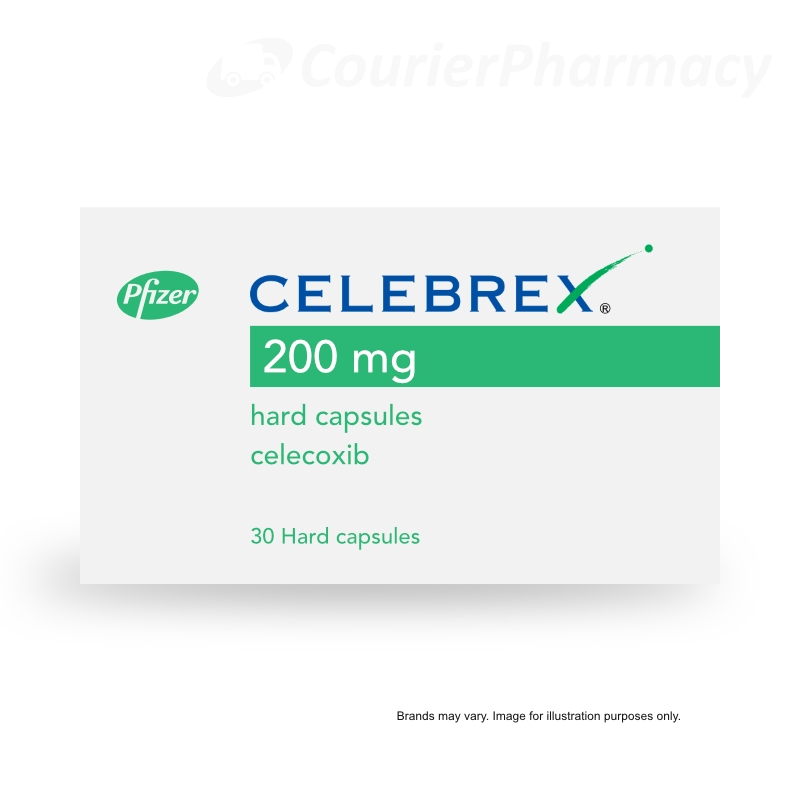
A COX-2 selective NSAID used for arthritis pain and inflammation, with a lower risk of gastric ulcers than older NSAIDs.
Celecoxib 200mg capsules are issued by UK clinicians at Courier Pharmacy after a careful consultation that includes cardiovascular and kidney risk assessment.
Celecoxib 200mg capsules are a prescription COX-2 selective NSAID used to relieve pain and inflammation in osteoarthritis, rheumatoid arthritis, and ankylosing spondylitis. Each capsule contains celecoxib 200mg. Most people take it once daily, although some treatment plans use divided doses instead.
Packs often contain 28 or 30 capsules, which usually works out as around a four-week supply. So, it fits neatly into a monthly repeat schedule when your prescriber recommends ongoing treatment.
Celecoxib works a bit differently from older NSAIDs such as ibuprofen or naproxen. Traditional NSAIDs block both COX-1 and COX-2 enzymes. COX-2 drives inflammation, while COX-1 helps protect the stomach lining. Because celecoxib targets COX-2 more selectively, it aims to reduce arthritis pain with a lower risk of stomach ulcers and bleeding for some people.
However, every option comes with trade-offs. Celecoxib may carry a small extra cardiovascular risk in some patients. For that reason, your prescriber should weigh up your heart and circulation risk factors before starting treatment.
At Courier Pharmacy, a UK-registered prescriber reviews your medical history and current medicines before issuing celecoxib. We also look at cardiovascular risk factors and possible interactions. If you live with chronic pain conditions, we can talk through whether celecoxib fits your wider plan or whether a different approach makes more sense.
Features and specifications
Active ingredient: Celecoxib 200mg
Form: Hard capsule
Pack size: Typically 28 or 30 capsules
Class: COX-2 selective NSAID (coxib)
Prescription status: Prescription Only Medicine (POM)
Typical use: Once daily, or 100mg twice daily (as directed)
Storage: Store below 30°C in the original packaging
Additional information
Quantity
1 x 30, 2 x 30, 3 x 30
MOJO WISDOM
Take control of your health by understanding your condition and what this medication is doing for you.
READ:
More information about this treatment.
UK-based doctors and pharmacists
Discreet and Confidential
UK-based doctors and pharmacists
Free, Expert Advice
No video link provided.
No video link provided.
UK-based doctors and pharmacists
Free, expert advice
Discrete and confidential
Fast delivery
Giving you trusted clinical advice for over 40 conditions
A UK regulated pharmacy providing safe, effective treatments online since 2014
When you need an NSAID for chronic inflammatory pain but the gastric side effects of ibuprofen, naproxen, or diclofenac have been a problem, celecoxib is the selective COX-2 inhibitor that offers anti-inflammatory pain relief with a significantly lower risk of stomach ulcers and gastrointestinal bleeding. For osteoarthritis, rheumatoid arthritis, ankylosing spondylitis, and other chronic inflammatory conditions, celecoxib has carved out a specific clinical position over the past 25 years.
At Courier Pharmacy, we believe pain care should suit the person, not the marketing budget. Whether you’re managing osteoarthritis flares, rheumatoid arthritis, ankylosing spondylitis, gout, dysmenorrhoea, or post-operative pain where the gastric side effects of conventional NSAIDs have been a problem, this page is here to help you decide whether Celecoxib 200mg capsules fit your situation, and how to use them well.
Five key takeaways
Celecoxib 200mg Capsules is a UK Prescription Only Medicine (POM) in the selective COX-2 inhibitor class of NSAIDs, licensed for osteoarthritis, rheumatoid arthritis, and ankylosing spondylitis in adults.
Selective COX-2 inhibition produces anti-inflammatory and analgesic effects with a significantly lower risk of upper gastrointestinal ulcers and bleeding compared to conventional non-selective NSAIDs (ibuprofen, naproxen, diclofenac).
Standard adult dose: 200mg once daily or 100mg twice daily for osteoarthritis; 100 to 200mg twice daily for rheumatoid arthritis; 200mg once or twice daily for ankylosing spondylitis. Maximum daily dose is 400mg.
Cardiovascular safety considerations are real and apply to all NSAIDs, with celecoxib carrying a small but documented increase in cardiovascular event risk that is comparable to diclofenac and higher than naproxen at usual doses. The CLASS and PRECISION trials inform current prescribing.
Use the lowest effective dose for the shortest necessary duration. Celecoxib is appropriate for patients who need anti-inflammatory treatment and have specific reasons to avoid conventional NSAID gastrointestinal effects.
Treatment dosage Celecoxib 200mg capsules
The usual recommended daily dose for osteoarthritis is 200mg taken once daily or in two divided doses. For some patients with inadequate symptom relief, the dose can be increased to 200mg twice daily. If there’s no improvement after two weeks at the higher dose, other treatment options should be considered.
For rheumatoid arthritis, the initial recommended daily dose is 200mg taken in two divided doses (100mg twice daily), which may be increased to 200mg twice daily if needed. For ankylosing spondylitis, the typical dose is 200mg once daily or in two divided doses, with a maximum of 400mg daily.
Because the cardiovascular risks of celecoxib increase with dose and duration, the shortest duration possible and the lowest effective daily dose should always be used. Your prescriber should re-evaluate the need for treatment periodically, especially in osteoarthritis, where flares may be intermittent rather than continuous.
The capsules can be taken with or without food, though taking them with food may reduce mild gastric upset. Swallow them whole with a glass of water. If you miss a dose, take it when you remember, unless it’s nearly time for the next one. Don’t double up.
Overview of Celecoxib 200mg capsules
Five things worth knowing:
Celecoxib is COX-2 selective, which is the main reason it exists.
It’s part of the “coxib” class, which also included rofecoxib (withdrawn from the market) and etoricoxib.
It contains a sulphonamide group, so people with severe sulpha allergies should avoid it.
Long-term use requires regular review of cardiovascular and kidney risk.
It works as well as other NSAIDs for pain, with a different side-effect profile rather than a clearly stronger one.
Celecoxib was developed in the late 1990s as part of a wave of COX-2 selective NSAIDs designed to reduce the gastric side effects that have long plagued NSAID use. The class hit a major bump when rofecoxib (Vioxx) was withdrawn worldwide in 2004 over cardiovascular safety concerns. Celecoxib survived that review but now carries strong, dose-dependent cardiovascular warnings.
The PRECISION trial, a large randomised study published in 2016, compared celecoxib with ibuprofen and naproxen in patients with arthritis and cardiovascular risk. Celecoxib at moderate doses was non-inferior to the older NSAIDs for cardiovascular safety, and had a lower rate of serious gastrointestinal events. This reframed celecoxib as a reasonable option when both factors need balancing, rather than a clear winner or loser.
For people living with conditions like fibromyalgia, hypermobility, or chronic fatigue, NSAID choice is often a balancing act. Celecoxib’s gentler GI profile makes it useful for people who can’t tolerate traditional NSAIDs, particularly those on SSRIs or low-dose aspirin where bleeding risk is already raised. Our prescribers will talk through these factors with you.
The 200mg dose is the standard adult starting point. Higher doses don’t reliably give more benefit and do increase risk, so dose escalation is rarely the right move; switching strategy usually is.
Finally, celecoxib is not a quick painkiller. It can ease acute pain within hours of the first dose, but its full anti-inflammatory effect builds over a week or two. If you need fast relief while waiting, paracetamol or topical NSAIDs can fill the gap.
Why choose Courier Pharmacy for Celecoxib 200mg capsules
NSAID choice is rarely simple. Celecoxib offers a real GI advantage, but it carries cardiovascular and kidney considerations that need to be weighed up properly. At Courier Pharmacy, your prescription is reviewed by a UK-registered prescriber who looks at your full history rather than ticking boxes, and explains why celecoxib is or isn’t the right fit. If something else would suit you better, we’ll say so.
For people living with chronic pain conditions like fibromyalgia, hypermobility, or chronic fatigue, NSAID use needs to fit into a wider strategy that includes physical therapies, pacing, and other medicines. Reflux is rarely an isolated story, and neither is arthritis pain. The questions you’ve been brushed off about elsewhere are the ones we want to hear. We also have access to compounded options where excipient sensitivities are an issue, and we work as a referral partner for clinicians looking for personalised pharmacy support.
Our brand guide, Dr Ada Jex-Cori, sums up the approach better than we can: you’re not broken. The system that’s failed you might be. We do what we can do, properly, and connect you with the rest. That includes our free fortnightly drop-in clinics and talks at Insomnia in Derby, where you can ask questions face-to-face without spending a penny.
Buy Celecoxib 200mg capsules (Prescription Only) from Courier Pharmacy
Celecoxib 200mg capsules are a Prescription Only Medicine (POM) in the UK. Buying through Courier Pharmacy is straightforward and built around your time.
Here’s how it works:
Complete a quick online consultation
A UK prescriber reviews your answers
If approved, a prescription is issued
We dispense and deliver discreetly to your door
If it isn’t suitable for you, we’ll explain why and suggest the next best option.
Active ingredient in Celecoxib 200mg capsules
The active ingredient is celecoxib, a diaryl-substituted pyrazole. Chemically, it contains a sulphonamide group, which is clinically relevant because people with severe allergies to sulphonamide-containing medicines (such as some antibiotics or sulphasalazine) should not take celecoxib. A mild reaction to a sulfa antibiotic is different from a severe one; your prescriber will help judge whether it’s safe for you.
Each capsule also contains inactive ingredients such as lactose monohydrate, sodium lauryl sulfate, povidone, croscarmellose sodium, and magnesium stearate, with capsule shells made of gelatin and titanium dioxide. For people with lactose intolerance, MCAS, or specific excipient sensitivities, this matters. Our pharmacy team can help find a suitable formulation or look at alternatives where appropriate.
What are Celecoxib 200mg capsules used for?
Celecoxib 200mg capsules are licensed in the UK for symptomatic relief in osteoarthritis, rheumatoid arthritis, and ankylosing spondylitis. In osteoarthritis, the most common form of arthritis in the UK, celecoxib helps with pain, stiffness, and reduced function in affected joints, most often the knees, hips, and small joints of the hands. It doesn’t change the underlying joint degeneration; it just makes living with it more bearable.
In rheumatoid arthritis, an autoimmune condition causing joint inflammation, celecoxib is used alongside disease-modifying drugs (DMARDs) like methotrexate to help manage pain and morning stiffness. It is not a substitute for DMARDs, which actually slow the disease.
In ankylosing spondylitis, a form of inflammatory arthritis primarily affecting the spine, celecoxib helps reduce pain and stiffness, particularly the back pain that often disturbs sleep and limits mobility.
Celecoxib is also licensed in the UK for the symptomatic relief of pain in adult acute conditions and dysmenorrhoea, though these are less common indications and treatment is typically short-term.
How do Celecoxib 200mg capsules work?
To understand celecoxib, it helps to know what NSAIDs do generally. When tissue is damaged or inflamed, an enzyme called cyclooxygenase (COX) helps produce prostaglandins, chemicals that cause pain, swelling, and fever. NSAIDs block COX, reducing prostaglandin production and easing those symptoms.
There are two main forms of COX. COX-1 is present in many tissues all the time and helps with normal functions like protecting the stomach lining, maintaining kidney blood flow, and supporting platelets in clotting. COX-2 is mostly induced during inflammation and is the main driver of inflammatory pain. Older NSAIDs like ibuprofen and naproxen block both COX-1 and COX-2; that’s why they ease pain but also irritate the stomach, affect platelets, and can stress the kidneys.
Celecoxib selectively blocks COX-2 while leaving COX-1 mostly alone. The result is comparable pain relief with significantly less gastric irritation, ulceration, and bleeding. This is the main reason celecoxib exists and the main reason it might be chosen over a traditional NSAID for someone at high gastrointestinal risk.
The trade-off is cardiovascular. Prostaglandins produced by COX-2 in blood vessels help balance clotting and vessel tone. Blocking COX-2 selectively can tip this balance slightly toward clot formation, which is why coxibs carry an increased risk of heart attack and stroke compared to placebo, particularly at higher doses and with longer use. This is the central trade-off you and your prescriber are weighing up.
Celecoxib starts to work within a few hours, with steady levels reached over about five days. Full anti-inflammatory benefit usually takes one to two weeks. It’s processed in the liver, mainly by the CYP2C9 enzyme, which is relevant for some interactions.
How to use Celecoxib 200mg capsules
Take your celecoxib capsules as prescribed, with or without food. Swallow them whole with a glass of water. If you experience stomach upset, taking them with food can help, though celecoxib is generally gentler on the stomach than older NSAIDs.
Use the lowest effective dose for the shortest possible time. For osteoarthritis particularly, where symptoms can come and go, taking celecoxib only during flares rather than continuously is often a sensible approach. Discuss this with your prescriber.
If you miss a dose, take it when you remember, unless your next dose is nearly due. Don’t double up. Continuity matters for steady pain relief, but a single missed dose won’t derail your control.
Combine celecoxib with non-drug measures where you can. Joint-specific exercises, physiotherapy, weight management where relevant, heat or cold packs, and supportive footwear all help reduce reliance on medication. Topical NSAIDs and paracetamol can fill in for breakthrough pain without adding to systemic NSAID load. The tablet is one tool; a wider plan does the heavy lifting.
Warnings and precautions for Celecoxib 200mg capsules
Celecoxib is not suitable for everyone. Important precautions include established heart failure (NYHA II-IV), confirmed ischaemic heart disease, peripheral arterial disease, cerebrovascular disease, severe liver impairment, severe kidney impairment, active peptic ulcer or gastrointestinal bleeding, inflammatory bowel disease flare, and pregnancy from week 20 onwards. People with hypersensitivity to celecoxib, other NSAIDs, aspirin, or sulphonamides should not take it.
Cardiovascular risk is real and dose-dependent. The MHRA and EMA advise the lowest effective dose for the shortest necessary duration, particularly in people with cardiovascular risk factors (high blood pressure, high cholesterol, diabetes, smoking, family history). People with established cardiovascular disease should generally not use celecoxib.
Kidney function should be assessed before starting and periodically during treatment, particularly if you’re over 65, have any existing kidney issues, take ACE inhibitors or diuretics, or are dehydrated. NSAIDs can reduce kidney blood flow and trigger acute kidney injury in vulnerable people.
Celecoxib can cause fluid retention and raised blood pressure. If you have hypertension, your readings should be checked before starting and monitored. Some people need their antihypertensive medication adjusted.
Serious skin reactions, including Stevens-Johnson syndrome and toxic epidermal necrolysis, have been reported very rarely. Stop celecoxib and seek urgent medical help if you develop a widespread rash, blistering, or peeling skin.
In pregnancy, celecoxib should be avoided from week 20 of pregnancy onwards because of the risk of fetal kidney problems and premature closure of the ductus arteriosus. Breastfeeding should generally be avoided while on celecoxib.
Side effects of Celecoxib 200mg capsules
Common side effects (affecting up to 1 in 10 patients)
Headache
Dizziness
Nausea, abdominal pain, dyspepsia
Diarrhoea or constipation
Flatulence
Skin rash
Insomnia
Sinusitis, upper respiratory tract symptoms
Peripheral oedema (mild ankle swelling)
Hypertension (worsening or new onset)
Less common side effects
Palpitations or other cardiovascular symptoms
Worsening of heart failure
Mood changes (anxiety, depression)
Tinnitus
Mouth ulcers
Worsening of inflammatory bowel disease
Liver enzyme elevation
Acute kidney injury
Skin reactions (urticaria, photosensitivity)
Vaginitis
Rare but serious side effects
Severe cardiovascular events (myocardial infarction, stroke)
Severe gastrointestinal events (perforation, significant bleeding, ulceration)
Severe skin reactions (Stevens-Johnson syndrome, toxic epidermal necrolysis, exfoliative dermatitis)
Severe hepatic injury (acute hepatitis, hepatic failure)
Severe allergic reactions (anaphylaxis, angio-oedema)
Chest pain, breathlessness, weakness on one side, slurred speech (signs of cardiovascular event)
Severe abdominal pain, vomiting blood, black tarry stools (signs of GI bleeding or perforation)
Severe rash, blistering, peeling, or mouth ulcers
Yellowing of skin or eyes, dark urine (signs of liver injury)
Significant swelling of ankles or face, breathlessness (signs of fluid retention or heart failure)
Severe allergic reaction (swelling of face/lips/tongue, difficulty breathing)
Sudden vision changes
Severe headache with neck stiffness (rare aseptic meningitis)
Yellow Card reporting
Suspected adverse drug reactions can be reported to the MHRA via the Yellow Card scheme at yellowcard.mhra.gov.uk. Reporting helps build the safety picture for everyone.
Drug interactions with Celecoxib 200mg capsules
Celecoxib interacts with several important medicines. Combining it with other NSAIDs (including ibuprofen, naproxen, and high-dose aspirin) is generally not recommended because it adds to gastrointestinal and bleeding risk without adding benefit. Low-dose aspirin (75-100mg) used for cardiovascular protection can be continued, but the gastric benefit of choosing celecoxib partially disappears, so a PPI is often co-prescribed.
Anticoagulants like warfarin and direct oral anticoagulants increase the risk of bleeding when combined with celecoxib. Close monitoring is essential if these need to be used together. Antiplatelet medicines like clopidogrel also increase bleeding risk in combination.
Selective serotonin reuptake inhibitors (SSRIs) and serotonin-noradrenaline reuptake inhibitors (SNRIs) raise the risk of gastrointestinal bleeding when combined with NSAIDs, including celecoxib. A PPI is often added in this combination.
ACE inhibitors, angiotensin receptor blockers, and diuretics can have their blood-pressure-lowering effects reduced by NSAIDs, and the combination increases the risk of acute kidney injury, particularly in elderly or dehydrated patients.
Lithium and methotrexate levels can rise when celecoxib is added, requiring closer monitoring. Fluconazole significantly raises celecoxib levels by inhibiting CYP2C9, so the celecoxib dose may need to be halved. Rifampicin, on the other hand, reduces celecoxib levels.
Always tell your prescriber and pharmacist about everything you take, including over-the-counter medicines, vitamins, and herbal supplements. Our pharmacy team will check the full picture before issuing your prescription.
Frequently asked questions about Celecoxib 200mg capsules
What is celecoxib 200mg used for?
Celecoxib 200mg is licensed in the UK for the symptomatic relief of osteoarthritis, rheumatoid arthritis, and ankylosing spondylitis.
How is celecoxib different from ibuprofen or naproxen?
Celecoxib is COX-2 selective, while ibuprofen and naproxen block both COX-1 and COX-2. This selectivity reduces the risk of stomach ulcers and gastric bleeding, but slightly increases cardiovascular risk at higher doses.
How quickly does celecoxib work?
Pain relief can start within a few hours of the first dose. Full anti-inflammatory benefit usually builds over one to two weeks.
Can I take celecoxib long term?
Some people need long-term treatment, but it should be reviewed regularly to make sure benefits still outweigh risks, particularly cardiovascular and kidney risks. The lowest effective dose for the shortest necessary period is always the goal.
Is celecoxib safer than other NSAIDs?
It’s gentler on the stomach but carries similar or slightly higher cardiovascular risk than some traditional NSAIDs. The PRECISION trial showed it’s broadly comparable to ibuprofen and naproxen for cardiovascular safety at moderate doses.
Can I take celecoxib with low-dose aspirin?
You can if needed for cardiovascular protection, but the GI advantage of celecoxib is partly lost in combination. A PPI is usually added to protect the stomach.
Can I drink alcohol while on celecoxib?
Moderate alcohol use is generally fine, but heavy drinking increases the risk of gastric irritation and liver problems. Be sensible.
Is celecoxib safe in pregnancy?
No, particularly not from week 20 of pregnancy onwards, because of the risk of fetal kidney problems and premature closure of the ductus arteriosus.
Can I take celecoxib if I have asthma?
Be cautious. Some people with asthma, particularly those with aspirin-sensitive asthma, can have severe reactions to NSAIDs including celecoxib. Tell your prescriber if you’ve had any reaction to aspirin or other NSAIDs.
Does celecoxib raise blood pressure?
It can. Your blood pressure should be checked before starting and monitored, and some people need their antihypertensive medication adjusted.
Can I take celecoxib with paracetamol?
Yes. They work through different pathways and combining them is a sensible way to manage pain without escalating the celecoxib dose.
What’s the maximum daily dose?
400mg per day, taken as 200mg twice daily. Higher doses don’t reliably give more benefit and increase cardiovascular and kidney risk.
Can I take celecoxib if I’m allergic to sulpha drugs?
If you’ve had a severe reaction to a sulphonamide medicine, celecoxib should be avoided as it contains a sulphonamide group. A mild reaction is different; discuss with your prescriber.
Will celecoxib affect my kidneys?
NSAIDs including celecoxib can affect kidney function, particularly in older adults, those with existing kidney problems, or people on ACE inhibitors or diuretics. Kidney function should be monitored.
Can celecoxib affect my mood?
Uncommonly, low mood or anxiety have been reported. If you notice mood changes, tell your prescriber.
Should I tell my dentist or surgeon I’m on celecoxib?
Yes. NSAIDs can affect bleeding and may need to be paused around surgery. Mention it as part of your full medication list.
Is celecoxib addictive?
No. It’s not addictive and you don’t need to taper it when stopping.
Can I take celecoxib for period pain?
Celecoxib is licensed for the relief of acute pain and primary dysmenorrhoea in some products, though traditional NSAIDs like naproxen or mefenamic acid are more commonly first-line. Discuss with your prescriber.
What if celecoxib doesn’t help?
If you’ve had a fair trial (2-4 weeks at an appropriate dose) without meaningful benefit, talk to your prescriber. Switching to a different NSAID, adding physical therapy, or exploring other options may make more sense than increasing the dose.
Can I get celecoxib without a prescription?
No. Celecoxib is Prescription Only in the UK because the cardiovascular and kidney risk profile requires clinical assessment. Through Courier Pharmacy, a short online consultation is all you need.
Disclaimer: This article is for information only and isn’t a substitute for personal medical advice. Always speak to a qualified prescriber before starting or changing treatment.
More than a prescription: our community
We believe healthcare should be accessible whether or not you’re buying anything. That’s why we run free fortnightly drop-in talks at Insomnia in Derby, every other week from 12 to 1pm. Come along, ask anything from “is this normal?” to “is my current treatment still right for me?”, and have a proper conversation with someone who has time to talk.
Silverstein, F.E. et al. (2000) ‘Gastrointestinal toxicity with celecoxib vs nonsteroidal anti-inflammatory drugs for osteoarthritis and rheumatoid arthritis: the CLASS study’, JAMA, 284(10), pp. 1247-1255. Available at: https://pubmed.ncbi.nlm.nih.gov/10979111/ (Accessed: 14 May 2026).
Nissen, S.E. et al. (2016) ‘Cardiovascular safety of celecoxib, naproxen, or ibuprofen for arthritis (PRECISION)’, New England Journal of Medicine, 375(26), pp. 2519-2529. Available at: https://pubmed.ncbi.nlm.nih.gov/27959716/ (Accessed: 14 May 2026).