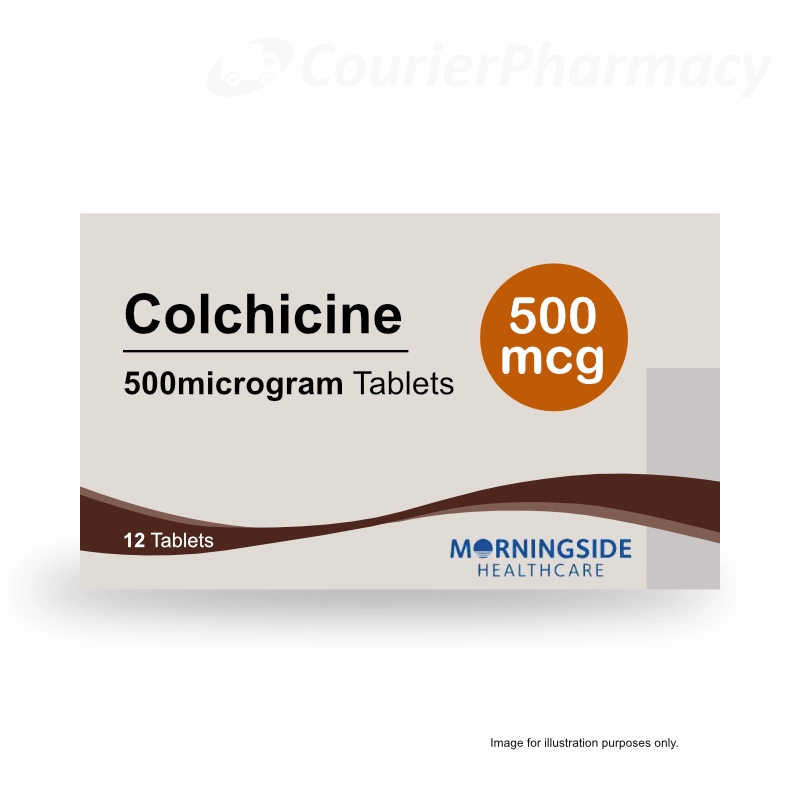
Colchicine is a plant-derived medicine originally extracted from the autumn crocus (Colchicum autumnale). So its use for gout dates back centuries. However, only in the modern era have the mechanism and safe dosing been properly understood. In particular, colchicine 500mcg tablets are a UK-licensed prescription-only medicine (POM), available as generic and various brand versions.
Furthermore, one tablet contains 500 micrograms (0.5mg) of colchicine, formulated for oral dosing at the low-dose regimens now recommended.
Where colchicine sits in gout treatment
Current UK guidelines place colchicine as one of two first-line options for acute gout, alongside an NSAID such as naproxen. So the choice between colchicine and an NSAID depends on kidney function, heart status, ulcer history, and other medicines you take. In particular, colchicine is often preferred when NSAIDs are contraindicated.
Furthermore, colchicine also has a defined prophylactic role during the first few months after starting a urate-lowering therapy (allopurinol or febuxostat). This is because lowering serum urate itself can trigger acute flares. As a result, one of these tablets serves two related but distinct purposes. Settling an attack and preventing flares while long-term treatment is bedded in.
The modern low-dose approach
Older colchicine regimens (“one tablet every 2 hours until pain relief or diarrhoea”) were notorious for causing severe gastrointestinal side effects. So current low-dose regimens (500 micrograms 2 to 4 times daily to a total of 6mg per course) give equivalent pain relief with far fewer side effects.
In particular, this modern approach comes from randomised trial evidence (Terkeltaub 2010) and is now standard in the BNF, NICE, and BSR guidance. Furthermore, sticking to this dose and not exceeding 6mg per course is the single most important safety point in colchicine prescribing.
Key features and details
Prescription-only oral tablets, licensed for acute gout and short-term gout flare prophylaxis.
Each tablet contains 500 micrograms (0.5mg) of colchicine.
First-line option in UK guidelines (NICE NG219, BSR 2017).
Modern low-dose regimen: up to 6mg total per acute course, no repeat within 3 days.
Also used for prophylaxis of gout flares during the first months of allopurinol or febuxostat.
Reviewed for suitability by a UK-qualified prescriber before every supply.
MOJO WISDOM
Take control of your health by understanding your condition and what this medication is doing for you.
READ:
More information about this treatment.
UK-based doctors and pharmacists
Discreet and Confidential
UK-based doctors and pharmacists
Free, Expert Advice
No video link provided.
No video link provided.
UK-based doctors and pharmacists
Free, expert advice
Discrete and confidential
Fast delivery
Giving you trusted clinical advice for over 40 conditions
A UK regulated pharmacy providing safe, effective treatments online since 2014
Colchicine 500mcg tablets, a proven first-line option for acute gout
Colchicine 500mcg tablets are a licensed prescription-only medicine used to settle the pain and inflammation of an acute gout attack, and to prevent flares during the first few months of urate-lowering therapy with allopurinol or febuxostat. So this is one of the two first-line options for acute gout in current UK guidelines, alongside a non-steroidal anti-inflammatory such as naproxen. In particular, colchicine suits patients who cannot take NSAIDs due to kidney disease, heart failure, peptic ulcer disease, or interaction with anticoagulants. Furthermore, at Courier Pharmacy we supply colchicine 500mcg tablets after a proper prescriber assessment, with clear dosing advice to avoid the diarrhoea and toxicity that older, higher-dose regimens caused.
When to see a doctor before starting or continuing colchicine 500mcg
Colchicine is generally well tolerated at modern low doses. However, some situations need medical attention before starting, and any of these during treatment warrants contacting your prescriber:
New or worsening diarrhoea, nausea, vomiting, or abdominal pain.
New muscle pain, weakness, or dark-coloured urine (possible rhabdomyolysis).
Numbness, tingling, or unusual weakness in hands or feet.
Unexplained bruising, bleeding, sore throat, or fever (possible bone marrow effect).
Known moderate or severe kidney or liver disease.
If you take a statin, ciclosporin, a macrolide antibiotic (clarithromycin, erythromycin), or an azole antifungal (ketoconazole, itraconazole).
If you drink grapefruit juice regularly.
Pregnancy, planning pregnancy, or breastfeeding.
If a gout attack has not settled within 7 to 10 days despite treatment.
For life-threatening symptoms, call 999. For urgent but non-emergency concerns, call NHS 111.
Five key takeaways about colchicine 500mcg tablets
Licensed UK prescription-only medicine (POM) for acute gout and short-term gout flare prevention.
First-line option alongside NSAIDs (naproxen), with a well-established evidence base and long clinical history.
Modern low-dose regimen: 500 micrograms 2 to 4 times a day for acute attacks, up to a total of 6mg per course, no repeat course within 3 days.
Prophylaxis dose (during allopurinol or febuxostat initiation): 500 micrograms once or twice daily for up to 6 months.
Narrow safety margin. So dose reduction is essential in kidney or liver disease and with several important drug interactions.
What is gout: overview
Gout is a form of inflammatory arthritis caused by monosodium urate crystals depositing in joints.
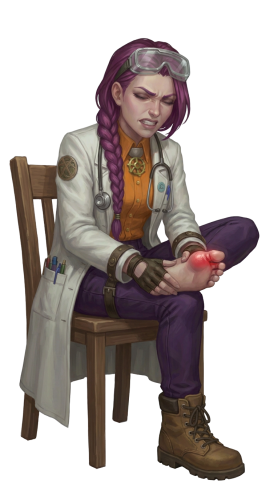
Attacks typically hit one joint at a time, most often the big toe, with rapid severe pain, redness, and swelling.
The underlying cause is a raised serum urate over years, from a mix of genetics, diet, alcohol, kidney function, and other medicines.
Long-term treatment aims to lower serum urate below 300 to 360 micromol/L to dissolve existing crystals and prevent new deposits.
Colchicine treats acute attacks and short-term flare prevention. So it does not lower urate on its own.
A brief history of colchicine
Colchicine has one of the oldest documented medical histories of any drug still in use. So extracts of the autumn crocus were used for joint pain in ancient Egypt and Greece. In particular, colchicine was isolated as a pure compound in 1820. Furthermore, its role in gout became formalised in the 20th century, and its mechanism (microtubule binding and inflammasome inhibition) was worked out from the 1960s onward. As a result, colchicine now sits alongside NSAIDs as one of the two first-line options in NICE and BSR gout guidelines.
Colchicine is not a urate-lowering therapy
Colchicine does not lower serum urate. So it treats the inflammation caused by urate crystals, rather than the underlying urate excess. In particular, long-term gout control usually needs allopurinol or febuxostat, taken daily, titrated to a serum urate target below 300 to 360 micromol/L. Furthermore, colchicine has its role during the first months of that treatment, to prevent the paradoxical flares that can happen while urate is falling.
Why “treat to target” matters
NICE NG219 (2022) recommends treating gout to a serum urate target, not to symptoms alone. So allopurinol or febuxostat is titrated up over weeks or months until serum urate sits below 300 to 360 micromol/L. In particular, colchicine 500 micrograms once or twice daily during this titration reduces the risk of a flare from the falling urate itself. Furthermore, this approach dissolves existing tophi over months to years and prevents new deposits.
Why choose Courier Pharmacy for your colchicine 500mcg tablets
Registered, independent, and patient-led
Courier Pharmacy is a UK-registered independent pharmacy regulated by the General Pharmaceutical Council (GPhC 9010051). So when you order colchicine through us, you work with a proper pharmacy team, not a warehouse. Furthermore, our independence means we can spend time on gout questions where a chain would not.
Specialist prescriber expertise
Our Superintendent Pharmacist Shazlee Ahsan holds an MSc in Endocrinology and a PGDip in Infectious Diseases. So we understand how gout sits within the wider metabolic picture: kidney function, diabetes, hypertension, cardiovascular risk, and the medicines that raise or lower serum urate. In particular, this matters for patients whose gout is one part of a bigger metabolic story rather than an isolated problem.
Dr Ada Jex-Cori, our brand pharmacist
Our brand pharmacist is Dr Ada Jex-Cori. She represents the spirit of what we do. Named for Ada Lovelace, Sophia Jex-Blake, and Gerty Cori, she stands for evidence-led, unafraid-of-questions medicine. Her message runs through everything we prescribe:
You’re not broken. The system is. We’re here to change that.
For gout patients in particular, this matters. So gout still carries an unfair stigma as a “self-inflicted” condition, when the truth is that genetics and kidney handling of urate account for most of the individual variation. Furthermore, we treat gout as the metabolic condition it is, not as a moral failing.
Care that keeps showing up
Gout treatment is a long-term project. So we are here for the follow-up questions along the way: dose adjustments, allopurinol titration, side-effect discussion, and coordination with any wider treatment plan you have with your GP. In particular, we can help make sure your acute course is safe and your prophylactic dose is right during allopurinol titration.
Buy Colchicine 500mcg Tablets (Prescription Only) from Courier Pharmacy
Colchicine is a prescription-only medicine (POM) supplied through our gout treatment pathway at courierpharmacy.co.uk. So supply always follows a clinical assessment. In particular, new patients complete a gout consultation before we dispense. However, established patients with a settled gout picture can complete a shorter reassessment.
The four steps
Complete a quick online consultation covering your gout history, current attack (if any), current urate-lowering treatment, kidney function, and other medicines.
A UK prescriber (our Superintendent Pharmacist Shazlee Ahsan or a partner prescriber) reviews your answers.
If colchicine 500mcg is clinically appropriate, a prescription is issued.
We dispense and deliver discreetly to your door.
If colchicine isn’t right for you
If our assessment shows a different approach fits your situation better, we’ll explain why and suggest the next best option. So this might mean:
An NSAID such as naproxen 500mg twice daily for an acute attack (if kidney function, heart status, and ulcer history allow).
A short course of oral prednisolone for patients who cannot take colchicine or an NSAID.
Referral to your GP for allopurinol or febuxostat initiation if you are having repeated attacks.
A serum urate check and kidney function test if you have not had one in the last 12 months.
A discussion of diet and alcohol contributors (though these are usually modest compared with genetic and kidney factors).
A rheumatology referral if the picture is unusual or the diagnosis is uncertain.
Above all, we won’t dispense a medicine that isn’t right for your situation. In short, honest guidance matters more than making the sale.
Active ingredient in colchicine 500mcg tablets
Colchicine
Each tablet contains 500 micrograms (0.5mg) of colchicine. So colchicine is the sole active ingredient. In particular, colchicine is a plant-derived alkaloid originally isolated from the autumn crocus (Colchicum autumnale). Furthermore, its anti-inflammatory action in gout comes from binding intracellular microtubules and inhibiting neutrophil migration into inflamed joints.
Other ingredients
The exact excipient list depends on the specific brand or generic dispensed. So the tablet shell typically contains lactose monohydrate, microcrystalline cellulose, magnesium stearate, and a coating of hypromellose and polyethylene glycol. Furthermore, if you have a lactose intolerance or a specific excipient allergy, tell our team before ordering so we can confirm the excipients of the brand being dispensed, or arrange a lactose-free alternative where available.
What are colchicine 500mcg tablets for?
Colchicine 500mcg tablets are licensed for two main uses in gout, and have several other well-established uses beyond the strict UK licence:
Acute gout attacks
The main use is settling the pain and inflammation of an acute gout attack. So starting colchicine at the first hint of an attack shortens the duration and reduces peak pain. In particular, colchicine works best when started within 12 to 24 hours of the attack beginning. Furthermore, later starts still help but with reduced effect.
Prophylaxis during allopurinol or febuxostat initiation
When allopurinol or febuxostat is started or titrated up, the falling serum urate can paradoxically trigger acute gout flares in the first few months. So colchicine 500 micrograms once or twice daily during this period reduces the flare risk. In particular, this is a licensed use in the UK, supported by NICE NG219 and BSR 2017 guidance. Furthermore, prophylaxis usually continues for the first 3 to 6 months of urate-lowering treatment.
Familial Mediterranean fever (FMF)
Colchicine is the cornerstone of long-term treatment for familial Mediterranean fever, a genetic auto-inflammatory condition. So it prevents the recurrent fever, abdominal, and joint attacks that characterise FMF. In particular, this is a licensed indication in the UK. Furthermore, colchicine also reduces the risk of amyloidosis in FMF.
Pericarditis (off-label)
Colchicine is now widely used off-label as an adjunct to NSAIDs for acute and recurrent pericarditis. So the evidence base (COPE, ICAP, CORP trials) is strong even though this use is not in the UK licence. In particular, colchicine reduces the risk of recurrent pericarditis when added to standard NSAID treatment. Furthermore, if colchicine has been prescribed for you for pericarditis rather than gout, this off-label use is well established.
Behcet's syndrome (off-label)
Colchicine is also used off-label in Behcet's syndrome, particularly for mucocutaneous and joint manifestations. So this is another well-established off-label use, supported by rheumatology guidelines.
Where colchicine is not the right choice
However, some situations need a different approach:
Chronic hyperuricaemia without acute attacks (needs allopurinol or febuxostat, not colchicine).
Severe kidney disease (eGFR below 10 mL/min) or dialysis.
Severe liver disease.
Anyone currently on a contraindicated interacting drug (clarithromycin, ciclosporin, some antifungals).
Anyone with a serious blood disorder (bone marrow suppression risk).
Pregnancy for acute gout (specialist input; colchicine is used long-term in FMF pregnancy under specialist care).
Adolescents under 18 (specialist rheumatology).
How do colchicine 500mcg tablets work?
Colchicine works through several distinct mechanisms. So its anti-gout effect comes from stopping the inflammatory cascade that urate crystals trigger, not from removing the crystals themselves. In particular, six mechanisms are worth understanding.
Binding to intracellular microtubules
Colchicine binds directly to tubulin, the building-block protein of microtubules inside cells. So it stops microtubule assembly and disrupts the internal scaffolding of cells that depend on it, particularly white blood cells. Furthermore, this is the fundamental mechanism from which most of colchicine's effects flow. As a result, colchicine's targets are the cell processes that need working microtubules: cell division, immune cell movement, and inflammasome assembly.
Reducing neutrophil migration into joints
Neutrophils are the white blood cells that flood into a gouty joint and cause most of the pain and swelling. So by disrupting their microtubules, colchicine reduces their ability to move, adhere to blood vessel walls, and cross into the joint. In particular, this cuts off the inflammatory cascade at its source. Furthermore, this is why colchicine works best when started early in an attack, before the neutrophil influx is fully established.
Inhibiting the NLRP3 inflammasome
When urate crystals are engulfed by immune cells, they activate the NLRP3 inflammasome, a molecular complex that releases interleukin-1-beta (IL-1beta), the master switch of gout inflammation. So colchicine's microtubule effect also blocks NLRP3 inflammasome assembly and IL-1beta release. In particular, this inflammasome mechanism explains why colchicine works across several inflammatory conditions (gout, familial Mediterranean fever, pericarditis) that share NLRP3 activation. Furthermore, this is now recognised as one of the most important mechanisms of colchicine's anti-inflammatory action.
Reducing crystal-induced cell adhesion
Colchicine reduces the expression of adhesion molecules (selectins, integrins) on neutrophils and vascular endothelium. So neutrophils stick less well to blood vessels near an inflamed joint. In particular, this compounds the migration-blocking effect. Furthermore, this reduces the initial recruitment of inflammatory cells to the crystal deposits.
Timing and the window of best effect
Colchicine's anti-gout effect depends on catching the neutrophil influx early. So starting colchicine within 12 to 24 hours of an attack beginning gives the best results. In particular, later starts still help but the pain relief is slower and less complete. Furthermore, this is why patients with recurrent gout are often given a supply to keep at home for early self-start at the first symptoms.
Absorption, metabolism, and elimination
Colchicine is absorbed from the gut and metabolised in the liver by CYP3A4. So drugs that block CYP3A4 (clarithromycin, azole antifungals, some HIV drugs) raise colchicine levels and toxicity risk. In particular, colchicine is also a substrate for P-glycoprotein (P-gp), so P-gp inhibitors (ciclosporin, verapamil) also increase colchicine levels. Furthermore, colchicine is largely eliminated through bile and, to a lesser extent, the kidneys. As a result, both liver and kidney impairment slow its clearance, which is why dose reduction is essential in both.
How to take colchicine 500mcg tablets
The basic pattern for acute gout
Adults 18 and over: 500 micrograms (one tablet) 2 to 4 times daily as soon as the attack begins.
Continue until symptoms settle or a total dose of 6mg (12 tablets) is reached for the course.
Do not exceed 6mg total per course.
Do not repeat a course within 3 days.
Swallow the tablet whole with a glass of water.
Can be taken with or without food.
The basic pattern for prophylaxis (allopurinol or febuxostat cover)
Adults 18 and over: 500 micrograms once or twice daily.
Usually continued for the first 3 to 6 months of urate-lowering treatment.
Your prescriber will tell you when to stop.
Timing options
For an acute attack, take the first dose as soon as symptoms begin. So starting within 12 to 24 hours gives the best results. In particular, patients with recurrent gout often keep a supply at home so they can start early. Furthermore, for prophylaxis, morning dosing is common but not required.
Grapefruit and grapefruit juice
Avoid grapefruit and grapefruit juice while taking colchicine. So grapefruit inhibits the CYP3A4 enzyme that clears colchicine, which raises blood levels and increases toxicity risk. In particular, even a modest daily amount of grapefruit juice can be enough to cause a problem.
Storage
Store below 25 degrees Celsius in a dry place.
Keep in the original blister pack.
Keep out of the sight and reach of children (colchicine is highly toxic in overdose).
Do not use after the expiry date on the pack.
Treatment dosage colchicine 500mcg
The standard acute gout dose (adults)
The current BNF and SmPC dose for an acute gout attack is 500 micrograms 2 to 4 times daily, until symptoms are relieved or a total dose of 6mg is reached. So most patients need no more than 6 to 12 tablets across a course of a few days. In particular, do not repeat the course within 3 days. Furthermore, if diarrhoea develops, stop the course early, and if pain persists after 6mg is reached, contact your prescriber for the next step.
The prophylaxis dose during allopurinol or febuxostat initiation
The prophylactic dose is 500 micrograms once or twice daily. So this is used for up to 6 months while allopurinol or febuxostat is being titrated and while serum urate is falling toward target. In particular, this prevents the paradoxical flare of acute gout that can happen in the first months of urate-lowering treatment. Furthermore, the prophylactic dose should not exceed 500 micrograms twice daily without prescriber review.
Dose in kidney impairment
Colchicine dose must be reduced in kidney impairment. So the current BNF and SmPC advise:
eGFR 30 to 50 mL/min: use with caution; reduce dose or extend the dose interval, and monitor closely.
eGFR 10 to 30 mL/min: reduce dose; use with particular care.
eGFR below 10 mL/min or dialysis: avoid.
So your prescriber will check your recent renal function before issuing a prescription. In particular, poor kidney clearance is the commonest reason for colchicine toxicity in UK practice.
Dose in liver impairment
Colchicine is metabolised in the liver via CYP3A4. So in significant liver impairment, dose reduction is required. In particular, in severe liver impairment, avoid colchicine altogether. Furthermore, tell your prescriber if you have known liver disease (alcohol-related, viral hepatitis, autoimmune).
If a dose is missed
For an acute gout course, take the missed dose as soon as you remember, provided the total daily dose does not exceed 4 tablets. However, if it is close to the next planned dose, skip the missed one. So never double up to catch up. Furthermore, if you are on prophylaxis and miss a dose, skip it and take the next dose at the usual time.
When to stop and see your prescriber
Stop colchicine and contact your prescriber urgently if:
You develop diarrhoea, nausea, or vomiting.
You develop muscle pain, weakness, or dark urine.
You develop unusual bruising, bleeding, sore throat, or fever.
You develop numbness or tingling in hands or feet.
The gout attack does not settle within 7 to 10 days.
Warnings and precautions for colchicine 500mcg tablets
Narrow therapeutic index and overdose risk
Colchicine has a very narrow safety margin between an effective dose and a toxic one. So overdose can be fatal, and there is no specific antidote. In particular, doses above 6mg per course, or accidental ingestion of multiple tablets (especially by a child), can cause serious multi-organ toxicity. Furthermore, keep colchicine well out of reach of children and away from anyone who might take it in error.
Kidney impairment
Colchicine is partly cleared by the kidneys, so kidney impairment increases the risk of toxicity. So dose reduction is essential in moderate-to-severe kidney impairment, and colchicine should be avoided in severe kidney impairment (eGFR below 10 mL/min) or on dialysis. In particular, tell your prescriber about any known kidney condition, and make sure your recent renal function test is available.
Liver impairment
Colchicine is metabolised in the liver via CYP3A4. So dose reduction is required in significant liver impairment, and colchicine should be avoided in severe liver impairment. In particular, tell your prescriber about any liver disease (alcohol-related, viral hepatitis, autoimmune).
Elderly patients
Older patients are more sensitive to colchicine toxicity, partly because kidney function declines with age. So a lower dose or an extended dose interval may be needed. In particular, this is important for patients over 70.
Blood disorders
Colchicine can cause bone marrow suppression at high doses or with prolonged use. So it is used with caution in patients with pre-existing blood disorders. In particular, contact your prescriber if you develop unusual bruising, bleeding, sore throat, or fever while on colchicine.
Neuromuscular effects
Colchicine can cause a reversible neuromyopathy, particularly in patients with kidney impairment or those on interacting drugs. So contact your prescriber if you develop muscle weakness, muscle pain, or numbness and tingling in the hands or feet. In particular, this is more likely when colchicine is combined with a statin.
Pregnancy and breastfeeding
Colchicine crosses the placenta and passes into breast milk. So use during pregnancy or breastfeeding requires specialist input. In particular, colchicine is used long-term in familial Mediterranean fever during pregnancy under specialist supervision, but for acute gout in pregnancy other options are usually preferred. Furthermore, if you are pregnant, planning pregnancy, or breastfeeding, tell your prescriber before starting.
Grapefruit
Avoid grapefruit and grapefruit juice. So grapefruit blocks the CYP3A4 enzyme that metabolises colchicine, which raises colchicine levels and increases toxicity risk.
Side effects of colchicine 500mcg tablets
Most colchicine side effects are dose-related and settle when the dose is reduced or the course finishes. However, some are worth knowing about:
Common effects
Diarrhoea (often the first sign of too much colchicine).
Nausea
Vomiting
Abdominal pain or cramps.
Loss of appetite.
Managing common effects
Diarrhoea: stop the course early and contact your prescriber. So this is the classic warning sign of dose approaching toxicity.
Nausea: take with a small amount of food or water; if persistent, stop and contact your prescriber.
Abdominal pain: usually settles when the dose is reduced or stopped.
Less common effects
Skin rash or itching.
Hair loss (usually reversible on stopping).
Alteration in taste.
Mild reversible peripheral nerve tingling.
Rare but important
Muscle pain, weakness, or dark urine (possible rhabdomyolysis, especially with statins).
Bone marrow suppression (unusual bruising, bleeding, sore throat, or fever).
Severe allergic reaction (facial swelling, breathing difficulty, widespread rash).
Liver injury.
When to stop and get help
Stop colchicine and contact your prescriber or NHS 111 urgently if you develop diarrhoea or vomiting, muscle pain or weakness, dark urine, unusual bruising or bleeding, or signs of a severe allergic reaction. So for life-threatening symptoms, call 999.
Yellow Card scheme: report any suspected side effects via https://yellowcard.mhra.gov.uk or the Yellow Card app. Reporting helps make medicines safer for everyone.
Drug interactions with colchicine 500mcg
Statins (simvastatin, atorvastatin, rosuvastatin)
Combining colchicine with a statin increases the risk of muscle toxicity (myopathy and, rarely, rhabdomyolysis). So the combination is used with caution and often at reduced colchicine dose. In particular, patients on the combination should report new muscle pain or weakness promptly. Furthermore, simvastatin at higher doses (40mg or 80mg) is the highest-risk combination.
Clarithromycin and erythromycin are strong CYP3A4 inhibitors that raise colchicine levels significantly. So this combination has caused several documented fatal toxicity cases. In particular, the combination is generally avoided or, at minimum, requires substantial colchicine dose reduction. Furthermore, azithromycin is a safer choice within the macrolide class if an antibiotic in that class is needed.
Azole antifungals are strong CYP3A4 inhibitors. So they raise colchicine levels and toxicity risk. In particular, colchicine dose reduction is required, or a different antifungal used.
Ciclosporin and tacrolimus
Ciclosporin (and, to a lesser extent, tacrolimus) inhibits both CYP3A4 and P-gp. So both mechanisms raise colchicine levels. In particular, colchicine dose reduction is essential in transplant patients on ciclosporin.
Protease inhibitors (ritonavir, atazanavir)
HIV protease inhibitors are strong CYP3A4 inhibitors that raise colchicine levels significantly. So this combination requires substantial dose reduction or avoidance.
Verapamil, diltiazem
These calcium channel blockers are moderate CYP3A4 and P-gp inhibitors. So they modestly raise colchicine levels. In particular, colchicine dose reduction may be needed.
Grapefruit and grapefruit juice
Grapefruit inhibits gut-wall CYP3A4 and raises colchicine levels. So avoid grapefruit and grapefruit juice while taking colchicine.
Other gout medicines
Colchicine is often used alongside allopurinol or febuxostat during the first months of urate-lowering treatment. So this combination is deliberate and well established. However, always disclose all gout treatments during consultation.
Alcohol
Heavy alcohol raises serum urate and can trigger gout attacks. So moderate alcohol is not usually a problem during a colchicine course, but heavier drinking is best avoided while managing gout more broadly.
Frequently asked questions about colchicine 500mcg tablets
How quickly does colchicine work for an acute gout attack?
Most patients notice some pain relief within 12 to 24 hours of starting colchicine, and most attacks settle within 3 to 5 days. However, later starts (more than 24 hours into the attack) usually give slower relief. So start colchicine at the first hint of an attack for the best result.
Can I take colchicine and ibuprofen or naproxen together?
Some patients do use both, though it is more common to pick one or the other. So if you are on colchicine and want to add an NSAID for extra pain relief, check with your prescriber first. In particular, this matters if you have kidney or heart concerns.
How many colchicine tablets can I take in a single gout attack?
The maximum is 6mg total per course, which is 12 tablets. So a typical course is 500 micrograms (one tablet) 2 to 4 times daily until symptoms settle or the total 6mg is reached, whichever comes first. In particular, do not exceed this and do not repeat a course within 3 days.
Why can't I just take more tablets to make the attack settle faster?
Higher doses do not settle the attack faster, but do cause severe diarrhoea and toxicity. So the modern low-dose regimen gives equal pain relief with far fewer side effects than the old "every 2 hours" approach. In particular, exceeding 6mg per course risks serious harm.
Should I keep colchicine at home in case of another attack?
For patients with recurrent gout, yes, this is standard. So having a supply lets you start colchicine at the first hint of an attack, when it works best. In particular, discuss this with your prescriber to make sure the plan fits your kidney function and other medicines.
Can I take colchicine long-term?
For prophylaxis during allopurinol or febuxostat titration, yes, usually for 3 to 6 months. However, colchicine is not usually taken continuously beyond that for gout. In particular, long-term prophylaxis is used in familial Mediterranean fever, but that is under specialist supervision.
Does colchicine lower my urate level?
No. Colchicine treats the inflammation caused by urate crystals, not the underlying urate excess. So long-term gout control usually needs allopurinol or febuxostat to bring serum urate below the 300 to 360 micromol/L target.
What is the difference between colchicine and allopurinol?
They do different jobs. So colchicine treats acute attacks and short-term flare prevention. In particular, allopurinol is the long-term urate-lowering treatment that gradually dissolves crystal deposits and prevents new attacks. Furthermore, many patients need both at different points in their treatment.
Is colchicine safe if I have kidney disease?
It depends on the severity. So mild kidney impairment usually allows standard doses with monitoring. However, moderate impairment needs dose reduction, and severe impairment (eGFR below 10 mL/min or dialysis) means colchicine should be avoided. In particular, your prescriber will check your recent kidney function before issuing a prescription.
Can I drink alcohol on colchicine?
Moderate alcohol is not usually a problem during a colchicine course. However, heavy drinking raises serum urate and can trigger more gout attacks. So moderation matters more for gout control than for a colchicine course itself.
Why must I avoid grapefruit?
Grapefruit inhibits the CYP3A4 enzyme in your gut wall that clears colchicine. So drinking grapefruit juice while on colchicine raises blood levels of the drug and increases toxicity risk. In particular, even modest daily amounts can be enough to cause a problem.
Can I take colchicine if I am on a statin?
Yes, but with care. So the combination increases the risk of muscle problems, and your prescriber may reduce the colchicine dose or monitor you more closely. In particular, report new muscle pain, weakness, or dark urine promptly.
Can I take colchicine if I am pregnant?
For acute gout in pregnancy, other options are usually preferred. However, colchicine is used long-term in familial Mediterranean fever during pregnancy under specialist supervision. So tell your prescriber if you are pregnant or planning pregnancy.
Can I take colchicine while breastfeeding?
Colchicine passes into breast milk. So the manufacturer's SmPC advises caution or avoidance during breastfeeding. In particular, the decision is a specialist one weighing the benefits against the exposure to the infant.
Does colchicine cause hair loss?
Hair loss is a rare side effect of colchicine, usually seen with prolonged use or overdose. So it is unusual with a standard acute course. Furthermore, if it does occur, it is usually reversible on stopping.
Does colchicine work for other types of arthritis?
Colchicine works specifically on crystal-driven inflammation (gout, pseudogout) and on inflammasome-driven conditions (familial Mediterranean fever, pericarditis, Behcet's). So it is not effective for rheumatoid arthritis, osteoarthritis, or general aches. In particular, if the diagnosis is uncertain, seeing your GP or a rheumatologist first is important.
Can I take paracetamol alongside colchicine?
Yes, paracetamol at standard doses is safe with colchicine. So it can help with pain relief while colchicine settles the inflammation. In particular, the two work in different ways and can be combined.
What if I forget a dose during an acute course?
Take the missed dose as soon as you remember, provided the total daily dose does not exceed 4 tablets. However, if it is close to the next planned dose, skip the missed one. So never double up to catch up.
What if my gout attack does not settle within a week?
Contact your prescriber. So a gout attack that has not settled within 7 to 10 days needs a review. In particular, this may mean the diagnosis needs revisiting, or a different anti-inflammatory approach is needed.
What is colchicine?
Colchicine is a plant-derived alkaloid originally extracted from the autumn crocus (Colchicum autumnale). So it is a licensed UK prescription-only medicine used mainly to treat acute gout attacks and to prevent gout flares during allopurinol or febuxostat initiation. In particular, colchicine has one of the longest documented medical histories of any drug still in use, with extracts of the autumn crocus used for joint pain in ancient Egypt and Greece.
What is colchicine used for?
Colchicine is used to treat acute gout attacks and to prevent gout flares during the first few months of urate-lowering therapy with allopurinol or febuxostat. So it is also licensed for familial Mediterranean fever (FMF) and used off-label for pericarditis and Behcet's syndrome. In particular, colchicine is one of two first-line options for acute gout alongside an NSAID like naproxen (NICE NG219).
What does colchicine do?
Colchicine stops the inflammatory cascade that urate crystals trigger in a gouty joint. So it does not remove urate crystals or lower urate levels, it blunts the inflammation they cause. In particular, colchicine binds microtubules inside white blood cells, which stops neutrophils migrating into the joint and blocks the NLRP3 inflammasome from releasing IL-1 beta.
How does colchicine work?
Colchicine binds tubulin, the building block of microtubules inside cells. So it disrupts the internal scaffolding that neutrophils need to migrate into a gouty joint and that the NLRP3 inflammasome needs to assemble and release IL-1 beta. In particular, this inflammasome mechanism is why colchicine works across several inflammatory conditions (gout, FMF, pericarditis) that share NLRP3 activation.
Is colchicine an NSAID?
No. Colchicine is not an NSAID (non-steroidal anti-inflammatory drug). So it works through a completely different mechanism, binding microtubules and blocking neutrophil migration and the NLRP3 inflammasome. In particular, this is why colchicine can be used in patients who cannot take NSAIDs because of kidney disease, heart failure, peptic ulcer disease, or anticoagulant interactions.
How to take colchicine for acute gout?
The standard adult dose for an acute attack is 500 micrograms (one tablet) 2 to 4 times daily, until symptoms settle or a total of 6mg is reached. So most patients need 6 to 12 tablets across a course of a few days. In particular, do not exceed 6mg per course and do not repeat a course within 3 days.
How many days can you take colchicine?
For an acute gout attack, a course usually lasts 2 to 4 days until symptoms settle or the 6mg total per-course limit is reached. However, for prophylaxis during allopurinol or febuxostat initiation, colchicine 500 micrograms once or twice daily may be continued for up to 6 months. In particular, do not repeat an acute course within 3 days.
How many times a day can you take colchicine?
For an acute gout attack, 2 to 4 times daily until symptoms settle or the 6mg per-course maximum is reached. For prophylaxis, once or twice daily. So the maximum in any 24-hour period is 6mg (12 x 500 microgram tablets) during an acute course.
How long does colchicine take to work?
Most patients notice some pain relief within 12 to 24 hours of starting colchicine, with the attack settling over 3 to 5 days. However, later starts (more than 24 hours into the attack) usually give slower relief. So start colchicine at the first hint of an attack for the best result.
How long does gout last with colchicine?
With early colchicine, most gout attacks settle within 3 to 5 days rather than the 7 to 14 days a severe attack might otherwise take. However, if the attack has not settled by 7 to 10 days, contact your prescriber. So untreated gout attacks typically last 1 to 2 weeks.
Can you take ibuprofen with colchicine?
Ibuprofen and colchicine can be combined for an acute gout attack under prescriber guidance. However, both can cause gastrointestinal side effects, and ibuprofen (an NSAID) can cause fluid retention that colchicine can worsen. So many prescribers pick one or the other rather than combining them routinely.
Can you take paracetamol with colchicine?
Yes, paracetamol at standard doses is safe to combine with colchicine. So it can help with pain relief while colchicine settles the inflammation. In particular, the two work in different ways and the combination is well established.
Can you take colchicine with naproxen?
Naproxen (an NSAID) and colchicine can be combined for an acute gout attack under prescriber guidance. However, both can cause gastrointestinal side effects, and naproxen can cause fluid retention. So many prescribers pick one or the other rather than combining them routinely.
Can you take colchicine with allopurinol?
Yes, this is a common and deliberate combination. So colchicine 500 micrograms once or twice daily is often prescribed during the first 3 to 6 months of allopurinol or febuxostat treatment, to prevent the paradoxical gout flares that the falling serum urate can trigger. In particular, this prophylactic use is a licensed indication for colchicine in the UK.
Can colchicine and allopurinol be taken together?
Yes, and this is often done deliberately. So colchicine is used as prophylaxis for the first 3 to 6 months of allopurinol treatment, to reduce the risk of flares as serum urate falls. In particular, NICE NG219 and the BSR 2017 guideline both support this combination.
Foods to avoid when taking colchicine?
Avoid grapefruit and grapefruit juice throughout the colchicine course. So grapefruit inhibits the CYP3A4 enzyme that clears colchicine, which raises blood levels and increases toxicity risk. However, no specific other foods need to be avoided purely because of the colchicine. In particular, broader gout-friendly eating (reducing alcohol, red meat, and sugary drinks; staying well hydrated) remains useful regardless.
Can you drink alcohol with colchicine tablets?
Moderate alcohol during a colchicine course is not usually a problem. However, heavy alcohol worsens gout by raising serum urate and can also dehydrate you if diarrhoea occurs. So moderation matters more for gout control than for a colchicine course itself.
Can you get colchicine over the counter?
No. Colchicine is a prescription-only medicine (POM) in the UK and cannot be bought over the counter. So supply requires a consultation with a UK-registered prescriber. In particular, this is because colchicine has a very narrow therapeutic index, strict dose limits in kidney and liver impairment, and several important drug interactions that need checking first.
Where can I buy colchicine?
Colchicine 500 microgram tablets are prescription-only in the UK, so they can only be dispensed by a UK-registered pharmacy against a valid prescription. So we supply colchicine at Courier Pharmacy through our gout consultation pathway at courierpharmacy.co.uk. In particular, our Superintendent Pharmacist (or a partner prescriber) reviews each request before dispensing.
Can a pharmacist prescribe colchicine?
Yes, if the pharmacist is a UK-registered independent prescriber (IP). So our independent prescribers can issue colchicine prescriptions after a proper clinical assessment. In particular, this is why Courier Pharmacy can supply colchicine without you needing to see your GP first.
What is a major side effect of colchicine?
The most common side effect is diarrhoea, which is usually the first warning sign that the dose is approaching toxic levels. So if diarrhoea develops during a course, stop and contact your prescriber. In particular, more serious but less common effects include muscle pain or weakness (possible rhabdomyolysis, particularly with statins), bone marrow suppression (unusual bruising, bleeding, sore throat, fever), and peripheral neuropathy.
Does colchicine cause diarrhoea?
Yes, diarrhoea is the most common side effect of colchicine. So it is often the first sign that the dose is reaching the upper safety limit. In particular, if diarrhoea develops during an acute course, stop the course early and contact your prescriber; do not try to "push through" it. Furthermore, the modern low-dose regimen (500 micrograms 2 to 4 times daily to a 6mg per-course maximum) causes far less diarrhoea than the older "one tablet every 2 hours" approach.
Does colchicine reduce uric acid?
No. Colchicine does not lower serum uric acid. So it treats the inflammation caused by urate crystals, rather than the underlying urate excess. In particular, long-term gout control usually needs allopurinol or febuxostat, which do lower serum urate (to the target below 300 to 360 micromol/L).
Disclaimer
Disclaimer: This information is for education only and isn't a substitute for personal medical advice. Always follow your prescriber's instructions.
National Institute for Health and Care Excellence (accessed 2026). Gout. Clinical Knowledge Summary. Available at: https://cks.nice.org.uk/topics/gout/
Terkeltaub RA, Furst DE, Bennett K, et al. (2010). High versus low dosing of oral colchicine for early acute gout flare: Twenty-four-hour outcome of the first multicenter, randomized, double-blind, placebo-controlled, parallel-group, dose-comparison colchicine study. Arthritis & Rheumatism, 62(4), pp.1060-1068. Available at: https://onlinelibrary.wiley.com/doi/10.1002/art.27327