Free delivery on orders over £50

Customer Service: 0203 189 1942

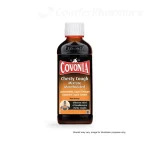
Covonia Chesty Cough Mixture

from£5.99

Additionally, traditional Covonia formulation — menthol, squill (Urginea maritima), and liquid extract of liquorice in a distinctive strong-tasting syrup for chesty cough. THR-registered.

Traditional herbal action.

Importantly, different from modern guaifenesin-based Covonia Sugar Free.

Available at Courier Pharmacy.

Pack size 150ml and 300ml

TREATS:

Coughs and colds

FORMAT:

Oral liquid

Availability:

In stock

Begin Consultation

Watch

Coughs and colds

Watch

Covonia Chesty Cough Mixture
SKU: N/A Category: Tags: ,

Description

Product description Covonia Chesty Cough Mixture

Notably, covonia Chesty Cough Mixture is a traditional herbal chesty cough syrup with distinctive strong menthol-warming flavour. It typically contains:

  • Menthol: cooling/warming counterirritant, TRPM8 activation
  • Squill vinegar (Urginea maritima liquid extract): traditional expectorant herb
  • Liquid extract of liquorice (Glycyrrhiza glabra): demulcent, flavouring, traditional respiratory herb

Furthermore, standard pack sizes: 150ml or 300ml bottle. Specifically, manufactured by Thornton & Ross Ltd (Stada). Licensed as Traditional Herbal Registration (THR). Meanwhile, for adults and children (age range varies — check pack).

What makes Covonia Chesty Cough Mixture different?

In fact, what distinguishes Covonia Chesty Cough Mixture from other cough products:

  • Traditional formulation dating back decades
  • Distinctive strong menthol-warming flavour
  • Traditional herbal ingredients (squill + liquorice)
  • THR regulatory status (traditional use evidence)
  • Long UK heritage
  • Different from the modern guaifenesin-based Covonia Chesty Cough Sugar Free
  • Similar traditional category to Vicks-style aromatic products but as a syrup

The wider Covonia range:

  • Covonia Chesty Cough Mixture (this product) — traditional formulation with menthol, squill, liquorice
  • Covonia Chesty Cough Sugar Free — modern guaifenesin-based, sugar-free
  • Covonia Bronchial Balsam — similar traditional formulation
  • Covonia Original — traditional style
  • Covonia Dry Cough — cough suppressants for dry cough
  • Covonia Throat Spray — sore throat spray

The wider cough syrup market:

Traditional/herbal:

  • Covonia Chesty Cough Mixture (this product)
  • Covonia Bronchial Balsam
  • Broncho Stop Cough Syrup (thyme + marshmallow root)
  • Simple linctus BP (glycerol only)

Modern guaifenesin expectorants:

  • Covonia Chesty Cough Sugar Free
  • Benylin Mucus Cough Max Syrup
  • Benylin Chesty Cough Non-Drowsy
  • Sudafed Mucus Cough Liquid
  • Lemsip Cough for Mucus Cough and Catarrh

Cough suppressants:

  • Benylin Dry Cough variants (dextromethorphan or diphenhydramine)
  • Covonia Dry Cough variants
  • Robitussin Dry Cough

In particular, the role of a traditional-formulation cough syrup:

Some patients strongly prefer traditional formulations for reasons that combine:

  • Cultural familiarity (family/childhood association)
  • Perceived effectiveness from personal experience
  • Preference for herbal over synthetic actives
  • Enjoyment of distinctive traditional flavour
  • Trust built over decades of use

In short, for these patients, traditional Covonia hits the specific spot that modern single-active products don’t. Similarly, the strong menthol warming sensation, the distinctive taste, and the sense of taking a “proper” old-fashioned remedy have subjective value.

How it works?

Indeed, the mechanism of the three main components:

Menthol:

  • Activates TRPM8 cold receptors
  • Creates cooling sensation followed by warming counterirritant effect
  • Aromatic vapours reach the airways
  • Traditional respiratory associations
  • Not a pharmacological cough suppressant or expectorant

Squill vinegar (Urginea maritima liquid extract):

  • Traditional expectorant herb from Mediterranean squill bulb
  • Contains cardiac glycosides (at higher doses would be cardioactive)
  • At OTC dilutions, provides mild traditional expectorant action
  • Has been in European traditional medicine for centuries

Liquid extract of liquorice (Glycyrrhiza glabra):

  • Traditional demulcent
  • Contains glycyrrhizic acid (relevant for cautions — see below)
  • Soothing coating effect on the throat
  • Flavouring contribution
  • Traditional respiratory associations

Generally, what’s important to understand about the liquorice caution:

In addition, glycyrrhizic acid in liquorice can cause pseudohyperaldosteronism (mimicking mineralocorticoid excess):

  • Sodium and water retention
  • Potassium loss
  • Raised blood pressure
  • Heart concerns at high intakes
  • Cardiac arrhythmia risk with existing heart conditions

At standard cough syrup doses, exposure is typically modest and doesn’t cause problems for most people. Additionally, but specific groups should exercise care:

  • Existing hypertension
  • Heart failure
  • Kidney disease
  • Taking digoxin (potassium loss increases digoxin toxicity risk)
  • Taking loop or thiazide diuretics (compounded potassium loss)
  • Taking corticosteroids
  • Taking the combined contraceptive pill (compounded fluid retention)
  • Taking laxatives (compounded electrolyte disturbance)
  • Pregnancy (particularly late pregnancy)

Key points to remember

For example, discuss with pharmacist if any of these apply.

Importantly, what’s important to understand about squill vinegar:

Squill (Urginea maritima) is a Mediterranean bulb plant containing cardiac glycosides similar to those in digitalis. On the other hand, at therapeutic doses in traditional medicine, squill has been used as an expectorant and cardiac tonic. Therefore, at OTC dilutions in cough syrups:

  • Provides traditional expectorant action
  • Cardiac glycoside content is very low
  • Doesn’t cause cardiac effects at recommended doses
  • Long history of safe use in this formulation

However, patients taking digoxin (also a cardiac glycoside) or having significant heart conditions should discuss with pharmacist before use.

The THR regulatory status:

Traditional Herbal Registration means:

  • Manufacturer demonstrates quality and consistency
  • Manufacturer demonstrates safety
  • Long traditional use (30+ years, including 15+ in Europe)
  • Specific labelling (“traditional herbal medicinal product used for the symptomatic relief of…”)
  • THR number displayed on packaging
  • Efficacy based on traditional use rather than modern trials

Consequently, covonia has been in UK use for a very long time, meeting the traditional use requirement comfortably. Quality and safety requirements ensure consistent product.

Important details

However, the relationship to other cough and cold products:

Moreover, vs Covonia Chesty Cough Sugar Free: same brand, different formulation. In summary, sugar Free is modern guaifenesin (standard medicines licensing). This is traditional herbal (THR). Choose Mixture for traditional formulation, Sugar Free for guaifenesin and sugar-free.

Overall, vs Covonia Bronchial Balsam: similar traditional Covonia formulation. Notably, check specific packs for exact composition differences.

Furthermore, vs Broncho Stop Cough Syrup: different herbal combination (thyme + marshmallow root). Both are THR.

Vs Benylin Mucus Cough Max Syrup / Benylin Chesty Cough Non-Drowsy / Sudafed Mucus Cough Liquid: modern guaifenesin products (standard medicines licensing).

Specifically, vs Lemsip Cough for Mucus: modern guaifenesin.

Meanwhile, vs simple linctus BP: pure glycerol demulcent — gentler, simpler.

In fact, vs Benylin Chesty Coughs Original: traditional Benylin formulation with diphenhydramine (sedating). In particular, different active profile from Covonia Mixture.

Vs cough suppressants: opposite mechanism. Match to cough type (chesty ? this or expectorants; dry ? suppressants).

In short, vs paracetamol or ibuprofen: for pain and fever. Compatible.

Similarly, vs multi-symptom cold and flu combinations: for multiple cold symptoms. This mixture addresses cough only.

Indeed, vs topical decongestants (Sudafed Nose Spray, Otrivine, Vicks Sinex, Sudafed Sinus-Ease): for congestion. Different mechanism. Compatible.

What to know

Vs Vicks VapoRub, Vicks Inhaler, Olbas Inhaler: sensation-based aromatic products. As a result, related mechanism (menthol sensation) but different format. Compatible.

Generally, vs Strepsils range, Ultra Chloraseptic: sore throat products. Different area. Compatible.

Vs Sterimar Isotonic: saline. Compatible.

Vs antibiotics: for bacterial infection. Compatible.

In addition, who Covonia Chesty Cough Mixture suits:

  • Adults (and children per pack age range) with chesty cough
  • People who prefer traditional formulations
  • People with cultural or family familiarity with Covonia
  • People who like distinctive menthol-warming syrups
  • People who prefer herbal to modern single-active products
  • Short-term use during acute cough
  • People without liquorice contraindications

Covonia Chesty Cough Mixture isn’t the optimal choice for:

  • Children below the pack’s minimum age
  • Pregnancy (particularly late pregnancy) — liquorice caution
  • Breastfeeding without advice
  • People with hypertension
  • People with heart failure or significant heart disease
  • People with kidney disease
  • People taking digoxin, diuretics, corticosteroids, or combined contraceptive pill
  • People with severe potassium loss issues
  • People with liquorice allergy or intolerance
  • People with menthol-sensitive asthma
  • People with diabetes wanting sugar-free (choose Covonia Sugar Free instead)
  • Cough with breathing difficulty (urgent GP)
  • Cough with blood in sputum (urgent GP)
  • Cough persisting more than 3 weeks (GP review)

Features and specifications:

  • Active ingredients: menthol + squill vinegar (Urginea maritima) + liquid extract of liquorice
  • Form: syrup (distinctive strong menthol-warming flavour)
  • Pack sizes: 150ml or 300ml bottle
  • Manufacturer: Thornton & Ross Ltd (Stada)
  • Class: traditional herbal cough mixture
  • Legal status: Traditional Herbal Registration (THR)
  • Age range: check specific pack
  • Typical adult dose: 10ml every 4 hours (check pack)
  • Maximum duration: short-term use; seek advice beyond 1-2 weeks
  • Contains sugar (unless specific sugar-free variant)
  • Contains liquorice — cautions apply
  • Storage: as per pack instructions

Additional information

Pack size

1 x 150ml, 1 x 300ml

MOJO WISDOM

Take control of your health by understanding your condition and what this medication is doing for you.

READ:

More information about this treatment.

No video link provided.

No video link provided.

UK-based doctors and pharmacists

Free, expert advice

Discrete and confidential

Fast delivery

Giving you trusted clinical advice for over 40 conditions

A UK regulated pharmacy providing safe, effective treatments online since 2014
View all conditions

Overview

Active ingredients

What is it for?

How does it work?

How do you use it?

Warnings and precautions

Side effects

Drug interactions

FAQs

Download patent leaflet

Written By
Shazlee Ahsan
BSc Pharmacy, Independent Prescriber, PgDip Endocrinology, MSc Endocrinology, PgDip Infectious Diseases

Superintendant Pharmacist, Independent Prescriber


Checked By
Safdar Ali
BSc Pharmacy

Pharmacist


Covonia Chesty Cough Mixture

The classic Covonia formulation — the traditional herbal-style chesty cough mixture with menthol, squill vinegar (Urginea maritima), and liquid extract of liquorice (Glycyrrhiza glabra) in a syrup base.

The Covonia most people remember from childhood cupboards — the distinctively strong-tasting, warming, traditional syrup that has been a UK cough remedy staple for decades. The one your pharmacist might suggest when you want a traditional-formulation cough syrup rather than a modern single-active guaifenesin product (like Covonia Chesty Cough Sugar Free, Benylin Mucus Cough Max, or Sudafed Mucus Cough), when you prefer distinctive traditional flavour and the sense of an “old-fashioned” cough remedy, or when you like the warming menthol sensation alongside the traditional expectorant herbs.

Maybe your family always had Covonia. Maybe you find the strong distinctive flavour more effective than blander modern syrups. Maybe you like the combination of menthol warmth and traditional herbal action. Maybe you appreciate the long UK heritage of this specific formulation. Covonia Chesty Cough Mixture is a Traditional Herbal Registration (THR) product — regulated based on long safe traditional use rather than modern trial data.

At Courier Pharmacy we want to explain what the traditional herbs actually do, how it differs from the modern guaifenesin-based Covonia Chesty Cough Sugar Free (same brand, different formulation), and where the traditional approach fits in the wider cough treatment picture.

Five key takeaways

  • Covonia Chesty Cough Mixture typically contains menthol, squill vinegar (Urginea maritima liquid extract), and liquid extract of liquorice (Glycyrrhiza glabra) in a syrup base. The traditional formulation dating back many decades in UK use. Thornton & Ross Ltd (Stada). Traditional Herbal Registration (THR). For adults and children (age range varies — check specific pack). Adult dose typically 10ml every 4 hours (verify pack). Distinctive strong-tasting warming syrup.
  • Different formulation from Covonia Chesty Cough Sugar Free. The Sugar Free variant is a modern guaifenesin-based syrup (100mg per 5ml, standard medicines licensing). This Mixture is the traditional herbal formulation (menthol + squill + liquorice, THR). Same brand family, different products. Choose Mixture for the traditional formulation, Sugar Free for guaifenesin and sugar-free.
  • Traditional herbal actions of the components. Menthol provides warming counterirritant sensation and TRPM8 activation. Squill (Urginea maritima) has traditional expectorant associations in European herbal medicine — the extract is cardioactive at higher doses but at OTC dilutions provides milder expectorant action. Liquid extract of liquorice adds soothing demulcent effect and flavour, with a traditional respiratory association.
  • Liquorice interactions matter. The liquorice extract contains glycyrrhizic acid, which at higher intakes can cause pseudohyperaldosteronism — sodium retention, potassium loss, raised blood pressure, and potential heart problems. At standard cough syrup doses this usually isn’t a problem, but people with hypertension, heart failure, kidney disease, or those on digoxin, diuretics, corticosteroids, or contraceptive pills should discuss with pharmacist. Not for pregnancy without advice.
  • Where it fits in the wider picture. As a traditional-formulation chesty cough syrup — this is the specific niche.  For someone who wants the traditional Covonia experience specifically — this is the product. For someone wanting proven guaifenesin action with modern licensing — a guaifenesin syrup will suit better.

Treatment dosage Covonia Chesty Cough Mixture

Standard use (check specific pack):

  • Adults: typically 10ml every 4 hours as required
  • Children: age range and dose vary by pack — check specific product
  • Don’t exceed the maximum daily dose stated
  • Duration: short-term use; seek advice beyond 1-2 weeks

How to use:

  1. Shake the bottle if directed
  2. Measure the correct dose using the supplied device
  3. Swallow slowly
  4. Don’t wash down with a lot of water immediately (let the syrup coat)
  5. Wait 4 hours before the next dose
  6. Drink water between doses

Frequency and timing:

  • Regular dosing during acute chesty cough
  • Space at least 4 hours apart
  • Reduce as symptoms improve

Practical tips:

  • Distinctive strong flavour — some like it, some find it challenging
  • Compatible with paracetamol, ibuprofen, most cold and flu combinations
  • Consider warm drinks and steam alongside
  • Sit upright after doses

When to expect what:

  • Immediate menthol warming sensation
  • Effect builds over regular dosing
  • Cough may feel more productive within the first day
  • Over 3-5 days: symptoms usually improving

When to stop and seek advice:

  • Cough persists more than 3 weeks
  • Cough with blood in sputum
  • Cough with breathing difficulty
  • High blood pressure symptoms (headache, dizziness) — liquorice-related concern
  • Muscle weakness or cramps — potassium loss concern
  • Ankle swelling — fluid retention concern
  • Allergic-type reactions

On the other hand, don’t use Covonia Chesty Cough Mixture if:

  • You’re allergic to menthol, squill, liquorice, or any other ingredient
  • You have hypertension (particularly uncontrolled)
  • You have heart failure
  • You have severe kidney disease
  • You’re taking digoxin
  • You’re taking loop or thiazide diuretics (potassium loss concern)
  • You’re taking corticosteroids
  • You’re pregnant (particularly late pregnancy) — without medical advice
  • You’re breastfeeding without medical advice
  • You’re below the pack’s minimum age

Use with care if:

  • You have mild hypertension
  • You have diabetes (contains sugar)
  • You have significant asthma with menthol sensitivity
  • You’re taking the combined contraceptive pill (compounded fluid retention)
  • You have chronic cough
  • You have COPD or chronic bronchitis
  • You have hepatic impairment

Overview of Covonia Chesty Cough Mixture

Three things worth knowing:
  • The liquorice content matters clinically. Not just a flavouring — glycyrrhizic acid can affect blood pressure, potassium, and fluid balance in vulnerable people. For most healthy adults at cough syrup doses this isn’t a problem. For people with hypertension, heart failure, kidney disease, digoxin therapy, or diuretic use, discuss with pharmacist.
  • Distinctive strong flavour is part of the identity. This is a traditional-formulation product with strong menthol and herbal notes. Some patients love it; others find the flavour challenging. It’s not a bland modern syrup — that’s the point.
  • Different from Covonia Chesty Cough Sugar Free despite same brand. Sugar Free is modern guaifenesin (standard medicines licensing, sugar-free). Mixture is traditional herbal (THR, contains sugar and liquorice). Same brand, different products for different preferences.

Why choose Courier Pharmacy for Covonia Chesty Cough Mixture

In short, the traditional formulation deserves careful placement in the modern cough medicine landscape. Similarly, every Covonia Chesty Cough Mixture purchase at Courier Pharmacy comes with the honest guidance that helps you use it safely.

We’ll explain the difference from Covonia Chesty Cough Sugar Free (modern guaifenesin) — same brand, different formulation.

Indeed, we’ll walk through the liquorice cautions — hypertension, heart failure, kidney disease, digoxin, diuretics, corticosteroids, contraceptive pill.

As a result, we’ll discuss whether traditional formulation suits your preferences or whether modern guaifenesin would work better for your specific cough.

Generally, we’ll check for menthol sensitivity in significant asthma.

In addition, we’ll signpost to GP for persistent cough (3+ weeks), cough with red flags, or complications.

Our brand guide, Dr Ada Jex-Cori, sums it up: you’re not broken. Additionally, the system that’s failed you might be. For example, we want to do the part we can do, properly, and connect you with the rest. Importantly, that includes our free fortnightly drop-in clinics and talks at Insomnia in Derby.

Dr Ada Jex Cori at courierpharmacy.co.uk holding a coupon

Buy Covonia Chesty Cough Mixture from Courier Pharmacy

Covonia Chesty Cough Mixture is a Traditional Herbal Registration (THR) product. No prescription needed.

Here’s how it works:

  • Add to your basket
  • Answer the questionnaire
  • Reviewed by our prescriber
  • We dispense and deliver
  • Optional guidance available if you want to discuss your overall symptoms


Active Ingredients

Therefore, menthol: cooling/warming counterirritant, TRPM8 receptor activation.

Consequently, squill vinegar (Urginea maritima liquid extract): traditional Mediterranean bulb herb with expectorant associations. At OTC dilutions, mild traditional expectorant effect.

However, liquid extract of liquorice (Glycyrrhiza glabra): demulcent, flavouring, traditional respiratory herb. Contains glycyrrhizic acid.

Moreover, other ingredients (typical formulation): sucrose or glucose, water, colours, preservatives, flavourings. In summary, some formulations contain small amounts of ethanol from tinctures.

Contains sugars: relevant for diabetes. Contains liquorice: cautions apply. Contains squill: mild cardiac glycoside content (cautions with digoxin or significant heart disease). Overall, may contain small amounts of ethanol from tinctures: check pack.

What it does mechanistically:

Menthol: TRPM8 cold-receptor activation. Cooling then warming sensation.

Squill: traditional expectorant action. Notably, at OTC dose, mild effect via traditional pathways.

Liquorice: demulcent coating. Traditional respiratory soothing.

The combination:

  • Aims to soothe throat irritation while gently helping mucus movement
  • Distinctive warming sensation
  • Traditional multi-component approach

What it doesn't do:

  • Doesn't have the proven expectorant strength of guaifenesin
  • Doesn't suppress cough reflex
  • Doesn't kill viruses or bacteria
  • Doesn't treat the underlying infection
  • Doesn't shorten the illness
Dr Ada Jex Cori measuring active pharmaceutical ingredients on a weighing scale courierpharmacy.co.uk

What is it for?

Furthermore, used as a traditional herbal remedy for symptomatic relief of:

  • Chesty productive cough from cold and flu
  • Mild bronchial catarrh
  • Cough with mucus buildup
  • Traditional respiratory comfort during viral illness

Not for:

  • Children below the pack's minimum age
  • Pregnancy without advice
  • Hypertension, heart failure, kidney disease (liquorice)
  • People on digoxin, diuretics, corticosteroids
  • Severe cough with red flags
  • Chronic cough beyond 3 weeks
  • Replacement for prescribed cough or respiratory treatment
Dr Ada Jex Cori coughing courierpharmacy.co.uk  

How does it work?

The traditional mechanism:

  • Menthol activates TRPM8 cold receptors — cooling/warming sensation
  • Squill provides traditional expectorant action at OTC dose
  • Liquorice extract provides demulcent coating and flavour
  • Effect during and shortly after each dose

The course over a typical cough:

  • Day 1-3: regular dosing as pack directs
  • Day 3-7: continued use as symptoms need
  • Beyond 1-2 weeks: seek advice

What it doesn't do:

  • Doesn't cure the infection
  • Doesn't dramatically shorten the illness
  • Doesn't provide the proven guaifenesin expectorant strength
Dr Ada Jex Cori thinking courierpharmacy.co.uk

How to use it

Standard technique:

  1. Shake bottle if directed
  2. Measure dose per pack
  3. Swallow slowly
  4. Wait 4 hours before next dose
  5. Drink water between doses

Practical tips:

  • Distinctive taste — some love it, some don't
  • Drink plenty of water alongside
  • Compatible with paracetamol, ibuprofen for pain and fever
  • Consider warm drinks and steam alongside
  • Sit upright after doses

Combining with other treatments:

  • With paracetamol: yes
  • With ibuprofen: yes
  • With aspirin (16+): yes
  • With multi-symptom cold and flu combinations: usually yes
  • With guaifenesin expectorants (Benylin Mucus Cough Max, Covonia Chesty Cough Sugar Free, Sudafed Mucus Cough): possible but likely redundant
  • With cough suppressants: contradictory action — not usually
  • With topical decongestants: yes
  • With Sterimar Isotonic: yes
  • With Vicks VapoRub, Vicks Inhaler, Olbas Inhaler: yes but menthol overlap
  • With Strepsils range: yes
  • With antibiotics: yes (though check for interactions)
  • With digoxin: NO (squill and liquorice interactions)
  • With diuretics: caution (liquorice potassium loss)
  • With corticosteroids: caution (liquorice compounded effects)
  • With combined contraceptive pill: caution (fluid retention)
Dr Ada Jex Cori pouring medicine into a spoon courierpharmacy.co.uk

Warnings and Precautions

Don't use if:

  • You're allergic to menthol, squill, liquorice, or any other ingredient
  • You have significant hypertension
  • You have heart failure
  • You have severe kidney disease
  • You're taking digoxin
  • You're taking loop or thiazide diuretics
  • You're taking corticosteroids
  • You're pregnant without medical advice
  • You're breastfeeding without medical advice
  • You're below the pack's minimum age

Use with care if:

  • You have mild hypertension
  • You have diabetes
  • You have significant asthma with menthol sensitivity
  • You're taking the combined contraceptive pill
  • You have chronic cough
  • You have COPD or chronic bronchitis

Pregnancy:

Specifically, not recommended without medical advice — liquorice contraindicated particularly late pregnancy (linked to preterm birth risk).

Breastfeeding:

Not recommended without medical advice.

Driving and operating machinery:

Generally no effect.

Sport and doping:

Meanwhile, not on WADA prohibited list at standard doses.

Alcohol:

Check pack for ethanol content.

Diabetes:

Contains sugar. Occasional use is fine.

Blood pressure:

In fact, the liquorice content can raise blood pressure with regular or high intake. Monitor if you have hypertension.

If reactions occur:

  • Mild stomach upset — usually settles
  • Rising blood pressure — stop and discuss
  • Muscle cramps or weakness — potassium loss concern
  • Ankle swelling — fluid retention concern
  • Allergic reactions — stop and seek immediate help

Report any side effect via the MHRA Yellow Card scheme.

Dr Ada Jex Cori holding a warning sign courierpharmacy.co.uk

Side Effects

Uncommon:

  • Mild stomach upset
  • Nausea
  • Taste alteration (distinctive flavour may not suit)

Rare:

  • Allergic reactions
  • Rising blood pressure (from liquorice)
  • Sodium and water retention
  • Potassium loss (particularly with regular use or in vulnerable patients)
  • Bronchospasm in menthol-sensitive asthmatics

Very rare:

  • Cardiac arrhythmia (from combined squill and liquorice effects in vulnerable patients)
  • Severe allergic reactions

If you experience side effects:

  • Mild effects: usually settle
  • Persistent stomach upset: stop and discuss
  • Cardiovascular symptoms: stop and seek advice
  • Allergic reactions: stop and seek immediate help
  Courierpharmacy.co.uk divider Dr Ada Jex Cori

Drug Interactions

Significant interactions:

  • Digoxin: don't combine — both squill and liquorice affect potassium and cardiac glycoside sensitivity
  • Loop diuretics (furosemide): don't combine — compounded potassium loss
  • Thiazide diuretics: don't combine
  • Corticosteroids: compounded mineralocorticoid effects
  • Combined contraceptive pill: compounded fluid retention
  • Antihypertensives: can be undermined by liquorice-induced BP rise
  • Laxatives: compounded potassium loss
  • ACE inhibitors: caution
  • Warfarin: potential interaction

Compatible generally with:

  • Paracetamol
  • Ibuprofen
  • Most antibiotics
  • Topical treatments
  • Most cold and flu OTC products (not combined guaifenesin — redundant)

In particular, discuss with your pharmacist if you take other medications, particularly cardiovascular or hormonal.

Courierpharmacy.co.uk divider Dr Ada Jex Cori

Frequently Asked Questions

Dr Ada Jex Cori at courierpharmacy.co.uk FAQs  

How is it different from Covonia Chesty Cough Sugar Free?

Same brand, different formulation. On the other hand, mixture is traditional herbal (menthol + squill + liquorice, THR). Therefore, sugar Free is modern guaifenesin (standard medicines licensing, sugar-free). Choose based on preference.

Why the strong flavour?

Consequently, the distinctive taste comes from menthol, liquorice, and squill — traditional herbal formulation intended to have a warming, herbal profile rather than the blander taste of modern syrups.

Is it as effective as guaifenesin cough syrups?

Different regulatory basis. Guaifenesin has standard medicines licensing (efficacy trials). However, covonia Mixture is THR (traditional use evidence). Individual patient response varies significantly.

What does THR mean?

Moreover, traditional Herbal Registration — UK regulatory scheme for herbal products with long traditional use. In summary, quality and safety demonstrated; efficacy based on traditional use rather than modern trials.

Can I take it during pregnancy?

Not recommended without medical advice — liquorice content particularly cautioned in pregnancy.

Can I take it while breastfeeding?

Not without medical advice.

Can children take it?

Overall, age range depends on the specific pack.

What if I have high blood pressure?

Notably, not recommended in significant hypertension — liquorice can raise BP.

What if I have heart problems?

Furthermore, not recommended in heart failure or with digoxin.

What if I have kidney problems?

Not recommended in significant kidney disease.

What if I take diuretics?

Specifically, not recommended — compounded potassium loss risk.

What if I take the contraceptive pill?

Meanwhile, care — compounded fluid retention with liquorice.

What if I have diabetes?

Contains sugar. Occasional use is generally fine.

Can I take it with paracetamol or ibuprofen?

Yes.

Can I take it with guaifenesin cough syrups?

Possible but likely redundant. Choose one.

Can I take it with cough suppressants?

Not usually — different mechanisms.

What about with asthma?

Menthol can occasionally trigger bronchospasm. In fact, discuss with pharmacist for significant menthol-sensitive asthma.

How long can I use it?

Short-term. Beyond 1-2 weeks without improvement, seek advice.

Cough persisting beyond 3 weeks?

Needs GP review.

Blood in sputum?

Urgent GP appointment.

How should I store it?

As per pack instructions.

Disclaimer: This information is for education only and isn’t a substitute for personal medical advice. Always follow your prescriber’s instructions.

References

[1] Electronic Medicines Compendium. Covonia Chesty Cough Mixture: Product Information. Available at: https://www.medicines.org.uk/emc/product/4831/smpc

[2] NICE Clinical Knowledge Summaries. Cough. Available at: https://cks.nice.org.uk/topics/cough/   Courierpharmacy.co.uk divider Dr Ada Jex Cori

Download patient leaflet

https://www.medicines.org.uk/emc/files/pil.4831.pdf

Covonia Chesty Cough Mixture courierpharmacy.co.uk
Covonia Chesty Cough Mixture
from£5.99

{"29945":29945,"29073":29073,"28893":28893,"22083":22083,"28758":28758,"28502":28502,"28430":28430,"28371":28371,"28365":28365,"28316":28316,"28311":28311,"27938":27938,"27885":27885,"27880":27880,"27881":27881,"27882":27882,"27884":27884,"27874":27874,"27867":27867,"27859":27859,"27855":27855,"27830":27830,"27826":27826,"27651":27651,"27067":27067,"27059":27059,"27060":27060,"27047":27047,"27040":27040}