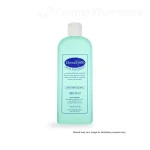
An antimicrobial bath emollient containing benzalkonium chloride and chlorhexidine, for adults and children with dry itchyc skin conditions particularly atopic eczema with bacterial colonisation.
Dermol 600 is supplied at Courier Pharmacy after a brief online consultation reviewed by a UK pharmacist, then delivered to your door.
For many people with atopic eczema, plain emollients aren’t quite enough. After all, the eczema-bacteria cycle is well-documented: skin gets dry, the barrier breaks down, Staphylococcus aureus moves in, inflammation gets worse, scratching breaks the skin further. So a bath additive that does both jobs — moisturising AND reducing bacterial load — can be genuinely useful. That’s the case for Dermol 600.
Dermol 600 vs other Dermol products
Dermal Laboratories makes a family of Dermol products. So choosing between them depends on how you’ll use them:
Dermol 200 Shower Emollient: shower format, benzalkonium chloride AND chlorhexidine
Dermol 500 Lotion: leave-on lotion, benzalkonium chloride AND chlorhexidine
Dermol Cream: leave-on cream, benzalkonium chloride AND chlorhexidine
Dermol Wash Cutaneous Emulsion: soap substitute, benzalkonium chloride AND chlorhexidine
Interestingly, Dermol 600 is the only Dermol product without chlorhexidine — it relies on benzalkonium chloride alone. So if you have a known chlorhexidine allergy, Dermol 600 may be the only option in the Dermol range. Many people use Dermol 600 in the bath and a leave-on Dermol product (Dermol Cream or Dermol 500 Lotion) afterwards to extend the antimicrobial action.
Dermol 600 vs other bath emollients
The UK bath emollient market includes several options. So choosing between them depends on whether you need the antimicrobial action:
Dermol 600 (this product): emollient + antimicrobial, especially useful for eczema with infection risk
Oilatum Junior Bath Additive: plain emollient, designed for children’s skin
In general, plain bath emollients suit dry skin without infection issues, while antimicrobial ones (Dermol 600, Oilatum Plus) suit eczema where bacteria are part of the picture. Therefore, the choice often depends on whether your skin condition follows a flare-infection-flare cycle.
Where Dermol 600 fits in UK skin care
Bath emollients sit at Step 2 of the UK approach to dry skin conditions:
Step 4: Mild topical steroids like hydrocortisone 1% for mild flares
Step 5: Moderate to potent topical steroids (Eumovate, Betnovate, Elocon) for stronger flares
Step 6: Calcineurin inhibitors (tacrolimus, pimecrolimus) for face and sensitive areas
Step 7: Antibiotic treatment if skin becomes clinically infected
Step 8: Specialist skin care input for treatment-resistant cases
Importantly, even when someone is using topical steroids or antibiotics higher up the ladder, the emollient and bath emollient continue. So stopping these when symptoms ease is one of the most common reasons skin conditions come back.
Who Dermol 600 suits well
This product particularly works well for people who:
Have atopic eczema, especially with recurrent flares or visible signs of bacterial colonisation
Have eczema that worsens despite using plain emollients consistently
Are prone to recurrent skin infections (impetigo, infected scratches)
Have broken skin from scratching, where bacterial entry is a real risk
Have a child with atopic eczema and want to support skin care during bath time
Prefer bathing to showering, especially for the soak time
Want a dual-action approach (emollient + antimicrobial) in one product
Have a chlorhexidine allergy and need an antimicrobial emollient without it
Have widespread eczema where leave-on application is impractical for full coverage
Who might suit other options better
Other options may work better for people who:
Have plain dry skin without any infection risk — a plain bath emollient (Oilatum Junior, Cetraben Bath, Hydromol Bath) costs less and works just as well for pure moisturising
Have a known allergy to benzalkonium chloride, liquid paraffin, or isopropyl myristate
Don’t have a bath, since Dermol 200 Shower Emollient or Dermol Wash suit better
Have very oily or acne-prone skin, where bath emollients aren’t usually appropriate
Have signs of established skin infection (yellow crusts, increasing redness, pus, fever) — see GP for antibiotics first
Have psoriasis without eczema, since plain emollients usually suit better
Are at high fall risk, because bath emollients make the bath very slippery
Have small children who can’t safely manage a slippery bath
Have cracked, weeping skin that’s likely to sting on contact with benzalkonium chloride
Courier Pharmacy supply
Dermol 600 is a Pharmacy (P) medicine. So no prescription is needed, but the medicine is sold under pharmacist supervision. Our pharmacist is on hand to discuss whether Dermol 600 is right for your skin situation — and to suggest other options if it isn’t.
Eczema that keeps getting infected — or rather keeps colonising with Staphylococcus aureus, the bacterium that doesn’t always cause an obvious infection but worsens inflammation and makes flares harder to control. Maybe your prescriber has recommended an antimicrobial bath emollient as part of your eczema management. Or maybe you’re finding standard bath emollients aren’t enough and you need something that addresses both the dryness and the bacterial colonisation. Maybe you’ve been using Dermol cream as a leave-on and want to know how the 600ml bath version fits in.
Dermol 600 is a bath emollient containing benzalkonium chloride and chlorhexidine in a liquid paraffin base, addressing both skin barrier support and the bacterial colonisation that drives many eczema flares.
At Courier Pharmacy we want you to understand exactly how Dermol 600 works, who it suits, how the antimicrobial action complements leave-on emollients, and where the bath emollient fits in your broader eczema management, so the routine makes sense.
Five key takeaways
Dermol 600 is a bath emollient added to bath water, containing benzalkonium chloride 0.5% and chlorhexidine dihydrochloride 0.5% in a liquid paraffin and isopropyl myristate base. Used in adults and children for the management of dry, pruritic skin conditions, particularly atopic eczema where Staphylococcus aureus colonisation is contributing to flares.
The antimicrobials address Staphylococcus aureus colonisation of eczematous skin — a major driver of inflammation, itching, and flare frequency in atopic eczema. Reducing the bacterial burden often substantially improves eczema control alongside the emollient effect.
The 600ml pack size is the larger bath emollient version. Dermol products include Dermol cream (leave-on antimicrobial emollient), Dermol 500 Lotion (larger leave-on or wash), and Dermol 600 Bath Emollient (this product) — different formulations of essentially the same active components for different uses.
Add to bath water (typically about 15ml per bath for an adult), bathe normally, pat dry. Don’t rinse off — the emollient and antimicrobials need to remain on the skin to work. Use 2-3 times a week initially or as directed; can be used more frequently during active flares.
Important practical considerations: bath surfaces become slippery (use non-slip mat); contact with eyes irritates (close eyes when wetting hair); not for use as a leave-on emollient (the higher antimicrobial concentration in bath formulations is appropriate for dilution in bath water, not direct skin application); fire safety considerations as with all paraffin-containing emollients.
Treatment dosage Dermol 600 ml Emollient
The standard use is to add to bath water before bathing.
Adult use:
Run a normal-sized bath at a comfortable temperature (not too hot — hot water dries skin)
Add approximately 15ml (one capful, or as the bottle specifies) to the bath water
Mix briefly with the water
Bathe normally for 5-10 minutes
Pat dry with a clean towel — don’t rub vigorously
Don’t rinse off — the emollient and antimicrobials should remain on the skin
Apply leave-on emollient (e.g. Dermol cream, Diprobase, or other) while skin is still slightly damp
Child use:
Use smaller amounts in children’s baths — typically 5ml for a baby’s bath, 10ml for a child’s bath
Follow the prescriber’s specific instructions for paediatric use
Same approach as adults — add to bath water, bathe normally, pat dry without rinsing
As a wash (alternative to bath):
Some patients use Dermol 600 (or the related Dermol 500 lotion) on wet skin in the shower
Apply a small amount to wet skin, smooth gently, then rinse off
This provides a more concentrated antimicrobial wash without the full bath approach
Less convenient for whole-body coverage than a bath
Frequency:
Typical use: 2-3 times a week
During active eczema flares with suspected bacterial colonisation: more frequent use (daily or alternate days for 1-2 weeks)
For maintenance after improvement: less frequent (1-2 times a week) may be sufficient
Follow the prescriber’s specific direction
Practical tips:
Use a non-slip mat — bath surfaces become slippery from the paraffin
Close eyes when wetting hair — the product can sting eyes
Use lukewarm water, not hot — hot water increases skin dryness
Don’t add bubble bath or scented bath products at the same time — these can dry skin and conflict with the emollient effect
Pat dry, don’t rub — gentle drying preserves the emollient film on the skin
Apply leave-on emollient while skin is still slightly damp — this traps moisture
For specific situations:
Atopic eczema with frequent flares or visible signs of bacterial colonisation: 2-3 times a week, alongside other eczema treatments
Acute eczema flare: more frequent (daily) for 1-2 weeks until controlled
Maintenance phase: 1-2 times a week
After known triggers (e.g. swimming in chlorinated pools that have caused flares): bath in Dermol 600 to remove chlorine and reduce bacterial impact
For children with eczema: incorporate into bath routine; consider every other bath if eczema is active
Don’t use Dermol 600 if:
You have known hypersensitivity to benzalkonium chloride, chlorhexidine, or any other ingredient
You have severe skin irritation or open wounds (clean and treat first; can resume once stabilised)
You have anaphylactic-type reactions to chlorhexidine (rare but recognised; serious)
Use with care if:
You have very fragile or thin skin
You have known contact allergy to similar antiseptics
You’re using other antiseptic products that contain chlorhexidine or benzalkonium chloride (additive exposure)
You have multiple skin sensitivities (test on a small area first)
You’re pregnant or breastfeeding (limited specific data, but minimal absorption from bath emollient use)
Important contraindication: chlorhexidine hypersensitivity — chlorhexidine can cause anaphylactic reactions in sensitised individuals. Although rare, this is a recognised serious risk. If you’ve had previous severe allergic reactions to chlorhexidine-containing products (in dental work, surgical preparations, mouthwashes, etc.), tell your prescriber and pharmacist before using Dermol 600.
Fire safety warning — important: emollients (including bath emollients with paraffin content) can build up on bath towels, clothing, and bedding. Paraffin-soaked fabric burns readily. Wash treated fabrics regularly at the highest suitable temperature. Keep away from open flames and cigarettes.
If you skip a bath day, don’t try to make up — just continue the schedule.
Overview of Dermol 600 ml Emollient
Five things worth knowing:
The antimicrobial component is the key feature. Plain bath emollients (Oilatum, Aveeno bath, basic paraffin baths) provide emollient effect without the antimicrobial. Dermol 600 specifically targets bacterial colonisation that’s often missed in standard eczema management.
Staphylococcus aureus colonisation is a major driver of eczema in around 90% of atopic eczema patients. The bacteria produce toxins (superantigens) that drive inflammation; reducing bacterial burden often substantially improves eczema control. This is increasingly recognised in modern eczema management.
Bath emollient and leave-on emollient are complementary, not alternatives. The bath emollient provides whole-body emollient and antimicrobial action during bathing; leave-on emollient provides ongoing skin barrier support throughout the day. Many patients use both.
The Dermol product family allows different approaches: Dermol cream for daily leave-on use, Dermol 500 lotion for larger leave-on areas or wash use, Dermol 600 for bath use. Patients choose based on what fits their routine and skin needs.
Chlorhexidine sensitivity is a recognised consideration. While most patients tolerate chlorhexidine well, sensitised individuals can have anaphylactic reactions. Patients with significant allergies or who’ve had reactions to chlorhexidine in other settings (dental, surgical) should discuss this before using Dermol 600.
Dermol 600 sits within a broader landscape of bath emollients and antimicrobial skin care:
Whether bacterial colonisation is contributing — frequent flares, history of impetigo, visible weeping or crusting, family history of severe eczema all suggest colonisation may be a factor
Severity and frequency of flares — more severe or frequent suggests more aggressive antimicrobial approach
What’s worked before — patients responding well to antimicrobial approaches may benefit from continuing
Patient and family preference — bath emollient approach suits some routines better than others
Other treatments being used — combination with topical steroids and standard emollients is common
For people living with complex conditions, the bath emollient approach is often practical because bathing is part of the routine anyway. The whole-body antimicrobial action complements topical steroids (for active inflammation) and leave-on emollients (for ongoing barrier support).
The Dermol 600-vs-Dermol-500-Lotion question comes up. Both contain the same antimicrobials. The 500 Lotion is designed for leave-on use or as a wash; the 600 is specifically formulated for bath water dilution. For patients who don’t have or use a bath regularly, the 500 lotion may suit better. For patients who do bathe, the 600 bath emollient provides whole-body coverage efficiently.
Why choose Courier Pharmacy for Dermol 600 ml Emollient
The bacterial colonisation aspect of eczema is often under-addressed. Many patients with frequent eczema flares are on topical steroids and emollients but never have the colonisation considered; reducing the bacterial burden often substantially improves their eczema. Every Dermol 600 supply at Courier Pharmacy is reviewed by a UK pharmacist who reads your situation properly and explains the decision either way.
We’ll discuss whether Dermol 600 is the right choice. For atopic eczema with frequent flares, suspected or confirmed S. aureus colonisation, or history of impetigo or infected eczema, the antimicrobial bath approach often helps substantially. For simple dry skin or eczema without colonisation issues, plain emollients (without antimicrobials) may be sufficient.
We’ll explain the integration with other eczema treatments — leave-on emollients (Dermol cream, Diprobase, others) for ongoing barrier support; topical steroids (or calcineurin inhibitors) for active inflammation; trigger identification and avoidance.
We’ll discuss the practical aspects — non-slip mats, closing eyes when wetting hair, lukewarm water rather than hot, patting dry rather than rubbing, applying leave-on emollient promptly after bathing.
We’ll flag the chlorhexidine hypersensitivity consideration carefully. If you’ve had previous severe reactions to chlorhexidine in dental, surgical, or other settings, Dermol 600 isn’t appropriate; alternative approaches (non-chlorhexidine antimicrobials, plain emollients with other infection management) are used.
We’ll also discuss the fire safety warning — paraffin-containing emollients can build up on bath towels, bedding, and clothing, which become flammable. Regular washing and avoidance of open flames reduces this risk.
Our brand guide, Dr Ada Jex-Cori, sums it up: you’re not broken. The system that’s failed you might be. We want to do the part we can do, properly, and connect you with the rest. That includes our free fortnightly drop-in clinics and talks at Insomnia in Derby, where you can ask questions face-to-face without spending a penny. Also take advantage of the coupon code AJC10, to get 10% off all purchases.
Buy Dermol 600 ml Emollient from Courier Pharmacy
Dermol 600 ml Emollient is available as a pharmacy (P) medicine in the UK. Buying through Courier Pharmacy is straightforward and built around your time, not ours.
Here’s how it works:
Complete a quick online consultation about your skin condition
A UK pharmacist reviews your information
If suitable, supply is approved
We dispense and deliver discreetly to your door
If it isn’t suitable for you, we’ll explain why and suggest the next best option.
Active ingredients
Each 100ml of Dermol 600 Bath Emollient contains:
Benzalkonium chloride 0.5% w/w: an antimicrobial that targets bacteria on the skin surface, including Staphylococcus aureus
Liquid paraffin 25% w/w: an occlusive oil that forms a protective barrier and slows water loss
Isopropyl myristate 25% w/w: a lightweight oil that softens the skin and helps the emollient spread evenly
Why the antimicrobial action matters in eczema
This is the bit that makes Dermol 600 different from plain bath emollients. After all, why add an antiseptic to a bath product? The answer is in how eczema actually behaves.
In atopic eczema, the skin barrier is weakened, so bacteria can settle on the skin in much larger numbers than usual. In particular, Staphylococcus aureus loves eczematous skin — and once it's there, it makes inflammation worse, drives the itch-scratch cycle, and increases the risk of full-blown skin infection. Therefore, reducing bacterial load on the skin can help break that cycle.
Benzalkonium chloride works by carrying a positive electrical charge, while bacterial cell walls carry a negative charge. As a result, the two are drawn together, and the benzalkonium disrupts the bacterial membrane. Even at the dilution you get when 30ml of Dermol 600 hits a bath of water, it remains effective against Staphylococcus aureus.
Why 50% oils matters
Dermol 600 contains a much higher proportion of oils than leave-on emollients. So whereas Doublebase Gel has 30% oils, Dermol 600 has 50%. The reason is dilution: once you put 30ml of bath emollient into a full bath of water, the oils need to be concentrated enough to still leave a useful film on the skin.
In practice, this means:
The oils form a protective film on the skin during the soak
After patting dry, some of the film stays on the skin to keep moisture in
Bathing in plain water actually dries out the skin — Dermol 600 prevents this
Even short soaks (5 minutes) give useful emollient action
Other ingredients
The full ingredient list:
Sodium dihydrogen phosphate and disodium phosphate (pH buffers)
Polysorbate 20 (emulsifier)
Disodium edetate (stabiliser)
Purified water
Dermol 600 doesn't contain lanolin, fragrances, or strong cleansing agents — although it does contain benzalkonium chloride, which is itself a known though uncommon trigger of contact allergy in some people.
What is Dermol 600 Bath Emollient for?
Dermol 600 is for dry, itchy skin conditions, particularly when bacterial infection is part of the problem. So it's used in eczema, dermatitis, ichthyosis (a hereditary scaling condition), and xeroderma (very dry skin). The emollient oils trap moisture in the skin, while the benzalkonium chloride targets bacteria that can make eczema worse.
Who is it for?
This product particularly suits people with atopic eczema, where bacterial colonisation drives the itch-scratch-infection cycle. It also suits people with recurrent skin infections, broken skin from scratching, or eczema that worsens despite plain emollients. Suitable for all ages, including babies — although you'll use less in smaller baths.
What does it do?
Dermol 600 does two things at once. First, the emollient oils form a protective layer that traps water in the skin, just like plain bath emollients. In addition, benzalkonium chloride binds to bacterial cell walls and reduces the number of bacteria (especially Staphylococcus aureus) living on the skin. As a result, the skin gets moisturised AND the bacterial load that drives flares comes down.
What doesn't it do?
Dermol 600 isn't a cure for eczema, dermatitis, or any underlying skin condition. So it doesn't replace topical steroids during active flares. It also isn't an antibiotic — although it has antimicrobial action, an established skin infection (with yellow crusts, oozing, or pus) needs antibiotics from a GP. Finally, it isn't a treatment for fungal or viral skin infections like ringworm, athlete's foot, or cold sores.
Bacterial colonisation (predominantly with Staphylococcus aureus in around 90% of patients)
Itch driving the itch-scratch cycle, which further damages the barrier
Triggers (allergens, irritants, stress, certain foods in some patients) that drive flares
The bacterial colonisation aspect is increasingly understood as a significant contributor:
aureus colonises eczematous skin much more than normal skin
The bacteria release exotoxins, some of which act as “superantigens” that broadly activate the immune system
This drives more inflammation, worsens itch, prevents normal healing
The disrupted barrier allows more bacterial colonisation, creating a vicious cycle
Severe colonisation can progress to overt infection (impetigo)
Dermol 600 addresses several of these:
Antimicrobial action (benzalkonium chloride and chlorhexidine):
Reduces bacterial colonisation across the bathed skin surface
Particularly active against S. aureus, the main culprit in eczema
Provides whole-body antimicrobial effect during bathing
The two-antimicrobial combination provides broader coverage than either alone
Emollient action (liquid paraffin and isopropyl myristate):
Reduces water loss from the skin
Softens dry, scaly skin
Provides a moisturising film after bathing
Helps with the skin barrier dysfunction
Combined effect over time:
Regular use reduces bacterial burden on skin
Reduced bacterial colonisation reduces inflammation and itch
Improved skin barrier reduces susceptibility to colonisation
The cycle of “colonisation worsens flares, flares worsen colonisation” is interrupted
For active flares with significant colonisation, more frequent use (daily for 1-2 weeks) can substantially help. For maintenance, less frequent use (1-2 times a week) often keeps colonisation suppressed.
The action is primarily at the skin surface. The antimicrobials kill or inhibit bacteria during contact with the skin; the emollient components provide barrier support. Systemic absorption is minimal.
What Dermol 600 doesn’t do:
Doesn’t treat active inflammation directly (need topical steroids or other anti-inflammatory treatments)
Doesn’t treat established infection (need specific antibiotics; topical or oral depending on severity)
Doesn’t address other components of eczema (allergens, food triggers in some patients, immune dysregulation)
Doesn’t replace leave-on emollients (need ongoing barrier support throughout the day)
The combination of antimicrobial bath, leave-on emollients, topical steroids for active inflammation, and identification/management of triggers gives substantially better eczema control than any single component alone.
Onset of effect: bacterial reduction is immediate during bathing. Visible improvement in eczema with regular use over 1-2 weeks. Maintenance benefit with ongoing 1-2 times weekly use.
How to use Dermol 600
This summary is for reference only. The definitive guide is the patient information leaflet supplied with the product. If anything isn't clear, contact our pharmacist.
Standard adult dosing
How to use Dermol 600 in a bath:
Run a warm bath as usual (avoid very hot water, since this dries the skin further)
Measure up to 30ml using the measuring cap on the bottle
Pour into the running water and swirl gently
Get into the bath carefully — the water will be very slippery
Soak for 5-10 minutes
Stand up slowly and steady yourself before stepping out
Pat dry rather than rubbing — patting leaves more emollient on the skin
If using a leave-on emollient or other treatment, apply within a few minutes while skin is still slightly damp
Dosing for smaller baths and babies
Smaller doses suit smaller baths:
Adult shallow bath: 15-20ml
Children's bath: 10-15ml
Baby bath: 5-15ml depending on bath size
Babies should soak for shorter periods (3-5 minutes is enough)
Never leave a baby or young child unattended in a Dermol 600 bath, since the bath will be slippery
Using Dermol 600 for sponge or bed baths
For people who can't get in a bath, Dermol 600 can be used for sponge or bed baths. So:
Add 5-10ml to a basin of warm water
Use a soft flannel or sponge to apply the diluted emollient to dry skin areas
Pat dry rather than rubbing
Apply a leave-on emollient afterwards if needed
How often to use it
Frequency depends on your skin condition:
Daily use during flares or for active eczema
Several times a week for maintenance
Less frequent (1-2 times a week) once skin is settled
Never stop completely if eczema is the issue — bacterial recolonisation happens fast
Your pharmacist or GP may advise different patterns for specific situations
Using Dermol 600 with other treatments
Dermol 600 fits with most other eczema treatments:
Leave-on emollients (Doublebase, Cetraben, Hydromol): apply after the bath while skin is damp
Topical steroids: apply at least 30 minutes after the leave-on emollient
Calcineurin inhibitors (tacrolimus, pimecrolimus): apply at least 30 minutes after the leave-on emollient
Oral antibiotics for infected eczema: continue as prescribed; Dermol 600 supports but doesn't replace antibiotics for established infection
Other antimicrobial wash products: don't use multiple antimicrobials at the same time without checking with the pharmacist
Food, drink, and lifestyle
Dermol 600 is for external use only, so it doesn't interact with food, drink, or alcohol directly. However, several lifestyle factors affect dry skin and emollient effectiveness:
Lukewarm rather than hot baths — hot water strips skin oils
Limit bath time to under 15 minutes total
Pat dry rather than rubbing
Apply leave-on emollient within 3 minutes of patting dry (the "soak and seal" method)
Use a humidifier in centrally heated rooms
Avoid biological washing powders and fabric conditioners with strong fragrances
Cotton clothing is gentler than wool or synthetic fabrics
Storage
Store below 25°C
Replace the cap after use
Keep out of sight and reach of children
Don't use after the expiry date on the container
Warnings and precautions for Dermol 600 ml Emollient
Dermol 600 is generally well-tolerated but has specific considerations.
Contraindicated in:
Known hypersensitivity to benzalkonium chloride, chlorhexidine, or any ingredient
Previous anaphylactic reactions to chlorhexidine (a serious recognised risk)
Significant chlorhexidine sensitivity from any source (dental, surgical, mouthwash, antiseptics)
Use with care in:
Patients with multiple contact allergies to skin products
Patients with very fragile or thin skin
Patients with severe acute eczema flares (treat the acute phase first; introduce bath emollient as inflammation settles)
Pregnancy and breastfeeding (minimal systemic absorption; generally considered acceptable but limited specific data)
Very young infants (specific paediatric guidance)
Eye contact — irritates the eyes
Chlorhexidine hypersensitivity:
Chlorhexidine is recognised as a cause of anaphylactic reactions in sensitised individuals. Although the absolute incidence is low, the consequences can be severe. Patients who have had previous severe reactions to chlorhexidine in:
Surgical or medical preparations
Dental procedures or mouthwashes (Corsodyl, Peridex)
Antiseptic wound care products
Other Dermol products or similar antiseptic skin products
…should not use Dermol 600. Discuss with your prescriber. The MHRA has issued specific guidance on chlorhexidine hypersensitivity.
Benzalkonium chloride considerations:
Can cause skin irritation in some patients, particularly with prolonged use
Allergic contact dermatitis is recognised
The bath dilution generally produces concentrations well-tolerated for skin contact, but individual sensitivities exist
Bath surfaces become slippery — use a non-slip mat. Bath water can also be slippery on tile floors if it splashes out.
Eye irritation — close eyes when wetting hair. If accidental eye contact occurs, rinse with cool water. Persistent irritation should be reviewed.
Pregnancy and breastfeeding:
Limited specific safety data for Dermol 600 in pregnancy
Benzalkonium chloride and chlorhexidine are widely used antiseptics; systemic absorption from bath use is minimal
Generally considered acceptable for use when clearly needed, but discuss with prescriber if unsure
For breastfeeding, avoid contamination of the breast and nipple from the bath water if possible
Children:
Suitable for children with appropriate dose reduction (smaller amount in smaller baths)
Watch the child’s response and skin tolerance
Follow specific prescriber instructions for paediatric use
Older patients:
Generally well-tolerated
Bath safety considerations (slippery surfaces) are particularly relevant
Hot baths should be avoided (drying effect, fall risk)
Fire safety: as with all paraffin-containing emollients, treated fabrics can become flammable. Regular washing of bath towels, clothing, and bedding at the highest suitable temperature; avoidance of open flames; awareness of the risk.
If you experience signs of an allergic reaction (rash, swelling, difficulty breathing), stop using the product and seek immediate medical attention. Anaphylaxis is a medical emergency; call 999. This is particularly important with chlorhexidine-containing products.
Side effects of Dermol 600 ml Emollient
Dermol 600 is generally well-tolerated. Most side effects are local skin reactions.
Common side effects, between 1 in 100 and 1 in 10 people, include mild skin irritation, mild redness, temporary stinging on application to broken or inflamed skin, and dryness if used too frequently or in too high concentration.
Uncommon side effects, between 1 in 1,000 and 1 in 100 people, include contact dermatitis (allergic reaction to benzalkonium chloride, chlorhexidine, or other ingredients), folliculitis on hairy areas, eye irritation if accidental contact, and worsening of dryness if used excessively.
Rare side effects, fewer than 1 in 1,000 people, include severe contact dermatitis requiring discontinuation, photosensitivity reactions in rare cases, and bath-related accidents from slippery surfaces.
Very rare and serious side effects include severe allergic reactions including anaphylaxis to chlorhexidine (rare but recognised; the most clinically important serious side effect), severe contact dermatitis, and very rarely systemic toxicity from overuse (essentially not seen with normal bath use).
The most clinically important serious risk is chlorhexidine anaphylaxis, which is the basis for the contraindication in patients with previous chlorhexidine hypersensitivity.
For the vast majority of patients without chlorhexidine sensitivity, Dermol 600 is well-tolerated for ongoing use.
If you experience any side effect that worries you, report it to your prescriber and consider reporting it directly to the MHRA’s Yellow Card scheme. This helps improve safety data for everyone who uses the product. Our pharmacy team are happy to help you submit a Yellow Card report if you’d like assistance.
Drug interactions with Dermol 600 ml Emollient
Dermol 600 has limited drug interactions because of minimal systemic absorption.
Topical considerations:
Other chlorhexidine-containing products: additive exposure if used together (mouthwashes, surgical preparations, other antiseptics) — usually not a problem, but worth knowing if multiple chlorhexidine products are being used
Other antiseptics: don’t combine in the same bath; alternate days if multiple antiseptic approaches are being used
Bath additives (bubble bath, scented oils, bath salts): don’t combine in the same bath
Topical medicines (steroids, calcipotriol, etc.): apply at separate times to bathing or after the bath; don’t put medicinal cream in bath water
Leave-on emollients (Diprobase, Cetraben, Dermol cream): apply after bathing while skin is damp; this enhances effect rather than interfering
Systemic interactions: there are no clinically significant systemic interactions from bath emollient use because absorption is minimal.
Soap and shower gels — generally avoid using harsh soap or shower gel in the same bath. The drying effect of soap can counteract the emollient effect, and surfactants may interact with the antimicrobials.
Tell your prescriber and pharmacist about all products you use on your skin if you’re starting any new medical treatment.
Frequently asked questions about Dermol 600 ml Emollient
What is Dermol 600 used for?
Dermol 600 is an antimicrobial bath emollient for adults and children with dry pruritic skin conditions, particularly atopic eczema where bacterial colonisation (mainly Staphylococcus aureus) is contributing to flares. It combines emollient effect with antimicrobial action during bathing.
How is Dermol 600 different from plain bath emollients?
Plain bath emollients (Oilatum, Aveeno bath, Cetraben bath) provide emollient effect only. Dermol 600 adds antimicrobial action through benzalkonium chloride and chlorhexidine — addressing the bacterial colonisation that often contributes to eczema flares.
How does Dermol 600 work?
The benzalkonium chloride and chlorhexidine reduce bacterial colonisation on the skin during bathing, particularly targeting Staphylococcus aureus. The liquid paraffin and isopropyl myristate provide emollient effect, reducing water loss and softening dry skin.
Why does bacterial colonisation matter in eczema?
Around 90% of atopic eczema patients have Staphylococcus aureus colonising their skin (vs about 20% of the general population). The bacteria release toxins (superantigens) that drive inflammation, worsen itch, and prevent normal healing. Reducing bacterial burden often substantially improves eczema control.
How is Dermol 600 different from Dermol cream and Dermol 500 lotion?
All contain the same antimicrobials. Dermol cream (100g) is a leave-on emollient applied to skin. Dermol 500 lotion (500ml) is a larger leave-on or wash product. Dermol 600 (600ml) is specifically for bath water dilution. Many patients use Dermol cream as leave-on plus Dermol 600 for baths — complementary not alternatives.
How much should I use in the bath?
For an adult bath of normal size: about 15ml (one capful). For child baths, less — typically 5-10ml depending on age and bath size. Check the bottle for specific instructions.
How often should I take a Dermol 600 bath?
For maintenance with stable eczema: 1-2 times a week. For active flares with bacterial colonisation: daily or every other day for 1-2 weeks. The prescriber may direct specific frequency for your situation.
Should I rinse off after the bath?
No. The antimicrobials and emollient should remain on the skin to work. Pat dry rather than rubbing or rinsing.
Can I add other bath products at the same time?
No — avoid bubble bath, scented oils, bath salts, or other additives. These can dry the skin, conflict with the emollient effect, and may interact with the antimicrobials.
Should I use hot or cool water?
Lukewarm water is best. Hot water dries the skin and can worsen eczema. Cool to lukewarm is comfortable and preserves skin moisture.
Can children use Dermol 600?
Yes — Dermol 600 is suitable for children with appropriate dose reduction. Watch for the child’s reaction and follow specific prescriber instructions for paediatric use.
Is it safe during pregnancy?
Limited specific safety data, but the antimicrobials are widely used and systemic absorption from bath use is minimal. Generally considered acceptable when clearly needed.
Can I use it while breastfeeding?
Generally acceptable. Avoid contamination of the breast and nipple from the bath water if possible.
What about chlorhexidine allergy?
Important consideration. Chlorhexidine can cause anaphylactic reactions in sensitised individuals. If you’ve had previous severe allergic reactions to chlorhexidine in dental work, surgical preparations, mouthwashes, or other antiseptic products, don’t use Dermol 600. Discuss alternatives with your prescriber.
Will Dermol 600 disinfect my skin completely?
No — it reduces bacterial burden rather than sterilising the skin (which wouldn’t be desirable, as the natural skin microbiome is important). Significant reduction in colonising bacteria during bathing.
Should I still use my leave-on emollient?
Yes — bath emollient and leave-on emollient are complementary, not alternatives. Apply leave-on emollient (Dermol cream, Diprobase, or other as prescribed) after bathing while skin is still slightly damp, and continue throughout the day.
Can I still use my topical steroid?
Yes — topical steroids for active flares are used alongside the bath emollient. Apply steroids separately from bathing — either earlier in the day before the bath or after the bath and post-bath emollient. The steroid addresses active inflammation; Dermol 600 addresses colonisation and dryness.
What about fire safety?
Paraffin-containing emollients including Dermol 600 can build up on bath towels, clothing, and bedding. Paraffin-soaked fabric burns readily. Wash regularly at the highest suitable temperature, keep away from open flames and cigarettes. This warning applies to all paraffin-containing emollients.
What if I have a reaction to Dermol 600?
If you develop irritation, redness, or rash after starting, stop using it and discuss with your prescriber. The most likely culprits are the chlorhexidine or benzalkonium chloride. Switching to a plain bath emollient (without antimicrobials) or a different approach to bacterial colonisation may be needed.
What if Dermol 600 isn’t enough for my eczema?
If you’re using Dermol 600 baths plus leave-on emollients and topical steroids and your eczema is still poorly controlled, options include increasing the steroid potency, adding topical calcineurin inhibitors (tacrolimus, pimecrolimus), treating any overt infection with antibiotics, identifying and managing triggers, considering allergy testing, or specialist referral for phototherapy or systemic treatment.
Disclaimer: This article is for information only and isn’t a substitute for personal medical advice. Always speak to a qualified prescriber before starting or changing treatment.
References
[1] Electronic Medicines Compendium. Dermol 600 Bath Emollient: Summary of Product Characteristics. Available at:https://www.medicines.org.uk/emc/files/pil.3821.pdf