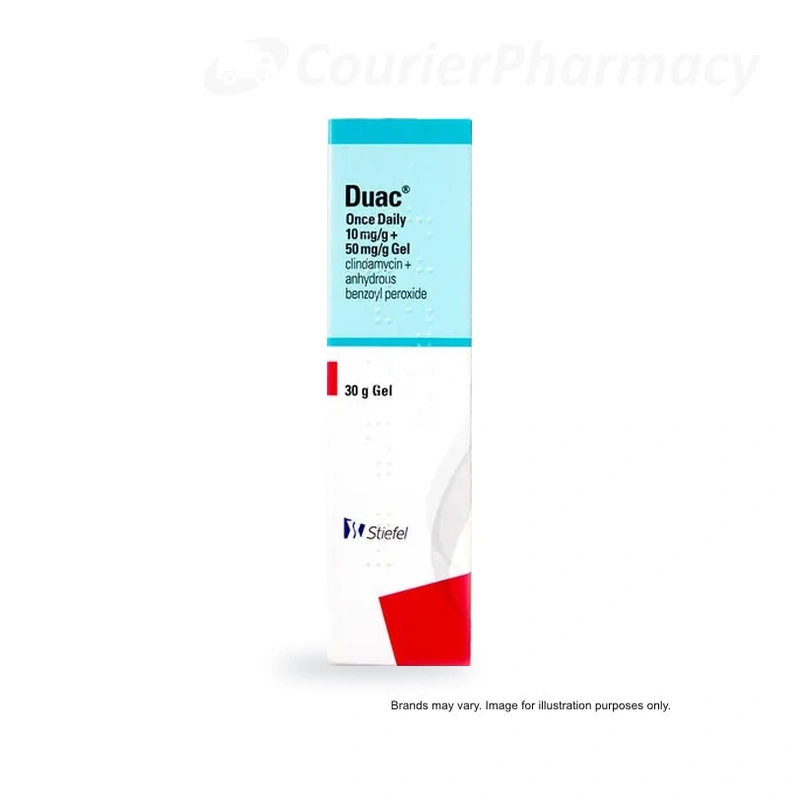
This is a topical gel containing two active ingredients. Firstly, clindamycin at 1% is a lincosamide antibiotic. Additionally, benzoyl peroxide at 5% is an antimicrobial and keratolytic agent. Meanwhile, this is the standard-strength version of Duac Once Daily Gel (a gentler 3% benzoyl peroxide version is also available). As a result, treatment tackles inflammatory acne through two different mechanisms at once at the strength most commonly prescribed. The Duac Once Daily Summary of Product Characteristics confirms the ingredients and indications.
Why the combination matters
Clindamycin alone can lose effectiveness as skin bacteria develop resistance. In particular, this is a well-recognised problem in acne treatment. Meanwhile, benzoyl peroxide reduces the emergence of resistant bacteria significantly. As a result, the combination protects the antibiotic component from resistance while also delivering the direct pore-clearing action of benzoyl peroxide. Furthermore, NICE NG198 acne guidance supports fixed-combination topicals as a first-line approach.
A 12-week course, not indefinite use
This gel is licensed for use for a maximum of 12 weeks at a time. In particular, this limit exists to reduce the risk of antibiotic resistance. Additionally, most patients see maximum benefit within 8 to 12 weeks. Meanwhile, if longer-term treatment is needed, your prescriber may switch to a non-antibiotic topical afterwards. As a result, this is a time-limited course, not something you stay on for years.
Key features and specifications
Active ingredients: clindamycin phosphate (equivalent to 1% clindamycin) and hydrous benzoyl peroxide (equivalent to 5% anhydrous BPO)
Form: white to slightly yellow homogeneous topical gel
Pack sizes: commonly 25g, 30g, 50g, or 60g tubes
Class: fixed-combination topical antibiotic and antimicrobial for acne
If spots, whiteheads, and inflamed pustules are getting in the way of your daily life, Duac Once Daily 5% Gel is a well-established prescription option. Firstly, it combines an antibiotic (clindamycin 1%) with benzoyl peroxide at 5%. Additionally, the two together work harder than either alone. Meanwhile, this is a licensed prescription treatment for mild to moderate acne, and the 5% strength delivers stronger antimicrobial and keratolytic action than the gentler 3% version. At Courier Pharmacy, we help you decide whether it fits your acne pattern and skin type.
What is Duac Once Daily 5% Gel: overview
A once-daily prescription gel for mild to moderate inflammatory acne.
Combines two well-established acne actives: clindamycin (antibiotic) and benzoyl peroxide (antimicrobial and keratolytic).
Licensed for adults and adolescents from 12 years.
Used as a first-line combination topical in NICE acne guidance.
Maximum course length is 12 weeks, to protect against antibiotic resistance.
Why the dual mechanism matters
Acne involves several things happening at once. Firstly, bacterial growth on the skin (mainly Cutibacterium acnes). Additionally, inflammation of the pilosebaceous unit. Meanwhile, blocked pores from dead skin cell build-up. As a result, tackling only one part of the picture (bacteria or pores) often gives incomplete results. Furthermore, a fixed combination targets more of the acne process at once.
How Duac 3% and 5% differ
Meanwhile, the branded Duac Once Daily Gel comes in two strengths: 3% and 5% benzoyl peroxide. In particular, both contain the same 1% clindamycin. Additionally, the 3% version is gentler and often better for sensitive skin. However, the 5% version delivers stronger antimicrobial and keratolytic action. As a result, your prescriber picks based on your acne severity and how well your skin tolerates benzoyl peroxide.
Where it fits in the NICE acne pathway
NICE NG198 (published in 2021) recommends fixed-combination topicals as first-line treatment for mild to moderate acne. In particular, fixed clindamycin plus benzoyl peroxide is one of the recommended options. Meanwhile, other first-line combinations include adapalene plus benzoyl peroxide or tretinoin plus clindamycin. As a result, the choice depends on your acne subtype, skin sensitivity, and what you’ve tried before.
Why 12 weeks is the ceiling
Antibiotic resistance is a real concern in acne care. Firstly, long-term topical clindamycin without benzoyl peroxide is a known driver of resistant skin bacteria. Additionally, even the combination should not be used continuously beyond 12 weeks per course. Meanwhile, if maintenance treatment is needed after the course ends, non-antibiotic topicals like adapalene, tretinoin, or benzoyl peroxide alone can take over.
Why choose Courier Pharmacy for your Duac Once Daily 5% Gel
Registered, independent, and patient-led
Courier Pharmacy is a UK-registered independent pharmacy. The General Pharmaceutical Council regulates us. Firstly, acne looks different for every patient. Additionally, your acne pattern, skin sensitivity, and previous treatments all matter. As a result, our prescribers ask about those things. Getting your acne treatment right is about the fit.
Dr Ada Jex-Cori, our brand pharmacist
Our brand pharmacist is Dr Ada Jex-Cori. She represents the spirit of what we do. Named for Ada Lovelace, Sophia Jex-Blake, and Gerty Cori, she stands for evidence-led, unafraid-of-questions medicine. Her message is straightforward. You’re not broken. The system is. We’re here to change that.
Care that keeps showing up
We don’t disappear after we’ve dispensed. Furthermore, if your skin flares during treatment, we’re here. Additionally, if you’re ready to switch to a maintenance topical after the 12-week course, we help plan that. For patients navigating hormonal acne alongside other health concerns, that continuity matters. Care that fits you means care that keeps showing up.
Free fortnightly drop-in clinics in Derby
Healthcare shouldn’t only happen when you’re paying for it. Every fortnight, we run free drop-in talks at Insomnia, Derby, from 10am to 12pm. Anyone can come. No appointment. No cost. No pressure. We cover skincare, acne, hair loss, hormones, and more.
Buy Duac Once Daily 5% Gel (Prescription Only) from Courier Pharmacy
Duac Once Daily 5% Gel is a Prescription Only Medicine. You can request it at courierpharmacy.co.uk. Firstly, complete an online consultation. Then, a UK-qualified prescriber reviews your answers. If approved, we dispense and deliver discreetly.
Complete a quick online consultation
A UK prescriber reviews your answers
If approved, a prescription is issued
We dispense and deliver discreetly to your door
If it isn’t suitable for you, we’ll explain why and suggest the next best option.
Summary
Contains clindamycin 1% and benzoyl peroxide 5% in a once-daily gel.
Licensed for mild to moderate acne in adults and children from 12 years.
A dual-action treatment: clindamycin kills acne bacteria while benzoyl peroxide unclogs pores and reduces bacterial resistance. The 5% strength delivers stronger action than the gentler 3% version.
Maximum treatment duration is 12 weeks to limit antibiotic resistance.
Duac Once Daily 5% Gel is a Prescription Only Medicine. A UK-qualified prescriber reviews every request at courierpharmacy.co.uk.
Active ingredients in Duac Once Daily 5% Gel
Clindamycin 1%
Clindamycin is a lincosamide antibiotic. In particular, it inhibits protein synthesis in Cutibacterium acnes, the main bacterial contributor to acne. Meanwhile, this reduces bacterial numbers on the skin and reduces the inflammatory response they drive. Additionally, systemic absorption from topical use is low, so side effects are usually local rather than body-wide. However, some patients still get gut side effects from tiny amounts absorbed.
Benzoyl peroxide 5%
Benzoyl peroxide is a potent oxidising agent. Firstly, it releases oxygen radicals that kill bacteria on the skin. Additionally, it has a keratolytic action, meaning it helps loosen and shed dead skin cells that clog pores. Meanwhile, it also reduces the emergence of clindamycin-resistant bacteria. As a result, benzoyl peroxide brings three overlapping benefits to the combination: antimicrobial, comedolytic, and resistance-protective.
Gel base and storage
The gel base includes carbomer, dimeticone, glycerol, and water. Meanwhile, this delivers the actives in a light, quick-drying formulation. Additionally, keep the tube refrigerated (between 2 and 8 degrees Celsius) before first use. Furthermore, after opening, store below 25 degrees Celsius and use within 2 months. As a result, cool storage protects benzoyl peroxide from degradation.
What is Duac Once Daily 5% Gel for?
Mild to moderate inflammatory acne
This gel is licensed for mild to moderate acne vulgaris. In particular, it targets comedones (whiteheads and blackheads), papules (red bumps), and pustules (pus-filled spots). Meanwhile, it works best for inflammatory acne rather than mainly non-inflammatory acne. As a result, if your acne is mostly blackheads without much redness, other options may suit better.
Where it fits versus other acne treatments
Meanwhile, several first-line topicals exist for acne. Firstly, benzoyl peroxide alone works well for milder inflammatory acne. Additionally, adapalene plus benzoyl peroxide (Epiduo) is a non-antibiotic combination. Furthermore, tretinoin plus clindamycin (Treclin) uses a retinoid rather than benzoyl peroxide. As a result, clindamycin plus benzoyl peroxide fits patients who want a licensed antibiotic-containing combination for inflammatory acne.
What it won't fix
Above all, this gel is for mild to moderate acne, not severe nodulocystic acne. In particular, deep cystic acne or acne with significant scarring needs different management. Additionally, hormonal acne patterns may need combined oral hormonal treatment (such as combined contraceptive pills or spironolactone). Meanwhile, if your acne is not responding, discuss the wider picture with your prescriber.
How does Duac Once Daily 5% Gel work?
Clindamycin kills the acne bacteria
Clindamycin binds to bacterial ribosomes. Firstly, this stops the bacteria from making proteins they need to survive and reproduce. Additionally, this reduces the population of Cutibacterium acnes on the skin. Meanwhile, fewer bacteria mean less inflammation around each hair follicle. As a result, existing inflamed spots settle faster and new ones develop less often.
Benzoyl peroxide's dual action
Benzoyl peroxide penetrates the skin and pilosebaceous unit. Firstly, it releases oxygen radicals that kill Cutibacterium acnes directly. Additionally, it has a comedolytic action, helping unblock pores. Meanwhile, it also has a mild peeling effect that clears dead skin cells. As a result, it clears both the bacterial and blocked-pore parts of the acne process.
Why the combination reduces resistance
Antibiotic resistance is a real risk when clindamycin is used alone long-term. In particular, resistant strains of Cutibacterium acnes can develop. Meanwhile, benzoyl peroxide kills bacteria through a completely different mechanism (oxidative damage) that bacteria can't easily develop resistance to. As a result, adding benzoyl peroxide keeps the clindamycin component working better for longer during the course.
How long until you see results
You may notice some improvement within 2 to 5 weeks. However, maximum benefit usually shows within 8 to 12 weeks. Meanwhile, response varies from person to person. Additionally, consistency matters more than any single application. As a result, sticking with the once-daily routine over the full course gives the best chance of visible improvement.
How to apply Duac Once Daily 5% Gel
Step-by-step technique
Firstly, gently wash the affected areas with a mild cleanser. Rinse with warm water and pat completely dry. Then, squeeze a small amount of gel onto your fingertip. Next, apply a thin layer to all areas of skin affected by acne (not just individual spots). After that, rub in gently until absorbed. Finally, wash your hands thoroughly to remove any residual product. The NHS provides an acne treatment guide for reference.
Skincare routine alongside
Meanwhile, use a gentle non-comedogenic moisturiser if your skin becomes dry. Additionally, use a broad-spectrum SPF 30 or higher during the day. Furthermore, avoid harsh cleansers, scrubs, and toners that could add to irritation. As a result, keep your routine minimal during the course to give the gel the best chance to work.
Bleaching precautions
Above all, benzoyl peroxide bleaches hair, coloured fabrics, and dyed materials. In particular, apply carefully to avoid contact with your hair and eyebrows. Additionally, use white or old pillowcases and towels during the treatment period. Meanwhile, wait until the gel has fully dried before putting on clothes. Furthermore, wash your hands immediately after applying to avoid transferring the gel to hair or fabrics later.
Treatment dosage Duac Once Daily 5% Gel
Adult and adolescent dose
For adults and children aged 12 and over, apply a thin layer once daily in the evening. In particular, apply to all areas of skin affected by acne, not just individual spots. Additionally, the skin should be gently washed and patted dry first. Meanwhile, use fingertips to spread the gel evenly. The BNF and Duac Once Daily Summary of Product Characteristics confirm these directions.
How long to use
Most patients notice some improvement within 2 to 5 weeks. However, maximum benefit usually shows within 8 to 12 weeks. Additionally, the licensed maximum duration is 12 weeks in one course. Meanwhile, this limit reflects the need to protect against antibiotic resistance. As a result, your prescriber will guide whether treatment continues, stops, or switches to a non-antibiotic option.
What to do if symptoms don't improve
If your acne hasn't improved after 12 weeks, don't just continue using the same gel. Firstly, contact your prescriber. Additionally, they may switch you to a different topical (such as adapalene with benzoyl peroxide, or a topical retinoid) or consider oral treatment. Meanwhile, persistent or worsening acne needs proper review rather than more antibiotic exposure.
Warnings and precautions for Duac Once Daily 5% Gel
Bleaching effect on hair and fabrics
Firstly, benzoyl peroxide bleaches hair and coloured or dyed fabrics permanently. In particular, this includes coloured towels, pillowcases, clothing, and carpets. Meanwhile, use white bedding and towels during treatment. Additionally, take care with eyebrow hair when applying to the forehead. As a result, plan around this before starting the course.
Sun sensitivity
Benzoyl peroxide makes your skin more sensitive to sunlight. Firstly, avoid sunbeds and prolonged sun exposure during the course. Additionally, use SPF 30 or higher daily. Meanwhile, wear protective clothing and a hat if you can't avoid strong sun. As a result, sun protection is a non-negotiable part of treatment.
Skin irritation
Most patients experience some redness, dryness, or peeling in the first few weeks. Additionally, this usually settles as your skin adapts. However, if irritation is severe, use less often or pause treatment briefly. Meanwhile, an oil-free non-comedogenic moisturiser helps. Above all, if irritation is severe or worsening, stop the gel and contact your prescriber.
Pregnancy and breastfeeding
There are limited data on the use of this gel in pregnancy. Meanwhile, the manufacturer advises using it during pregnancy only if clearly needed. Additionally, it should not be applied to the breast area during breastfeeding. Furthermore, discuss any pregnancy or breastfeeding during your consultation. As a result, alternative options may be more appropriate in these situations.
12-week limit and antibiotic resistance
Above all, do not use this gel for more than 12 weeks in one course. In particular, this limit exists to reduce antibiotic resistance. Additionally, if you've recently used other clindamycin or erythromycin-containing medicines, this gel may work less well. Meanwhile, tell your prescriber about any recent antibiotic use. As a result, they can plan the right treatment approach for your history.
Gut conditions and the diarrhoea signal
If you have a history of regional enteritis (Crohn's disease), ulcerative colitis, or antibiotic-associated colitis, mention this during consultation. Additionally, if you develop severe diarrhoea or stomach cramps during treatment, stop the gel and contact your doctor immediately. Meanwhile, this is very rare with topical clindamycin but has been reported. Above all, don't ignore new gut symptoms during the course.
Side effects of Duac Once Daily 5% Gel
Common side effects
The most common side effects affect up to 1 in 10 people. These include dry skin, peeling, redness, itching, and burning at the application site. Meanwhile, some patients notice a brief stinging sensation on application. Additionally, mild worsening of acne can occur in the first few weeks (a purging effect). As a result, most patients tolerate the gel with sensible skincare adjustments.
Uncommon side effects
Uncommon side effects (up to 1 in 100) include increased sensitivity to sunlight, headache, and skin pain. Furthermore, some patients develop a rash or hives. Additionally, contact dermatitis has been reported. Your prescriber may adjust or stop treatment if any of these persist.
Rare pseudomembranous colitis
Very rarely, clindamycin can cause a serious gut condition called pseudomembranous colitis. In particular, this presents as severe watery diarrhoea, blood or mucus in the stool, and stomach cramps. Meanwhile, this is much more common with oral or injected clindamycin but has been reported very rarely with topical use. Above all, stop the gel and seek urgent medical help if severe diarrhoea develops during or after treatment.
When to seek urgent help
Seek urgent help for signs of a severe allergic reaction (facial swelling, difficulty breathing, widespread rash). Similarly, seek help for severe or persistent diarrhoea. Additionally, contact your prescriber for severe skin irritation that doesn't settle. Meanwhile, any new worsening of your general health during treatment warrants review.
Yellow Card reporting
You can report any suspected side effects directly via the MHRA Yellow Card Scheme at https://yellowcard.mhra.gov.uk. Reporting side effects helps provide more information on the safety of this medicine.
Drug interactions with Duac Once Daily 5% Gel
Erythromycin and other clindamycin-containing products
Firstly, avoid using this gel alongside erythromycin-containing products. In particular, cross-resistance can develop between the two antibiotics. Additionally, if you've recently used other clindamycin-containing medicines (oral or topical), tell your prescriber. Meanwhile, this history affects how well the gel is likely to work.
Retinoids (tretinoin, isotretinoin, tazarotene)
Meanwhile, avoid using this gel at the same time of day as tretinoin, isotretinoin, or tazarotene. In particular, benzoyl peroxide can reduce the efficacy of these retinoids and increase skin irritation. However, they can still be used in the same overall routine if applied at different times of day (for example, one in the morning and one in the evening). Additionally, discuss timing with your prescriber if you're on multiple topical actives.
Sulfonamide-containing products
Additionally, benzoyl peroxide combined with topical sulfonamide-containing products can cause temporary yellow or orange discolouration of skin and facial hair. In particular, this is a cosmetic effect rather than a safety concern but can be startling. As a result, avoid combining unless your prescriber specifically advises it.
Neuromuscular blockers
Clindamycin has neuromuscular blocking properties. Meanwhile, this is mostly relevant to systemic clindamycin, but caution applies if you're due surgery involving neuromuscular blockers. Additionally, tell your anaesthetist you're using topical clindamycin before any planned procedure.
Frequently asked questions about Duac Once Daily 5% Gel
How quickly does the gel work?
Some improvement can appear within 2 to 5 weeks. However, maximum benefit usually shows within 8 to 12 weeks. Meanwhile, consistency matters more than the specific week you notice change. Additionally, treatment should not exceed 12 weeks in one course.
Is this the same as branded Duac?
Generic clindamycin and benzoyl peroxide 5% gel contains the same active ingredients at the same strengths as branded Duac Once Daily Gel. Meanwhile, the excipients and gel base may vary slightly between manufacturers. Additionally, both are licensed to the same clinical standard.
What's the difference between 3% and 5%?
Both strengths contain the same 1% clindamycin. However, they differ in benzoyl peroxide. Firstly, 3% is gentler and often better for sensitive skin. Additionally, 5% delivers stronger antimicrobial and keratolytic action. As a result, your prescriber picks based on your skin tolerance and acne severity.
Why only 12 weeks?
Antibiotic resistance is a real concern with topical clindamycin. In particular, using it longer than 12 weeks increases resistance risk without adding much extra benefit. Meanwhile, if maintenance treatment is needed after the course, non-antibiotic topicals can take over. As a result, the 12-week limit is a safety measure, not an arbitrary rule.
Will it bleach my hair or clothes?
Yes. Benzoyl peroxide bleaches hair, coloured fabrics, and dyed materials. In particular, this includes towels, pillowcases, clothing, and even carpets. Meanwhile, use white bedding and towels during treatment. Additionally, take care around your eyebrows and hairline when applying.
Do I need SPF while using this gel?
Yes. Benzoyl peroxide increases sun sensitivity. Firstly, use SPF 30 or higher daily. Additionally, avoid sunbeds and prolonged sun exposure. Meanwhile, wear protective clothing and hats if you can't avoid strong sun. As a result, daily sunscreen is essential during the course.
Can I use moisturiser with this gel?
Yes. In fact, a gentle non-comedogenic moisturiser often helps manage the dryness and peeling that occur early in treatment. Meanwhile, apply moisturiser after the gel has absorbed. Additionally, choose oil-free formulations to avoid clogging pores. As a result, moisturiser supports rather than works against treatment.
Can I use it with tretinoin or adapalene?
Not at the same time of day. Firstly, benzoyl peroxide can reduce the efficacy of retinoids and increase irritation. However, you can still use both in the same routine if applied at different times (for example, this gel in the morning, tretinoin at night). Additionally, discuss timing with your prescriber if you're on multiple topicals.
Should I stop if my skin gets irritated?
Some redness, dryness, or peeling in the first few weeks is normal. Firstly, try using the gel less often (every other night) until your skin adapts. Additionally, use an oil-free moisturiser. Meanwhile, if irritation is severe or worsening, stop and contact your prescriber. As a result, don't push through significant irritation.
Can I use it while pregnant?
Only if clearly needed. Firstly, there are limited data on use in pregnancy. Additionally, safer alternatives (such as azelaic acid) may be more appropriate. Meanwhile, discuss any pregnancy or planning during consultation. Above all, this is a decision to make with your prescriber and midwife.
Can I use it while breastfeeding?
Cautiously. Meanwhile, do not apply the gel to the breast area during breastfeeding. Additionally, discuss with your prescriber before starting. As a result, some patients wait until breastfeeding ends before starting this treatment, or use gentler alternatives during breastfeeding.
Can children use it?
Yes, from age 12 upward. In particular, this gel is licensed for adolescents 12 years and over. Meanwhile, it is not recommended for children under 12. Additionally, adolescents need careful skincare guidance to manage the dryness and sun sensitivity that treatment can cause.
Why does the gel need to be refrigerated?
Benzoyl peroxide is chemically unstable and degrades faster at higher temperatures. In particular, keep the tube in the fridge (between 2 and 8 degrees Celsius) before first use. Additionally, after opening, store below 25 degrees Celsius and use within 2 months. As a result, correct storage keeps the active potent.
Will it help with acne scars?
This gel treats active acne rather than existing scars. Meanwhile, by reducing new spots, it can help prevent further scarring. Additionally, dedicated scar treatments (such as tretinoin, azelaic acid, or professional procedures) may help fade existing scars. As a result, discuss any scarring concerns with your prescriber.
Can I wear makeup over the gel?
Yes, once the gel has fully dried. Firstly, allow 15 to 20 minutes after applying before adding makeup. Additionally, use non-comedogenic (oil-free) makeup products. Meanwhile, remember that benzoyl peroxide can bleach some makeup brushes and pillowcases if it hasn't fully dried.
What if I forget to apply?
Apply as soon as you remember, unless it's nearly time for the next evening. Meanwhile, don't apply twice to catch up. Additionally, consistency over the full 12-week course matters more than any single missed application. As a result, resume normal application without doubling up.
How should I store the gel?
Keep the tube refrigerated (2 to 8 degrees Celsius) before opening. Additionally, after opening, store below 25 degrees Celsius and use within 2 months. Meanwhile, keep it out of the reach of children. Furthermore, don't use it past the expiry date on the tube.
Can it be used on the back or chest?
Yes. Although the face is the most common area, this gel can be applied to acne on the back, chest, or shoulders. Meanwhile, larger areas need more product per application. Additionally, take extra care with bleaching precautions for clothing and bedding when treating body areas.
What if it doesn't work after 12 weeks?
Contact your prescriber. In particular, if 12 weeks hasn't given adequate improvement, continuing the same treatment risks antibiotic resistance without added benefit. Meanwhile, your prescriber may switch you to adapalene plus benzoyl peroxide, tretinoin, or consider oral options. As a result, this is a signal for review, not a reason to continue.
Will I need a prescription from Courier Pharmacy?
Yes. Duac Once Daily 5% Gel is a Prescription Only Medicine. A UK-qualified prescriber must review your suitability. You can complete the consultation at courierpharmacy.co.uk.
Disclaimer
Disclaimer: This information is for education only and isn't a substitute for personal medical advice. Always follow your prescriber's instructions.
National Institute for Health and Care Excellence (2021) Acne vulgaris: management. NICE guideline NG198. Available at: https://www.nice.org.uk/guidance/ng198