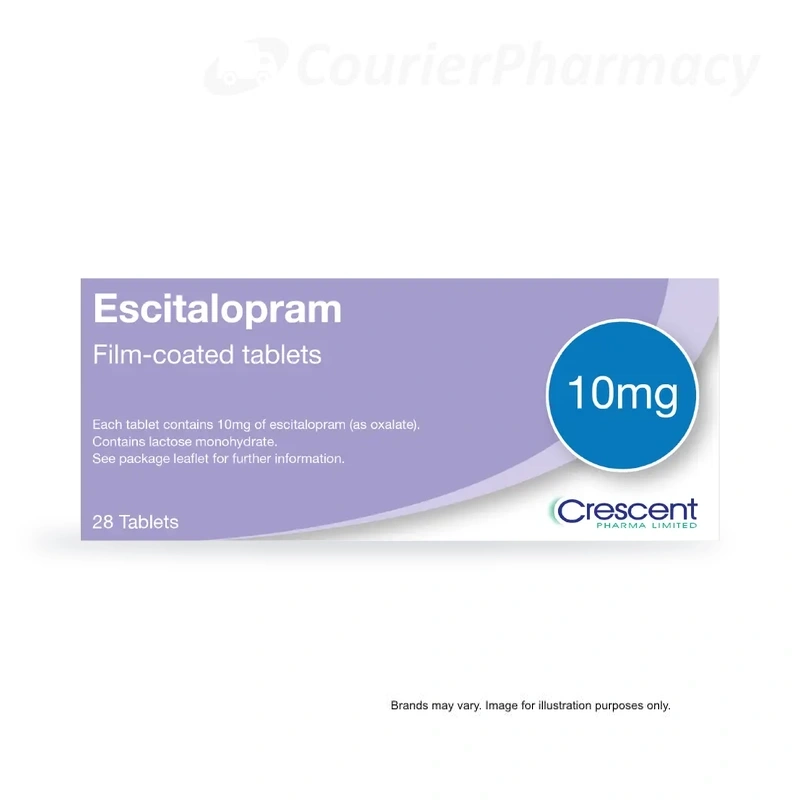
Product description Escitalopram 10mg for depression
What Escitalopram 10mg is
Escitalopram 10mg is a film-coated tablet containing 10 milligrams of escitalopram (as escitalopram oxalate). Firstly, escitalopram belongs to a family of medicines called selective serotonin reuptake inhibitors (SSRIs). Additionally, it works on the brain’s serotonin system to help regulate mood.
Meanwhile, escitalopram is the S-enantiomer of citalopram, and is roughly twice as potent per milligram (so 10mg escitalopram gives a similar clinical effect to 20mg citalopram). Furthermore, generic escitalopram is manufactured by several UK-approved companies including Dr. Reddy’s Laboratories, Aurobindo Pharma (Milpharm), and others. The branded version is Cipralex, made by Lundbeck. As a result, the same active ingredient is available under different names but at the same clinical standard.
How SSRIs work
Depression involves changes in several brain chemicals, including serotonin. In particular, serotonin is a chemical messenger that helps regulate mood, sleep, appetite, and thinking. Meanwhile, SSRIs like escitalopram increase serotonin activity in the brain by blocking its reabsorption into nerve cells.
Additionally, this gives serotonin more time to send its signals between nerve cells. As a result, over several weeks, brain circuits involved in mood regulation gradually adjust. Notably, this is why escitalopram takes time to work rather than acting instantly like a painkiller.
A treatment that needs regular review
Escitalopram is not a self-service medicine. Firstly, starting an antidepressant is a clinical decision that needs proper assessment. Additionally, ongoing review matters throughout treatment, especially in the first few weeks and if the dose changes.
Meanwhile, patients under 25 need closer monitoring, particularly early in treatment. Furthermore, stopping escitalopram needs to be planned with tapering to avoid discontinuation effects. As a result, at Courier Pharmacy, escitalopram is always dispensed through a full prescriber-led consultation with clear plans for review.
Key features and specifications
Active ingredient: escitalopram 10 mg (as escitalopram oxalate)
Form: film-coated tablet, usually white to off-white, round or oval
Pack sizes: commonly 28 tablets (one month) or 30 tablets
Escitalopram is one of the most commonly prescribed antidepressants in the UK. Firstly, it belongs to a family of medicines called selective serotonin reuptake inhibitors (SSRIs). Additionally, it’s licensed for major depressive episodes, panic disorder with or without agoraphobia, social anxiety disorder, generalised anxiety disorder, and obsessive-compulsive disorder. Meanwhile, 10mg is the standard adult starting dose for depression and most anxiety indications, and is also the maximum daily dose for adults over 65 or those with liver problems, reflecting the MHRA warning about dose-dependent QT interval prolongation. At Courier Pharmacy, escitalopram is prescribed through a full clinical consultation with a UK-qualified prescriber, with ongoing review throughout treatment.
If you need urgent help now
If you’re in immediate danger, or you feel you might harm yourself or someone else, please seek help right now. Meanwhile, the information below is for general education about escitalopram. It isn’t a substitute for talking to someone.
Samaritans: call 116 123 (free, 24 hours a day, 365 days a year)
SHOUT: text SHOUT to 85258 for free crisis text support in the UK
NHS 111: call 111 and choose the mental health option
For immediate danger to life: call 999 or go to your nearest A&E
Five key takeaways
Escitalopram 10mg is a once-daily SSRI tablet, the standard adult starting dose for depression.
Licensed for major depression, panic disorder, social anxiety disorder, generalised anxiety disorder, and OCD.
20mg is also the maximum daily dose for adults over 65 or those with liver problems.
MHRA has warned that escitalopram can cause dose-dependent QT interval prolongation, so pre-treatment cardiac screening and dose ceilings apply.
Escitalopram 10mg is a Prescription Only Medicine. A UK-qualified prescriber reviews every request at courierpharmacy.co.uk.
What is Escitalopram 10mg: overview
Where escitalopram fits in the NICE depression pathway
NICE NG222 (published in 2022) covers depression in adults. In particular, it recommends a range of first-line options for less severe depression including guided self-help, group CBT, individual CBT, or an SSRI. Additionally, for more severe depression, combined therapy (antidepressant plus talking therapy) is recommended. Meanwhile, escitalopram is one of the SSRIs specifically named by NICE for depression treatment. As a result, escitalopram’s clinical position in UK practice is well-established rather than experimental.
Escitalopram vs other SSRIs
Meanwhile, several SSRIs exist and share the same broad mechanism. In particular, they differ in half-life, side-effect profile, drug interactions, and evidence in specific populations. Additionally, escitalopram is the S-enantiomer of citalopram, and roughly twice as potent per milligram; so 10mg escitalopram gives a similar clinical effect to 20mg citalopram. Furthermore, escitalopram has broader licensed indications than citalopram, covering depression, panic disorder, social anxiety, generalised anxiety, and OCD (whereas citalopram is only licensed for depression and panic disorder in the UK). However, escitalopram shares citalopram’s dose-dependent QT interval prolongation warning, which means pre-treatment cardiac screening matters and dose ceilings apply. Meanwhile, sertraline is another commonly-chosen SSRI that does not carry the QT warning and may be preferred where cardiac risk factors exist. As a result, your prescriber picks based on your medical history, cardiac status, other medicines you take, and previous experience with antidepressants.
A course of weeks or months, not a quick fix
Antidepressant treatment for depression is typically continued for at least 6 to 9 months after symptoms improve. Firstly, this reduces the risk of relapse. Additionally, some patients need longer-term treatment, especially those who have had multiple episodes of depression. Meanwhile, the decision on how long to continue is made with your prescriber based on your circumstances. Above all, escitalopram is not a short course like a two-week antibiotic; it’s a longer-term commitment to feeling better.
Talking therapy alongside medication
NICE recommends that antidepressants work best alongside talking therapy for most people with depression. In particular, cognitive behavioural therapy (CBT), interpersonal therapy, or behavioural activation are commonly offered. Meanwhile, these can be accessed via NHS Talking Therapies (self-referral in England) or through private providers. Additionally, some patients find lifestyle changes (exercise, sleep hygiene, social connection) important alongside treatment. As a result, escitalopram is one part of a wider approach rather than the only thing that helps.
Why choose Courier Pharmacy for your Escitalopram 10mg
Registered, independent, and patient-led
Courier Pharmacy is a UK-registered independent pharmacy. The General Pharmaceutical Council regulates us. Firstly, depression looks different for every patient. Additionally, your symptom pattern, other health conditions, other medicines, and previous treatment history all matter. As a result, our prescribers ask about those things properly rather than treating antidepressant prescribing as a tick-box exercise. Getting your mental health treatment right is about the fit and the follow-up.
Dr Ada Jex-Cori, our brand pharmacist
Our brand pharmacist is Dr Ada Jex-Cori. She represents the spirit of what we do. Named for Ada Lovelace, Sophia Jex-Blake, and Gerty Cori, she stands for evidence-led, unafraid-of-questions medicine. Her message is straightforward. You’re not broken. The system is. We’re here to change that.
Care that keeps showing up
Antidepressant treatment isn’t a one-off transaction. Furthermore, we build in ongoing review from the start. Additionally, if side effects appear in the first few weeks, we’re here to help you decide whether they’re likely to settle or whether the treatment needs adjusting. Meanwhile, when the time comes to reduce the dose or stop, we help plan the tapering safely. For patients navigating depression alongside other health concerns, hormonal changes, or a difficult life stage, that continuity matters.
Free fortnightly drop-in clinics in Derby
Healthcare shouldn’t only happen when you’re paying for it. Every fortnight, we run free drop-in talks at Insomnia, Derby, from 10 am to 12 pm. Anyone can come. No appointment. No cost. No pressure. We cover mental health, hormones, skincare, hair loss, and more.
Buy Escitalopram 10mg (Prescription Only) from Courier Pharmacy
Escitalopram 10mg is a Prescription Only Medicine. You can request it at courierpharmacy.co.uk. Firstly, complete a full online consultation. Then, a UK-qualified prescriber reviews your answers carefully. If escitalopram is appropriate for you, we dispense and deliver discreetly with a clear follow-up plan.
Complete a full online consultation covering symptoms, history, and other medicines
A UK prescriber reviews your consultation and may follow up with questions
If approved, a prescription is issued and dispensed
We deliver discreetly and set up your review schedule
If escitalopram isn’t the right treatment for you, we’ll explain why and suggest better routes. Sometimes GP referral, talking therapy, or a different medicine is the right next step. Above all, we won’t dispense escitalopram just because it was requested.
Summary
A once-daily SSRI antidepressant licensed for major depression, panic disorder, social anxiety disorder, generalised anxiety disorder, and OCD.
10mg is the standard adult starting dose for escitalopram in patients under 65 with normal liver function.
Sits within the SSRI class alongside sertraline, citalopram, fluoxetine, and paroxetine.
Recommended by NICE as a first-line antidepressant option in NG222 (depression in adults) alongside talking therapy.
Carries an MHRA-issued warning about dose-dependent QT interval prolongation, which sets clear dose ceilings and screening requirements.
Active ingredient in Escitalopram 10mg
Escitalopram oxalate
The active ingredient is escitalopram, provided as escitalopram oxalate. In particular, each tablet delivers 10 milligrams of escitalopram. Meanwhile, escitalopram is the S-enantiomer of citalopram and the therapeutically active form of the molecule. Additionally, escitalopram has an elimination half-life of about 27 to 32 hours, which supports once-daily dosing. Furthermore, it's converted in the liver mainly by CYP2C19, with contributions from CYP3A4 and CYP2D6, to less active metabolites. As a result, the parent drug is responsible for the clinical effect.
Tablet composition
Meanwhile, the tablet includes standard excipients such as microcrystalline cellulose, calcium hydrogen phosphate, and magnesium stearate. Additionally, the film coating typically uses hypromellose, titanium dioxide, and other standard coating agents. Furthermore, each tablet contains less than 1 mmol of sodium, so is essentially sodium-free. As a result, sodium restriction generally isn't a barrier to escitalopram treatment.
What is Escitalopram 10mg for?
Depression (major depressive episodes)
Escitalopram is licensed for the treatment of major depressive episodes and for prevention of recurrence of depression. In particular, this covers moderate to severe depression that meets diagnostic criteria. Meanwhile, mild depression is often managed initially with self-help, exercise, and talking therapy rather than medication. Additionally, decisions about starting an antidepressant are based on the severity, duration, and impact of symptoms alongside patient preference.
Other licensed uses
Beyond depression, escitalopram is licensed for four other conditions in the UK. Firstly, panic disorder with or without agoraphobia. Additionally, social anxiety disorder (social phobia). Meanwhile, generalised anxiety disorder (GAD). Furthermore, obsessive-compulsive disorder (OCD). As a result, escitalopram has one of the widest licensed indication ranges among SSRIs, and is frequently chosen where depression and an anxiety disorder co-exist. However, escitalopram is not licensed for use in children or adolescents under 18 in the UK, and post-traumatic stress disorder (PTSD) is not among its licensed indications.
What escitalopram won't fix
Above all, escitalopram is a medicine for specific mental health conditions, not a general mood enhancer. In particular, it isn't licensed for grief, life dissatisfaction, low self-esteem, or ordinary stress. Additionally, it won't fix underlying life circumstances that are contributing to low mood. Meanwhile, it works best when combined with talking therapy and lifestyle support. Furthermore, some patients don't respond to escitalopram and need a different antidepressant or approach. As a result, escitalopram is one tool among several, not a universal solution.
How does Escitalopram 10mg work?
Selective serotonin reuptake inhibition
Nerve cells communicate using chemical messengers called neurotransmitters. Firstly, serotonin is one of these, and it plays a role in mood, sleep, appetite, and other functions. Additionally, after nerve cells release serotonin, they normally reabsorb it via a transporter protein. Meanwhile, escitalopram blocks this reabsorption selectively, meaning serotonin stays in the space between nerve cells for longer. Furthermore, this increased signalling gradually influences the brain circuits involved in mood regulation. As a result, mood, sleep, and other functions can gradually improve over weeks.
Why it takes weeks to work
Increased serotonin signalling happens quickly after starting escitalopram. However, the clinical benefit builds slowly. In particular, this is because the effect depends on gradual changes in brain circuitry, receptor sensitivity, and downstream gene expression. Meanwhile, these adaptations take weeks to develop. Additionally, this is why escitalopram is not a quick-acting medicine and why consistent daily dosing over several weeks matters. Above all, don't judge whether escitalopram is working in the first two weeks.
How to take Escitalopram 10mg
When and how
Take one 10mg tablet once daily. In particular, take it at roughly the same time each day. Additionally, either morning or evening is fine; consistency matters more than the specific time. Meanwhile, if escitalopram makes you feel sleepy, evening dosing may suit you. Furthermore, if it causes insomnia, morning dosing usually helps. As a result, work with your prescriber to find the timing that suits your response.
With or without food
Escitalopram can be taken with or without food. Additionally, food may reduce mild gastrointestinal side effects like nausea in the first few weeks. Meanwhile, swallow the tablet whole with water. Furthermore, if you find swallowing difficult, escitalopram is also available as an oral suspension (liquid) via specialist prescription.
Alcohol
Alcohol is not recommended during escitalopram treatment. In particular, alcohol can worsen depression symptoms directly and undermine treatment. Additionally, it can increase sedation and reduce the clarity of thought needed for early recovery. Meanwhile, occasional light drinking is unlikely to be dangerous but is generally advised against. As a result, discuss alcohol use with your prescriber during consultation.
Treatment dosage Escitalopram 10mg for depression
Adult dose for depression at 10mg
For adults with depression, the standard licensed starting dose is 10 milligrams once daily. In particular, this is usually the target dose for the first few weeks in adults under 65 with normal liver function. Meanwhile, your prescriber will assess your response after that and may adjust the dose if needed. Additionally, the maximum licensed daily dose is 20mg for adults under 65, so 10mg leaves headroom for dose escalation if response is inadequate. However, for adults over 65 or those with hepatic impairment, 10mg is both the recommended starting dose and the maximum daily dose, reflecting the MHRA's dose-dependent QT interval warning. Furthermore, for panic disorder the starting dose is 5mg daily for the first week to reduce initial worsening of symptoms, before increasing to 10mg. Above all, dose changes should be made by your prescriber. The BNF and Escitalopram 10mg Summary of Product Characteristics confirm these directions.
How long until it works
Escitalopram is not a quick-acting medicine. Firstly, some improvement in mood, sleep, or appetite may appear within 1 to 2 weeks. Additionally, most patients notice more meaningful benefit at 2 to 4 weeks. Meanwhile, full effect usually takes 6 to 8 weeks. Above all, don't stop taking escitalopram in the first few weeks just because you don't feel different. As a result, patience and consistent daily dosing over the first six weeks give the medicine the best chance of working.
Stopping escitalopram (tapering)
Above all, don't stop escitalopram suddenly. In particular, stopping abruptly can cause discontinuation symptoms including flu-like feelings, sensory disturbances (electric-shock or 'zapping' sensations), dizziness, sleep problems, and mood changes. Additionally, these symptoms are usually brief but can be very unpleasant. Meanwhile, your prescriber will guide you through a gradual dose reduction over weeks or months when the time comes to stop. Furthermore, this planned tapering approach reduces the risk of discontinuation effects significantly.
Missed doses
If you forget a dose, take it as soon as you remember unless it's nearly time for the next dose. Meanwhile, don't take two doses to catch up. Additionally, occasional missed doses aren't dangerous but consistent daily use gives the best benefit. As a result, if you're frequently missing doses, talk to your prescriber about strategies to make the routine easier.
Warnings and precautions for Escitalopram 10mg
QT interval prolongation (MHRA warning)
Escitalopram causes a dose-dependent prolongation of the QT interval on the electrocardiogram. In particular, the MHRA issued specific safety warnings about this in 2011 and 2014, covering both escitalopram and its parent molecule citalopram. Meanwhile, QT prolongation can rarely lead to a serious heart rhythm disturbance called torsades de pointes. As a result, escitalopram is contraindicated in patients with known QT interval prolongation, congenital long QT syndrome, or when taking other medicines known to prolong the QT interval. Additionally, caution applies in patients with significant bradycardia, recent heart attack, uncompensated heart failure, or electrolyte disturbances such as low potassium or low magnesium. Furthermore, dose ceilings apply: 20mg daily maximum in adults under 65, and 10mg daily maximum in adults over 65 or those with liver impairment. Above all, disclose your full cardiac history and current medication list during consultation so this can be properly assessed.
Suicidal thoughts and behaviours, especially under 25
Antidepressants can occasionally increase suicidal thoughts or self-harming behaviour, particularly in patients under 25. In particular, this risk is highest in the first few weeks of treatment and after dose changes. Additionally, family, friends, and prescribers should watch for signs of worsening mood, agitation, or new suicidal thinking. Meanwhile, if you or someone close to you notices concerning changes, contact your prescriber urgently. Furthermore, if you're in immediate danger, contact the crisis services listed at the start and end of this page. Above all, the risk of untreated depression itself remains higher than the risk from treatment for most patients.
Bipolar disorder screening
Escitalopram can occasionally trigger manic or hypomanic episodes in patients with underlying bipolar disorder. In particular, this is why it's important to disclose any history of mania, hypomania, or mood episodes that felt unusually 'high' during consultation. Meanwhile, bipolar depression is often better treated with different approaches. Additionally, family history of bipolar disorder is also relevant. As a result, careful history-taking is part of prescriber-led escitalopram treatment.
Serotonin syndrome
Serotonin syndrome is a rare but potentially serious reaction when serotonin activity becomes excessive. In particular, symptoms include high fever, sweating, muscle rigidity, tremor, agitation, confusion, rapid heart rate, and unstable blood pressure. Meanwhile, the risk is much higher when escitalopram is combined with other serotonergic drugs (see Drug interactions). Additionally, if you develop these symptoms, seek urgent medical help immediately. As a result, always tell prescribers you're taking escitalopram before starting any new medicine.
Bleeding risk
SSRIs including escitalopram can increase the risk of bleeding, particularly in the gut. Firstly, this risk is higher when combined with non-steroidal anti-inflammatory drugs (NSAIDs) like ibuprofen, aspirin, or anticoagulants (warfarin, DOACs). Additionally, it may present as unusual bruising, nosebleeds, or gastrointestinal bleeding. Meanwhile, patients on these combinations may benefit from a proton pump inhibitor for stomach protection. As a result, tell your prescriber about all other medicines you take.
Hyponatraemia (low sodium)
SSRIs can occasionally cause low blood sodium (hyponatraemia), especially in older adults. In particular, symptoms include headache, difficulty concentrating, confusion, weakness, and in severe cases seizures. Meanwhile, this is more common in patients over 65 or those on diuretics. Additionally, if you develop these symptoms, seek medical assessment promptly. As a result, older adults may need periodic sodium checks during treatment.
Pregnancy and breastfeeding
Decisions about escitalopram in pregnancy are individual and need specialist input. In particular, untreated depression in pregnancy carries risks for both parent and baby. Meanwhile, escitalopram is one of the more commonly used SSRIs in pregnancy where treatment is judged necessary. Additionally, use in late pregnancy has been associated with a small increased risk of persistent pulmonary hypertension of the newborn. Furthermore, escitalopram passes into breast milk in small amounts but is generally considered compatible with breastfeeding. As a result, discuss pregnancy, planning pregnancy, or breastfeeding with your prescriber.
Discontinuation syndrome
Do not stop escitalopram suddenly. Firstly, sudden stopping can cause a discontinuation syndrome with flu-like symptoms, dizziness, sensory disturbances ('brain zaps'), sleep problems, and mood changes. Additionally, these symptoms are usually brief but can be very unpleasant. Meanwhile, planned gradual tapering under prescriber guidance reduces this risk significantly. Above all, if you want to stop escitalopram, plan this with your prescriber over weeks or months rather than stopping suddenly.
Side effects of Escitalopram 10mg
Common start-up effects (first 2 to 4 weeks)
The most common early side effects include nausea, diarrhoea, headache, insomnia or drowsiness, dry mouth, and mild anxiety or restlessness. In particular, these often settle within the first 2 to 4 weeks as your body adapts. Meanwhile, they're usually mild and manageable. Additionally, taking escitalopram with food can reduce nausea. As a result, don't stop treatment in the first few weeks based on these effects alone; contact your prescriber to discuss whether to continue, adjust timing, or change dose.
Sexual side effects
SSRIs including escitalopram can cause sexual side effects. In particular, this includes reduced libido, delayed or absent orgasm, and (in men) delayed ejaculation. Meanwhile, these effects are common and often persist while on treatment. Additionally, they usually resolve after stopping escitalopram, though rare cases of persistent effects have been reported. Furthermore, if sexual side effects are troublesome, discuss with your prescriber; sometimes dose adjustment, timing changes, or switching medicines can help. As a result, this is a topic worth raising openly during review.
Weight changes
Escitalopram can cause weight changes in either direction. In particular, some patients lose weight early in treatment (often related to nausea or reduced appetite). Meanwhile, others gain weight over months of treatment. Additionally, the effect varies substantially between individuals. Furthermore, if weight changes are troublesome, discuss with your prescriber. As a result, weight isn't usually a reason to avoid escitalopram but is worth monitoring.
Serious side effects requiring urgent help
Seek urgent help for signs of serotonin syndrome (high fever, muscle rigidity, agitation, confusion). Similarly, seek help for suicidal thoughts or new self-harming urges, especially in the first few weeks. Additionally, seek help for signs of severe allergic reaction (facial swelling, difficulty breathing, widespread rash). Meanwhile, unusual bleeding or bruising warrants prescriber contact. Furthermore, symptoms of low sodium (severe headache, confusion, weakness) need medical assessment. Above all, if you're in immediate danger, contact the crisis services listed at the top and bottom of this page.
Yellow Card reporting
Report any suspected side effects to the MHRA Yellow Card scheme at yellowcard.mhra.gov.uk or via the Yellow Card app.
Drug interactions with Escitalopram 10mg
Other QT-prolonging medicines
Above all, escitalopram is contraindicated with other medicines known to prolong the QT interval. In particular, this includes certain antiarrhythmics (amiodarone, sotalol), some antipsychotics (pimozide, haloperidol at high doses), some antibiotics (moxifloxacin, erythromycin, clarithromycin), some antifungals (fluconazole, ketoconazole), some antimalarials (mefloquine), and methadone. Additionally, always disclose your full medication list including over-the-counter medicines during consultation. Meanwhile, if a new QT-prolonging medicine needs to be started while you're on escitalopram, this needs planned prescriber input. As a result, don't assume any new medicine is safe with escitalopram without checking.
Monoamine oxidase inhibitors (MAOIs)
Above all, do not combine escitalopram with MAOIs (such as phenelzine, isocarboxazid, tranylcypromine) or the reversible MAOI moclobemide. In particular, this combination can cause life-threatening serotonin syndrome. Additionally, at least 14 days should pass between stopping an MAOI and starting escitalopram. Meanwhile, at least 14 days should pass between stopping escitalopram and starting an MAOI. Furthermore, linezolid (an antibiotic) and methylene blue have MAOI-like properties and the same interaction concern applies.
Other serotonergic drugs
Meanwhile, several other medicines increase serotonin activity and can raise the risk of serotonin syndrome when combined with escitalopram. In particular, this includes other SSRIs, SNRIs (venlafaxine, duloxetine), tricyclic antidepressants, tramadol, pethidine, triptans (migraine treatments), St John's wort, and recreational drugs like MDMA. Additionally, disclose all medicines including herbal remedies and any illicit drug use during consultation. As a result, safe prescribing depends on knowing what else you take.
NSAIDs and blood thinners
Additionally, escitalopram can increase the risk of bleeding when combined with NSAIDs (ibuprofen, naproxen, aspirin), anticoagulants (warfarin, DOACs like apixaban), and antiplatelet drugs (clopidogrel). Meanwhile, if these combinations are needed, your prescriber may add a proton pump inhibitor for stomach protection. Furthermore, disclose any regular painkiller or blood thinner use during consultation.
Alcohol and recreational drugs
Alcohol is not recommended during escitalopram treatment. In particular, it can worsen depression and increase sedation. Additionally, recreational drugs (particularly MDMA, cocaine, amphetamines) can interact with escitalopram and increase the risk of serotonin syndrome or worsen mental health symptoms. Meanwhile, disclosing recreational drug use during consultation is important for safe treatment. Furthermore, this information is treated confidentially and shapes safe prescribing rather than affecting judgement.
Frequently asked questions about Escitalopram 10mg for depression
How quickly does escitalopram work?
Some early benefit (sleep, appetite, mild mood lift) may appear within 1 to 2 weeks. However, most patients notice meaningful improvement at 2 to 4 weeks, and full effect usually takes 6 to 8 weeks. Meanwhile, don't judge whether escitalopram is working in the first 2 weeks.
Will escitalopram change my personality?
Escitalopram doesn't change core personality. In particular, it helps regulate the mood chemistry that depression disrupts. Meanwhile, many patients describe feeling more like themselves rather than different. Additionally, if you feel emotionally 'flattened' or numbed on escitalopram, discuss this with your prescriber; sometimes dose or medicine changes can help.
Is escitalopram addictive?
Escitalopram is not addictive in the way that terms like 'addictive' are usually understood. In particular, it doesn't cause craving, tolerance, or drug-seeking behaviour. However, stopping suddenly can cause discontinuation symptoms because your brain has adapted to its presence. Meanwhile, this is why gradual tapering under prescriber guidance is important when the time comes to stop.
How long will I need to take it?
For a first episode of depression, treatment usually continues for at least 6 to 9 months after symptoms improve. In particular, this reduces the risk of relapse. Meanwhile, for recurrent depression, longer-term treatment may be recommended. Additionally, decisions about duration are made with your prescriber based on your circumstances and treatment history.
Can I take escitalopram while pregnant?
This is an individual decision that needs specialist input. In particular, untreated depression in pregnancy also carries risks. Meanwhile, escitalopram is one of the more commonly used SSRIs in pregnancy where treatment is judged necessary. Additionally, discuss pregnancy or planning pregnancy with your prescriber to weigh the individual risks and benefits.
Can I take escitalopram while breastfeeding?
Small amounts of escitalopram pass into breast milk but it's generally considered compatible with breastfeeding. In particular, escitalopram is often one of the preferred SSRIs during breastfeeding when antidepressant treatment is needed. Meanwhile, discuss with your prescriber to ensure the choice fits your individual situation.
Can I drink alcohol on escitalopram?
Alcohol is not recommended during escitalopram treatment. In particular, it can worsen depression, undermine treatment, and increase sedation. Meanwhile, occasional light drinking is unlikely to be dangerous but is generally advised against. Additionally, if alcohol use is difficult to reduce, discuss with your prescriber.
What if escitalopram doesn't work for me?
Not everyone responds to escitalopram, and this is common with antidepressants. Firstly, if you've had 4 to 6 weeks at a therapeutic dose without benefit, contact your prescriber. Meanwhile, options include increasing the dose, switching to a different antidepressant, adding a second medicine, or adding talking therapy. As a result, treatment resistance is a signal for review, not a reason to give up.
Can I take escitalopram with other medicines?
Escitalopram has fewer interactions than some SSRIs but has some important ones. In particular, avoid combining with MAOIs, other SSRIs/SNRIs, tramadol, triptans, and St John's wort without prescriber guidance. Additionally, escitalopram is contraindicated with medicines that prolong the QT interval (see the QT warning above). Meanwhile, disclose all regular medicines during consultation including herbal remedies and over-the-counter medicines. Furthermore, common medicines like paracetamol are generally safe with escitalopram.
Do I need a heart check before starting escitalopram?
Not routinely for healthy adults on a starting 10mg dose. However, an ECG (heart tracing) should be considered if you have known heart disease, a family history of sudden cardiac death, an existing arrhythmia, low potassium, low magnesium, or are on other medicines that affect the QT interval. In particular, disclose your full cardiac history during consultation. Meanwhile, if any risk factors are present, your prescriber may arrange an ECG or advise a different antidepressant. As a result, this cardiac assessment is a specific feature of prescribing escitalopram (and citalopram), not a general SSRI requirement.
Will escitalopram make me gain weight?
Weight changes on escitalopram vary. In particular, some patients lose weight early (often from reduced appetite or nausea). Meanwhile, others gain weight over months of treatment. Additionally, the effect isn't predictable. Furthermore, if weight is a concern, mention it during consultation so your prescriber can factor it into the treatment plan.
Will it affect my sex life?
SSRIs including escitalopram commonly cause sexual side effects like reduced libido, delayed orgasm, or (in men) delayed ejaculation. Meanwhile, these effects vary between individuals but are common enough that they should be discussed openly. Additionally, if sexual side effects are troublesome, your prescriber may adjust dose, timing, or medicine to help.
Can I stop taking escitalopram suddenly?
No. Stopping suddenly can cause discontinuation symptoms including flu-like feelings, dizziness, sensory disturbances, and mood changes. Instead, plan a gradual tapering with your prescriber over weeks or months. Meanwhile, this approach reduces the risk of discontinuation effects significantly.
Can I drive while taking escitalopram?
Most patients can drive normally on escitalopram. However, some experience drowsiness, dizziness, or blurred vision, especially early in treatment or after a dose change. In particular, avoid driving until you know how escitalopram affects you. Additionally, follow DVLA guidance if you experience side effects that affect driving safely.
Do I still need talking therapy if I'm on escitalopram?
NICE recommends combined treatment (antidepressant plus talking therapy) for most people with moderate to severe depression. In particular, this combination often gives better outcomes than either alone. Meanwhile, NHS Talking Therapies can be accessed by self-referral in England. Additionally, private therapy is another route. As a result, escitalopram is one part of care, not the whole thing.
Is escitalopram safe for teenagers?
Escitalopram is not licensed for use in children or adolescents under 18 in the UK. In particular, fluoxetine is usually the first SSRI considered for adolescent depression under specialist supervision. Additionally, sertraline is the SSRI licensed for OCD in children from age 6. Meanwhile, all antidepressant use in under-25s requires closer monitoring for suicidal thoughts. As a result, adolescent depression is generally not managed through general online prescribing services and needs specialist input.
What if I feel worse in the first few weeks?
Some worsening of anxiety or restlessness can occur in the first 1 to 2 weeks as your body adjusts. In particular, this usually settles. Meanwhile, if you notice suicidal thoughts, severe agitation, or unusual mood changes, contact your prescriber urgently and seek crisis support if needed. Additionally, don't stop escitalopram without prescriber guidance; sudden stopping can cause its own problems.
Do I need blood tests while on escitalopram?
Routine blood monitoring isn't required for most patients on escitalopram. However, older adults or those on medicines that affect sodium may benefit from periodic sodium checks. Meanwhile, if you develop specific side effects, your prescriber may arrange targeted tests. As a result, discuss any monitoring needs at your consultation.
Can I take escitalopram in the morning or should it be at night?
Either is fine. In particular, if escitalopram makes you feel sleepy, evening dosing suits you. Meanwhile, if it causes insomnia, morning dosing usually helps. Additionally, consistency matters more than the specific time, so pick whichever fits your routine and stick with it.
Do I need a prescription from Courier Pharmacy?
Yes. Escitalopram 10mg is a Prescription Only Medicine. A UK-qualified prescriber must review your consultation. You can complete this at courierpharmacy.co.uk.
What if I need to be switched to a different antidepressant?
This is common and usually straightforward with prescriber guidance. In particular, switching between SSRIs is often done with a short overlap or brief washout. Meanwhile, switching to or from certain other antidepressants (especially MAOIs) needs a longer washout for safety. Additionally, never make the switch yourself; work with your prescriber to plan it safely.
If you're in crisis
Depression can be exhausting and, at times, dangerous. If you're struggling right now, please talk to someone. You don't have to work this out alone.
Samaritans: call 116 123 (free, 24 hours a day, 365 days a year)
SHOUT: text SHOUT to 85258 for free crisis text support in the UK
NHS 111: call 111 and choose the mental health option
For immediate danger to life: call 999 or go to your nearest A&E
Additionally, NHS Talking Therapies (formerly IAPT) offer free psychological therapy for depression and anxiety in England and can be accessed by self-referral. Furthermore, Mind, Rethink Mental Illness, and other charities provide information, peer support, and advocacy.
Disclaimer
Disclaimer: This information is for education only and isn't a substitute for personal medical advice. Always follow your prescriber's instructions.
National Institute for Health and Care Excellence (2022) Depression in adults: treatment and management. NICE guideline NG222. Available at: https://www.nice.org.uk/guidance/ng222