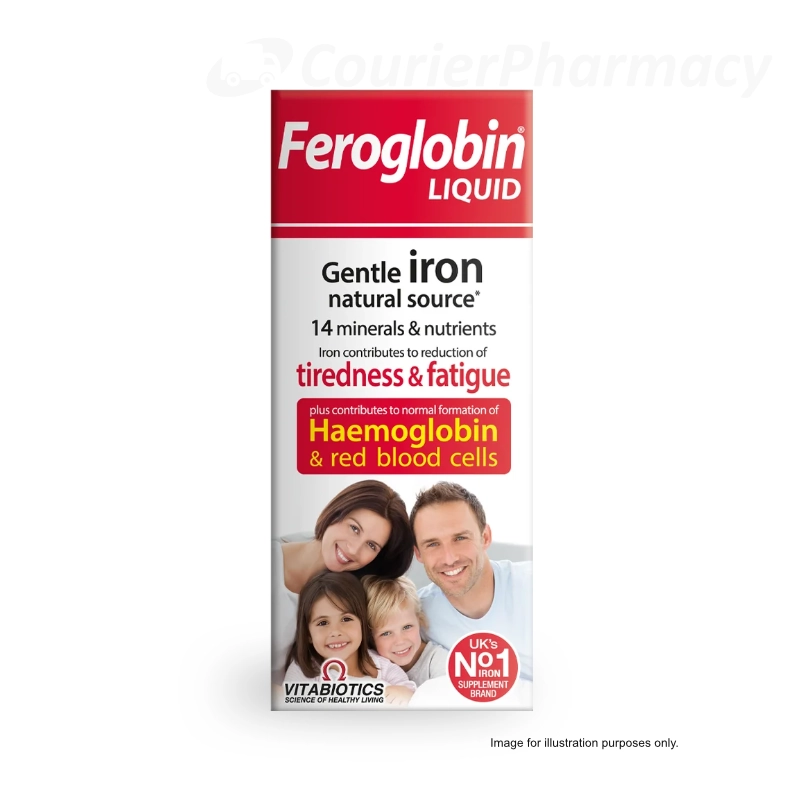
Feroglobin Liquid is Vitabiotics’ whole-family iron food supplement in liquid format. Each 10ml serving contains 14mg of iron in the organic iron citrate form, alongside vitamin B12, folic acid, vitamin B6, vitamin C, zinc, copper, manganese, and lysine.
Notably, the liquid format makes iron supplementation easier for anyone who struggles with tablets: children, elderly patients, those with dysphagia, or anyone who simply prefers liquid supplements.
Vitabiotics has been making Feroglobin since the 1970s, and Vitabiotics is now the UK’s No.1 iron supplement brand. The company has won the Queen’s Award for Enterprise four times, most recently for Innovation. So Feroglobin’s long track record and consistent quality make it a trusted family supplement.
Why the liquid format matters
Iron tablets (particularly ferrous sulphate) commonly cause stomach side effects: nausea, cramping, constipation, and dark stools. Because Feroglobin Liquid uses the gentler organic iron citrate form and provides iron in a diluted liquid, these side effects tend to be much less common.
Also, the liquid format lets young children take iron easily, and the dose can be adjusted by the volume taken. So one bottle serves the whole family with different age-appropriate doses.
Vitamin C for iron absorption
Feroglobin Liquid contains built-in vitamin C. Because vitamin C significantly improves the absorption of non-haem iron (the form found in plants and supplements), this built-in combination maximises how much iron your body actually takes up from each dose.
Supporting nutrients
Iron alone isn’t the whole story of red blood cell production. Also, vitamin B12, folic acid, and vitamin B6 are all essential for producing healthy red blood cells. Zinc and copper support iron metabolism and immune function. Lysine is an amino acid that supports iron absorption from the gut. So the combined blend supports blood, energy, and immune health more comprehensively than iron alone.
Coeliac warning: contains barley malt
Feroglobin Liquid contains barley malt extract, which contains gluten. So it is NOT suitable for people with coeliac disease, gluten sensitivity, or wheat allergy. Also, even small amounts of barley malt can trigger coeliac symptoms in sensitive individuals.
For gluten-free iron supplementation, Feroglobin Capsules provide a suitable option. Also, Spatone (natural iron-rich water) is naturally gluten-free.
Not vegan (contains honey)
Feroglobin Liquid contains honey, so it is NOT vegan. Also, because honey can carry Clostridium botulinum spores that can cause infant botulism under 12 months of age, Feroglobin Liquid must NEVER be given to babies under 12 months.
For vegan iron supplementation, look for iron supplements with plant-based ingredients (Floradix has vegan versions, and various vegan iron capsules are available).
Key features and details
Main features: whole-family liquid iron supplement with vitamin C and supporting nutrients
Iron content: 14mg per 10ml serving (as organic iron citrate complex)
Vitabiotics’ whole-family liquid iron food supplement with vitamin C for absorption, gentle on the stomach and suitable for adults and children from age 3
Feroglobin Liquid is Vitabiotics’ whole-family iron supplement in a gentle liquid format. Each 10ml serving delivers 14mg of iron (as organic iron citrate complex), alongside vitamin B12, folic acid, vitamin B6, vitamin C, zinc, copper, manganese, and lysine. So it supports the whole family from age 3 upwards with a coordinated blend of iron and supporting nutrients.
Notably, Vitabiotics is the UK’s No.1 iron supplement brand and a four-time Queen’s Award winner. Because Feroglobin has been trusted by British families for decades, the formulation is well-established, well-tolerated, and widely used across the UK.
The liquid format has several practical advantages over iron tablets. First, it’s easier for children and elderly people to take (no swallowing tablets needed). Second, the built-in vitamin C aids iron absorption. Third, the organic iron citrate form tends to be gentler on the stomach than harsher iron salts like ferrous sulphate, so it’s less likely to cause constipation, nausea, or stomach discomfort.
However, one important note: Feroglobin Liquid contains barley malt extract, so it is NOT gluten-free. So it’s not suitable for anyone with coeliac disease or gluten sensitivity. For gluten-free iron supplementation, Feroglobin Capsules provide a suitable option instead.
Also, Feroglobin Liquid contains honey. So it is NOT vegan, and it must NOT be given to babies under 12 months of age (because honey can carry Clostridium botulinum spores, which pose a risk of infant botulism under 12 months).
The 200ml bottle provides around 20 daily doses at the adult serving of 10ml (2 teaspoons). If two adults share the bottle, it lasts 10 days. If a child under 12 uses it at a lower dose, one bottle lasts considerably longer.
Iron helps your body in several important ways. Because iron is essential for producing haemoglobin (the protein in red blood cells that carries oxygen), adequate iron levels keep energy production, cognitive function, and immune function running properly. So low iron can leave you feeling tired, breathless on exertion, and mentally foggy.
Certain groups face higher risk of low iron:
Women with heavy periods (menorrhagia)
Pregnant and breastfeeding women
Vegetarians and pescatarians (plant-source iron is less well absorbed)
Growing children and adolescents
Elderly people with reduced dietary intake
People with gastric problems affecting absorption
Athletes and endurance sports participants
Blood donors (regular donation depletes iron stores)
People recovering from surgery or blood loss
Feroglobin Liquid works best alongside a balanced diet including iron-rich foods (red meat, poultry, fish, leafy greens, pulses, and fortified cereals). Because it’s a food supplement rather than a licensed medicine, it fits in as everyday nutrition rather than clinical treatment for confirmed iron deficiency anaemia.
For confirmed iron deficiency anaemia (diagnosed on blood tests), prescription-strength iron like ferrous sulphate or ferrous fumarate tablets, or occasionally intravenous iron, provides more intensive treatment. So talk to your GP or our prescriber if you suspect iron deficiency rather than starting supplements without assessment.
At Courier Pharmacy, we stock Feroglobin Liquid as part of our nutrition and supplement range. Our team can help you decide if it suits your needs, or whether a different iron product (or a proper blood test through your GP) would fit better.
When to see a doctor about iron or tiredness
Feroglobin Liquid provides everyday iron support for most people. However, some situations need proper medical assessment beyond just adding a supplement.
Persistent tiredness, breathlessness on exertion, dizziness, or pale skin: needs blood tests to check for iron deficiency anaemia
Suspected iron deficiency anaemia: usually needs prescription-strength iron treatment rather than food supplement doses
Heavy periods causing tiredness: needs gynaecology review alongside iron support
Blood in stools, black tarry stools, or unexplained weight loss: needs urgent GP assessment (could indicate gastrointestinal bleeding)
Coeliac disease or suspected gluten sensitivity: Feroglobin Liquid contains barley malt (gluten). Use Feroglobin Capsules or a gluten-free alternative instead
Babies under 12 months: never give Feroglobin Liquid (honey content poses botulism risk). Use infant-specific iron drops instead
Haemochromatosis (iron overload disorder) or family history of it: do NOT take iron supplements without specialist input
Sulphite sensitivity or asthma triggered by sulphites: Feroglobin Liquid contains sulphites
Diabetes: Feroglobin Liquid contains sucrose. Check with your GP if diabetes control is a concern
Regular iron supplementation over several months without blood test monitoring
Pregnancy or planning pregnancy: use Pregnacare Original, Plus, or Max, which provide pregnancy-appropriate iron alongside other essential nutrients
Taking prescribed medicines like levothyroxine, some antibiotics, or bisphosphonates: iron significantly reduces absorption of these medicines and needs 4-hour spacing
Signs of iron overdose in children (accidental ingestion): call 999 or your poison centre urgently. Iron overdose in children can be life-threatening
Signs of severe allergic reaction: rash, facial swelling, breathing difficulty. Call 999
Five key takeaways
Feroglobin Liquid delivers 14mg of iron per 10ml alongside vitamin C, B vitamins, zinc, copper, and lysine in a gentle whole-family liquid format from age 3 upwards.
Adults take 2 teaspoons (10ml) daily. Children 7-12 take 1-2 teaspoons daily. Children 3-6 take half a teaspoon twice daily.
Vegetarian Society Approved. Halal and Kosher certified. NOT vegan (contains honey). NOT gluten-free (contains barley malt), coeliac patients should NOT use this product.
NOT for babies under 12 months (honey carries a risk of infant botulism). Contains sulphites and sucrose. Space by 4 hours from levothyroxine and some other medicines.
Food supplement, not a licensed medicine. Supports normal red blood cell formation, oxygen transport, energy, cognitive function, and immune health per EU/UK health claims. Available from Courier Pharmacy.
What is Feroglobin Liquid: overview
A whole-family iron food supplement in liquid format from Vitabiotics, the UK’s No.1 iron supplement brand.
14mg iron per 10ml with vitamin C for absorption, plus B vitamins, zinc, copper, manganese, and lysine.
Suitable for adults and children from age 3, at different age-appropriate doses.
Vegetarian Society Approved. Halal and Kosher certified. NOT vegan (honey). NOT gluten-free (barley malt).
Food supplement, not a licensed medicine. NEVER for babies under 12 months. Available from Courier Pharmacy.
Where Feroglobin Liquid fits in iron supplementation
Iron support falls into several categories: general prevention (for the wider population), targeted prevention (for higher-risk groups like women with heavy periods or vegetarians), and treatment (for confirmed iron deficiency anaemia). Feroglobin Liquid fits mainly in the general and targeted prevention categories.
For confirmed iron deficiency anaemia on blood tests, prescription-strength iron like ferrous sulphate 200mg or ferrous fumarate 210mg (providing 65mg-70mg elemental iron per tablet) usually provides more intensive treatment. So talk to your GP if you suspect anaemia rather than treating it with food supplements alone.
Feroglobin Liquid vs Feroglobin Capsules
Feroglobin Capsules are adult-only, gluten-free (suitable for coeliacs), and don’t contain honey (safe for babies over 12 months if a specialist advises, though usually adult use only). So capsules suit adults who need gluten-free or vegetarian iron in a discreet daily dose.
Feroglobin Liquid suits whole-family use, is easier to take for children and elderly, and delivers a slightly higher daily iron content. However, it contains gluten (barley malt) and honey, so has more dietary limits.
Feroglobin Liquid vs Floradix Liquid Iron
Floradix is another popular liquid iron supplement with a herbal base including plant extracts. Because it uses ferrous gluconate at 10mg per 10ml, it delivers slightly less iron than Feroglobin Liquid but has a longer track record of gentle tolerability.
Feroglobin Liquid delivers more iron per dose (14mg vs 10mg) and includes vitamin C, B vitamins, zinc, copper, and lysine in one product.
Feroglobin Liquid vs Spatone
Spatone is naturally iron-rich mineral water from Wales. Because it delivers only around 5mg of iron per sachet, it suits people who want the gentlest possible iron supplementation. Also, Spatone is naturally gluten-free and vegan.
Feroglobin Liquid delivers substantially more iron per dose (14mg vs 5mg), which suits people needing more meaningful iron support.
Feroglobin Liquid vs prescription iron
Prescription ferrous sulphate 200mg tablets provide around 65mg of elemental iron per tablet, and ferrous fumarate 210mg tablets provide around 70mg. Because these are much higher doses, they suit treating confirmed iron deficiency anaemia rather than general prevention.
However, these higher doses commonly cause stomach side effects (nausea, cramping, constipation, dark stools) that Feroglobin Liquid usually avoids. So each has its place depending on need.
Feroglobin Liquid vs Pregnacare (during pregnancy)
Pregnacare Original contains 17mg of iron alongside folic acid, vitamin D, and other pregnancy-specific nutrients. So Pregnacare is the more appropriate choice during pregnancy than Feroglobin Liquid.
Feroglobin Liquid isn’t specifically formulated for pregnancy needs. So switch to Pregnacare during pregnancy for the right combination of nutrients.
Alongside iron-rich foods
Feroglobin Liquid works best alongside a balanced diet including iron-rich foods:
Haem iron (best absorbed): red meat, liver, poultry, fish, shellfish
Non-haem iron (needs vitamin C for absorption): lentils, beans, chickpeas, tofu, spinach, kale, fortified cereals, dried fruit
So supplementation complements dietary iron rather than replacing it.
Why choose Courier Pharmacy for your Feroglobin Liquid
Nutrition and supplement expertise
At Courier Pharmacy, we take supplement advice seriously. Because our Superintendent Pharmacist and independent prescriber Shazlee Ahsan holds an MSc in Endocrinology (which covers nutrient metabolism), our team can help you understand where iron sits in your overall nutrition and health picture.
Registered, independent, and patient-led
Courier Pharmacy is a UK-registered independent pharmacy regulated by the General Pharmaceutical Council. So when you buy iron supplements through our service, you’re getting them from a proper pharmacy with prescriber oversight, not just a generic online retailer.
Coordinated advice with your other prescriptions
If you take other medicines (particularly levothyroxine, thyroid hormones, or certain antibiotics), we can coordinate iron supplementation timing to avoid interactions. So the 4-hour spacing rule for iron and levothyroxine is standard advice, and we’ll help you fit it into your daily routine.
Dr Ada Jex-Cori, our brand pharmacist
Our brand pharmacist is Dr Ada Jex-Cori. She represents the spirit of what we do. Named for Ada Lovelace, Sophia Jex-Blake, and Gerty Cori, she stands for evidence-led, unafraid-of-questions medicine. Her message is straightforward. You’re not broken. The system is. We’re here to change that.
Care that keeps showing up
Iron supplementation often runs over months or longer. So we’re here for the follow-up questions along the way: adjusting products if Feroglobin Liquid doesn’t suit you (switching to Capsules for gluten-free needs, for example), coordinating with GP blood test results, and helping you understand your overall nutritional health.
Buy Feroglobin Liquid 200ml from Courier Pharmacy
Feroglobin Liquid 200ml is a food supplement available at courierpharmacy.co.uk.
Add Feroglobin Liquid 200ml to your basket
Our pharmacy team reviews the sale as part of our routine check
Your order dispatches promptly
Follow the pack directions. Contact us if you have questions
If Feroglobin Liquid isn’t right for your situation, we’ll explain why. Options include Feroglobin Capsules (adult-only, gluten-free, honey-free), Feroglobin Fizz (effervescent tablet format for adults), Feroglobin Baby Drops (specifically for infants), Spatone (natural iron water, vegan and gluten-free), Floradix Liquid Iron (herbal iron liquid), Pregnacare Original, Plus, or Max (during pregnancy for coordinated pregnancy nutrition), Perfectil (for skin, hair, nails including iron), a referral to your GP for iron blood testing (ferritin, full blood count, transferrin saturation), or prescription-strength iron treatment for confirmed iron deficiency anaemia.
Above all, we won’t sell you a supplement that isn’t right for your situation, and we’ll flag when a GP visit or blood test matters more than another supplement.
Main nutrients in Feroglobin Liquid
Iron 14mg per 10ml (organic iron citrate complex)
Iron is the star ingredient in Feroglobin Liquid. Each 10ml serving delivers 14mg of iron in the organic iron citrate form (ferric ammonium citrate combined with organic complexes).
Because organic iron citrate is gentler on the stomach than harsher iron salts like ferrous sulphate, it's less likely to cause the classic iron side effects of nausea, cramping, constipation, and dark stools. So this format suits everyday supplementation better than prescription-strength iron for those who don't need the highest doses.
Vitamin C for iron absorption
Vitamin C is included in Feroglobin Liquid to improve iron absorption. Because vitamin C converts iron to a more absorbable form in the gut, this partnership significantly boosts how much iron your body actually takes up from each dose.
Vitamin B12
Vitamin B12 is essential for producing healthy red blood cells alongside iron. Because low B12 causes its own form of anaemia (megaloblastic anaemia), combining iron with B12 addresses two important nutrients for blood health at once.
Folic acid (vitamin B9)
Folic acid also supports red blood cell formation. Also, folic acid is particularly important for women of reproductive age (before and during early pregnancy). So the folic acid in Feroglobin Liquid contributes to overall blood health.
Vitamin B6
Vitamin B6 supports normal red blood cell formation and helps regulate energy metabolism. So it complements the iron and other B vitamins in Feroglobin Liquid.
Zinc
Zinc supports immune function, wound healing, and normal cognitive function. Also, zinc plays a role in iron metabolism and absorption.
Copper
Copper is needed for iron transport in the body. Because copper deficiency can cause anaemia even when iron intake is adequate, having copper alongside iron supports the whole system.
Manganese
Manganese supports normal energy metabolism and healthy connective tissue. So it fits into the overall energy and metabolism support that Feroglobin Liquid provides.
Lysine (amino acid)
Lysine is an essential amino acid. Because lysine has been shown to enhance iron absorption from the gut, adding it to the formula further boosts how much iron your body takes up.
Approved EU/UK health claims for iron
Iron has multiple approved health claims:
Contributes to normal formation of red blood cells and haemoglobin
Contributes to normal oxygen transport in the body
Contributes to normal energy-yielding metabolism
Contributes to normal cognitive function
Contributes to normal function of the immune system
Contributes to the reduction of tiredness and fatigue
Has a role in the process of cell division
Other ingredients in Feroglobin Liquid
Base ingredients
The base of Feroglobin Liquid includes:
Water (purified water as the main liquid)
Honey (natural sweetener and preservative)
Barley malt extract (contains gluten)
Sucrose (sugar sweetener)
Glycerol (E422, humectant to keep liquid consistent)
Natural flavourings
Preservatives including sulphites
Contains gluten (barley malt)
Barley malt extract contains gluten. So Feroglobin Liquid is NOT suitable for people with coeliac disease, gluten sensitivity, or wheat allergy.
Contains honey
Honey is a natural ingredient in Feroglobin Liquid. So it is NOT vegan. Also, honey can carry Clostridium botulinum spores that can cause infant botulism, so Feroglobin Liquid must NEVER be given to babies under 12 months.
Contains sulphites
Sulphites are used as preservatives in Feroglobin Liquid. So people with known sulphite sensitivity (or asthma triggered by sulphites) should avoid this product.
Contains sucrose
Sucrose (sugar) is included as a sweetener. So people with diabetes or those following low-sugar diets should factor this into their overall intake. However, the amount per dose is relatively small.
Manufacturing standards
Feroglobin Liquid is manufactured in the UK under GMP (Good Manufacturing Practice) standards. So this ensures consistent quality and content per serving.
What is Feroglobin Liquid for?
Everyday iron support for the whole family
Feroglobin Liquid provides iron support for adults and children from age 3. Because iron is essential for haemoglobin production, oxygen transport, energy metabolism, and immune function, adequate intake matters for the whole family.
Support for higher-risk groups
Certain groups face higher iron needs or lower dietary iron intake, and Feroglobin Liquid supports these situations:
Women with heavy periods (menorrhagia) losing extra iron each month
Vegetarians and pescatarians (plant-source iron is less well absorbed)
Growing children and adolescents with higher iron needs
Elderly people with reduced dietary intake
Blood donors (regular donation depletes iron stores)
Athletes and endurance sports participants
People recovering from surgery or blood loss
Support during periods of higher nutritional demand
Times of growth, recovery, or increased demand benefit from extra iron support. So use during these periods (while children are growing, during exam stress, after illness, during heavy training) helps meet increased needs.
Reducing tiredness and fatigue
Iron contributes to reducing tiredness and fatigue (an approved health claim). Because low iron is a common cause of persistent tiredness, particularly in women of reproductive age, supplementation can help where iron intake is a factor.
Supporting immune function
Iron supports normal immune system function. So during winter months, after illness, or during periods of higher exposure to infections, adequate iron matters more.
Supporting cognitive function
Iron contributes to normal cognitive function. Because low iron is linked with reduced concentration, mental fatigue, and brain fog, adequate iron supports clear thinking.
Whole-family convenience
Because the same bottle serves adults and children (at different age-appropriate doses), Feroglobin Liquid can meet family iron needs from a single product. So this simplifies household supplementation and often works out more cost-effective than buying separate products.
What Feroglobin Liquid isn't for
Not for babies under 12 months (honey content poses botulism risk).
Not for people with coeliac disease or gluten sensitivity (barley malt contains gluten).
Not for vegans (contains honey).
Not for people with haemochromatosis or iron overload conditions.
Not a substitute for prescription-strength iron in confirmed iron deficiency anaemia.
Not a substitute for a balanced diet including iron-rich foods.
Not for combining with other high-dose iron supplements or multivitamins with high iron content without healthcare professional advice.
How does Feroglobin Liquid work?
Iron absorption from the gut
Iron in Feroglobin Liquid is absorbed mostly in the upper small intestine. Because iron absorption is regulated by your body's needs, more iron is absorbed when your stores are low and less when they're already adequate.
Also, the vitamin C in Feroglobin Liquid converts iron to a more absorbable form. Because this partnership improves absorption significantly, the effective iron intake is higher than the raw dose number suggests.
Iron transport and storage
Once absorbed, iron binds to transferrin (a transport protein) in the blood. So transferrin carries iron to the bone marrow (for red blood cell production) and other tissues that need it.
Excess iron is stored in ferritin, mainly in the liver, spleen, and bone marrow. So blood ferritin levels are commonly used as a marker of overall iron stores.
Haemoglobin production
The bone marrow uses iron to produce haemoglobin, the protein in red blood cells that carries oxygen from the lungs to the tissues. Because red blood cells only live around 120 days, new ones are constantly being made, and adequate iron matters continually.
Regulation of absorption
Your body regulates iron absorption based on need. Because of this regulation, taking iron supplements when stores are adequate results in less absorption than when stores are low. So supplementation self-limits to some extent.
Building iron stores takes time
Iron stores in ferritin build up gradually. So it usually takes 2-3 months of consistent supplementation before blood ferritin levels increase meaningfully. Also, replenishing depleted stores after significant blood loss or long-standing low iron can take 3-6 months.
Treatment dosage for Feroglobin Liquid
At a glance
For: adults and children from age 3 upwards
Adults: 2 teaspoons (10ml) daily with food
Children 7-12: 1-2 teaspoons daily
Children 3-6: half a teaspoon twice daily
Timing: with a meal that includes some vitamin C for best absorption
Duration: continuous use for maintenance, or as directed by your healthcare professional
NEVER for babies under 12 months (honey content)
Do NOT exceed the recommended dose
Adult dose
Adults take 2 teaspoons (10ml) daily. Because the daily dose delivers 14mg of iron, this sits well within the safe daily intake range for adults. So one bottle lasts around 20 days at this dose.
Children 7-12 years
Children aged 7-12 take 1-2 teaspoons (5-10ml) daily depending on age and needs. So a 7-year-old usually starts at 1 teaspoon, while a 12-year-old may take up to 2 teaspoons.
Children 3-6 years
Younger children aged 3-6 take half a teaspoon (2.5ml) twice daily. Because their iron needs and body size are smaller, this split dose keeps the total intake age-appropriate.
Take with food
Take Feroglobin Liquid with a meal to reduce any stomach discomfort. Also, taking with a vitamin C-containing food or drink (orange juice, kiwi fruit, strawberries, tomatoes, peppers) further improves iron absorption alongside the built-in vitamin C.
Avoid taking with tea, coffee, or dairy
Tea, coffee, and dairy products significantly reduce iron absorption when taken at the same time as iron supplements. So avoid these within an hour before or after taking Feroglobin Liquid.
Duration
Most people benefit from continuous use during periods of higher iron need (heavy periods, pregnancy planning, vegetarian or vegan diet, growing children, post-illness recovery). However, once iron levels are adequate and no ongoing risk factor exists, supplementation can be adjusted or stopped.
Missed doses
If you miss a dose, take it as soon as you remember. However, don't double up. So just resume your normal schedule from the next day.
Do not exceed recommended dose
Iron in excess of body needs can cause side effects and, in high doses, more serious problems. So stick to the recommended dose and don't combine Feroglobin Liquid with other iron-containing supplements without healthcare professional advice.
How to take Feroglobin Liquid
Standard use
Shake the bottle well before use. Measure out the correct dose with a teaspoon or the measuring cap (if provided). Take with a meal.
Shake well before each use
Feroglobin Liquid can separate slightly during storage. So shaking the bottle before each use ensures the iron and other nutrients mix properly for a consistent dose.
Take with a meal
Taking iron with food reduces stomach discomfort. Also, a meal with vitamin C (fresh fruit, vegetables, juice) further improves iron absorption alongside the built-in vitamin C.
Space away from tea, coffee, dairy, and calcium
The following significantly reduce iron absorption when taken at the same time:
Tea (including green tea) contains tannins that bind iron
Coffee also reduces absorption
Milk and dairy products (calcium competes for absorption)
Calcium supplements or antacids
High-fibre foods like wheat bran (in large amounts)
So take Feroglobin Liquid at meals that don't include these, or wait at least an hour between them and your iron dose.
Space away from certain medicines (at least 4 hours)
Iron significantly reduces absorption of some medicines and must be spaced by at least 4 hours:
Levothyroxine (Eltroxin, generic levothyroxine tablets, and oral solution)
Try to take Feroglobin Liquid at the same time each day. So building a habit around a specific meal (like lunch or dinner) helps you remember and maintain consistent intake.
Storage
Store the bottle below 25°C in a cool, dry place away from direct sunlight. Once opened, refrigerate the bottle and use within the time specified on the pack (usually 6-8 weeks after opening). Always screw the cap on tightly after use.
Keep out of reach of children
Above all, keep Feroglobin Liquid securely stored out of children's reach. Because accidental iron overdose in children can be life-threatening, iron products need to be stored as carefully as any other medicine.
When to expect benefits
Because iron stores take time to build up, you may need 2-3 months of consistent supplementation before noticing improvements in energy, concentration, or exercise tolerance. So patience is important, and a follow-up blood test after 3 months of use helps confirm progress if you're supplementing due to low levels.
Warnings and precautions for Feroglobin Liquid
Never give to babies under 12 months
Above all, Feroglobin Liquid must NEVER be given to babies under 12 months of age. Because honey can carry Clostridium botulinum spores, which can germinate in an infant's immature gut and cause infant botulism (a serious, potentially life-threatening illness), no honey-containing product should be given under 12 months. So use Feroglobin Baby Drops or other age-appropriate infant iron products instead.
Not for coeliac disease or gluten sensitivity
Feroglobin Liquid contains barley malt extract, which contains gluten. So people with coeliac disease, non-coeliac gluten sensitivity, or wheat allergy should NOT take Feroglobin Liquid. Options include Feroglobin Capsules (gluten-free) or Spatone (naturally gluten-free).
Not for vegans
Feroglobin Liquid contains honey. So it is NOT vegan. Vegans should look for iron supplements with plant-based ingredients.
Haemochromatosis or iron overload
People with haemochromatosis (hereditary iron overload disorder), transfusion-dependent anaemias, or other iron overload conditions must NOT take iron supplements. Because extra iron in these conditions can accumulate to damaging levels in the liver, heart, and other organs, specialist medical supervision is essential.
Sulphite sensitivity
Feroglobin Liquid contains sulphites as preservatives. So people with known sulphite sensitivity or asthma triggered by sulphites should avoid this product.
Diabetes and sucrose content
Feroglobin Liquid contains sucrose (sugar) as a sweetener. So people with diabetes or those following low-sugar diets should factor this into their overall daily sugar intake.
Pregnancy and breastfeeding
While iron supplementation is often needed during pregnancy, Feroglobin Liquid isn't specifically formulated for pregnancy. So use Pregnacare Original, Plus, or Max during pregnancy for coordinated pregnancy nutrition, and Pregnacare Breast-feeding after birth.
Interactions with certain medicines
Iron significantly reduces the absorption of several important medicines. So space Feroglobin Liquid by at least 4 hours from:
Levothyroxine (Eltroxin and generic brands)
Liothyronine (T3)
Tetracycline and doxycycline antibiotics
Ciprofloxacin, levofloxacin, and other quinolone antibiotics
Bisphosphonates (alendronic acid, risedronate)
Penicillamine
Methyldopa
Levodopa
Signs of iron overdose (particularly in children)
Accidental ingestion of large amounts of iron can be serious, particularly in children. Symptoms of iron overdose include:
Nausea and vomiting (sometimes with blood)
Severe stomach pain
Diarrhoea (sometimes bloody)
Drowsiness or confusion
Rapid heart rate
Pale, cold, or clammy skin
So keep Feroglobin Liquid securely stored out of children's reach. Call 999 or your poison centre urgently if accidental overdose is suspected.
Signs of allergic reaction
Rare allergic reactions to Feroglobin Liquid ingredients can occur. Symptoms of severe allergic reaction include rash, facial swelling, breathing difficulty. Call 999 if severe.
Long-term use without monitoring
Long-term iron supplementation without periodic blood test monitoring can build up iron stores beyond healthy levels. So consider periodic ferritin blood tests through your GP if you supplement for extended periods.
Alcohol
No direct interaction with moderate alcohol intake. However, heavy alcohol use affects overall nutritional health.
Driving and machinery
No expected effects on driving or using machinery.
Side effects of Feroglobin Liquid
Generally well tolerated
Feroglobin Liquid is generally well tolerated because the organic iron citrate form and liquid delivery tend to be gentler on the stomach than tablet iron preparations. However, some side effects can still occur.
Common (mild) side effects
These may include:
Mild digestive discomfort or bloating
Nausea (less common than with iron tablets)
Constipation or (less commonly) mild diarrhoea
Dark stools (normal iron effect, not a cause for concern)
Metallic taste
Slight staining of teeth (rinse mouth or use a straw to reduce this)
Less common side effects
These may include:
Stomach pain or cramps
Loss of appetite
Skin rash or itching (possible allergic reaction)
Headache
Signs of iron overdose (rare but serious)
Symptoms of significant iron overdose include severe stomach pain, vomiting (sometimes with blood), bloody diarrhoea, rapid heart rate, drowsiness, confusion, and pale or clammy skin. So call 999 urgently if these develop, particularly in children after accidental ingestion.
Allergic reactions (rare)
Rare allergic reactions to Feroglobin Liquid ingredients (including sulphites) can occur. Symptoms include rash, itching, facial swelling, or breathing difficulty. So stop taking and call 999 for severe reactions.
Long-term over-supplementation
Long-term iron intake beyond needs can cause:
Iron overload (raised ferritin levels)
Constipation
Digestive discomfort
Very rarely, damage to the liver or heart in susceptible individuals
So periodic blood test monitoring helps avoid this by ensuring iron intake matches needs.
Serious side effects requiring urgent help
Above all, seek urgent medical help for signs of severe allergic reaction (facial or throat swelling, breathing difficulty, widespread rash) or signs of significant iron overdose (severe stomach pain, bloody vomiting or diarrhoea, drowsiness, confusion). Call 999.
Drug interactions with Feroglobin Liquid
Levothyroxine and liothyronine (thyroid hormones)
Iron significantly reduces absorption of levothyroxine (Eltroxin and generic brands) and liothyronine. So space Feroglobin Liquid by at least 4 hours from your thyroid hormone dose. Because thyroid hormone is usually taken first thing in the morning, taking Feroglobin Liquid with lunch or dinner works well.
Tetracycline and doxycycline antibiotics
Iron reduces absorption of tetracycline family antibiotics. So space by at least 4 hours between Feroglobin Liquid and any dose of tetracycline, doxycycline, minocycline, or lymecycline.
Quinolone antibiotics
Iron significantly reduces absorption of ciprofloxacin, levofloxacin, ofloxacin, and other quinolones. So space by at least 4 hours.
Bisphosphonates
Alendronic acid, risedronate, and other bisphosphonates for osteoporosis should be taken separately from iron supplements. So follow the specific bisphosphonate timing instructions (usually first thing on an empty stomach) and take Feroglobin Liquid at a different time of day.
Penicillamine
Penicillamine (used for rheumatoid arthritis and other conditions) has its absorption reduced by iron. So space by at least 2 hours.
Methyldopa
Methyldopa (used for high blood pressure) has its absorption reduced by iron. So space appropriately from Feroglobin Liquid doses.
Levodopa
Levodopa (used for Parkinson's disease) has its absorption reduced by iron. So space by at least 2 hours.
Antacids and PPIs
Antacids containing calcium, aluminium, or magnesium (Rennie, Gaviscon, Maalox) reduce iron absorption. So space by at least 2 hours. Also, PPIs like omeprazole and lansoprazole reduce stomach acid, which can reduce iron absorption over time.
Calcium supplements
Calcium and iron compete for absorption. So take calcium supplements at a different time from Feroglobin Liquid, ideally spaced by at least 2 hours.
Other iron supplements
Don't combine Feroglobin Liquid with other iron supplements (tablets, capsules, or other liquids) or high-iron multivitamins without healthcare professional advice. Because combined intake can push iron levels too high, one iron source at appropriate dosing is enough for most people.
Food and drink interactions
These significantly reduce iron absorption when taken at the same time:
Tea (including green tea) contains tannins that bind iron
Coffee contains compounds that reduce iron absorption
Milk and dairy products (calcium competes with iron)
Large amounts of wheat bran or high-fibre foods
Wine (tannins reduce absorption)
However, these improve iron absorption when taken alongside iron:
Haem iron sources (red meat) improve absorption of non-haem iron eaten at the same meal
Alcohol
No direct interaction with moderate alcohol intake.
Frequently asked questions about Feroglobin Liquid
What is Feroglobin Liquid used for?
A whole-family iron food supplement for adults and children from age 3. It supports normal red blood cell formation, oxygen transport, energy, cognitive function, immune health, and reduction of tiredness per approved health claims.
How much iron does Feroglobin Liquid contain?
Each 10ml serving (2 teaspoons) contains 14mg of iron in the organic iron citrate form.
How often do I take Feroglobin Liquid?
Adults: 2 teaspoons (10ml) once daily. Children 7-12: 1-2 teaspoons daily. Children 3-6: half a teaspoon twice daily. Do NOT exceed the recommended dose.
Can babies take Feroglobin Liquid?
NEVER for babies under 12 months. Because Feroglobin Liquid contains honey, which can cause infant botulism in under-1s, it is strictly not suitable for babies. Use Feroglobin Baby Drops or age-appropriate infant iron products instead.
Is Feroglobin Liquid gluten-free?
No. Feroglobin Liquid contains barley malt extract, which contains gluten. So it is NOT suitable for people with coeliac disease or gluten sensitivity. Use Feroglobin Capsules or another gluten-free iron supplement instead.
Is Feroglobin Liquid vegan?
No. Feroglobin Liquid contains honey. So it is NOT vegan. Vegans should look for iron supplements with plant-based ingredients.
Is Feroglobin Liquid Halal?
Yes. Feroglobin Liquid is Halal certified.
Is Feroglobin Liquid Kosher?
Yes. Feroglobin Liquid is Kosher certified.
Is Feroglobin Liquid suitable for vegetarians?
Yes. Feroglobin Liquid is Vegetarian Society Approved.
Can I take Feroglobin Liquid during pregnancy?
Pregnacare Original, Plus, or Max is the more appropriate choice during pregnancy, providing coordinated pregnancy nutrition. So switch to Pregnacare during pregnancy rather than using Feroglobin Liquid alone.
Can I take Feroglobin Liquid while breastfeeding?
Pregnacare Breast-feeding is the more appropriate choice for the postnatal period. So use that instead.
How long can I take Feroglobin Liquid?
Most people benefit from continuous use during periods of higher iron need (heavy periods, growing children, vegetarian diet, post-illness). However, consider periodic blood tests through your GP for long-term supplementation to check ferritin levels.
How should I store Feroglobin Liquid?
Below 25°C in a cool, dry place. Once opened, refrigerate and use within the time specified on the pack (usually 6-8 weeks). Keep out of reach of children.
What if I miss a dose?
Take it as soon as you remember. However, don't double up. Just resume your normal schedule from the next day.
Can I take Feroglobin Liquid with coffee or tea?
No. Coffee and tea significantly reduce iron absorption. So avoid within an hour before or after your Feroglobin Liquid dose. Water is best.
Can I take Feroglobin Liquid with levothyroxine?
Yes, but with proper spacing. Because iron reduces levothyroxine absorption significantly, space Feroglobin Liquid by at least 4 hours from your levothyroxine dose. So if you take levothyroxine first thing in the morning, take Feroglobin Liquid with lunch or dinner.
Why does my mouth taste metallic after taking Feroglobin Liquid?
A metallic taste is a common effect of liquid iron supplements. Rinsing your mouth with water after taking, or using a straw to avoid contact with your teeth, can reduce this.
Will Feroglobin Liquid stain my teeth?
Occasional slight staining is possible. So using a straw to avoid direct contact with teeth, or rinsing your mouth immediately after taking, can help prevent this.
Why are my stools dark after taking Feroglobin Liquid?
Dark stools are a normal effect of iron supplementation and not a cause for concern. However, black tarry stools (very different in appearance) can indicate bleeding and need urgent medical assessment.
What are the signs I'm getting too much iron?
Persistent constipation, digestive discomfort, or (in more serious cases) raised ferritin levels on blood tests. So stick to recommended doses and consider periodic blood tests for long-term use.
Do I need a prescription for Feroglobin Liquid?
No. It's a food supplement, available without prescription.
What are the options to Feroglobin Liquid?
Options include Feroglobin Capsules (gluten-free, adult-only), Feroglobin Fizz (effervescent tablets), Feroglobin Baby Drops (for infants), Spatone (natural iron water, vegan and gluten-free), Floradix Liquid Iron (herbal iron), or prescription-strength iron (ferrous sulphate, ferrous fumarate) for confirmed iron deficiency anaemia.
Disclaimer
Disclaimer: This information is for education only and isn't a substitute for personal medical advice. Feroglobin Liquid is a food supplement, not a licensed medicine. It's not intended to diagnose, treat, cure, or prevent any medical condition, including iron deficiency anaemia. Always follow the pack directions. For persistent tiredness, suspected iron deficiency, or unexplained symptoms, see your GP for blood tests and proper assessment. NEVER give to babies under 12 months (honey content). Not for coeliac disease or gluten sensitivity (barley malt). Not for haemochromatosis or iron overload conditions. Not for vegans (honey). Contains sulphites and sucrose. Keep out of reach of children, iron overdose in children can be life-threatening.