Hair loss is easy to dismiss until it happens to you. So the visible signs are familiar: thinning at the crown, a wider parting, a hairline moving in the wrong direction. In particular, the less visible impact is often harder to carry. Furthermore, confidence drops. The worry that things are getting worse, and that nothing tried so far has made a real difference, becomes part of daily life.
The problem with standard treatments
For many people, the frustration goes beyond the hair loss itself. So it is about the experience of trying to treat it.
In particular, standard topical liquids sting on application, alcohol hits the scalp before absorption, propylene glycol leaves a tight residue for hours, and finasteride tablets carry their own worries. Furthermore, after weeks of that, skipping treatment starts to feel reasonable. As a result, treatment stops working because it stops being used.
Why oral minoxidil
Oral minoxidil bypasses the scalp entirely. So the drug is taken as a small daily capsule, reaches the hair follicles through the bloodstream, and gives more consistent scalp exposure than topical application.
In particular, this suits patients who have reacted to topical vehicles, patients who found daily topical routines hard to keep up, and patients whose clinical profile points toward an oral approach.
Furthermore, oral minoxidil has become one of the most-prescribed off-label options for pattern hair loss in UK and international dermatology since around 2015.
Where 2.5mg sits in our oral minoxidil range
We offer oral minoxidil across six strengths: 0.25mg, 0.5mg, 1.25mg, 2.5mg, 3mg, and 5mg. So the choice depends on sex, response, and tolerance rather than a fixed pathway. In particular, having close dose steps in the low-to-mid range lets us tailor treatment to fit each patient. Furthermore, if the first dose is not quite right, moving up or down a step is straightforward.
0.25mg: the lowest dose in our range, matching the smallest dose used in the published women’s protocols. Suits women starting extremely cautiously, patients who are highly sensitive to medicines, or anyone whose prescriber wants the gentlest possible starting point.
0.5mg: a very low dose, useful for women stepping up from 0.25mg, or as a starting dose for patients who want minimal systemic exposure. It also works as a step-down dose if a higher dose has not been well tolerated.
1.25mg: a commonly-used women’s dose that features in the published literature. Suits women where 0.5mg has not given enough response, or patients who want a low starting point without going right down to 0.25mg or 0.5mg.
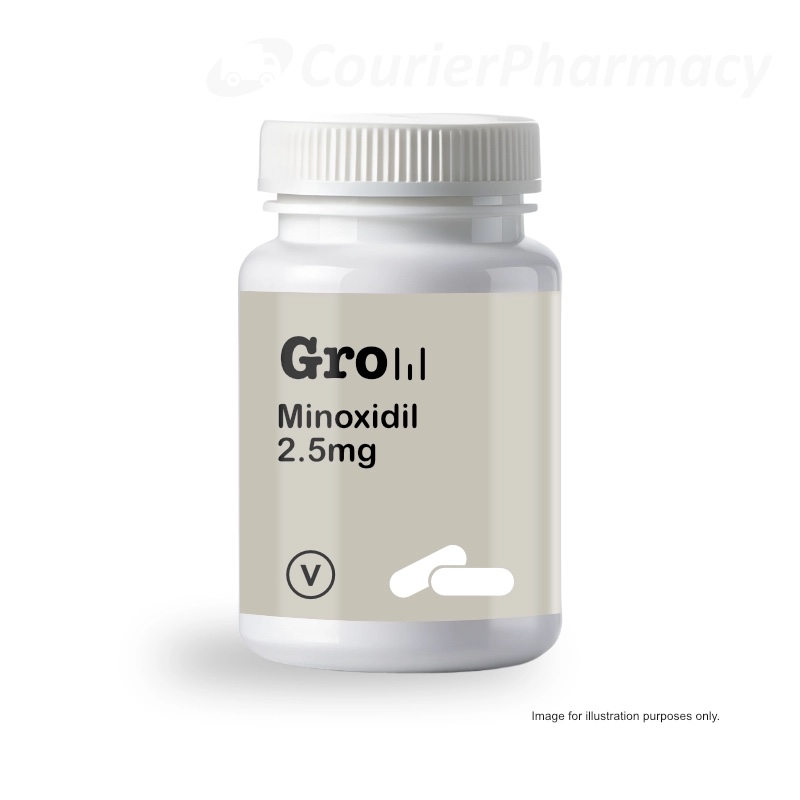
2.5mg (this product): the common starting dose for women, and a lower-dose option for men who prefer to start smaller or who need dose reduction from 5mg. Half the standard men’s dose. Many women stay on 2.5mg for the long term without needing to step up.
3mg: a mid-range dose between 2.5mg and 5mg. Suits women whose 2.5mg dose has not given enough response but who do not want to jump straight to 5mg, or men who do not fully tolerate 5mg but need more than 2.5mg. In particular, this is a useful in-between step for tolerability-driven dose finding.
5mg: the most common daily dose for men in current oral minoxidil protocols, and a step-up dose for women when 2.5mg or 3mg has not given enough response. Delivers the strongest hair-cycle effect in our range at a once-daily dose.
Why 2.5mg suits both women and men
Oral minoxidil dose choice is guided by response and tolerance rather than a strict male/female split. So 2.5mg gives a genuine hair-cycle effect while keeping the systemic side-effect profile as light as possible.
In particular, many women stay on 2.5mg long-term and never need to step up. Furthermore, some men respond fully at 2.5mg without needing the standard 5mg dose. As a result, 2.5mg is one of the most-prescribed daily doses in our range.
Why compounding matters here
Compounding means a medicine is prepared to order by a licensed pharmacy for an individual patient. So it is not a mass-produced one-size-fits-all product. In particular, no drug company markets an oral minoxidil product for hair loss at any of our six strengths (0.25mg, 0.5mg, 1.25mg, 2.5mg, 3mg, or 5mg).
Furthermore, compounding is what makes personalised oral minoxidil dosing possible in the UK. As a result, our six-strength range gives real clinical flexibility that off-the-shelf products cannot match.
A medically responsible route
At Courier Pharmacy, treatment starts with a proper assessment. So suitability is checked before any capsule is dispensed. In particular, the decision to prescribe this compounded medicine is a clinical one based on your history, your hair-loss pattern, and your goals. Furthermore, ongoing reviews check that the strength you are on remains the right one for you.
Key features and details
Prescription-only compounded oral capsules for pattern hair loss in men and women.
Minoxidil 2.5mg per capsule, taken once daily by mouth.
The common starting dose for women and a lower-dose option for men.
Pack size: 30 capsules, a one-month supply at one capsule daily.
Part of the Gro hair loss range from Courier Pharmacy and Medical Mojo.
Reviewed for suitability by a UK-qualified prescriber before every supply.
Additional information
Pack size
1 x 30 capsules, 2 x 30 capsules, 3 x 30 capsules, 4 x 30 capsules, 5 x 30 capsules, 6 x 30 capsules
MOJO WISDOM
Take control of your health by understanding your condition and what this medication is doing for you.
READ:
More information about this treatment.
UK-based doctors and pharmacists
Discreet and Confidential
UK-based doctors and pharmacists
Free, Expert Advice
No video link provided.
No video link provided.
UK-based doctors and pharmacists
Free, expert advice
Discrete and confidential
Fast delivery
Giving you trusted clinical advice for over 40 conditions
A UK regulated pharmacy providing safe, effective treatments online since 2014
Minoxidil 2.5mg capsules, a common starting dose in the Gro hair loss range
Minoxidil 2.5mg capsules are a once-daily oral option in the Gro hair loss range from Courier Pharmacy and Medical Mojo. So this is a compounded medicine used off-label for pattern hair loss in men and women. In particular, 2.5mg is the common starting dose for women in current oral minoxidil protocols, and a lower-dose option for men who prefer to start smaller or need dose reduction from 5mg. Furthermore, the choice of dose is a clinical decision, often supported by a TrichoTest pharmacogenetic profile. As a result, Minoxidil 2.5mg sits alongside our topical liquid, foam, and Trichosol options as part of a proper personalised approach to hair loss. h
When to see a doctor before starting or continuing Minoxidil 2.5mg
Oral minoxidil is well tolerated for most patients. However, some situations need medical attention before starting, and any of these during treatment warrants contacting your prescriber:
New or worsening breathlessness, especially on lying flat or with exertion.
New chest pain, palpitations, or fast heartbeat.
New or worsening ankle, leg, or facial swelling.
Rapid weight gain of more than 2kg in a week.
Unusual, severe headache.
Any known heart failure, pericardial disease, or significant kidney disease.
If a woman of child-bearing potential is not using reliable contraception.
If a partner is pregnant or planning pregnancy soon.
If unwanted body-hair growth becomes bothersome.
For life-threatening symptoms, call 999. For urgent but non-emergency concerns, call NHS 111.
Five key takeaways about Minoxidil 2.5mg capsules
Part of the Gro hair loss range: compounded, personalised, and priced fairly.
One capsule once daily. A common oral minoxidil dose for both men and women.
The common starting dose for women, and a lower-dose option for men. Our oral minoxidil range spans 0.25mg, 0.5mg, 1.25mg, 2.5mg, 3mg, and 5mg.
Dose choice is supported by clinical assessment and, where used, a TrichoTest pharmacogenetic profile.
Prescription-only compounded medicine, dispensed after a proper Courier Pharmacy consultation.
What is oral minoxidil for hair loss: overview
Oral minoxidil is minoxidil taken as a capsule or tablet by mouth, prescribed off-label for hair loss.
It is unlicensed in the UK for hair loss. So it is supplied as a compounded medicine.
It is used in both men and women with androgenetic alopecia (pattern hair loss).
The evidence base has grown quickly since around 2015.
It is often used alongside finasteride, dutasteride, or topical minoxidil, not always as a stand-alone.
A brief history
Minoxidil was first developed in the 1970s as an oral vasodilator for severe high blood pressure. So the hair growth was noticed as a side effect in those hypertension patients. Furthermore, this observation led to topical minoxidil (Rogaine/Regaine) in the 1980s. In particular, oral minoxidil for hair loss re-emerged in the 2010s as dermatologists noticed some patients did better on oral than on topical. As a result, oral minoxidil now has a rapidly growing evidence base across several patient groups.
The compounded medicines pathway
Because minoxidil is not licensed for hair loss, no drug company markets an oral hair-loss product at these doses. So supply relies on UK compounding pharmacys who prepare each batch to a prescription. Furthermore, this pathway is properly regulated by the MHRA as an unlicensed compounded medicine.
Why off-label prescribing matters
Off-label prescribing is a normal part of UK medical practice. So the GMC and GPhC both provide guidance on it. However, off-label use places extra responsibility on the prescriber to justify the choice, and on the patient to give informed consent. In particular, our oral minoxidil consultation covers this explicitly.
Why choose Courier Pharmacy for your Minoxidil 2.5mg capsules
Registered, independent, and patient-led
Courier Pharmacy is a UK-registered independent pharmacy regulated by the General Pharmaceutical Council (GPhC 9010051). So when you order oral minoxidil through us, you work with a proper pharmacy team, not a warehouse. Furthermore, our independence means we can spend time on hair-loss questions where a chain would not.
Hair-loss expertise plus endocrinology
At Courier Pharmacy, hair loss sits alongside our wider hormonal health work. In particular, our prescribers are experts in hair loss and functional medicine and so we understand how DHT, testosterone, thyroid function, iron status, and hair biology interact. Furthermore, we can flag when a hair-loss picture points to a wider hormonal or nutritional issue.
TrichoTest pharmacogenetic profiling
For patients who want to move beyond standard protocols, we offer TrichoTest. So this is a pharmacogenetic test that analyses 26 genetic polymorphisms linked to nine key treatment pathways relevant to hair loss. In particular, it can help decide whether oral minoxidil is a good fit for your biology, and at what dose. Furthermore, TrichoTest can also flag nutritional and metabolic factors (iron, zinc, vitamin D, antioxidant status) that affect hair health independently of any drug.
Dr Ada Jex-Cori, our brand pharmacist
Our brand pharmacist is Dr Ada Jex-Cori. She represents the spirit of what we do. Named for Ada Lovelace, Sophia Jex-Blake, and Gerty Cori, she stands for evidence-led, unafraid-of-questions medicine. Her message runs through everything we prescribe:
You’re not broken. The system is. We’re here to change that.
For hair-loss patients in particular, this matters. So many men and women have quietly worried for years without knowing what evidence-based options actually exist. Furthermore, we take that starting point seriously.
Dose choice and follow-up
We stock oral minoxidil across six strengths (0.25mg, 0.5mg, 1.25mg, 2.5mg, 3mg, 5mg). So we can match the strength to your response over time. In particular, if the first dose is not quite right, moving up or down a step is straightforward without a fresh prescription hurdle. Furthermore, we schedule reviews to check response and tolerance.
Care that keeps showing up
Hair-loss treatment is a long-term project. So we are here for the follow-up questions along the way: dose adjustments, side-effect discussion, and coordination with any wider treatment plan you have with your GP or dermatologist.
TrichoTest, personalising the approach
What TrichoTest is
TrichoTest reduces guesswork. So it is a pharmacogenetic test that analyses 26 genetic polymorphisms linked to nine key treatment pathways relevant to hair loss. In particular, rather than prescribing from standard protocols alone, TrichoTest combines your genetic profile with your medical history to predict which ingredients, dosages, and delivery methods are most likely to work for your biology.
How TrichoTest can inform an oral minoxidil dose
One key pathway TrichoTest looks at is prostaglandin and sulphotransferase activity, which affects how you process minoxidil. So some patients have genetic profiles suggesting they respond well to minoxidil, while others metabolise it poorly. In particular, this can help decide between the six strengths in our oral minoxidil range. Furthermore, if TrichoTest suggests you are a poor minoxidil responder, your prescriber may recommend a different approach entirely (finasteride, dutasteride, or a combination).
The nine pathways TrichoTest analyses
Prostaglandins and sulphotransferase, how you process minoxidil and latanoprost.
Anti-inflammatory response, your reaction to glucocorticoids and immunomodulators.
Anti-androgen metabolism, how effectively you respond to dutasteride, finasteride, and 17alpha-oestradiol.
Circulation stimulation, response to vasodilators.
Collagen synthesis capacity.
Insulin-like Growth Factor (IGF-1) response.
Vitamin absorption, A, B7, B9, B12, C, D, E.
Mineral absorption, zinc, magnesium, iron, selenium.
Antioxidant needs and oxidative stress profile.
Beyond ingredient selection
TrichoTest also identifies nutritional gaps and metabolic factors that affect hair health independently of the drug. So if genetic variants reduce zinc or iron absorption, the prescriber can recommend targeted supplementation alongside your oral minoxidil. Furthermore, this moves treatment from guesswork toward something shaped by your actual biology. In particular, TrichoTest does not guarantee results, but it gives the prescriber better information to decide whether this specific product, at this specific dose, is right for you.
The Gro hair loss range
What Gro is
Gro is the compounded hair loss range created by Courier Pharmacy. So it exists because hair loss treatment should not feel one-size-fits-all. In particular, Gro brings topical and oral options together under one brand, matching treatment to the person using it, not the other way around.
Why Gro is different
Gro is built around three practical goals:
Choice of formulation: topical liquid, topical foam, Trichosol solution (propylene glycol free and alcohol free), and oral capsules.
Personalisation: single, dual, and triple-ingredient combinations across multiple concentrations.
Better tolerability: every format is designed to reduce the friction that stops people from maintaining their routine.
The four formulation types
Topical hair loss liquid, a traditional spray solution containing alcohol and propylene glycol. Well-established, with efficient scalp penetration. Chosen by patients who want a direct, familiar format.
Hair loss foam, lighter, faster-drying, and easier to apply without dripping. Chosen by patients who want clinical results in a format that fits more easily into daily life.
Trichosol topical solution, propylene glycol free and alcohol free. Designed for patients with sensitive or reactive scalps who need a gentler base.
Oral capsules (this product family), for patients who prefer a once-daily oral route, or who have not tolerated topical formats. Includes oral minoxidil 0.25mg, 0.5mg, 1.25mg, 2.5mg, 3mg, 5mg, and low-dose oral dutasteride 0.15mg, 0.25mg.
Ingredients across the Gro range
Depending on the product selected, Gro formulations may include:
Tretinoin 0.01% (as an adjunct in topical combinations only).
So the range covers single-ingredient, dual, and triple-ingredient combinations across multiple concentrations. In particular, this gives your prescriber real room to shape treatment to your profile.
Gro pricing and pack format
Each Gro topical product comes in a 30ml bottle designed to last one month, at £29.99 for up to three active ingredients, less than £1 a day. So the pricing is designed to keep personalised hair loss treatment accessible over the long term. Furthermore, oral Gro products (this product and its sister strengths, plus low-dose oral dutasteride) are supplied in 30-capsule one-month packs.
The full Gro product options list
The Gro range includes the following compounded hair loss options. Each topical product is a 30ml one-month bottle at £29.99.
Finasteride 0.05%, minoxidil 5% in Trichosol, topical solution.
Finasteride 0.1%, minoxidil 5%, topical liquid.
Finasteride 0.1%, minoxidil 5%, topical foam.
Finasteride 0.1%, minoxidil 5% in Trichosol, topical solution.
Finasteride 0.2%, minoxidil 5%, topical liquid.
Finasteride 0.2%, minoxidil 5%, topical foam.
Finasteride 0.2%, minoxidil 5% in Trichosol, topical solution.
Minoxidil + Tretinoin (topical dual combination)
Minoxidil 5%, tretinoin 0.01%, topical liquid.
Minoxidil 5%, tretinoin 0.01%, topical foam.
Minoxidil 5%, tretinoin 0.01% in Trichosol, topical solution.
Dutasteride only (topical single ingredient)
Dutasteride 0.05%, topical liquid, foam, or Trichosol.
Dutasteride 0.1%, topical liquid, foam, or Trichosol.
Dutasteride 0.2%, topical liquid, foam, or Trichosol.
Finasteride only (topical single ingredient)
Finasteride 0.05%, topical liquid, foam, or Trichosol.
Finasteride 0.1%, topical liquid, foam, or Trichosol.
Finasteride 0.2%, topical liquid, foam, or Trichosol.
Minoxidil only (topical single ingredient)
Minoxidil 5%, topical liquid, foam, or Trichosol.
In simple terms
Gro makes personalised hair loss treatment accessible and liveable. So you get a compounded product at a concentration chosen for you, in a format your scalp (or stomach) can actually tolerate, with a prescriber who reviews you along the way. In particular, if you want tailored treatment that fits your scalp, your sensitivities, and your treatment history, the Gro range gives you more than one route without making the choice complicated.
Buy Minoxidil 2.5mg Capsules (Prescription Only) from Courier Pharmacy
Minoxidil 2.5mg is a prescription-only compounded medicine supplied through our hair-loss compounded medicine pathway at courierpharmacy.co.uk. So supply always follows a clinical assessment. In particular, new patients complete a hair-loss consultation before we dispense. However, established patients moving from another provider can complete a shorter reassessment.
The four steps
Complete a quick online consultation covering your hair-loss history, current treatments, medical history, and current medicines.
A UK prescriber (our Superintendent Pharmacist Shazlee Ahsan or a partner prescriber) reviews your answers.
If Minoxidil 2.5mg is clinically appropriate, a prescription is issued.
We dispense and deliver discreetly to your door.
If Minoxidil 2.5mg isn’t right for you
If our assessment shows a different approach fits your situation better, we’ll explain why and suggest the next best option. So this might mean:
Minoxidil 5mg capsules if you need the standard men’s dose, or a step-up from 2.5mg or 3mg.
Minoxidil 3mg capsules if you need a mid-range dose between 2.5mg and 5mg.
Minoxidil 1.25mg capsules for a genuinely low starting dose.
Minoxidil 0.5mg capsules for a very low dose or a step-down after side effects.
Minoxidil 0.25mg capsules for the lowest dose in the range, matching the smallest published women’s protocols.
A Gro topical option (liquid, foam, or Trichosol) if you’d rather stay on topical treatment.
Compounded dutasteride (topical Gro formulations at 0.05%, 0.1%, 0.2%; oral capsules at 0.15mg, 0.25mg) as an anti-androgen.
Compounded finasteride topical (0.05%, 0.1%, 0.2%) or standard oral finasteride 1mg.
TrichoTest pharmacogenetic profiling before starting, to help match a dose or formulation to your biology.
A dermatology referral if the picture is unusual.
A GP or specialist workup for a wider cause (thyroid, iron, testosterone) if the picture points that way.
Above all, we won’t dispense a medicine that isn’t right for your situation. In short, honest guidance matters more than making the sale.
Active ingredient in Minoxidil 2.5mg capsules
Minoxidil
Each capsule contains 2.5mg of minoxidil. So minoxidil is the sole active ingredient. In particular, minoxidil is a direct-acting arterial vasodilator, whose hair-growth effect comes from opening potassium channels in hair follicle cells and increasing scalp perfusion. Furthermore, minoxidil itself is a prodrug that is activated by sulfotransferase enzymes in the scalp and hair follicles.
Other ingredients
Minoxidil 2.5mg capsules are compounded medicines. So the exact excipient list depends on the compounding pharmacy we work with at the time. Furthermore, standard excipients we include are microcrystalline cellulose and the HPMC (plant-based) or gelatin capsule shell.
If you have a specific excipient allergy or intolerance (lactose, gelatin, gluten, dyes), tell our team before ordering. So we can confirm the current compounding pharmacy's excipient list or arrange a suitable alternative formulation.
What are Minoxidil 2.5mg capsules for?
Minoxidil 2.5mg is prescribed off-label for hair loss in men and women. So it is used in several common situations:
Female-pattern hair loss
The main use in women is female-pattern hair loss (Ludwig or Olsen pattern) and general hair thinning. So 2.5mg once daily is the common starting dose in most current oral minoxidil protocols for women. In particular, many women stay on 2.5mg long-term and never need to step up. Furthermore, some women progress to 3mg or 5mg over 6 to 12 months if 2.5mg has not given enough response.
Male-pattern hair loss where a lower dose suits
In men, 2.5mg is used as a lower-dose option for those who prefer to start smaller than the standard 5mg dose. So this may suit men who are sensitive to medicines, men who want to build up gradually, or men who need dose reduction from 5mg because of side effects. In particular, some men respond fully at 2.5mg without ever needing 5mg.
Combination therapy
Many patients use oral minoxidil alongside finasteride 1mg (men) or spironolactone (women), or with dutasteride. So the two drug classes attack hair loss from different angles. In particular, this combination approach is one of the most-used strategies for hair loss that has plateaued on single-agent treatment.
After topical minoxidil
Some patients switch from topical minoxidil to oral because of scalp irritation, poor tolerance of the alcohol or propylene glycol vehicle, or plain inconvenience. So oral is a valid option once topical use has proved unworkable. Furthermore, we can also switch you to a Gro Trichosol topical (alcohol and propylene glycol free) rather than to oral if you'd rather stay topical.
Where Minoxidil 2.5mg is not the right choice
However, some situations need a different approach:
Women of child-bearing potential without reliable contraception.
Any pregnancy or breastfeeding.
Uncontrolled heart failure, pericardial disease, or significant kidney disease.
Anyone with a phaeochromocytoma or other adrenal tumour.
Anyone who has reacted badly to minoxidil in the past.
Adolescents under 18.
How do Minoxidil 2.5mg capsules work?
Oral minoxidil works through several distinct mechanisms. So the effects on both hair growth and blood pressure come from related pathways. In particular, six main mechanisms are worth understanding.
Sulfation by scalp enzymes
Minoxidil is itself inactive. So the drug must be converted to minoxidil sulfate by sulfotransferase enzymes in the scalp and hair follicle before it can act on hair growth. Furthermore, this is one reason patient response varies: sulfotransferase activity differs between individuals. As a result, some patients respond well and others do not, largely regardless of dose. In particular, this is one of the pathways TrichoTest analyses.
ATP-sensitive potassium channel opening
Minoxidil sulfate opens ATP-sensitive potassium channels in the smooth muscle of blood vessels. So the muscle relaxes, and vessels widen. Furthermore, this is the mechanism behind minoxidil's blood pressure-lowering effect. In particular, in the scalp, the same channel-opening effect improves blood flow to hair follicles.
Prostaglandin and vascular endothelial growth factor (VEGF) effects
Oral minoxidil appears to upregulate VEGF and certain prostaglandins in the scalp. So this promotes new capillary formation around hair follicles. Furthermore, better follicular perfusion supports the anagen (growth) phase of the hair cycle. As a result, hairs may enter growth earlier and stay in growth for longer.
Extended anagen (growth) phase
Minoxidil extends the anagen phase of the hair cycle and shortens the telogen (resting) phase. So more hairs are actively growing at any one time. Furthermore, this shifts the visible hair density toward "more, thicker growing hairs" over months of use.
Initial shedding phase
Many patients notice a temporary increase in hair shedding during the first 2 to 8 weeks of oral minoxidil. So this is not usually a warning sign; it reflects hairs that were in the resting phase being pushed out early to make room for new growth. In particular, this early shedding usually settles by month 3.
Systemic effects to be aware of
Because minoxidil also relaxes blood vessels throughout the body, it can lower blood pressure, mildly increase heart rate, and cause fluid retention in some patients. So these are the effects to keep an eye on. Furthermore, unwanted body-hair growth (hypertrichosis) is the most common side effect at any oral minoxidil dose, and it is dose-related. In particular, hypertrichosis is often milder at 2.5mg than at 5mg.
How to take Minoxidil 2.5mg Capsules
The basic pattern
Adult men and women 18 and over: one 2.5mg capsule once daily.
Swallow the capsule whole with a glass of water.
Take at the same time each day for a consistent effect.
Can be taken with or without food.
Do not open, crush, or chew the capsule unless your prescriber advises.
Continue treatment as advised. So the full response often develops over 6 to 12 months.
Morning versus evening dosing
Morning dosing is common. However, some patients prefer evening dosing. So the choice depends on when any mild side effects (headache, mild dizziness) are least disruptive. In particular, if evening dosing suits your routine better, that is fine.
If you also take blood pressure medicine
Tell your prescriber if you are on any blood pressure medicine before starting oral minoxidil. So the combined effect can lower your blood pressure more than expected. In particular, some patients on blood pressure medicines have needed dose adjustments after starting.
Storage
Store below 25°C in a dry place.
Keep in the original container.
Keep out of the sight and reach of children, and away from pregnant partners.
Do not use after the expiry date on the label.
Treatment dosage Minoxidil 2.5mg
The standard adult dose
The usual dose is one 2.5mg capsule once daily by mouth. So most patients take it at the same time each day to build a steady routine. In particular, morning dosing is common but not required. Furthermore, no dose split across the day is needed at this strength.
Choosing between our six strengths
Our full oral minoxidil range gives real flexibility:
25mg once daily: the lowest dose in the range, matching the smallest published women's protocols. For the most cautious start.
5mg once daily: a very low dose, for cautious starters or step-down after side effects.
25mg once daily: a genuinely low starting dose, well-established in women's protocols.
5mg once daily (this product): the common starting dose for women, or a lower-dose option for men.
3mg once daily: a mid-range dose between 2.5mg and 5mg, useful for tolerability-driven dose finding.
5mg once daily: the standard men's dose, and a step-up for women.
So the choice belongs with the prescriber based on your sex, hair-loss pattern, tolerance, TrichoTest results (where used), and any other medicines you take.
If a dose is missed
Take the missed dose as soon as you remember the same day. However, if it is nearly time for the next dose, skip the missed one. So never take a double dose to catch up.
When to stop and see your prescriber
Stop Minoxidil 2.5mg and contact your prescriber urgently if:
You develop new breathlessness (especially lying flat) or a fast heartbeat.
You gain more than 2kg in a week.
You develop new ankle, leg, or facial swelling.
You develop new chest pain.
Unwanted body-hair growth becomes bothersome.
Warnings and precautions for Minoxidil 2.5mg capsules
Pregnancy: absolute contraindication
Oral minoxidil is contraindicated in pregnancy. So women of child-bearing potential must use reliable contraception if they take it, and must not become pregnant during treatment. Furthermore, a pregnant partner should not handle or swallow the capsules. In particular, if a pregnant person is exposed by accident, contact NHS 111 or the UK Teratology Information Service.
Hypertrichosis (unwanted body hair)
Oral minoxidil grows hair everywhere, not just on the scalp. So some patients notice increased hair growth on the face, forehead, ears, arms, and body. In particular, this effect is dose-related and is generally milder at 2.5mg than at 5mg. Furthermore, hypertrichosis usually reverses within a few months of stopping.
Fluid retention
Oral minoxidil can cause mild salt and water retention. So contact your prescriber if you notice sudden ankle or leg swelling, or if you gain more than 2kg in a week. In particular, fluid retention is less common at 2.5mg than at higher doses, and a diuretic is not usually needed at this strength.
Cardiovascular effects
Oral minoxidil can mildly lower blood pressure and mildly raise resting heart rate. So new palpitations, dizziness on standing, or breathlessness deserve a prescriber conversation. In particular, this matters more if you already take blood pressure medicine or have a heart condition.
Kidney disease
Patients with significant kidney disease may need dose adjustment or a different treatment. So tell your prescriber about any kidney condition, dialysis, or transplant before starting.
Interactions with other blood pressure medicines
Oral minoxidil can add to the blood pressure-lowering effect of other antihypertensives. So dose adjustments may be needed. In particular, this matters for guanethidine (an older antihypertensive) where the interaction can cause severe hypotension.
Anaesthesia and surgery
Tell any anaesthetist that you take oral minoxidil. So minoxidil's vasodilator effect may interact with anaesthetic drugs and blood pressure changes during surgery.
Side effects of Minoxidil 2.5mg capsules
Oral minoxidil at 2.5mg is generally well tolerated. So most patients have few or manageable side effects. However, some are worth knowing about:
Common effects
Increased body hair (hypertrichosis), especially on face, arms, and body.
Mild ankle or leg swelling.
Mild headache.
Mild dizziness (especially on standing up quickly).
Awareness of a slightly faster heartbeat.
Initial hair shedding in the first 2 to 8 weeks (settles by month 3).
Managing common effects
Hypertrichosis: usually reversible on stopping. Some patients manage with regular shaving or laser hair removal.
Mild swelling: reduce salt intake and speak to your prescriber.
Mild headache: usually settles in the first few weeks.
Dose reduction: patients who cannot tolerate 2.5mg can step down to 1.25mg, 0.5mg, or 0.25mg.
Less common effects
Mood changes.
Nausea
Skin rash or itching.
Small change in scalp sensitivity.
Rare but important
Pericardial effusion (fluid around the heart), breathlessness, chest pain, fainting.
Severe fluid overload with weight gain over 2kg in a week.
Severe drop in blood pressure with fainting or near-fainting.
Severe allergic reaction (facial swelling, breathing difficulty, widespread rash).
When to stop and get help
Stop Minoxidil 2.5mg and contact your prescriber or NHS 111 urgently if you develop new breathlessness, chest pain, significant swelling, sudden weight gain, or any signs of a severe allergic reaction. So for life-threatening symptoms, call 999.
Yellow Card scheme: report any suspected side effects via https://yellowcard.mhra.gov.uk or the Yellow Card app. Reporting helps make medicines safer for everyone.
Drug interactions with Minoxidil 2.5mg
Other blood pressure medicines
Oral minoxidil can add to the blood pressure-lowering effect of other antihypertensives (ACE inhibitors, ARBs, beta blockers, calcium channel blockers, diuretics). So dose adjustments may be needed. In particular, tell your prescriber and GP if you start oral minoxidil while on any blood pressure medicine.
Guanethidine
Guanethidine (an older antihypertensive) can cause severe low blood pressure when combined with oral minoxidil. So this combination is best avoided.
Diuretics (water tablets)
Diuretics are sometimes deliberately combined with oral minoxidil to manage any fluid retention. So this combination is often useful, not harmful, when the prescriber sets it up.
NSAIDs and salt-retaining medicines
Non-steroidal anti-inflammatory drugs (ibuprofen, naproxen, diclofenac) can cause fluid retention. So combining them with oral minoxidil can worsen ankle swelling.
Other hair loss medicines
Oral minoxidil is often combined with finasteride (men) or spironolactone (women) or dutasteride under prescriber guidance. So these combinations are common and clinically supported. However, always disclose all hair loss treatments during consultation.
Alcohol
Moderate alcohol is not usually a problem. However, alcohol can lower blood pressure and cause dizziness in the first few days. So take care until you know how the combination affects you.
Frequently asked questions about Minoxidil 2.5mg capsules
Is oral minoxidil the same drug as topical Regaine?
Yes. Minoxidil is the same active drug. However, topical minoxidil acts locally on the scalp with minimal absorption, while oral minoxidil acts throughout the body. So the side effect profiles differ.
Is 2.5mg a suitable starting dose?
For most women, yes. So 2.5mg once daily is the common starting dose for women in current oral minoxidil protocols. For men, 5mg is the more common daily dose, though 2.5mg is a valid lower-dose option.
Is oral minoxidil safe for women?
Yes, in principle, at appropriate doses and with reliable contraception in child-bearing years. So women commonly start at 2.5mg (this product), and some step up to 3mg or 5mg over time. In particular, we also stock 0.25mg, 0.5mg, and 1.25mg for women needing a smaller starting point.
How quickly does oral minoxidil work?
Response builds gradually. So initial hair shedding is common in the first 2 to 8 weeks, visible improvement usually starts at 3 to 6 months, and the full response develops over 6 to 12 months.
Can I take oral minoxidil alongside finasteride?
Yes, this is a common combination in men. So finasteride blocks DHT formation while oral minoxidil improves scalp perfusion and hair cycle length. In particular, this dual-action approach is one of the most-used strategies for hair loss that has plateaued on single-agent treatment.
Can I take oral minoxidil alongside dutasteride?
Yes, this is another common combination. In particular, our compounded low-dose oral dutasteride (0.15mg or 0.25mg capsules) pairs with oral minoxidil for men wanting a stronger DHT-blocking effect than finasteride.
Can I combine oral minoxidil with a Gro topical product?
Some prescribers do combine oral with topical minoxidil, though the added benefit over oral alone is not well established. So this is a prescriber decision based on your response. However, oral with topical dutasteride or finasteride is a common Gro-range combination.
Will oral minoxidil grow hair everywhere, not just on my scalp?
Often yes. So some patients notice more hair on the face, forehead, ears, arms, and body. In particular, this effect is generally milder at 2.5mg than at 3mg or 5mg. Furthermore, it usually reverses within a few months of stopping.
Is oral minoxidil safe in pregnancy?
No. Oral minoxidil is contraindicated in pregnancy. So women of child-bearing potential must use reliable contraception. Furthermore, a pregnant partner should not handle or swallow the capsules.
What if my partner is pregnant?
Keep the capsules stored safely and out of reach of your partner. So a pregnant partner should not handle or swallow the capsules. In particular, if accidental exposure happens, contact NHS 111 or the UK Teratology Information Service.
Do I need blood tests before starting?
No routine blood tests are required for most patients. So the online consultation covers your medical history and current medicines. However, your prescriber may request a check if your history suggests one.
How does TrichoTest help decide my dose?
TrichoTest looks at your genetic profile across nine treatment pathways, including how you process minoxidil. So it can help decide whether oral minoxidil is a good fit for your biology and at what dose. In particular, this can be useful if you have not responded well to standard treatments.
What are the differences between all your oral minoxidil strengths?
The active drug is the same across all six strengths. So the difference is the daily dose delivered. In particular, 0.25mg is the lowest, 0.5mg is a very low dose, 1.25mg is a common women's low dose, 2.5mg (this product) is the standard women's starting dose, 3mg is a mid-range option, and 5mg is the standard men's dose and women's step-up.
What is the Gro hair loss range?
Gro is the compounded hair loss range from Courier Pharmacy. So it covers topical (liquid, foam, Trichosol) and oral options, with single, dual, and triple-ingredient combinations. In particular, Gro is designed to give real personalisation rather than off-the-shelf treatment.
Can I stop oral minoxidil suddenly?
For most patients yes, though gradual tapering is often preferred. However, on stopping, the hair-growth effect reverses over 3 to 6 months. In particular, the extra hair grown on oral minoxidil usually falls back to your pre-treatment baseline.
Will I need to take oral minoxidil forever?
If it works for you, continuing is the norm. So androgenetic alopecia is progressive without treatment. Furthermore, stopping usually reverses the gains within 3 to 6 months.
Can I take oral minoxidil with high blood pressure?
If your blood pressure is well controlled, often yes. However, uncontrolled hypertension is a caution. So tell your prescriber if you have any high blood pressure diagnosis.
Can I drive on oral minoxidil?
For most patients yes. However, some experience dizziness or lightheadedness in the first few days. So take care until you know how it affects you.
Can I drink alcohol on oral minoxidil?
Moderate alcohol is not usually a problem. However, alcohol can lower blood pressure and add to any dizziness. So take care in the first few weeks.
Where can I get advice if I'm unsure?
Ask our team on the website, or drop in to our free fortnightly Sunday clinic at Insomnia Coffee Shop, Burton Road, Derby, from 10am to 12 noon.
Hair loss beyond the prescription
Many of our hair-loss patients ask wider questions: what about diet, iron, thyroid, stress, sleep? So our team can help you sort what needs a prescription from what needs blood tests, sleep changes, or a broader look at your life. In particular, TrichoTest can also flag nutritional and metabolic factors relevant to hair health.
Disclaimer
Disclaimer: This information is for education only and isn't a substitute for personal medical advice. Always follow your prescriber's instructions.
Randolph M, Tosti A (2021). Oral minoxidil treatment for hair loss: A review of efficacy and safety. Journal of the American Academy of Dermatology, 84(3), pp.737-746. Available at: https://www.jaad.org/article/S0190-9622(20)32109-5/abstract
Jimenez-Cauhe J, Saceda-Corralo D, Rodrigues-Barata R, et al. (2019). Effectiveness and safety of low-dose oral minoxidil in male androgenetic alopecia. Journal of the American Academy of Dermatology, 81(2), pp.648-649. Available at: https://www.jaad.org/article/s0190-9622(19)30685-1/fulltext
Vano-Galvan S, Pirmez R, Hermosa-Gelbard A, et al. (2021). Safety of low-dose oral minoxidil for hair loss: A multicenter study of 1404 patients. Journal of the American Academy of Dermatology, 84(6), pp.1644-1651. Available at: https://www.jaad.org/article/S0190-9622(21)00418-7/abstract
Ramos PM, Sinclair RD, Kasprzak M, et al. (2020). Minoxidil 1 mg oral versus minoxidil 5% topical solution for the treatment of female-pattern hair loss: A randomized clinical trial. Journal of the American Academy of Dermatology, 82(1), pp.252-253. Available at: https://www.jaad.org/article/S0190-9622(19)32666-0/fulltext
Sinclair R (2018). Female pattern hair loss: a pilot study investigating combination therapy with low-dose oral minoxidil and spironolactone. International Journal of Dermatology, 57(1), pp.104-109. Available at: https://onlinelibrary.wiley.com/doi/abs/10.1111/ijd.13838