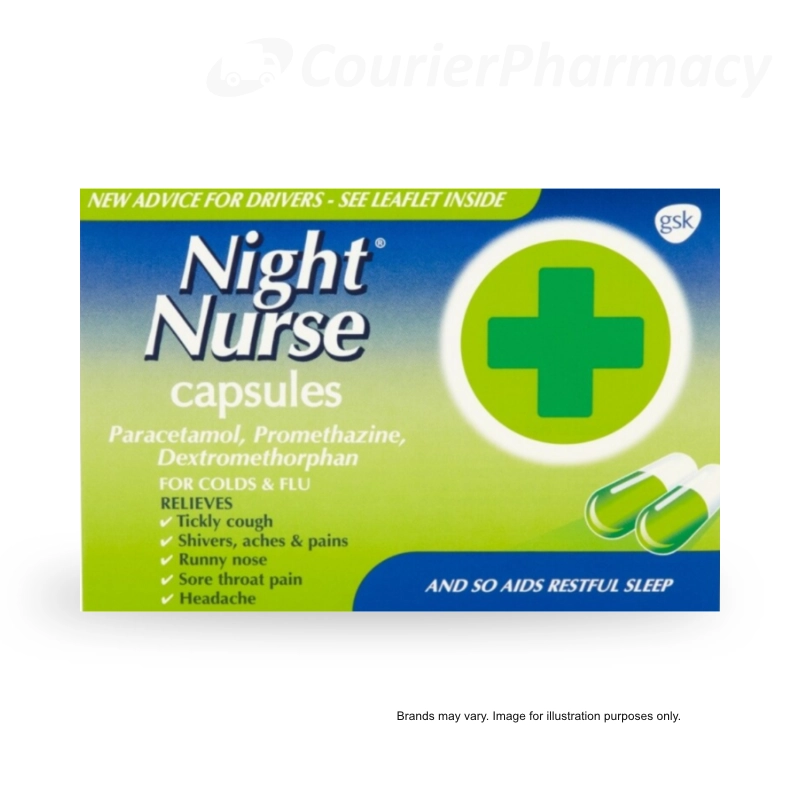
A bedtime cold and flu combination containing paracetamol 500mg, promethazine hydrochloride 10mg, and dextromethorphan hydrobromide 7.5mg per capsule
For adult (16+) symptomatic relief of colds, chills and influenza at night — sedation is a therapeutic effect, not a side effect
Adult dose: 2 capsules before bed; maximum 4 capsules in 24 hours with at least 4 hours between doses; not for daytime use if you need to drive or stay alert
Contraindicated with MAOI antidepressants (current or last 2 weeks) and in patients at risk of respiratory failure; not for children under 16, pregnancy, or breastfeeding
Available from Courier Pharmacy as a pharmacy medicine (P) with pharmacist support for suitability
Night Nurse Capsules are hard gelatin capsules supplied in packs of 10 capsules.
Each capsule contains three active ingredients targeted at nighttime cold and flu symptoms. Such as:
paracetamol 500mg (a widely-used analgesic and antipyretic),
promethazine hydrochloride 10mg (a first-generation sedating antihistamine that dries a runny nose and induces drowsiness), and
dextromethorphan hydrobromide 7.5mg (a non-opioid cough suppressant).
Additionally, the standard adult dose of 2 capsules provides 1000mg paracetamol, 20mg promethazine, and 15mg dextromethorphan — the same active-ingredient doses as one 20ml dose of Night Nurse liquid, so patients familiar with the liquid can switch to capsules without any dose change.
However, the capsule format avoids the liquid’s ethanol (18% v/v), sorbitol, and sugar content, which some patients prefer (particularly those with diabetes, following an alcohol-free lifestyle, or with sugar-alcohol intolerance).
How the three actives work together
Cold and flu symptoms come from several different processes — infection-driven inflammation causing aches and fever, mucous membrane changes causing runny nose and congestion, and airway irritation causing cough.
In particular, Night Nurse’s three actives target these different symptom groups in complementary ways. Additionally, paracetamol works mainly in the central nervous system to reduce pain perception and lower fever, dulling headache, muscle aches, and sore throat.
However, promethazine is a first-generation sedating antihistamine that dries a runny nose by blocking histamine H1 receptors in the nasal mucosa and adds a sedative effect (which is deliberately therapeutic for a bedtime cold remedy, the sleep it induces is part of the benefit, not a side effect to work around).
Furthermore, dextromethorphan is a non-opioid cough suppressant that acts centrally in the brainstem to reduce the cough reflex, helping quiet a dry, unproductive cough that would otherwise disturb sleep. As a result, the three actives together provide multi-symptom cold and flu relief specifically formulated for use at bedtime.
A pharmacy medicine, supplied with pharmacist support
Night Nurse Capsules are a pharmacy medicine (P). This means they are supplied through pharmacies rather than being available on general sale. Firstly, this is because the combination of a sedating antihistamine, a cough suppressant, and paracetamol. This combination has more contraindications and interactions than plain paracetamol or a simple cold remedy.
Additionally, the pharmacist may ask a few questions before supply to check the product is suitable for you, for example:
whether you’re taking other medicines that could interact,
whether you have certain medical conditions (glaucoma, prostate problems, epilepsy, heart rhythm concerns, breathing conditions),
whether you need to drive the next morning, or whether you’re pregnant.
However, this brief conversation isn’t a barrier. This consultation is there to keep you safe. Especially around the MAOI contraindication (a specific class of antidepressants) and around paracetamol overdose risk from combining products.
Key features and specifications
Active ingredients per capsule: paracetamol 500mg + promethazine hydrochloride 10mg + dextromethorphan hydrobromide 7.5mg
Form: hard gelatin capsule
Pack size: 10 capsules (five bedtime doses at the standard 2-capsule dose)
A widely-used bedtime cold and flu remedy for adult symptomatic relief
Night Nurse Capsules are one of the UK’s most well-known nighttime cold and flu remedies. Firstly, each capsule contains three active ingredients selected specifically for bedtime symptomatic relief: paracetamol (500mg) which relieves pain and reduces fever, promethazine hydrochloride (10mg) which is a first-generation sedating antihistamine that dries a runny nose and helps you fall asleep, and dextromethorphan hydrobromide (7.5mg) which suppresses a dry cough.
Additionally, the formulation is intentionally sedating, the drowsiness that promethazine causes is a therapeutic effect for a nighttime cold and flu remedy, not a side effect to work around. However, this means Night Nurse Capsules are for bedtime use only; do not take them if you need to drive, operate machinery, or otherwise stay alert.
Furthermore, Night Nurse Capsules are contraindicated in children under 16, in patients taking or recently taking monoamine oxidase inhibitor (MAOI) antidepressants, in patients at risk of respiratory failure (severe COPD, pneumonia, asthma attack), and are subject to a number of other important warnings covered below.
When to see a doctor rather than self-medicate
Night Nurse Capsules are designed for short-term symptom relief of a normal cold or flu. However, some symptoms need medical assessment rather than continued self-medication.
Difficulty breathing, chest tightness, or breathlessness at rest — call 999 or NHS 111
Coughing up blood, or thick coloured phlegm with fever, breathlessness, or chest pain — see your GP
Fever above 39°C not settling, or lasting more than 3 days despite treatment
Severe or persistent headache, one-sided weakness, confusion, or neck stiffness — call 999
Cold or flu symptoms lasting more than 7 to 10 days without improvement, or symptoms that improve and then worsen
If you’re pregnant, breastfeeding, over 65, or have a chronic condition (asthma, COPD, diabetes, heart disease, weakened immune system), call NHS 111 early rather than self-medicating
Five key takeaways
Night Nurse Capsules are a bedtime cold and flu combination containing paracetamol 500mg, promethazine hydrochloride 10mg (sedating antihistamine), and dextromethorphan hydrobromide 7.5mg (cough suppressant) per capsule.
Licensed for adult (16+) symptomatic relief of colds, chills, and influenza at night — the sedating effect helps you sleep through cold and flu symptoms.
Adult dose: 2 capsules before bed; if repeat dosing is needed, maximum 4 capsules in 24 hours with at least 4 hours between doses; do not take during the day if you need to drive, operate machinery, or stay alert.
Contraindicated with monoamine oxidase inhibitor (MAOI) antidepressants (current or within last 2 weeks) and in patients at risk of respiratory failure (severe COPD, pneumonia, acute asthma); not for children under 16, pregnancy, or breastfeeding.
Night Nurse Capsules are a pharmacy medicine (P) — not available on general sale. Ask the Courier Pharmacy team if you’re unsure whether it’s suitable for you.
What are Night Nurse Capsules: overview
Where Night Nurse Capsules fit in cold and flu treatment
Most colds and mild flu resolve within 7 to 10 days without any specific treatment, and the mainstay of self-care is rest, fluids, and time. In particular, symptomatic relief medicines like Night Nurse Capsules don’t shorten the illness but can make symptoms more tolerable and improve sleep quality, which is important because sleep supports immune function and recovery.
However, Night Nurse isn’t the only option — plain paracetamol or ibuprofen can help pain and fever without sedation, plain decongestants (pseudoephedrine, xylometazoline nasal spray) can help stuffy nose, plain cough suppressants (Robitussin Dry Cough) can help cough, and plain saline nasal sprays or steam inhalation may help congestion.
Additionally, Night Nurse’s specific niche is bedtime multi-symptom relief where the sedating effect is helpful; it’s not the right choice if you need to stay alert. Furthermore, for daytime cold and flu symptoms, Day Nurse or a non-sedating cold and flu product like Sudafed Blocked Nose or a Lemsip may fit better. As a result, Night Nurse Capsules are one tool among several — pick based on when you’ll take them and what symptoms most need relief.
Night Nurse Capsules vs Night Nurse Oral Solution
Both formulations contain the same three actives at the same 2-capsule / 20ml doses. In particular, one 20ml dose of the liquid provides paracetamol 1000mg, promethazine 20mg, and dextromethorphan 15mg — identical to the 2-capsule dose of the capsule form.
Additionally, the choice between capsules and liquid is mostly about preference and formulation. However, the liquid contains ethanol (18% v/v — about 3.6ml of alcohol per 20ml dose), sorbitol, glucose, and sodium; the capsules avoid all of these.
Furthermore, patients who prefer to avoid alcohol (for personal, religious, or medical reasons — including those with alcohol use history or on certain medicines), those with diabetes wanting to avoid the sugar content, or those with sorbitol intolerance may prefer the capsules. As a result, the capsule format is often the better choice for patients where these considerations matter.
Night Nurse Capsules vs Day Nurse Capsules
Day Nurse and Night Nurse are complementary products designed for daytime and nighttime cold and flu relief respectively. In particular, Day Nurse Capsules contain paracetamol, pseudoephedrine (a decongestant), and pholcodine (a cough suppressant) — no sedating antihistamine, so they don’t cause drowsiness.
However, Night Nurse Capsules contain the sedating promethazine specifically because sleep-promoting effect is the therapeutic goal at bedtime. Additionally, Day & Night Nurse combination packs contain both products so you can use Day Nurse during the day and Night Nurse at bedtime.
Furthermore, Day Nurse’s pseudoephedrine content has its own considerations (raised blood pressure, heart rhythm concerns, prostate issues) that don’t apply to Night Nurse. As a result, these products aren’t interchangeable — the sedating vs non-sedating profile is a fundamental difference.
Short-term use only
Night Nurse Capsules are licensed for short-term (up to 3 days) symptomatic relief of acute cold and flu at night. In particular, if cold and flu symptoms persist beyond 7 to 10 days, worsen after initial improvement, or are accompanied by breathing difficulty, high persistent fever, or other concerning features, medical assessment is needed rather than continued self-medication.
Additionally, do not use Night Nurse Capsules as a general sleep aid — this is not what they’re licensed for, and regular sedating-antihistamine use can lead to tolerance, next-day grogginess, and (in older adults) increased fall risk. However, if you have ongoing sleep problems, see your GP for proper assessment rather than self-medicating. As a result, Night Nurse Capsules should be used as a short-term acute-illness remedy, not a long-term sleep solution.
Self-medication with pharmacist support
Because Night Nurse is a pharmacy medicine, buying it at Courier Pharmacy comes with pharmacist support built in. In particular, the pharmacist can check that Night Nurse is suitable for your symptoms and situation, that you’re not on any medicines it interacts with (particularly MAOI antidepressants), and that no contraindications apply.
Additionally, if a different product would be safer or more effective for your specific situation, we’ll tell you. However, self-medication is only appropriate for uncomplicated, short-term cold and flu in adults who are otherwise well — if symptoms are severe, unusual, or accompanied by other concerning features (see When to see a doctor section above), medical assessment is more appropriate than any OTC remedy. As a result, our approach is to support informed self-medication where it’s appropriate and steer you to a doctor where it isn’t.
Why choose Courier Pharmacy for your Night Nurse Capsules
Registered, independent, and patient-led
Courier Pharmacy is a UK-registered independent pharmacy. The General Pharmaceutical Council regulates us. Firstly, even for a well-known pharmacy medicine like Night Nurse, pharmacist support matters — because a small conversation about your medical history, other medicines, and current symptoms can prevent avoidable harm.
Additionally, we treat every request as an opportunity to check that the product is a good fit, rather than a simple retail transaction. As a result, buying Night Nurse Capsules from us comes with the reassurance that a UK-qualified pharmacist has thought about your specific situation.
Dr Ada Jex-Cori, our brand pharmacist
Our brand pharmacist is Dr Ada Jex-Cori. She represents the spirit of what we do. Named for Ada Lovelace, Sophia Jex-Blake, and Gerty Cori, she stands for evidence-led, unafraid-of-questions medicine. Her message is straightforward. You’re not broken. The system is. We’re here to change that.
Care that keeps showing up
Pharmacy-medicine purchases aren’t one-off transactions when done properly. Furthermore, we’re here to answer follow-up questions if the product isn’t working as expected, if you notice unexpected side effects, or if your symptoms change. Additionally, if cold and flu symptoms aren’t responding to Night Nurse Capsules, we can help you think about whether a different OTC option, a GP appointment, or an NHS 111 call is the right next step. However, we won’t sell repeated packs to someone who really needs medical assessment — that’s not care, it’s just retail.
Free fortnightly Sunday drop-in clinics in Derby
Healthcare shouldn’t only happen when you’re paying for it. Every fortnight, we run free drop-in talks at Insomnia Coffee Shop on Burton Road, Derby, on Sunday from 10am to 12 noon. Anyone can come. No appointment. No cost. No pressure. We cover mental health, hormones, skincare, hair loss, and more.
Buy Night Nurse Capsules (Pharmacy Medicine) from Courier Pharmacy
Night Nurse Capsules are a pharmacy medicine (P), with smaller packs available for general sale (GSL). You can order at courierpharmacy.co.uk. Firstly, add the pack size you need to your basket. Then, a brief pharmacist check ensures the product is suitable for you (no contraindications, no significant interactions with anything else you’re taking). Additionally, we dispense and deliver promptly.
Add the pack size you need to your basket at courierpharmacy.co.uk
A brief pharmacist suitability check may be conducted for larger P packs
Your order is dispensed and dispatched promptly
Follow the dosage instructions carefully; contact us if you have questions
If Night Nurse Capsules aren’t the right choice for your situation, we’ll explain why and suggest better routes — a different OTC option (plain paracetamol, a non-sedating cold and flu remedy, or a plain cough suppressant), a visit to your GP, or NHS 111. Above all, we won’t dispense a pack that isn’t suitable for you just because it was requested.
Summary
A pharmacy-sold bedtime cold and flu combination containing paracetamol (analgesic and antipyretic), promethazine (sedating antihistamine), and dextromethorphan (cough suppressant).
Adult dose: 2 capsules before bed; maximum 4 capsules in 24 hours; not more than 3 days without medical advice; not for daytime use if driving or requiring alertness.
Contraindicated with MAOI antidepressants (current or last 2 weeks) and in patients at risk of respiratory failure (severe COPD, pneumonia, acute asthma); not for children under 16, pregnancy, or breastfeeding.
Not for chronic cough, chronic insomnia, or ongoing cold and flu — designed for short-term symptomatic relief during acute illness only.
Active ingredients in Night Nurse Capsules
Paracetamol 500mg
Paracetamol (acetaminophen) is a widely-used analgesic and antipyretic. In particular, at the 500mg dose in each Night Nurse Capsule, it works mainly in the central nervous system to reduce pain perception and lower body temperature; its exact mechanism is complex but includes effects on prostaglandin synthesis in the brain and on descending pain pathways.
However, paracetamol has a narrower safety margin than commonly assumed — the standard maximum adult dose is 4g (4000mg) in 24 hours from all sources, and doses only slightly above this can cause delayed but serious liver damage. Additionally, in Night Nurse the paracetamol contribution across the maximum dose (4 capsules) is 2000mg — well within the 4g daily maximum — but this leaves relatively little room for adding other paracetamol-containing products like cold and flu remedies, combination analgesics, or co-codamol.
Furthermore, patients with liver disease, chronic alcohol use, malnourishment, or on certain other medicines have an even narrower safety margin. Above all, do not exceed the stated dose and always check the labels of other medicines for paracetamol content.
Promethazine hydrochloride 10mg
Promethazine is a first-generation antihistamine of the phenothiazine class. In particular, at the 10mg dose in each Night Nurse Capsule (20mg in the standard 2-capsule dose), it blocks histamine H1 receptors, which dries a runny nose and reduces sneezing during colds. However, promethazine crosses the blood-brain barrier much more readily than newer non-sedating antihistamines (loratadine, cetirizine, fexofenadine), which is why it causes significant sedation — a therapeutic effect for a bedtime cold remedy but a significant limitation for daytime use.
Additionally, promethazine has anticholinergic effects (dry mouth, blurred vision, urinary retention) and, being a phenothiazine, can prolong the QT interval on the electrocardiogram at higher doses — this is why it's used with caution in patients with cardiac disease or on other QT-prolonging medicines. Furthermore, promethazine can lower the seizure threshold and can worsen breathing in patients with severe respiratory disease. As a result, this is the active with the most contraindications and cautions in Night Nurse.
Dextromethorphan hydrobromide 7.5mg
Dextromethorphan is a non-opioid cough suppressant. In particular, at the 7.5mg dose in each Night Nurse Capsule (15mg in the standard 2-capsule dose), it acts centrally in the cough centre of the brainstem to reduce the cough reflex. However, dextromethorphan is metabolised by the liver enzyme CYP2D6, so its levels can be affected by other medicines that inhibit this enzyme (fluoxetine, paroxetine, bupropion, quinidine) or by variations in CYP2D6 activity between individuals.
Additionally, at therapeutic doses dextromethorphan is not addictive and doesn't carry the same abuse concerns as codeine-containing cough suppressants; however, very high doses (many times the recommended amount) can produce dissociative and euphoric effects that have led to recreational misuse in some populations. Furthermore, dextromethorphan can cause serotonin syndrome when combined with monoamine oxidase inhibitors (MAOIs) — this is why Night Nurse is contraindicated in patients on or recently on MAOI antidepressants. As a result, this is an important interaction to disclose during consultation.
What are Night Nurse Capsules for?
Cold and flu symptoms at night
Night Nurse Capsules are licensed specifically for symptomatic relief of colds, chills, and influenza at night. In particular, they target the cluster of symptoms that typically prevent restful sleep during a cold or flu:
headache,
muscle aches,
fever,
runny nose, and
dry cough.
However, they do not treat the underlying viral infection, and won't shorten the illness (though better sleep supports immune function and recovery). Additionally, most colds resolve within 7 to 10 days without any specific treatment; if symptoms persist beyond this, worsen after initial improvement, or are severe from the start (breathing difficulty, high fever not settling), medical assessment is more appropriate than continued self-medication. Furthermore, the sedating effect is a deliberate feature for bedtime relief, not a side effect to work around — Night Nurse is designed for use when you're ready to sleep.
Runny nose (rhinorrhoea)
The promethazine component targets the runny nose commonly associated with colds. In particular, first-generation antihistamines like promethazine reduce mucus secretion in the nasal passages through both antihistamine and anticholinergic mechanisms. However, they don't clear a blocked nose (which is often the more troublesome symptom for many patients)> For blocked-nose relief, a decongestant like pseudoephedrine (available in Day Nurse and various decongestant products) or a topical decongestant nasal spray (Otrivine, Sudafed nasal spray) is more effective.
Additionally, saline nasal sprays and steam inhalation can help with congestion without medication. Furthermore, if runny or blocked nose is the dominant symptom and you don't need sedation, a plain decongestant or antihistamine may fit better than a full combination product like Night Nurse.
Dry cough
The dextromethorphan component in Night Nurse suppresses dry cough. In particular, dextromethorphan works centrally in the brainstem to reduce the cough reflex, which is helpful when a dry, unproductive cough is disrupting sleep. However, dextromethorphan is not appropriate for productive coughs (with phlegm). In productive coughs, the cough is helping clear the airways and suppressing it can trap infection lower down. Additionally, if you have a wet, productive cough, an expectorant (guaifenesin, available in Robitussin Chesty Cough and various products) may be more appropriate than a suppressant. Furthermore, if cough is severe, persistent (more than 3 weeks), or associated with breathing difficulty, coughing up blood, or chest pain, medical assessment is warranted. Above all, dextromethorphan is best for dry cough that's disrupting sleep.
Sleep during cold and flu
The sleep-promoting effect of the promethazine is a therapeutic feature of Night Nurse. In particular, quality sleep supports immune function and recovery from viral illness, and cold and flu symptoms (headache, aches, cough, runny nose) commonly disrupt sleep. However, Night Nurse is not licensed as a general sleep aid, and repeated use for insomnia in the absence of cold and flu symptoms is not appropriate. Additionally, promethazine-induced sleep isn't identical to natural sleep. The sleep architecture is somewhat different, and next-day drowsiness is common. Furthermore, if you have ongoing sleep problems, see your GP for proper assessment rather than repeatedly self-medicating with Night Nurse or any sedating medicine. As a result, sleep support is a specific short-term benefit during acute cold and flu, not an ongoing use case.
What Night Nurse isn't for
Night Nurse Capsules are not for chronic cough, chronic insomnia, general sedation, long-term cold and flu, or non-cold conditions. In particular, they aren't licensed for children under 16, pregnancy, or breastfeeding. Additionally, they're not for productive cough (with phlegm) or a persistent cough of unknown cause. However, if you have severe or unusual symptoms (breathing difficulty, high fever not settling, chest pain, coughing up blood, prolonged cold and flu symptoms), Night Nurse is not the right response, medical assessment is. Furthermore, some cough and cold conditions (chronic obstructive pulmonary disease, asthma, sinusitis, whooping cough, COVID-19 with concerning features) need specialist assessment and different treatments. As a result, Night Nurse is one tool for short-term acute cold and flu symptoms in otherwise-well adults, not a universal solution.
How does Night Nurse work?
Paracetamol's central action for pain and fever
Paracetamol's mechanism appears to involve reducing prostaglandin synthesis in the brain, activating descending pain-modulation pathways, and (indirectly) affecting the endocannabinoid and serotonergic systems. In particular, this is why paracetamol relieves pain and lowers fever without significant anti-inflammatory effect at the site of injury.
However, this central action is what makes paracetamol suitable for headache, sore throat, and cold-related aches without the GI or bleeding risks of NSAIDs like aspirin or ibuprofen. Additionally, fever reduction from paracetamol comes from its action on the temperature-regulating centre of the hypothalamus.
Promethazine's antihistamine and sedative effects
Promethazine blocks histamine H1 receptors, which reduces the nasal mucous production driven by histamine release during cold and flu. In particular, first-generation antihistamines like promethazine cross the blood-brain barrier readily and block H1 receptors in the brain too, which is what causes the sedation.
However, the same mechanism also produces mild anticholinergic effects (dry mouth, blurred vision, urinary retention). Additionally, promethazine's H1 blockade in the brain contributes to reduced motion sickness and nausea (though these aren't licensed indications for Night Nurse specifically). Furthermore, unlike newer non-sedating antihistamines, promethazine doesn't distinguish well between peripheral (nasal) and central (brain) H1 receptors — which is exactly why it works as a bedtime cold remedy but wouldn't work well as a daytime hay fever treatment.
Dextromethorphan's cough-suppressing effect
Dextromethorphan is a non-opioid centrally-acting cough suppressant. In particular, it works in the cough centre of the brainstem to raise the threshold for cough triggering, which reduces both the frequency and intensity of a dry, unproductive cough.
However, unlike codeine (an opioid cough suppressant found in some other combination products like Solpadeine and pholcodine-containing older cold remedies), dextromethorphan doesn't cause constipation, respiratory depression at therapeutic doses, or classical opioid dependence. Additionally, dextromethorphan is metabolised primarily by the liver enzyme CYP2D6 into dextrorphan, which is the active metabolite responsible for most of the cough-suppressant effect. Furthermore, patients with reduced CYP2D6 activity (about 5-10% of people of European ancestry are 'poor metabolisers') may experience less cough-suppressant effect and higher parent-drug levels.
Why the combination is designed for bedtime
The three actives together cover the main symptom groups that make cold and flu hard to sleep through — pain and fever, runny nose, and dry cough — while the promethazine additionally provides sedation to help sleep. In particular, this combination is deliberately designed for the specific use case of getting to sleep and staying asleep during a cold or flu, rather than for daytime symptom relief.
However, this same design makes Night Nurse inappropriate for daytime use if you need to drive or stay alert — the sedation cannot be separated from the antihistamine action. Additionally, the moderate 500mg paracetamol dose per capsule (1000mg per 2-capsule dose) provides effective pain and fever relief at bedtime while leaving room in the daily paracetamol budget for daytime doses of a separate cold and flu product if needed (but always check total paracetamol from all sources). As a result, Night Nurse fits a specific niche — nighttime cold and flu — and shouldn't be used outside that use case.
How to take Night Nurse Capsules
Adult dose (16 years and over)
The standard adult dose is 2 capsules taken with water at bedtime. In particular, the sedating effect of the promethazine takes about 20 to 30 minutes to begin, so take Night Nurse Capsules once you're ready for sleep rather than earlier in the evening.
However, if repeat dosing during the night is needed (for example if you wake with severe symptoms), you may take a further 2 capsules provided at least 4 hours have passed since the previous dose, up to a maximum of 4 capsules in 24 hours.
Additionally, do not take Night Nurse Capsules during the day if you need to drive, operate machinery, or otherwise stay alert — the sedation is significant and can persist into the following day even after a single bedtime dose. Furthermore, do not take Night Nurse Capsules for more than 3 days without medical advice; cold and flu symptoms that last longer than this need medical assessment.
Above all, do not exceed the stated dose. A paracetamol overdose (even doses only slightly above the maximum) can cause delayed and serious liver damage that may not be apparent for days.
How quickly it works
Night Nurse Capsules typically start to take effect within 20 to 30 minutes. In particular, the sedating effect of the promethazine tends to be the first noticeable action, with pain and fever relief from paracetamol taking about 30 to 60 minutes to peak.
Additionally, cough suppression from dextromethorphan usually begins within about 30 minutes. However, the sedation can last well into the following morning for some patients. This sedation is a common experience with promethazine and doesn't necessarily mean anything is wrong. Furthermore, take a small drink of water with the dose and get into bed shortly after. As a result, Night Nurse Capsules are best used when you're ready to be in bed for at least 7 to 8 hours.
Missed doses and stopping
Night Nurse Capsules are taken as needed for nighttime cold and flu relief, not on a fixed schedule. In particular, if you go to bed without taking a dose and later feel you need it, take it only if you'll then have at least 7 to 8 hours to sleep. Taking Night Nurse in the small hours can leave you sedated into midday. Additionally, you can stop Night Nurse Capsules whenever your symptoms have resolved, there's no need to taper. However, if you find yourself needing Night Nurse (or any sedating medicine) regularly to sleep, this warrants a conversation with your GP or pharmacist rather than continued self-medication.
Do not take with other paracetamol, antihistamines, or cough/cold products
Above all, do not take Night Nurse Capsules alongside any other product containing paracetamol, any other antihistamine (including topical antihistamine creams and other sedating cold remedies), or any other cough and cold medicine. In particular, paracetamol overlap can quickly cause dangerous overdose — paracetamol is present in many cold and flu remedies (Lemsip products, Beechams All-in-One, Sudafed Sinus, etc), combination analgesics (Solpadeine, Panadol Extra, Anadin Extra), and prescription pain products (co-codamol, co-dydramol).
Adding another sedating antihistamine or another cough suppressant compounds the sedation, anticholinergic effects, and other risks. Additionally, always check the ingredients label of any medicine you take alongside Night Nurse Capsules. As a result, one cold and flu product at a time is the safe approach — if in doubt, ask the pharmacist.
Warnings and precautions for Night Nurse Capsules
MAOI antidepressants (contraindicated)
Above all, Night Nurse Capsules must not be taken by patients currently taking, or who have taken in the last 2 weeks, monoamine oxidase inhibitor (MAOI) antidepressants. In particular, MAOIs include phenelzine (Nardil), isocarboxazid, tranylcypromine (Parnate), and the reversible MAOI moclobemide.
However, this contraindication is because the dextromethorphan component can cause a life-threatening serotonin syndrome when combined with MAOIs — with high fever, muscle rigidity, confusion, and cardiovascular instability. Additionally, linezolid (an antibiotic) and methylene blue also have MAOI-like activity and the same concern applies. Furthermore, if you're on any antidepressant, disclose this to the pharmacist before buying Night Nurse. As a result, alternative cold and flu remedies without dextromethorphan should be chosen if MAOI use applies.
Respiratory failure risk (contraindicated)
Night Nurse Capsules are contraindicated in patients with, or at risk of developing, respiratory failure. In particular, this includes severe chronic obstructive pulmonary disease (COPD), pneumonia, and during an asthma attack or asthma exacerbation. However, the promethazine's sedating effect can suppress breathing drive and depress respiratory function in these conditions.
Additionally, the cough suppression from dextromethorphan can be harmful when cough is helping clear airway secretions. Furthermore, if you have any significant chronic respiratory condition, discuss any cold and flu treatment with your GP or pharmacist before self-medicating. As a result, this is an absolute contraindication rather than a caution.
Not for children under 16
Night Nurse Capsules are not for children or adolescents under 16 years of age. In particular, the combination of sedating antihistamine and cough suppressant is not appropriate for younger patients — sedating antihistamines carry increased risk of paradoxical excitation, breathing depression, and other adverse effects in children.
Additionally, cough and cold products in general are not recommended for children under 6 (MHRA guidance), and combination products with cough suppressants are restricted further. However, for cold and flu symptoms in children, plain paracetamol or ibuprofen (age-adjusted to the correct dose based on weight) are the standard options for pain and fever, with saline nasal drops for congestion; ask the pharmacist for age-appropriate advice. As a result, Night Nurse is for adult use only.
Pregnancy (not recommended)
Night Nurse Capsules are not recommended during pregnancy. In particular, none of the three actives has established safety data supporting routine use in pregnancy. However, plain paracetamol at the lowest effective dose for the shortest time is generally considered the safer OTC option for pain and fever in pregnancy. Additionally, dextromethorphan and promethazine are less well-studied in pregnancy and are best avoided. Furthermore, if you're pregnant and unwell with a cold or flu, discuss with your midwife, GP, or pharmacist rather than self-medicating.
Breastfeeding (not recommended)
Night Nurse Capsules are not recommended during breastfeeding. In particular, promethazine and dextromethorphan can pass into breast milk and may cause drowsiness or feeding difficulty in breastfed infants. However, plain paracetamol at standard doses is considered compatible with breastfeeding for pain and fever. Additionally, ask your pharmacist or GP for safer alternatives if you need cold and flu relief while breastfeeding.
Sedation, driving, and machinery
Night Nurse Capsules cause significant sedation from the promethazine component. In particular, do not drive, ride a bicycle, operate machinery, or perform other tasks requiring alertness after taking Night Nurse Capsules.
However, the sedating effect can persist into the following day for some patients (particularly older adults and those slower to metabolise the drug), so caution with next-day driving is warranted especially if you notice residual drowsiness. Additionally, driving while impaired by prescription or OTC medicines is a criminal offence in the UK under the Road Traffic Act 1988 — this includes sedating antihistamines. As a result, take Night Nurse only when you can commit to being off the road until you're fully alert.
Promethazine has anticholinergic effects — dry mouth, blurred vision, urinary retention, and constipation. In particular, these effects can significantly worsen certain conditions and are contraindicated in narrow-angle glaucoma (where they can precipitate an acute glaucoma attack) and prostatic hypertrophy (where they can trigger acute urinary retention). However, older adults are particularly susceptible to anticholinergic side effects, including confusion and falls; Night Nurse is generally best avoided in patients over 65 unless there's no better alternative. Additionally, other anticholinergic medicines (some antidepressants, antipsychotics, urinary antispasmodics, some Parkinson's medicines) compound these effects. Furthermore, if you have any of these conditions or are on other anticholinergic medicines, discuss suitability with the pharmacist.
Epilepsy and seizure history
Promethazine can lower the seizure threshold. In particular, patients with a history of epilepsy or seizures should discuss Night Nurse with their GP or pharmacist before taking. However, if seizures occur during Night Nurse use, stop the medicine and seek medical assessment. As a result, this is a caution rather than an absolute contraindication, but disclosure matters.
Cardiac disease and QT prolongation
Promethazine is a phenothiazine and can prolong the QT interval on the electrocardiogram, particularly at high doses or in combination with other QT-prolonging medicines. In particular, this can rarely lead to a serious heart rhythm disturbance called torsades de pointes. However, at the therapeutic doses in Night Nurse this risk is small, but caution applies in patients with existing heart rhythm concerns, significant bradycardia, or on other QT-prolonging medicines (some antipsychotics, some antibiotics like moxifloxacin or clarithromycin, methadone, some antimalarials, some SSRIs like citalopram or escitalopram). Additionally, disclose any cardiac history and current medicines during pharmacist consultation.
Severe hepatic or renal impairment
Night Nurse Capsules should not be used in severe liver disease or severe kidney disease without medical advice. In particular, paracetamol clearance is reduced in liver impairment, raising the risk of hepatotoxicity even at standard doses. However, promethazine and dextromethorphan are also affected by liver and kidney function, with elevated blood levels and prolonged effects possible. Additionally, if you have moderate hepatic or renal impairment, medical assessment is needed before taking Night Nurse. As a result, disclose any liver or kidney conditions when buying.
Above all, paracetamol overdose can cause delayed but serious liver damage that may not become apparent for days. In particular, symptoms in the first 24 hours may be absent or mild, but liver damage develops over 48-96 hours and can progress to fatal liver failure without treatment. However, effective treatment (intravenous acetylcysteine) is available if given early. This is why any suspected paracetamol overdose is a medical emergency regardless of how well you feel.
Additionally, overdose can occur unintentionally if paracetamol from multiple products is combined, for example Night Nurse plus another cold and flu remedy plus co-codamol can easily exceed the safe daily maximum. Furthermore, always check the ingredients label of any medicine you take alongside Night Nurse for paracetamol content. Above all, if you or someone else has taken more Night Nurse than the stated dose (even a small amount above the maximum), call NHS 111 or go to A&E immediately — do not wait for symptoms to appear.
Duration of use (short-term only)
Do not take Night Nurse Capsules for more than 3 days without medical advice. In particular, ongoing cold and flu symptoms beyond this warrant medical assessment rather than continued self-medication — the underlying cause matters (secondary bacterial infection, worsening viral illness, other conditions). However, regular use of sedating antihistamines can cause tolerance to the sedating effect (so the sleep-promoting benefit reduces over time) and can contribute to daytime drowsiness, cognitive slowing, and (in older adults) increased fall risk. Additionally, cough that persists more than 3 weeks warrants medical assessment. Furthermore, if cold and flu symptoms haven't improved after 7 to 10 days, contact your GP or NHS 111. As a result, short-term use only is the safe pattern.
Alcohol
Avoid alcohol while taking Night Nurse Capsules. In particular, alcohol compounds the sedating effect of promethazine — the combination can cause much more sedation than either alone, with impaired coordination, judgement, and breathing depression. However, alcohol also increases the risk of paracetamol-related liver damage, particularly in regular or heavy drinkers. Additionally, alcohol can worsen the anticholinergic side effects of promethazine. Furthermore, if you drink alcohol regularly (more than 14 units per week), discuss suitability with the pharmacist before taking Night Nurse. As a result, plain water is the safe companion.
Side effects of Night Nurse Capsules
Common side effects
Common side effects from Night Nurse Capsules are mostly attributable to the promethazine component. In particular, drowsiness is very common. This is a therapeutic effect at bedtime but a limitation if it persists into the next day.
Additionally, dry mouth, dry eyes, blurred vision, mild dizziness, and mild constipation are common anticholinergic effects. However, most of these are mild and self-limiting when the medicine is stopped. Furthermore, gastrointestinal side effects (mild nausea, stomach upset) can occur from any of the three actives.
Less common but significant side effects
Some side effects need attention. In particular, next-day drowsiness or cognitive slowing that significantly affects daily function warrants stopping Night Nurse or discussing with the pharmacist.
However, difficulty passing urine (particularly in men over 50 or those with prostate concerns) warrants medical assessment. Additionally, palpitations, fast heart rate, or dizziness on standing may indicate cardiac effects.
Furthermore, paradoxical excitation (increased alertness or agitation rather than sedation) can occur, particularly in children, older adults, and rarely in other patients. If this occurs, stop Night Nurse and try a different approach.
Serious side effects requiring urgent help
Above all, seek urgent medical help for any of the following: signs of severe allergic reaction (facial or throat swelling, difficulty breathing, widespread rash, drop in blood pressure), signs of paracetamol overdose (nausea, vomiting, right upper abdominal pain days after taking too much), signs of serotonin syndrome (high fever, muscle rigidity, agitation, confusion, particularly if you've taken or recently taken an MAOI), any severe skin reaction (widespread blistering, mucosal involvement), or acute urinary retention (unable to pass urine with a distended bladder).
In particular, call 999 for severe allergic reactions or breathing emergencies. However, for less-severe but concerning symptoms, call NHS 111 or contact your GP. As a result, don't wait things out if serious side effects appear.
Do not take Night Nurse Capsules if you're currently taking, or have taken within the last 2 weeks, an MAOI antidepressant. In particular, MAOIs include phenelzine (Nardil), isocarboxazid, tranylcypromine (Parnate), and moclobemide (Manerix). However, the dextromethorphan component can cause life-threatening serotonin syndrome when combined with MAOIs.
Additionally, linezolid (an antibiotic sometimes used for resistant infections) and methylene blue have MAOI-like activity and carry the same concern. Furthermore, this is an absolute contraindication — no dose is safe with active MAOI treatment or within the 2-week washout after stopping.
Other paracetamol-containing products (critical warning)
Do not take Night Nurse Capsules alongside any other product containing paracetamol. In particular, paracetamol is present in many OTC cold and flu remedies (Lemsip products, Beechams All-in-One, Sudafed Sinus, Day Nurse, etc), combination analgesics (Solpadeine, Panadol Extra, Anadin Extra, Migraleve, Syndol), and prescription pain products (co-codamol, co-dydramol, Kapake, Tramacet). However, combining these can quickly cause paracetamol overdose — even at doses only slightly above 4g/day, delayed liver damage can occur.
Additionally, always read the label of any medicine you take alongside Night Nurse to check paracetamol content. As a result, if in doubt, ask the pharmacist to check compatibility.
Other sedating antihistamines and cough/cold medicines
Do not combine Night Nurse Capsules with other antihistamines (whether sedating like chlorphenamine/Piriton or non-sedating like loratadine/cetirizine), other cough suppressants (pholcodine, codeine linctus), or other combination cold and flu products. In particular, the sedation and anticholinergic effects compound with additional antihistamines, and cough suppressant overlap adds no benefit but multiplies risk. However, this includes topical antihistamine creams (like Anthisan) which contribute to overall antihistamine load. Additionally, this is another reason to stick to one cold and flu product at a time.
Alcohol and other CNS depressants
Avoid alcohol while taking Night Nurse (see Warnings section above). In particular, alcohol substantially compounds sedation. However, other central nervous system depressants — benzodiazepines (diazepam, lorazepam, clonazepam), Z-drugs for sleep (zolpidem, zopiclone), opioid painkillers (morphine, oxycodone, tramadol, codeine), sedating antipsychotics, and some antiepileptic medicines — all combine with promethazine to cause additive sedation and breathing depression. Additionally, if you take any of these regularly, discuss with your pharmacist or prescriber before taking Night Nurse. Furthermore, gabapentin and pregabalin also add to sedation.
Anticholinergic drugs
Other medicines with anticholinergic effects add to Night Nurse's anticholinergic side effects. In particular, tricyclic antidepressants (amitriptyline, nortriptyline), some antipsychotics (chlorpromazine, olanzapine), urinary antispasmodics (oxybutynin, tolterodine, solifenacin), some Parkinson's medicines, and some medicines for irritable bowel syndrome all have anticholinergic effects. However, combining these compounds risks of dry mouth, constipation, urinary retention, blurred vision, confusion (particularly in older adults), and precipitation of acute glaucoma. Additionally, disclose all regular medicines to the pharmacist.
QT-prolonging medicines
Promethazine can prolong the QT interval, and this risk is increased when combined with other QT-prolonging medicines. In particular, this includes some antipsychotics (haloperidol, chlorpromazine, pimozide, sulpiride, amisulpride), some antibiotics (moxifloxacin, clarithromycin, erythromycin), some antimalarials (halofantrine), methadone, and some SSRIs (citalopram, escitalopram at higher doses). However, at the therapeutic doses in Night Nurse the risk is small, but combinations should be discussed with the pharmacist. Additionally, this matters more in patients with existing cardiac disease, low potassium, or low magnesium.
CYP2D6 interactions (dextromethorphan)
Dextromethorphan is metabolised by the liver enzyme CYP2D6. In particular, strong CYP2D6 inhibitors — including fluoxetine (Prozac), paroxetine (Seroxat), bupropion, quinidine, and some others — can substantially raise dextromethorphan blood levels. However, this can increase the risk of side effects from dextromethorphan. Additionally, if you're on any of these medicines, discuss with the pharmacist. Furthermore, individual variation in CYP2D6 activity between people (some are 'poor metabolisers') can also affect dextromethorphan levels.
Other significant interactions
Additional interactions warrant caution. In particular, metoclopramide and domperidone (anti-sickness medicines) can speed up paracetamol absorption; cholestyramine (used for high cholesterol) can slow paracetamol absorption. However, some antiepileptic medicines (phenytoin, carbamazepine, phenobarbital) and rifampicin (an antibiotic) increase the risk of paracetamol liver toxicity. Additionally, warfarin patients should be aware that regular paracetamol use (2g/day or more) can gradually raise the INR — this is less of a concern with occasional Night Nurse use but worth mentioning if using regularly. As a result, always disclose your full medication list when buying Night Nurse.
Frequently asked questions about Night Nurse Capsules
When should I take Night Nurse Capsules?
Take 2 capsules with water at bedtime, once you're ready for sleep. In particular, the sedating effect begins within about 20 to 30 minutes, so take Night Nurse just before you plan to be in bed. However, allow at least 7 to 8 hours for the sedation to wear off — taking it in the small hours can leave you drowsy well into the following day.
Can I drive after taking Night Nurse Capsules?
No, not until you're fully alert. In particular, the promethazine in Night Nurse causes significant sedation that can persist into the following day. However, driving while impaired by prescription or OTC medicines is a criminal offence in the UK under the Road Traffic Act 1988. Additionally, take Night Nurse only when you can commit to being off the road until you're properly alert — for many patients this means avoiding morning driving after a bedtime dose.
What if I still feel drowsy in the morning?
Next-day drowsiness is common after Night Nurse, particularly in older adults and those slower to metabolise the promethazine. In particular, do not drive, ride a bicycle, or operate machinery until you're fully alert. However, drink water, get some fresh air, and give yourself time — the effect usually wears off within a few hours. Additionally, if next-day drowsiness is significantly affecting daily function, consider reducing to 1 capsule at bedtime or discuss with the pharmacist about a different product.
Can I take Night Nurse with alcohol?
No. Alcohol substantially compounds the sedating effect of promethazine, causing much more sedation than either alone. In particular, the combination can cause impaired coordination, judgement, and (rarely) breathing depression. However, alcohol also increases the risk of paracetamol-related liver damage. Additionally, plain water is the safe companion for Night Nurse.
Can I take other cold and flu products with Night Nurse?
No, do not combine Night Nurse with other cold and flu remedies. In particular, most cold and flu products contain paracetamol — combining them can quickly cause dangerous paracetamol overdose. However, they may also contain other overlapping actives (antihistamines, cough suppressants) that would compound side effects. Additionally, if you need daytime cold and flu relief alongside Night Nurse for bedtime, discuss with the pharmacist — options like Day Nurse (which contains paracetamol and pseudoephedrine but not the sedating antihistamine or dextromethorphan) may fit but require careful attention to total paracetamol from all sources.
What if I take antidepressants?
Discuss with the pharmacist before taking Night Nurse. In particular, if you take an MAOI antidepressant (phenelzine, isocarboxazid, tranylcypromine, moclobemide), Night Nurse is contraindicated — the dextromethorphan component can cause a life-threatening serotonin syndrome. However, other antidepressants (SSRIs, SNRIs, tricyclics) also need attention: fluoxetine and paroxetine (SSRIs) can raise dextromethorphan levels; sedating antidepressants (mirtazapine, tricyclics) add to Night Nurse's sedation; some antidepressants add to anticholinergic effects; some SSRIs (citalopram, escitalopram) can add to QT interval concerns. Additionally, this doesn't mean Night Nurse is always contraindicated with these medicines, but the interaction check matters.
Can children take Night Nurse Capsules?
No. Night Nurse Capsules are not for children or adolescents under 16 years of age. In particular, the combination of sedating antihistamine and cough suppressant is not appropriate for younger patients. However, for cold and flu symptoms in children, plain paracetamol or ibuprofen (age-adjusted based on weight) are the standard options for pain and fever, with saline nasal drops for congestion. Additionally, ask the pharmacist for age-appropriate advice.
Can I take Night Nurse during pregnancy or breastfeeding?
Not without medical advice. In particular, Night Nurse is not recommended during pregnancy or breastfeeding — none of the three actives has established safety data supporting routine use in these situations. However, plain paracetamol at the lowest effective dose for the shortest time is generally considered the safer OTC choice for pain and fever in pregnancy and while breastfeeding. Additionally, discuss with your midwife, GP, or pharmacist for cold and flu symptoms in pregnancy or breastfeeding.
How long can I take Night Nurse for?
Do not take Night Nurse Capsules for more than 3 days without medical advice. In particular, cold and flu symptoms that last longer than this need medical assessment rather than continued self-medication. However, regular use of sedating antihistamines can cause tolerance and next-day cognitive slowing. Additionally, if cold and flu symptoms haven't improved after 7 to 10 days, contact your GP or NHS 111.
What's the difference between Night Nurse Capsules and Night Nurse liquid?
Both formulations contain the same three actives at the same 2-capsule / 20ml doses. In particular, one 20ml dose of the liquid provides identical paracetamol, promethazine, and dextromethorphan content to the 2-capsule dose. However, the liquid contains ethanol (about 18% by volume — around 3.6ml of alcohol per 20ml dose), sorbitol, glucose, and sodium; the capsules avoid all of these. Additionally, patients who prefer to avoid alcohol (for personal, religious, medical, or recovery reasons), those with diabetes wanting to avoid the sugar content, or those with sorbitol intolerance may prefer the capsules.
What's the difference between Night Nurse and Day Nurse?
Night Nurse (this product) is for bedtime use and contains a sedating antihistamine (promethazine) plus a cough suppressant (dextromethorphan) plus paracetamol. In particular, the sedation is a therapeutic feature at bedtime but makes Night Nurse inappropriate for daytime use. However, Day Nurse Capsules are for daytime use and contain a non-sedating decongestant (pseudoephedrine) plus a cough suppressant (pholcodine) plus paracetamol — no sedating antihistamine. Additionally, Day & Night Nurse combination packs contain both products for round-the-clock relief. Furthermore, Day Nurse's pseudoephedrine has its own considerations (raised blood pressure, heart rhythm, prostate issues) that don't apply to Night Nurse.
What about older adults taking Night Nurse?
Night Nurse Capsules are generally best avoided in adults over 65 unless there's no better alternative. In particular, older adults are more susceptible to promethazine's anticholinergic effects (confusion, urinary retention, constipation) and sedating effects (falls, cognitive slowing). However, other cold and flu products (plain paracetamol with saline nasal drops, for example) are usually safer. Additionally, if Night Nurse is used in older adults, a single-capsule bedtime dose (rather than 2 capsules) may be considered — discuss with the pharmacist.
Can I take my regular sleep tablets with Night Nurse?
Not without medical advice. In particular, benzodiazepines (diazepam, lorazepam, temazepam), Z-drugs (zolpidem, zopiclone), and other sedating sleep medicines compound with promethazine to cause additive sedation and (rarely) breathing depression. However, if you take any regular sleep medication, discuss with your GP or pharmacist before taking Night Nurse. Additionally, plain paracetamol for the cold and flu pain, without the sedating combination, may be a safer approach.
Is Night Nurse addictive?
Night Nurse Capsules are not addictive in the way opioid painkillers or benzodiazepines can be. In particular, at therapeutic doses none of the three actives cause chemical dependence. However, dextromethorphan at very high doses (many times the recommended amount) can cause dissociative effects and has been misused recreationally in some populations; at Night Nurse's therapeutic dose this is not a concern. Additionally, promethazine can cause tolerance to its sedating effect with regular use — this isn't addiction but is a reason not to use Night Nurse as an ongoing sleep aid. Furthermore, if you find yourself using Night Nurse (or any sedating medicine) regularly, see your GP.
Can I take Night Nurse if I have asthma?
Not during an asthma attack or exacerbation — Night Nurse is contraindicated in acute respiratory failure risk. In particular, promethazine's sedation can suppress breathing drive during an asthma attack. However, in stable, well-controlled asthma, Night Nurse may be used for cold and flu with pharmacist advice, but disclose the asthma diagnosis. Additionally, be alert to any worsening breathlessness or wheeze during use and stop if this occurs. Furthermore, if you have severe or poorly-controlled asthma, discuss any cold and flu treatment with your GP or asthma nurse.
What should I do if I've taken too many Night Nurse Capsules?
Contact NHS 111 or go to A&E immediately, even if you feel well. In particular, paracetamol overdose can cause delayed but serious liver damage that may not be apparent for days — effective treatment is available if given early. However, promethazine overdose can also cause severe sedation, breathing depression, seizures, and cardiac effects. Additionally, don't wait for symptoms — early treatment is critical. Furthermore, take the packaging with you so medical staff can see exactly what and how much you've taken.
Do I need a prescription for Night Nurse from Courier Pharmacy?
No, Night Nurse Capsules are a pharmacy medicine (P), not prescription-only. In particular, this means they can be supplied without a prescription but only via a pharmacy with pharmacist involvement (not on general sale). However, our pharmacy team can help you decide whether Night Nurse is right for you, without needing a prescription. Additionally, if it's not suitable, we'll suggest better options.
Disclaimer
Disclaimer: This information is for education only and isn't a substitute for personal medical advice. Always follow the packaging directions, and ask your pharmacist or GP if you're unsure whether Night Nurse Capsules are suitable for you.