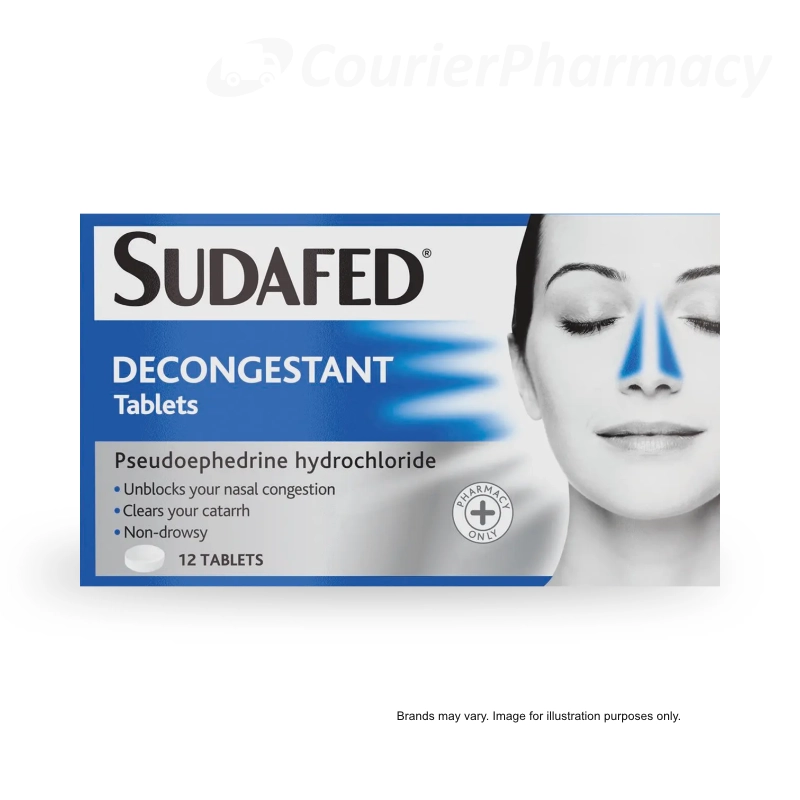
A single-ingredient oral decongestant containing pseudoephedrine hydrochloride 60mg per film-coated tablet
For adults and children 12+ for symptom relief of nasal, sinus, and Eustachian tube congestion from colds, hay fever, and upper respiratory allergies
Adult and 12+ dose: 1 tablet every 4-6 hours; maximum 4 tablets in 24 hours; not more than 5-7 days without medical advice
Non-drowsy (unlike sedating antihistamine cold remedies), but can cause insomnia if taken close to bedtime; contraindicated with a number of cardiovascular and other medical conditions and medicines
Available from Courier Pharmacy as a pharmacy medicine (P), subject to UK pack size restrictions (one pack per transaction) with pharmacist support for suitability
Sudafed Decongestant Tablets are red film-coated tablets, supplied in blister packs (typical pack size 12 tablets, the maximum allowed under UK pseudoephedrine pack size restrictions). Each tablet contains a single active ingredient: pseudoephedrine hydrochloride 60mg. A synthetic sympathomimetic drug that acts as an oral decongestant by narrowing blood vessels in the nasal and sinus mucosa.
Also, the standard adult dose of 1 tablet delivers 60mg pseudoephedrine. Studies dating back to the 1980s have shown this to be the optimal single adult dose. It gives maximum decongestant effect with minimal cardiovascular effect.
However, unlike combined cold and flu products, Sudafed Decongestant Tablets contain no paracetamol, no antihistamine, and no cough suppressant. So they can be paired with a plain painkiller if pain or fever also need treatment. Options include paracetamol or ibuprofen.
Furthermore, Sudafed sits within a wider Sudafed range. Other products in the range include Sudafed Blocked Nose Spray (a topical decongestant with xylometazoline). Also available: Sudafed Mucus Relief and Sudafed Sinus (combined cold products with paracetamol), and Sudafed Nasal Spray (oxymetazoline). This specific product (the tablets) is the classic oral single-ingredient pseudoephedrine formulation.
As a result, choosing the right Sudafed product depends on your symptoms, your medical history, and any other medicines you take.
How pseudoephedrine works as a decongestant
Nasal congestion during colds, sinus infections, and allergies is caused mainly by swelling of blood vessels and tissues in the nasal mucosa. This reduces the size of the nasal passages and impedes airflow. Notably, pseudoephedrine acts on alpha-adrenergic receptors on blood vessel walls, causing the vessels to narrow (vasoconstrict).
Plus, this narrowing of blood vessels reduces the swelling of the nasal mucosa, opening up the nasal passages and making breathing through the nose easier. However, this same blood-vessel-narrowing effect is what drives pseudoephedrine’s cardiovascular side effects. Some narrowing of blood vessels also occurs in blood vessels throughout the body, which can raise blood pressure and heart rate.
Furthermore, pseudoephedrine also has weak beta-adrenergic effects that can contribute to central nervous system stimulant effect (feeling more alert, trouble sleeping, occasionally anxiety or restlessness). As a result, pseudoephedrine’s benefits and side effects come from the same underlying mechanism. You cannot separate the decongestant effect from the systemic sympathomimetic effects.
A pharmacy medicine with pack size restrictions
Sudafed Decongestant Tablets are a pharmacy medicine (P), supplied only via pharmacies with pharmacist involvement. In short, pseudoephedrine is a chemical precursor that can be used to make methamphetamine (crystal meth). Because of this, UK legislation places it under the Misuse of Drugs Regulations.
On top of this, this means UK pack sizes are capped at 720mg pseudoephedrine per pack (equivalent to 12 x 60mg tablets). And pharmacies usually limit purchases to one pack per transaction to prevent bulk buying. However, this restriction doesn’t affect legitimate medical use. One pack of 12 tablets provides 3 days of standard adult dosing. This is close to the licensed duration limit anyway.
Furthermore, the pharmacist may ask a few questions before supply. This check confirms the product is suitable for you. Areas to cover include your cardiovascular history, blood pressure, other medicines, and any contraindicated conditions. As a result, buying Sudafed from a pharmacy is a supported and regulated purchase rather than a self-service transaction.
Key features and specifications
Active ingredient: pseudoephdrine hydrochloride 60mg per film-coated tablet
Form: red film-coated tablet
Pack size: 12 tablets (the maximum permitted under UK pseudoephedrine pack size restrictions)
A single-ingredient oral decongestant for nasal and sinus congestion
Sudafed Decongestant Tablets (also known as Non-Drowsy Sudafed Decongestant 60mg Film-Coated Tablets) are one of the UK’s most well-known oral decongestants. Firstly, each film-coated tablet contains a single active ingredient: pseudoephedrine hydrochloride 60mg. This is a sympathomimetic decongestant. It works by narrowing blood vessels in the nasal and sinus passages, reducing congestion and swelling.
Additionally, unlike combined cold and flu products, Sudafed Decongestant Tablets contain no paracetamol, no antihistamine, and no cough suppressant, so they target congestion specifically without covering other cold symptoms. However, they are non-drowsy. Pseudoephedrine has no sedative effect. In fact, it can cause insomnia if taken close to bedtime. Unlike Night Nurse or other sedating cold remedies, Sudafed can be used during the day. It does not impair driving or alertness.
Furthermore, Sudafed Decongestant Tablets are licensed for adults and children aged 12 and over. A wider age range than most other cold and flu combined products. Above all, pseudoephedrine has a distinctive cardiovascular safety profile. It carries a number of important contraindications: uncontrolled high blood pressure, heart disease, diabetes, overactive thyroid, prostate problems, and glaucoma. It also has a rare but serious link to two brain-blood-vessel conditions (PRES and RCVS) highlighted by the MHRA in 2024.
As a result, Sudafed Decongestant Tablets are a pharmacy medicine (P). This means they are supplied only via pharmacies with pharmacist involvement. Pack size limits apply: maximum 720mg pseudoephedrine per pack, one pack per transaction. These limits sit under the Misuse of Drugs Regulations, which treat pseudoephedrine as a controlled precursor. At Courier Pharmacy, our pharmacy team checks suitability before supply.
When to see a doctor rather than self-treat
Sudafed Decongestant Tablets are designed for short-term relief of nasal congestion. However, some symptoms need urgent medical assessment rather than continued self-care.
Sudden severe headache (particularly if unlike any previous headache), sudden nausea or vomiting, confusion, blurred vision, or seizures, call 999 (possible PRES or RCVS, rare but serious pseudoephedrine-related conditions requiring urgent stopping and medical assessment)
Palpitations, very fast heart rate, or a big rise in blood pressure, stop taking Sudafed and contact NHS 111 or your GP
Congestion persisting more than 5-7 days despite Sudafed, or worsening after initial improvement
Fever above 39°C not settling, or symptoms suggesting bacterial sinusitis (severe facial pain, coloured discharge, dental pain)
If you’re pregnant, breastfeeding, over 60, or have any of the medical conditions listed in the warnings below, don’t take Sudafed without discussing with your GP or pharmacist first
Five key takeaways
Sudafed Decongestant Tablets contain pseudoephedrine hydrochloride 60mg per tablet, a single-ingredient oral decongestant that narrows blood vessels in the nose and sinuses to reduce congestion.
Licensed for adults and children 12+ for symptom relief of nasal congestion, sinus congestion, and Eustachian tube congestion associated with colds, hay fever, and other upper respiratory allergies.
Adult and 12+ dose: 1 tablet every 4-6 hours, maximum 4 tablets in 24 hours; do not use for more than 5-7 days without medical advice; non-drowsy but may cause insomnia if taken close to bedtime.
Contraindicated in uncontrolled high blood pressure, severe heart disease, hyperthyroidism, diabetes, phaeochromocytoma, angle-closure glaucoma, prostatic hypertrophy with urinary retention, severe kidney or liver disease, and with MAOI antidepressants (current or last 2 weeks).
MHRA 2024 alert: rare but serious risk of PRES and RCVS (brain-blood-vessel conditions), stop and seek urgent medical help for sudden severe headache, seizures, or visual disturbance. Available from Courier Pharmacy as a pharmacy medicine (P), subject to pack size limits (max 720mg per pack, generally one pack per transaction).
What are Sudafed Decongestant Tablets: overview
Where Sudafed Decongestant Tablets fit in cold and flu treatment
Nasal and sinus congestion is a common symptom of colds, hay fever. And other upper respiratory allergies, and there are several approaches to treating it. For example, oral decongestants (pseudoephedrine tablets like Sudafed) work systemically, reducing congestion throughout the nasal passages and sinuses. And their effect usually lasts 4-6 hours.
However, topical decongestant nasal sprays work locally with faster onset and fewer systemic side effects. Examples include xylometazoline (in Otrivine and Sudafed Blocked Nose Spray) and oxymetazoline (in Vicks Sinex and some other sprays). Do not use these sprays for more than 7 days. Longer use can cause rebound congestion (rhinitis medicamentosa).
On top of this, saline nasal sprays and steam breathing provide non-pharmacological relief without side effects. Furthermore, antihistamines (particularly non-sedating ones like loratadine or cetirizine for allergic causes, or Sedating ones like promethazine or chlorphenamine for nighttime combined use) may help if allergy is contributing to congestion.
As a result, Sudafed’s specific niche is oral daytime relief of congestion in patients without the cardiovascular or other contraindications. Other options fit different situations.
Sudafed Decongestant Tablets vs Sudafed nasal sprays
Sudafed is a range of products, not a single formulation. Notably, Sudafed Decongestant Tablets (this product) contain pseudoephedrine and act systemically. However, Sudafed Blocked Nose Spray contains xylometazoline (a topical decongestant that acts only in the nasal passages). This has fewer systemic side effects, no cardiovascular contraindications in the same way, no pack size restrictions. And is available without pseudoephedrine’s specific limitations.
Additionally, other Sudafed formulations include Sudafed Mucus Relief (containing guaifenesin, an expectorant), Sudafed Sinus Max (paracetamol + phenylephrine + caffeine combination), and various children’s formulations. Furthermore, if your only symptom is nasal congestion and you don’t have the cardiovascular or other contraindications, either the tablets or the topical spray can work. The tablets last longer (4-6h vs 4-8h for the spray depending on formulation) and cover both nasal passages evenly. While The spray works faster and doesn’t have the systemic considerations.
As a result, discuss with the pharmacist which option fits your situation best.
Sudafed Decongestant Tablets vs combined cold and flu products
Sudafed Decongestant Tablets contain only pseudoephedrine, no paracetamol, antihistamine, or cough suppressant. In short, this single-ingredient approach means you can add a separate paracetamol or ibuprofen dose for pain and fever without worrying about paracetamol overlap. However, combined cold and flu products (Lemsip products, Beechams All-in-One, Day Nurse, Night Nurse, Sudafed Sinus, etc) provide multi-symptom relief in one dose. This is convenient but comes with more contraindications and interactions.
Also, if pain and fever are your main symptoms and congestion is minor, a combination product with paracetamol may be simpler. If congestion is the main problem, pseudoephedrine alone plus separate paracetamol if needed gives more control. Furthermore, do not combine Sudafed tablets with any other pseudoephedrine or phenylephrine-containing product. This would compound cardiovascular and CNS side effects.
Short-term use only
Sudafed Decongestant Tablets are licensed for short-term (up to 5-7 days) symptom relief of acute nasal congestion. Most of all, if congestion persists beyond a week or is accompanied by high persistent fever, severe facial pain. Or Other concerning features (see When to see a doctor section above), medical assessment is needed rather than continued self-care.
Additionally, do not use Sudafed as a general nasal decongestant for chronic sinus problems. This is not what it’s licensed for, and prolonged use can cause tolerance and increase cardiovascular strain. However, if you have ongoing sinus problems, see your GP for proper assessment. Nasal corticosteroid sprays (like fluticasone) or other treatments may fit better for chronic conditions.
Furthermore, allergic rhinitis with ongoing congestion may respond better to non-sedating antihistamines or intranasal corticosteroids than repeated pseudoephedrine courses. As a result, Sudafed Decongestant Tablets should be used as a short-term acute-relief medicine, not a long-term solution.
Self-medication with pharmacist support
Because Sudafed is a pharmacy medicine subject to specific legislation, buying it at Courier Pharmacy comes with pharmacist support built in. To be clear, the pharmacist checks that Sudafed is suitable for your symptoms and situation, that you’re not on any medicines it interacts with, that no contraindications apply. And that pack size and quantity are appropriate.
Also, if a different product would be safer or more effective for your specific situation, we’ll tell you. However, self-care is only appropriate for uncomplicated, short-term congestion in adults or adolescents 12+ who are otherwise well. If symptoms are severe, unusual, or accompanied by other concerning features, medical assessment is more appropriate than any OTC decongestant.
As a result, our approach is to support informed self-care where it’s appropriate and steer you to a doctor where it isn’t.
Why choose Courier Pharmacy for your Sudafed Decongestant Tablets
Registered, independent, and patient-led
Courier Pharmacy is a UK-registered independent pharmacy. The General Pharmaceutical Council regulates us. One thing to note: even for a well-known pharmacy medicine like Sudafed, pharmacist support matters. Because a small conversation about your medical history, other medicines, and current symptoms can prevent avoidable harm. Plus, we treat every request as an opportunity to check that the product is a good fit, rather than a simple retail transaction. As a result, buying Sudafed Decongestant Tablets from us comes with the reassurance that a UK-qualified pharmacist has thought about your specific situation.
Dr Ada Jex-Cori, our brand pharmacist
Our brand pharmacist is Dr Ada Jex-Cori. She represents the spirit of what we do. Named for Ada Lovelace, Sophia Jex-Blake, and Gerty Cori, she stands for evidence-led, unafraid-of-questions medicine. Her message is straightforward. You’re not broken. The system is. We’re here to change that.
Care that keeps showing up
Pharmacy-medicine purchases aren’t one-off transactions when done properly. Furthermore, we’re here to answer follow-up questions if the product isn’t working as expected. If You notice unexpected side effects, or if your symptoms change. On top of this, if congestion isn’t responding to Sudafed Decongestant Tablets, we can help you think through the next step. Options include trying a different OTC product, booking a GP appointment, or calling NHS 111. However, we won’t sell repeated packs to someone who really needs medical assessment, that’s not care, it’s just retail.
Buy Sudafed Decongestant Tablets (Pharmacy Medicine) from Courier Pharmacy
Sudafed Decongestant Tablets are a pharmacy medicine (P), with smaller packs available for general sale (GSL). You can order at courierpharmacy.co.uk. For example, add the pack size you need to your basket. Then, a brief pharmacist check ensures the product is suitable for you (no contraindications, no significant interactions with anything else you’re taking). Additionally, we dispense and deliver promptly.
Add the pack size you need to your basket at courierpharmacy.co.uk
A brief pharmacist suitability check may be conducted for larger P packs
Your order is dispensed and dispatched promptly
Follow the dosage instructions carefully; contact us if you have questions
If Sudafed Decongestant Tablets aren’t the right choice for your situation, we’ll explain why and suggest better routes. A different OTC option (a topical decongestant nasal spray, plain saline nasal spray, a non-sedating antihistamine for allergic congestion, or a different cold and flu approach), a visit to your GP, or NHS 111. Above all, we won’t dispense a pack that isn’t suitable for you just because it was requested.
Summary
A single-ingredient oral decongestant containing pseudoephedrine 60mg per tablet, narrows nasal blood vessels to reduce congestion.
Adult and 12+ dose: 1 tablet every 4-6 hours, max 4 tablets in 24 hours; not more than 5-7 days without medical advice.
Non-drowsy, pseudoephedrine has no sedative effect, so unlike sedating antihistamine cold remedies (like Night Nurse) it doesn’t cause driving-impairment; however, it can cause insomnia if taken close to bedtime.
Contraindicated in uncontrolled high blood pressure, heart disease, hyperthyroidism, diabetes, phaeochromocytoma, glaucoma, prostate enlargement, severe renal/hepatic impairment, and with MAOI antidepressants.
Subject to UK Misuse of Drugs Regulations pack size limits (max 720mg per pack = 12 x 60mg tablets; one pack per transaction) because pseudoephedrine is a methamphetamine precursor.
Active ingredient in Sudafed Decongestant Tablets
Pseudoephedrine hydrochloride 60mg
Pseudoephedrine is a synthetic sympathomimetic drug that acts primarily on alpha-adrenergic receptors on blood vessels, with some effect on beta-adrenergic receptors as well. Firstly, at the 60mg dose in each Sudafed tablet, it works as an oral decongestant by narrowing (blood-vessel-narrowing) blood vessels in the nasal and sinus mucosa. This reduces mucosal swelling and opens the nasal passages.
However, this blood-vessel-narrowing effect isn't confined to the nose. Some narrowing of blood vessels also occurs in blood vessels throughout the body, which can raise blood pressure and heart rate. Also, pseudoephedrine has weak central nervous system stimulant effects (feeling more alert, trouble sleeping, occasionally anxiety or restlessness).
Furthermore, pseudoephedrine is well-absorbed orally with peak effect at about 1-2 hours after dosing. And the decongestant effect usually lasts 4-6 hours. Above all, pseudoephedrine is excreted largely unchanged by the kidneys. So severe renal impairment is a contraindication because the drug can accumulate.
Why pseudoephedrine is a controlled precursor
Pseudoephedrine has been controlled in the UK under the Misuse of Drugs Regulations 2001 (as amended) since 2007. For example, this is because pseudoephedrine (and its stereoisomer ephedrine) can be chemically converted to methamphetamine, a Class A controlled drug. However, the UK response has been to restrict pack sizes rather than prescription-only status. The maximum pack size is 720mg pseudoephedrine per package (equivalent to 12 x 60mg Sudafed tablets). And pharmacies usually sell one pack per transaction.
Additionally, pharmacists are trained to recognise patterns of pseudoephedrine or ephedrine purchase that may suggest diversion for illicit manufacture. And are required to report concerns. Furthermore, this legislation doesn't affect legitimate medical use. One pack of 12 tablets provides 3 days of standard adult dosing, close to the licensed duration limit.
As a result, the pack size restriction is a public safety measure rather than a barrier to appropriate self-care.
What are Sudafed Decongestant Tablets for?
Nasal congestion from colds and flu
Sudafed Decongestant Tablets are commonly used to relieve nasal congestion (blocked nose) associated with the common cold, flu. And other acute upper respiratory viral infections. Notably, cold-related congestion is caused by inflammation and swelling of the nasal mucosa, and pseudoephedrine's narrowing of blood vessels reduces this swelling.
However, Sudafed doesn't treat the underlying viral infection. Colds resolve on their own in about 7-10 days regardless of decongestant use. Also, Sudafed doesn't cover other cold and flu symptoms (fever, headache, muscle aches, cough). For those, plain paracetamol or ibuprofen can be added alongside Sudafed, or A combined cold and flu product may be more convenient (though care with paracetamol overlap is essential).
Furthermore, if your cold and flu symptoms are dominated by cough or by fever/aches rather than congestion, other products may fit better.
Sinus congestion and sinusitis
Sinus congestion, where the small air-filled cavities in the face become blocked and inflamed, often accompanies colds and can also occur with allergies or bacterial infection. In short, Sudafed can help by reducing mucosal swelling that blocks sinus drainage. However, sinusitis with severe facial pain, thick coloured discharge, fever above 39°C. Or Symptoms lasting more than 10 days may indicate bacterial infection and warrants medical assessment (antibiotics may be needed in severe cases).
Plus, chronic sinusitis (symptoms lasting more than 12 weeks) is a specific condition that needs medical management rather than repeated OTC decongestant use. Furthermore, warm compresses, steam breathing, and saline nasal irrigation can help sinus symptoms alongside or instead of pseudoephedrine.
As a result, Sudafed is useful for short-term acute sinus congestion but not for chronic or severe sinus conditions.
Hay fever and allergic rhinitis
Sudafed is licensed for congestion associated with hay fever and other upper respiratory allergies. Most of all, the pseudoephedrine reduces allergy-driven mucosal swelling. However, for allergic causes, first-line treatment is usually a non-sedating antihistamine such as loratadine, cetirizine, or fexofenadine. These address the underlying histamine-driven inflammation. For regular allergy sufferers, add an intranasal corticosteroid spray (fluticasone or beclometasone).
On top of this, decongestants like Sudafed are best used for short-term flare-ups rather than continuously through hay fever season. Furthermore, combined products with a non-sedating antihistamine plus a decongestant may fit chronic allergic congestion better than Sudafed alone. Examples include some formulations of Clarityn Allergy Decongestant or Sudafed's own combination range.
As a result, discuss with the pharmacist if hay fever is the main issue. A different approach may fit better.
Eustachian tube congestion (blocked ears, air travel)
Sudafed is also licensed for congestion of the Eustachian tubes, the small channels connecting the middle ear to the back of the nose. To be clear, when these become blocked (usually during colds), they cause the sensation of blocked ears, muffled hearing. And (during air travel) severe ear pain from pressure changes.
However, pseudoephedrine can reduce Eustachian tube swelling and help these symptoms. Additionally, taking Sudafed 30-60 minutes before a flight is a common approach. It helps patients prone to ear pain with pressure changes. Check with your GP or the airline first if you have any cardiovascular concerns.
Furthermore, if ear symptoms are severe, painful, or Accompanied by discharge, medical assessment for otitis media is needed rather than continued decongestant use.
What Sudafed isn't for
Sudafed Decongestant Tablets are not for chronic congestion, cold and flu prevention, cough or sore throat, or non-congestion symptoms. One thing to note: they aren't a treatment for underlying conditions. They relieve symptoms while the underlying cause (usually a self-limiting viral infection or allergy) resolves or is addressed separately.
However, if congestion is severe, sudden, unusual, or Accompanied by other concerning features (severe headache, high persistent fever, one-sided facial pain, thick coloured discharge), Sudafed is not the right response. Medical assessment is. Furthermore, some conditions that cause nasal blockage (nasal polyps, deviated nasal septum, chronic rhinosinusitis, non-allergic rhinitis) need specialist assessment and different treatments.
As a result, Sudafed is one tool for short-term acute congestion in otherwise-well adults and adolescents, not a universal solution.
How does Sudafed work?
Alpha-adrenergic vasoconstriction in the nose
Pseudoephedrine works by narrowing blood vessels in the nasal and sinus lining. Firstly, the drug binds to alpha-adrenergic receptors on the walls of small blood vessels. This makes the vessels tighten, which is called vasoconstriction.
However, cold and flu congestion is caused by these same vessels dilating and leaking fluid into the surrounding tissue. Tightening them again reduces the swelling. As a result, the nasal passages open up and airflow improves.
Additionally, the same effect helps drainage of the sinuses and the Eustachian tubes that connect the middle ear to the back of the nose. This is why Sudafed can help with sinus pressure and blocked ears too.
Systemic effects beyond the nose
Pseudoephedrine acts throughout the body, not just in the nose. Firstly, this is because it is absorbed from the gut and travels in the bloodstream to reach alpha-adrenergic receptors everywhere.
However, this systemic reach is also the source of pseudoephedrine's cardiovascular side effects. Narrowing blood vessels in other parts of the body can raise blood pressure and heart rate.
Additionally, pseudoephedrine has weak beta-adrenergic effects. These add to the cardiac stimulation and can contribute to palpitations at higher doses. On top of this, they influence the release of the body's own noradrenaline.
Central nervous system stimulation
Pseudoephedrine crosses into the brain and produces mild central nervous system stimulation. Firstly, this is why it can cause insomnia, restlessness, and (rarely) anxiety.
However, this same effect is what makes Sudafed non-drowsy. Unlike sedating antihistamine cold remedies (Night Nurse, chlorphenamine, older cough and cold products), pseudoephedrine doesn't impair driving or alertness.
Notably, avoid taking Sudafed within about 4 hours of bedtime to reduce the risk of sleep disturbance.
Onset, peak, and duration
Sudafed is well-absorbed by mouth. Firstly, decongestant effect typically begins within about 30 minutes of taking a dose.
However, peak plasma concentrations are reached at about 1 to 2 hours, and the clinical effect on congestion usually lasts 4 to 6 hours.
Additionally, pseudoephedrine is excreted mainly unchanged by the kidneys. As a result, dose accumulation can occur in severe renal impairment. This is why severe kidney disease is a contraindication.
Why the effect is short-term only
Sudafed provides symptom relief while the underlying cause of congestion resolves. Firstly, it does not treat the viral infection driving a cold or the allergic response driving hay fever.
However, prolonged use of oral decongestants can lead to tolerance. This means the decongestant effect reduces over time. Additionally, oral decongestants have milder rebound effects than topical decongestant sprays, but the risk still exists.
As a result, Sudafed is licensed for short-term use (5 to 7 days maximum) without medical advice. Persistent congestion needs proper assessment rather than continued self-treatment.
How to take Sudafed Decongestant Tablets
Adult and adolescent dose (12 years and over)
The standard dose is 1 tablet with water every 4 to 6 hours as needed. Most of all, do not take more than 4 tablets in any 24-hour period. And leave at least 4 hours between doses. However, do not use Sudafed Decongestant Tablets for more than 5 to 7 days without medical advice.
Additionally, take the lowest dose that controls your symptoms for the shortest time needed. Congestion that persists longer than a week warrants medical assessment rather than continued self-care. Furthermore, if congestion doesn't improve after a few days or worsens despite Sudafed, contact your GP or NHS 111.
Above all, do not exceed the stated dose. Pseudoephedrine overdose can cause severe cardiovascular effects (hypertensive crisis, arrhythmias), CNS stimulant effect (agitation, hallucinations, seizures). And (rarely) the PRES/RCVS brain-blood-vessel conditions covered in the warnings section.
How quickly it works
Sudafed Decongestant Tablets usually begin to reduce nasal congestion within about 30 minutes of taking a dose. To be clear, peak effect is reached at around 1 to 2 hours after the dose. The decongestant effect lasts for about 4 to 6 hours.
However, individual response varies. Also, taking Sudafed with or without food doesn't significantly affect the onset or effect. Furthermore, don't take another dose within the 4-hour window even if the first dose feels slow to work. Dose-stacking increases side effects without adding meaningful decongestant benefit.
As a result, one tablet every 4-6 hours is the pattern to stick with.
Timing during the day and avoiding bedtime doses
Because pseudoephedrine can cause insomnia and restlessness, timing matters. One thing to note: avoid taking a Sudafed dose within about 4 hours of bedtime. The CNS stimulant effect can interfere with getting to sleep. However, this varies between individuals; some people are more sensitive than others. Additionally, if nighttime congestion is your main concern, other options may fit better than an oral pseudoephedrine tablet. Try a topical decongestant nasal spray at bedtime, or try a sedating antihistamine cold remedy such as Night Nurse. Furthermore, if daytime congestion is your main concern, morning and midday doses are usually best tolerated.
Missed doses and stopping
Sudafed Decongestant Tablets are taken as needed rather than on a fixed schedule, so there's no 'missed dose' concern in the way there is for regular medicines. Notably, take a dose when congestion becomes troublesome. Wait at least 4 hours since the last dose. Do not exceed 4 tablets in any 24 hours.
Also, you can stop Sudafed whenever your symptoms have resolved, there's no need to taper. However, using Sudafed (or any decongestant) regularly for more than a week or two calls for medical review. The underlying cause of the congestion should be checked.
Furthermore, prolonged use of oral decongestants can lead to tolerance. This means reduced effect over time. But this is less pronounced than with topical decongestant sprays, where 'rebound congestion' is a well-known issue.
Do not take with other pseudoephedrine or ephedrine products
Above all, do not take Sudafed Decongestant Tablets alongside any other product containing pseudoephedrine, phenylephrine, ephedrine, or Any other oral or topical decongestant without medical advice. Firstly, many cold and flu combined products contain pseudoephedrine. Examples include Sudafed Sinus, Sudafed Mucus Relief, some Nurofen Cold and Flu products, some Beechams products, and Day Nurse Capsules. Others contain phenylephrine (many Lemsip and Beechams products, and some Sudafed formulations). And combining these compounds cardiovascular and CNS side effects without additional benefit.
However, always read the ingredients label of any medicine you take alongside Sudafed. Plus, this includes topical decongestant nasal sprays (xylometazoline in Otrivine or Sudafed Blocked Nose Spray, oxymetazoline in some Vicks and Sudafed sprays). Furthermore, if in doubt, ask the pharmacist.
As a result, one decongestant at a time is the safe approach.
Warnings and precautions for Sudafed Decongestant Tablets
MHRA safety alert: PRES and RCVS (rare but serious)
Above all, the MHRA issued a specific safety alert in 2024. It highlighted rare but serious cases of two conditions after pseudoephedrine use: posterior reversible encephalopathy syndrome (PRES) and reversible cerebral vasoconstriction syndrome (RCVS). In short, PRES and RCVS are conditions involving reduced blood supply to the brain and can cause serious complications including seizures, stroke-like symptoms, and (rarely) permanent neurological damage.
However, symptoms to watch for include: sudden severe headache (especially if unlike any previous headache), sudden nausea or vomiting, sudden confusion, seizures, visual disturbances (blurred vision or loss of vision), and slurred speech. Also, if any of these symptoms develop while taking Sudafed, stop immediately and seek urgent medical assessment (call 999 for severe symptoms).
Furthermore, patients with existing risk factors (uncontrolled high blood pressure, cardiovascular disease, or on other blood-vessel-narrowing medicines) may be at higher risk. As a result, this is a small but important risk that all Sudafed users should be aware of.
Cardiovascular contraindications and cautions
Sudafed is contraindicated in patients with severe or uncontrolled high blood pressure, severe coronary artery disease, ischaemic heart disease, tachyarrhythmias. And a history of stroke or transient ischaemic attack. Firstly, pseudoephedrine's blood-vessel-narrowing and cardiac-stimulating effects can worsen all of these conditions and (rarely) precipitate serious events including hypertensive crisis, myocardial infarction, and stroke.
However, well-controlled mild high blood pressure may not be an absolute contraindication but warrants pharmacist assessment before supply and monitoring during use. Additionally, if you take any regular medicine for high blood pressure or heart conditions, disclose this when buying Sudafed.
Furthermore, if your blood pressure rises significantly during Sudafed use. Or If you develop palpitations, chest pain, or breathlessness, stop and seek medical advice. As a result, cardiovascular history is central to the pharmacist's suitability assessment.
Diabetes mellitus
Sudafed is contraindicated in patients with diabetes mellitus. For example, pseudoephedrine can raise blood glucose levels through its sympathomimetic effects, which can destabilise glycaemic control. However, patients with well-controlled diabetes may occasionally be able to use pseudoephedrine under medical supervision. But this needs individual assessment rather than general OTC supply. Also, plain paracetamol and topical decongestant nasal sprays are usually safer options for cold and congestion relief in patients with diabetes. Furthermore, disclose any diabetes diagnosis (type 1 or type 2) during pharmacist consultation.
Hyperthyroidism
Sudafed is contraindicated in hyperthyroidism (overactive thyroid). Notably, patients with hyperthyroidism are already in a hyper-sympathetic state. This means elevated heart rate, blood pressure, and metabolism. Adding a sympathomimetic like pseudoephedrine can compound this and trigger serious cardiovascular events. However, this contraindication applies whether or not the hyperthyroidism is currently treated. Plus, disclose any thyroid condition during pharmacist consultation.
Phaeochromocytoma
Sudafed is contraindicated in patients with phaeochromocytoma, a rare tumour of the adrenal gland that produces excessive catecholamines. In short, these patients are highly sensitive to any additional sympathomimetic stimulus, and pseudoephedrine can trigger a hypertensive crisis. However, phaeochromocytoma is rare and usually already identified, but disclose if applicable.
Angle-closure glaucoma
Sudafed is contraindicated in patients with narrow-angle (closed-angle) glaucoma. Most of all, pseudoephedrine can precipitate an acute angle-closure glaucoma attack in susceptible patients. This is a medical emergency causing severe eye pain, blurred vision, and (if untreated) permanent vision loss. However, most patients with open-angle glaucoma (the more common type) can use pseudoephedrine but should discuss with their ophthalmologist. On top of this, disclose any glaucoma diagnosis (or unexplained eye pain history) during pharmacist consultation.
Prostate enlargement and urinary retention
Sudafed is contraindicated in patients with prostatic hypertrophy (enlarged prostate) and trouble passing urine. To be clear, pseudoephedrine's alpha-adrenergic effects tighten the sphincter muscles of the urethra and can precipitate acute urinary retention in susceptible patients. This is painful and requires urgent medical attention (usually catheterisation). However, if you have any prostate symptoms (slow urinary stream, urinary hesitancy, needing to urinate frequently or urgently, incomplete bladder emptying), discuss with the pharmacist before buying Sudafed.
Severe renal or hepatic impairment
Sudafed should not be used in severe kidney or liver disease. One thing to note: pseudoephedrine is largely excreted unchanged by the kidneys. So severe renal impairment causes accumulation and higher blood levels. However, severe liver disease also warrants caution because of altered drug metabolism. Additionally, disclose any kidney or liver conditions during pharmacist consultation.
MAOI antidepressants (contraindicated)
Above all, Sudafed must not be taken by patients currently taking (or who have taken in the last 2 weeks) any monoamine oxidase inhibitor (MAOI) antidepressants. Above all here, MAOIs include phenelzine (Nardil), isocarboxazid, tranylcypromine (Parnate), and moclobemide (Manerix). However, combining pseudoephedrine with an MAOI can cause a severe hypertensive crisis (this is a different mechanism from the dextromethorphan-MAOI serotonin syndrome, with pseudoephedrine it's about excess sympathomimetic activity).
Also, linezolid (an antibiotic) has MAOI-like activity and the same concern applies. As a result, this is an absolute contraindication. No dose is safe with active MAOI treatment or within the 2-week washout after stopping.
Pregnancy (not recommended)
Sudafed is not recommended during pregnancy. Firstly, pseudoephedrine crosses the placenta and has been linked in some studies to a small increased risk of certain birth defects (gastroschisis, small intestinal atresia) when used in the first trimester. However, saline nasal spray and steam breathing are usually appropriate alternatives during pregnancy. Additionally, if you're pregnant and need decongestion, discuss with your midwife, GP, or pharmacist rather than self-medicating.
Breastfeeding (not recommended)
Sudafed is not recommended during breastfeeding. For example, pseudoephedrine passes into breast milk and can cause irritability and disturbed sleep in the breastfed infant. However, it can also reduce breast milk production (this is used therapeutically for suppression of lactation in some cases). Also, if you're breastfeeding and need congestion relief, saline nasal spray, steam breathing, or (with medical advice) a topical decongestant nasal spray for a limited period may be safer.
Children under 12 (not for use)
Sudafed Decongestant Tablets are not for children under 12 years of age. Notably, MHRA guidance restricts oral decongestants in children under 6 (never recommended) and advises caution in ages 6-11 (only under medical guidance). However, for older adolescents (12+), the standard adult dose applies. Plus, for younger children with cold-related congestion, saline nasal drops or steam breathing are the standard approaches. Furthermore, ask the pharmacist for age-appropriate advice for children's cold symptoms.
Elderly patients
Sudafed should be used with caution in adults over 60. In short, older adults are more likely to have the cardiovascular, prostate, or Cognitive conditions that contraindicate or complicate pseudoephedrine use. However, if suitable, they may be more sensitive to pseudoephedrine's cardiovascular effects and to the CNS stimulant effect (insomnia, restlessness, occasional confusion). On top of this, if you're over 60 and considering Sudafed, discuss with the pharmacist and be aware of the cardiovascular and CNS side effects.
Insomnia and CNS stimulant effect
Pseudoephedrine causes mild CNS stimulant effect as a side effect. Most of all, this can present as trouble getting to sleep, restlessness, feeling jittery, or (rarely) anxiety and restlessness. However, avoiding doses within 4 hours of bedtime usually prevents insomnia. Additionally, some patients are more sensitive than others. If CNS effects are troublesome, dose reduction or an alternative product may fit better. Furthermore, at excessive doses (well beyond the recommended maximum), pseudoephedrine can cause hallucinations, severe restlessness, and seizures. Another reason not to exceed the stated dose.
Duration of use (short-term only)
Do not take Sudafed Decongestant Tablets for more than 5-7 days without medical advice. To be clear, congestion that persists beyond this timeframe warrants medical assessment rather than continued self-care. The underlying cause matters. However, prolonged pseudoephedrine use can also cause tolerance to the decongestant effect and (rarely) rebound congestion when stopped. Also, chronic congestion needs proper diagnosis (allergic rhinitis, chronic sinusitis, nasal polyps, non-allergic rhinitis) rather than continued OTC decongestant use. As a result, short-term use only is the safe pattern.
Anti-doping considerations
Pseudoephedrine can produce positive results in anti-doping tests used in sport. One thing to note: the World Anti-Doping Agency (WADA) lists pseudoephedrine as prohibited in competition above a urine concentration threshold of 150 micrograms/ml. However, standard therapeutic Sudafed use (1 tablet every 4-6 hours) usually produces urine concentrations below this threshold but can approach it, especially with dosing close to a competition.
Additionally, competitive athletes subject to anti-doping testing should discuss any use with their team doctor or the UK Anti-Doping helpline (Global DRO, drug Reference Online) rather than assuming Sudafed is safe. Furthermore, this concern doesn't apply to recreational sport or general fitness activity.
Side effects of Sudafed Decongestant Tablets
Common side effects
Common side effects of Sudafed reflect its sympathomimetic activity. Most of all, insomnia (trouble getting to sleep, especially with evening doses), feeling jittery or restless, mild headache, and mild anxiety are common. However, dry mouth and (occasionally) mild dizziness can occur. Also, mild nausea is sometimes reported. Furthermore, most of these are mild and self-limiting when the medicine is stopped. As a result, these don't usually warrant stopping the medicine unless they're troublesome.
Less common but significant side effects
Some side effects need attention. Firstly, palpitations, feeling your heart racing, or A noticeable rise in blood pressure warrant stopping Sudafed and pharmacist or GP assessment. However, trouble passing urine, especially in men over 50, may indicate developing acute urinary retention. Plus, restlessness, extreme anxiety, or feelings of extreme happiness (paradoxical) can occur in some patients. Stop Sudafed if these develop. Furthermore, rare cases of ischaemic colitis (severe abdominal pain and bloody diarrhoea) have been reported with pseudoephedrine. Seek urgent medical assessment for these symptoms.
Serious side effects requiring urgent help (including PRES/RCVS)
Above all, seek urgent medical help for any of the following. Sudden severe headache, severe nausea or vomiting, sudden confusion, seizures, visual disturbances, or slurred speech, these may be signs of PRES or RCVS (see MHRA safety alert above). Signs of stroke: face drooping, arm weakness, speech difficulty (FAST). Severe chest pain, breathlessness, or palpitations. Signs of hypertensive crisis: very severe headache, chest pain, confusion, or trouble breathing. Acute urinary retention: unable to pass urine with a distended painful bladder. Severe abdominal pain with bloody diarrhoea. Signs of severe allergic reaction: facial or throat swelling, trouble breathing, or widespread rash.
For example, call 999 for stroke symptoms, chest pain, severe headache, or severe allergic reaction. However, for less-severe but concerning symptoms, call NHS 111 or contact your GP. As a result, don't wait things out if serious side effects appear.
Drug interactions with Sudafed Decongestant Tablets
MAOI antidepressants (contraindicated)
Above all, do not take Sudafed if you're currently taking, or Have taken within the last 2 weeks, an MAOI antidepressant. Notably, MAOIs include phenelzine (Nardil), isocarboxazid, tranylcypromine (Parnate), and moclobemide (Manerix). However, combining pseudoephedrine with an MAOI can cause severe hypertensive crisis with potentially fatal consequences. On top of this, linezolid (an antibiotic) has MAOI-like activity and carries the same concern. Furthermore, this is an absolute contraindication. No dose is safe with active MAOI treatment or within the 2-week washout after stopping.
Other pseudoephedrine, phenylephrine, or decongestant products
Do not take Sudafed alongside any other product containing pseudoephedrine, phenylephrine, ephedrine, or any other systemic decongestant. In short, many combined cold and flu products contain pseudoephedrine (Sudafed Sinus, Day Nurse, some Nurofen Cold and Flu, some Beechams products) or phenylephrine (many Lemsip products, Sudafed Sinus Max).
However, combining these compounds cardiovascular and CNS side effects without additional benefit. Additionally, this also includes topical decongestant nasal sprays (xylometazoline in Otrivine or Sudafed Blocked Nose Spray, oxymetazoline in some Vicks and Sudafed sprays). While these have less systemic effect, combining oral and topical decongestants adds systemic load.
Furthermore, always read the ingredients label of any cold and flu product before taking Sudafed alongside.
Beta-blockers
Sudafed should be used with caution or avoided with beta-blockers (propranolol, atenolol, bisoprolol, metoprolol, and others). Most of all, the combination can cause paradoxical high blood pressure because the beta-blocker leaves pseudoephedrine's alpha-adrenergic blood-vessel-narrowing effect unopposed. However, this is more marked with non-selective beta-blockers (propranolol) than with cardioselective ones. Also, if you take a beta-blocker for any reason (high blood pressure, angina, heart rhythm, migraine prevention, tremor), discuss with the pharmacist or your GP before taking Sudafed.
Tricyclic antidepressants
Sudafed should be used with caution with tricyclic antidepressants (amitriptyline, nortriptyline, imipramine, clomipramine, dosulepin). To be clear, tricyclics have sympathomimetic effects of their own and combining with pseudoephedrine can raise blood pressure and cause cardiac arrhythmias. However, if you take a tricyclic antidepressant (for depression, chronic pain, migraine prevention, or Bedwetting in children), discuss with the pharmacist. Additionally, alternative decongestion approaches (saline nasal spray, topical decongestant for short periods) may fit better.
Other blood pressure medicines
Sudafed can reduce the effect of certain blood pressure medicines. One thing to note: it can antagonise the antihypertensive effect of guanethidine, reserpine, methyldopa. And (to a lesser extent) other centrally-acting antihypertensives. However, in patients already on treatment for high blood pressure, adding Sudafed can lead to loss of blood pressure control. Also, ACE inhibitors (ramipril, lisinopril), ARBs (losartan, candesartan), calcium channel blockers. And diuretics are less directly antagonised but the pseudoephedrine's direct pressor effect can still cause problems. As a result, if you take any blood pressure medicine, discuss with the pharmacist before taking Sudafed.
Ergot alkaloids (migraine medicines)
Do not combine Sudafed with ergot-derived migraine medicines (ergotamine tartrate, dihydroergotamine, methysergide). To be clear, both classes cause narrowing of blood vessels, and the combination can cause severe peripheral narrowing of blood vessels with ischaemic complications. However, triptans (sumatriptan, rizatriptan, zolmitriptan and others) also have vasoconstrictive properties and should be used cautiously with Sudafed. Plus, if you take any migraine treatment, discuss with the pharmacist.
Digoxin
Sudafed can increase the risk of ectopic pacemaker activity when combined with digoxin. Firstly, patients on digoxin for heart rhythm control or heart failure should discuss with the pharmacist before taking Sudafed. However, this is a caution rather than an absolute contraindication.
Some volatile anaesthetics
Sudafed can increase the risk of ventricular arrhythmias when combined with certain volatile anaesthetics (halothane, cyclopropane) used in general anaesthesia. For example, if you're due to have surgery under general anaesthesia, tell your anaesthetist about all recent Sudafed use. Usually stop 24 hours before elective surgery. However, this doesn't apply to local or spinal anaesthesia.
Alcohol
Alcohol doesn't have a specific interaction with pseudoephedrine but can compound side effects. Notably, alcohol can worsen the CNS stimulant effect and sleep disturbance from Sudafed. However, alcohol also has its own cardiovascular effects that can add to pseudoephedrine's blood-pressure-raising effect. On top of this, moderation with alcohol is sensible during Sudafed use, especially if you have any cardiovascular concerns.
Frequently asked questions about Sudafed Decongestant Tablets
How quickly does Sudafed work?
Sudafed usually begins to reduce nasal congestion within about 30 minutes of taking a dose. In short, peak effect is at 1-2 hours with the decongestant effect lasting 4-6 hours. However, don't take another dose within 4 hours even if the first dose feels slow to work.
Why can I only buy one pack at a time?
Pseudoephedrine is subject to UK Misuse of Drugs Regulations because it can be used to make methamphetamine (crystal meth). Most of all, this limits pack sizes to 720mg per pack (12 x 60mg tablets) and pharmacies usually limit purchases to one pack per transaction. However, this doesn't affect legitimate medical use. One pack provides about 3 days of standard adult dosing, which is close to the licensed duration limit.
Can I take Sudafed if I have high blood pressure?
Only if your blood pressure is well-controlled, and only with pharmacist advice. To be clear, uncontrolled or severe high blood pressure is a contraindication to Sudafed. However, well-controlled mild high blood pressure may not preclude use but warrants monitoring. Take your own BP measurements while using Sudafed if you have a home BP monitor. Additionally, if your BP rises or you develop palpitations or headache, stop and seek advice.
Can I drive after taking Sudafed?
Yes, Sudafed is non-drowsy and doesn't impair driving in the way sedating antihistamine cold remedies do. One thing to note: pseudoephedrine has no sedative effect. However, if you experience unusual CNS side effects (severe restlessness, hallucinations, seizures, see PRES/RCVS warning), do not drive.
Can Sudafed keep me awake at night?
Yes, insomnia is a common side effect. One thing to note: avoid taking Sudafed within about 4 hours of bedtime. However, if you need nighttime congestion relief, a topical decongestant nasal spray at bedtime or a sedating antihistamine cold remedy (like Night Nurse) may fit better.
Can I take Sudafed with paracetamol or ibuprofen?
Yes, Sudafed contains only pseudoephedrine (no paracetamol, no ibuprofen). So plain paracetamol or ibuprofen can be added for pain and fever. Firstly, always check the label of any 'combined' cold and flu product to avoid overlap. However, if you're taking a combined cold and flu product that already contains paracetamol, don't add plain paracetamol on top.
What are PRES and RCVS?
PRES (posterior reversible encephalopathy syndrome) and RCVS (reversible cerebral vasoconstriction syndrome) are rare brain-blood-vessel conditions the MHRA highlighted as a safety concern with pseudoephedrine in 2024. For example, symptoms include sudden severe headache, seizures, visual disturbances, and stroke-like features. However, if any of these develop while taking Sudafed, stop immediately and seek urgent medical assessment (call 999 for severe symptoms). Also, patients with existing cardiovascular risk factors may be at higher risk.
Can Sudafed be used before flying?
Sudafed taken 30-60 minutes before a flight can help prevent painful ear pressure changes in patients prone to Eustachian tube blockage from colds. Notably, this is an off-label but common use. However, if you have any cardiovascular concerns or take other medicines, check with your pharmacist first. Additionally, a topical decongestant nasal spray can serve the same purpose with fewer systemic effects.
Can I take Sudafed while pregnant or breastfeeding?
No, not recommended. In short, pseudoephedrine has been linked to a small increased risk of certain birth defects in the first trimester, and reduces breast milk production. However, saline nasal spray and steam breathing are safer alternatives during pregnancy and breastfeeding. Also, discuss with your midwife or GP for cold and congestion relief in these situations.
Can children take Sudafed?
Sudafed Decongestant Tablets are for adults and children aged 12 and over. Most of all, they are not for children under 12. However, for younger children with cold-related congestion, saline nasal drops, steam breathing. And (from age 6 for some products) age-appropriate paracetamol or ibuprofen for pain and fever are the standard approaches. Plus, ask the pharmacist for age-appropriate advice.
Can I take Sudafed if I have diabetes?
Not without medical advice. To be clear, Sudafed is contraindicated in diabetes because pseudoephedrine can raise blood glucose levels. However, plain paracetamol and topical decongestant nasal sprays are usually safer options for cold and congestion relief in patients with diabetes. On top of this, discuss with your GP or pharmacist.
Can I take Sudafed if I have glaucoma or prostate problems?
Sudafed is contraindicated in narrow-angle glaucoma and in prostatic hypertrophy with urinary retention. One thing to note: pseudoephedrine can precipitate acute glaucoma attack or acute urinary retention in susceptible patients. However, open-angle glaucoma (the more common type) usually allows pseudoephedrine use, but discuss with your ophthalmologist. Additionally, if you have any prostate symptoms, discuss with the pharmacist before taking Sudafed.
Is Sudafed addictive?
Sudafed is not addictive in the way opioid painkillers can be. One point: at therapeutic doses pseudoephedrine doesn't cause chemical dependence. However, tolerance to the decongestant effect can develop with prolonged use. And the pack size restrictions exist because pseudoephedrine can be diverted for illicit methamphetamine manufacture, not because of individual user dependence.
What if I've taken too much Sudafed?
Contact NHS 111 or A&E immediately. Firstly, pseudoephedrine overdose can cause severe cardiovascular effects (hypertensive crisis, arrhythmias), CNS stimulant effect (agitation, hallucinations, seizures). And (rarely) the PRES/RCVS brain-blood-vessel conditions. However, take the packaging with you so medical staff can see exactly what and how much you've taken. Also, don't wait for symptoms to appear.
How do Sudafed tablets compare to Sudafed nasal spray?
Sudafed tablets contain pseudoephedrine and act systemically; Sudafed Blocked Nose Spray contains xylometazoline and acts locally. For example, tablets last longer (4-6h) and cover both nasal passages evenly. While Sprays work faster (within minutes) but only in the specific area sprayed. However, tablets have more systemic side effects and contraindications; sprays have less systemic effect but a specific limitation. Do not use for more than 7 days consecutively because of rebound congestion (rhinitis medicamentosa). Additionally, discuss with the pharmacist which fits your situation.
Do I need a prescription for Sudafed from Courier Pharmacy?
No, Sudafed Decongestant Tablets are a pharmacy medicine (P), not prescription-only. Notably, this means they can be supplied without a prescription but only via a pharmacy with pharmacist involvement (not on general sale). And subject to UK Misuse of Drugs Regulations pack size limits. However, our pharmacy team can help you decide whether Sudafed is right for you, without needing a prescription.
Disclaimer
Disclaimer: This information is for education only and isn't a substitute for personal medical advice. Always follow the packaging directions, and ask your pharmacist or GP if you're unsure whether Sudafed Decongestant Tablets are suitable for you.