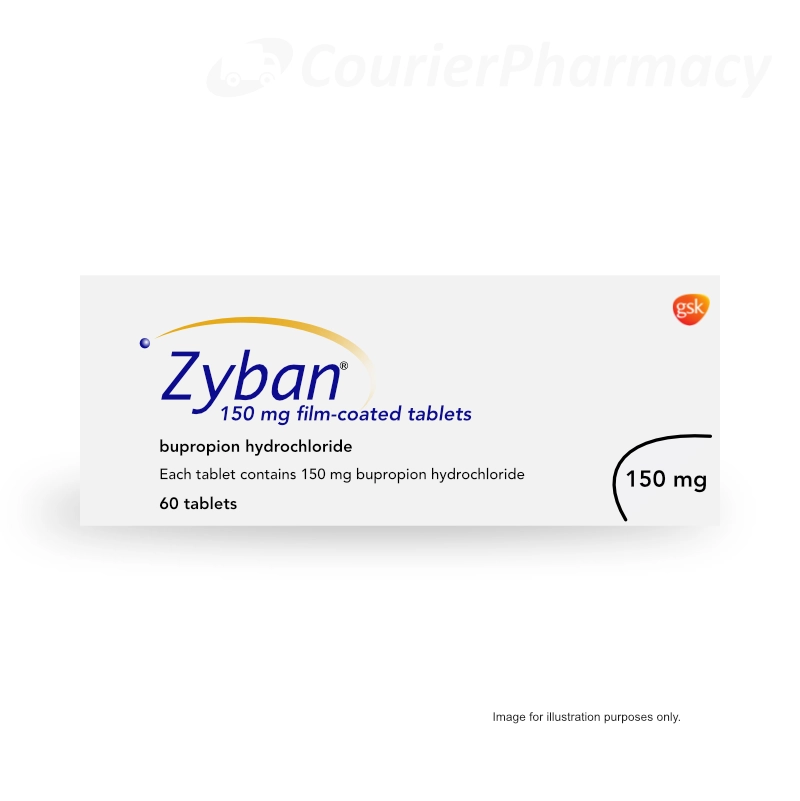
A non-nicotine prescription smoking cessation medicine containing bupropion, used alongside behavioural support to help adults stop smoking.
Zyban 150mg tablets are prescribed at Courier Pharmacy after a brief online consultation reviewed by a UK clinician, then dispensed and delivered to your door.
Zyban 150mg tablets are a prescription stop smoking medicine for adults who are motivated to quit. Each prolonged release tablet contains bupropion hydrochloride 150mg. The tablets are white, biconvex and film coated.
Zyban works best when it’s used alongside behavioural support, such as stop?smoking advice, coaching, or counselling. In other words, it’s a tool in the kit — not the whole kit.
What Zyban is used for
Zyban is used to help reduce nicotine cravings and withdrawal symptoms while you stop smoking. It’s designed for people who want to quit and are ready to commit to a plan, including a set stop smoking date.
How Zyban works (non nicotine approach)
Unlike nicotine replacement therapy (NRT), Zyban does not give you nicotine. Instead, it works in the brain by affecting neurotransmitters linked to reward and cravings.
In simple terms, Zyban:
Makes smoking feel less rewarding
Helps reduce withdrawal symptoms such as cravings, irritability, anxiety, and poor concentration
It does this through weak inhibition of dopamine and noradrenaline reuptake. The effect builds over time, which is why you start Zyban before you stop smoking.
Why you start Zyban 1–2 weeks before your quit date
Zyban isn’t a “take one tablet and stop today” medicine. It needs time to build up in your system. So, you usually start it 1–2 weeks before your target quit date. This gives you a better chance of having support in place when cravings peak.
Zyban and antidepressants: what to know in the UK
Bupropion is also used as an antidepressant in some countries (often under the name Wellbutrin). However, in the UK, bupropion isn’t licensed for depression. Zyban is licensed specifically for smoking cessation. So, if you’re looking for depression treatment, your GP would normally prescribe a different medicine.
Important safety checks (seizure risk and interactions)
Zyban isn’t suitable for everyone. The most important safety consideration is seizure risk. For that reason, prescribers must check for things that can increase the risk, such as:
A history of seizures
Certain neurological conditions
Eating disorders (current or past)
Heavy alcohol use or sudden alcohol withdrawal
Medicines that can lower the seizure threshold
Certain drug interactions (for example, MAO inhibitors)
This isn’t meant to be alarming. It’s simply why Zyban needs a proper medical review before it’s prescribed.
How we supply Zyban at Courier Pharmacy
At Courier Pharmacy, every Zyban request is reviewed by a UK registered prescriber. We’ll ask about your medical history, current medicines, alcohol intake, and your smoking pattern. If Zyban is suitable, we’ll explain how to time it, how to take it, and how to reduce risks. If it isn’t suitable, we’ll explain why and discuss alternatives such as NRT, varenicline, and behavioural support.
Key features and specifications
Active ingredient: Bupropion hydrochloride 150mg per tablet (prolonged release)
Form: White, biconvex film coated tablet imprinted “GX CH7”
Pack size: Typically 60 tablets (often covers a 7–9 week course)
Manufacturer: GSK
Class: Non nicotine smoking cessation aid; weak dopamine and noradrenaline reuptake inhibitor
Prescription status: Prescription Only Medicine (POM)
Typical use (as directed): Start 1–2 weeks before quit date; 150mg once daily for 6 days, then 150mg twice daily for a total of 7–9 weeks
Storage: Store below 25°C, in original packaging, protected from moisture
Additional information
Quantity
30 tablets, 60 tablets, 120 tablets
MOJO WISDOM
Take control of your health by understanding your condition and what this medication is doing for you.
READ:
More information about this treatment.
UK-based doctors and pharmacists
Discreet and Confidential
UK-based doctors and pharmacists
Free, Expert Advice
No video link provided.
No video link provided.
UK-based doctors and pharmacists
Free, expert advice
Discrete and confidential
Fast delivery
Giving you trusted clinical advice for over 40 conditions
A UK regulated pharmacy providing safe, effective treatments online since 2014
A serious decision to stop smoking, where willpower alone hasn’t been enough on previous attempts. Maybe you’ve tried nicotine replacement (patches, gum, lozenges) and it hasn’t worked. Maybe you’re looking for an option that doesn’t involve any more nicotine. Maybe varenicline (Champix) isn’t right for you or hasn’t been available. Zyban 150mg tablets contain bupropion, a non-nicotine prescription medicine that’s licensed specifically for smoking cessation and works on brain reward pathways rather than replacing the nicotine itself. At Courier Pharmacy we want you to understand exactly how Zyban works, who it suits, the seizure risk that’s the central safety concern, and the realistic expectations for stopping smoking with medical support, so the choice feels properly yours.
Five key takeaways
Zyban 150mg tablets contain bupropion hydrochloride in a prolonged-release formulation, licensed in the UK specifically for smoking cessation in adults alongside motivational support.
It works centrally on the brain rather than replacing nicotine. The mechanism involves weak inhibition of dopamine and noradrenaline reuptake, which reduces the rewarding effects of nicotine and softens withdrawal symptoms.
Treatment is started 1-2 weeks before your target stop-smoking date, allowing the medicine to reach steady-state blood levels before you stop. Typical course is 7-9 weeks total.
The most important safety concern is seizure risk. Zyban is contraindicated in patients with current or previous seizure disorders, eating disorders (anorexia, bulimia), severe hepatic cirrhosis, current or recent MAO inhibitor use, central nervous system tumours, and acute alcohol or benzodiazepine withdrawal.
Bupropion is also used as an antidepressant in some countries (under the brand name Wellbutrin), but in the UK Zyban is licensed specifically for smoking cessation, not for depression.
Treatment dosage Zyban 150mg tablets
Zyban dosing follows a structured pattern that starts before your target stop-smoking date and continues for 7-9 weeks:
Days 1-6: One 150mg tablet once daily, taken in the morning. This allows the medicine to build up in your system gradually with reduced side effects in the first week.
Day 7 onwards (target stop date): One 150mg tablet twice daily, taken in the morning and evening. The two doses should be at least 8 hours apart to maintain steady blood levels through the day while minimising the highest peak that drives seizure risk.
Total treatment duration: 7-9 weeks for most patients. Treatment can be stopped sooner if smoking cessation is established and stable; longer courses (up to 12 weeks) are sometimes used for patients who need extended support.
Maximum daily dose: 300mg (two tablets). Higher doses are not appropriate; the seizure risk increases substantially with doses above this level.
For older patients (over 65): Start at 150mg once daily as standard, with caution about progression to twice daily if other risk factors are present.
For patients with mild to moderate hepatic impairment, mild to moderate renal impairment, or those with risk factors for seizures: 150mg once daily for the full course is appropriate; the twice-daily 300mg dose is not recommended. This includes patients with diabetes treated with insulin or oral hypoglycaemics, alcohol use, history of head trauma, concurrent use of medicines that lower seizure threshold, addiction to stimulants or recent benzodiazepine withdrawal.
Take Zyban with or without food. Swallow each tablet whole with a glass of water. Don’t crush, chew, or split the tablets — the prolonged-release matrix is destroyed by crushing, producing immediate-release exposure with significantly higher seizure risk.
The target stop-smoking date should be set within the first 2 weeks of starting Zyban, typically on day 8-14. Continue smoking normally for the first week of Zyban treatment, then stop on your target date. The medicine takes about a week to reach effective blood levels.
If you haven’t been able to stop smoking by week 7, your prescriber may recommend stopping Zyban, since longer treatment without quit success isn’t usually beneficial. Reattempting with different support later may be appropriate.
If you miss a dose, take the next dose at the usual time. Don’t double up to compensate. Missing doses doesn’t usually compromise the overall effectiveness if it’s occasional.
Behavioural support alongside Zyban significantly improves quit rates. Most patients benefit from working with NHS Stop Smoking services (which combine medication with structured counselling), pharmacy-based stop smoking support, or evidence-based apps. Medication alone produces lower quit rates than combination treatment.
Overview of Zyban 150mg tablets
Five things worth knowing:
Zyban quit rates in clinical trials are around 30% at one year, compared to 15% with placebo and similar to nicotine replacement therapy. Quit rates are highest with combination approaches (medication plus behavioural support).
The medicine works centrally on brain reward pathways rather than replacing nicotine, which makes it different from NRT (patches, gum, lozenges, inhalers) and useful for patients who prefer not to use any more nicotine.
The seizure risk is the central safety concern. Overall seizure rate is approximately 1 in 1,000 patients on Zyban at the licensed dose, rising substantially with higher doses, in patients with risk factors, and with certain drug combinations.
Bupropion (the active ingredient) is the same molecule sold as Wellbutrin in some countries for depression. In the UK, the only licensed indication is smoking cessation; bupropion is not licensed here as an antidepressant.
The clinically distinctive feature of Zyban among smoking cessation medicines is its non-nicotine mechanism. Patients who specifically want to avoid nicotine entirely, or who haven’t responded to NRT, often find Zyban useful.
Zyban sits within a small group of UK-licensed smoking cessation aids. Other options include nicotine replacement therapy in multiple forms (patches, gum, lozenges, inhalers, mouth spray — all delivering nicotine through alternative routes), varenicline (Champix, a partial nicotinic receptor agonist), and behavioural support without medication.
For patients choosing between these options, several factors matter. NRT has the longest safety record, is available without prescription, and works well for many smokers. Varenicline produces the highest single-medicine quit rates in head-to-head trials but had safety concerns leading to its temporary withdrawal in 2021; it has since been reformulated and is available again. Zyban produces quit rates similar to NRT, with its specific advantage being non-nicotine mechanism and its specific disadvantage being seizure risk and contraindications.
For people living with complex conditions, the comparison with varenicline matters specifically. Varenicline can affect mood and has been associated with neuropsychiatric symptoms in some patients, though large studies (EAGLES trial) have generally been reassuring. Zyban’s seizure risk needs careful screening but doesn’t have the same mood-related concerns. For patients with mental health histories, both medicines need thoughtful prescribing but neither is automatically excluded.
The realistic expectations conversation matters. Quit rates with any single approach are around 20-30% at one year; even with the best evidence-based support, most quit attempts ultimately don’t succeed on the first try. This isn’t a failure — most successful long-term quitters have made multiple attempts. Each attempt builds learning and capacity. Zyban (or any single medicine) isn’t a magic bullet; the persistent effort over time is what produces long-term smoking cessation.
The combination of medication with behavioural support produces significantly higher quit rates than either alone. NHS Stop Smoking services offer this combination free at point of use, and we’d strongly encourage patients on Zyban to engage with these services for the best outcomes.
Why choose Courier Pharmacy for Zyban 150mg tablets
Smoking cessation is one of those decisions where having proper medical support significantly changes the success rate. Quit attempts with medication and structured support produce 2-3 times the long-term quit rates of unsupported attempts. Every Zyban prescription at Courier Pharmacy is reviewed by a UK-registered prescriber who reads your answers properly, asks about the safety-critical factors (seizure history, eating disorders, current medicines, alcohol use), and explains the decision either way.
We’ll discuss whether Zyban is the right choice for your specific situation. For patients without seizure risk factors who specifically want a non-nicotine approach, Zyban can be excellent. For patients with seizure history, eating disorder history, or significant alcohol use, we’ll explain why Zyban isn’t appropriate and discuss alternatives (NRT in various forms, varenicline, behavioural support alone). For patients new to quitting, we may suggest starting with NRT or behavioural support before considering Zyban.
We’ll also strongly encourage you to combine Zyban with behavioural support. NHS Stop Smoking services are free at point of use and significantly improve quit rates when combined with medication. Pharmacy-based stop smoking support and evidence-based apps are additional options.
Our brand guide, Dr Ada Jex-Cori, sums it up: you’re not broken. The system that’s failed you might be. We want to do the part we can do, properly, and connect you with the rest. That includes our free fortnightly drop-in clinics and talks at Insomnia in Derby, where you can ask questions face-to-face without spending a penny.
Buy Zyban 150mg tablets (Prescription Only) from Courier Pharmacy
Zyban 150mg tablets are a Prescription Only Medicine (POM) in the UK, which means they cannot be sold over the counter. Buying through Courier Pharmacy is straightforward and built around your time, not ours.
Here’s how it works:
Complete a quick online consultation including your smoking history, seizure history, and current medicines
A UK prescriber reviews your answers carefully
If you meet the eligibility criteria and have no contraindications, a prescription is issued
We dispense and deliver discreetly to your door
If it isn’t suitable for you, we’ll explain why and suggest the next best option.
Active ingredients in Zyban
Zyban 150mg tablets contain bupropion hydrochloride as the active ingredient. Each tablet provides 150mg of bupropion hydrochloride.
Bupropion is a prescription medicine used to support smoking cessation by helping reduce nicotine cravings and withdrawal symptoms. It works on chemical messengers in the brain involved in reward and dependence, particularly noradrenaline and dopamine.
Take Zyban exactly as prescribed, and swallow the tablets whole with water (do not crush or chew).
What are Zyban 150mg tablets used for?
Zyban 150mg tablets are licensed in the UK for one specific indication: smoking cessation in adults who are motivated to stop smoking, used in conjunction with motivational support.
The medicine is suitable for:
Adults who smoke regularly and want to stop
Adults motivated to make a serious quit attempt with structured support
Patients who prefer not to use nicotine replacement therapy
Patients who have tried NRT without success
Patients for whom varenicline is unsuitable
Zyban is not licensed or appropriate for:
People who aren’t ready to stop smoking or aren’t seriously committed to a quit attempt
Children and adolescents under 18
Pregnancy (smoking cessation in pregnancy is critical but Zyban is contraindicated; behavioural support and carefully managed NRT are preferred)
Breastfeeding
Patients with any of the contraindications detailed below (current or previous seizure disorder, eating disorders, severe hepatic cirrhosis, MAO inhibitor use, central nervous system tumours, acute alcohol or benzodiazepine withdrawal)
Depression in the UK (although bupropion is licensed elsewhere as an antidepressant under the Wellbutrin brand)
Bipolar disorder, particularly current manic phase
NICE guidance recognises Zyban as one of the evidence-based options for smoking cessation, alongside NRT and varenicline. The specific positioning depends on patient characteristics, preferences, and availability of alternatives.
How do Zyban 150mg tablets work?
Smoking addiction involves complex interactions of nicotine pharmacology, behavioural conditioning, social factors, and individual neurobiology. Nicotine itself acts on nicotinic acetylcholine receptors in the brain, particularly in the mesolimbic reward pathway. Activation of these receptors causes dopamine release in the nucleus accumbens, which produces the rewarding feeling associated with smoking. Over time, with repeated exposure, the brain adapts to this nicotine-driven dopamine signalling — receptor numbers change, baseline neurotransmitter levels adjust, and the brain becomes “tuned” to expect regular nicotine exposure.
When a smoker stops, the absence of nicotine produces withdrawal: cravings, irritability, anxiety, restlessness, difficulty concentrating, increased appetite, depressed mood. These symptoms reflect the brain adjusting back to nicotine-free function, but they’re significantly uncomfortable and drive many quit attempts to fail.
Zyban (bupropion) works on the brain neurotransmitter systems involved in nicotine reward and withdrawal through several mechanisms:
Dopamine reuptake inhibition: Bupropion weakly inhibits the reuptake of dopamine at synaptic clefts in the brain, increasing the amount of dopamine available for signalling. This may have two effects: (1) raising baseline dopamine levels makes nicotine-induced dopamine release feel less reinforcing relative to baseline; (2) maintaining adequate dopamine signalling during withdrawal may reduce the dopamine “deficit” that drives cravings.
Noradrenaline reuptake inhibition: Similar to its dopamine effect, bupropion weakly inhibits noradrenaline reuptake, which may soften withdrawal symptoms involving noradrenergic function (anxiety, irritability, difficulty concentrating).
Nicotinic receptor antagonism: Bupropion appears to act as a non-competitive antagonist at certain nicotinic acetylcholine receptor subtypes. This may directly reduce the reward signal from any nicotine that is consumed during the transition period.
The combined effect makes smoking feel less satisfying and reduces the withdrawal symptoms that drive relapse. This is fundamentally different from NRT (which replaces some of the nicotine to gradually wean off) or varenicline (which partially activates nicotinic receptors to reduce both cravings and the reward of smoking).
Onset of effect builds over the first 1-2 weeks of treatment. This is why Zyban is started 1-2 weeks before the target stop-smoking date — the medicine needs to reach steady-state blood levels and produce its effects before the quit attempt.
The medicine doesn’t eliminate cravings or withdrawal entirely. Most patients on Zyban still experience some quit-related symptoms; the medicine just reduces them enough to make the quit attempt more likely to succeed.
How to use Zyban 150mg tablets
Set your target stop-smoking date before starting Zyban. This should be 1-2 weeks (typically day 8-14) after your first Zyban dose. Continue smoking normally for the first week of Zyban treatment, then stop on your target date.
Days 1-6: Take one 150mg tablet once daily in the morning. This allows the medicine to build up gradually with reduced side effects in the first week.
Day 7 onwards: Take one 150mg tablet twice daily, in the morning and evening. Doses should be at least 8 hours apart.
Swallow each tablet whole with a glass of water. Don’t crush, chew, or split the tablets — the prolonged-release matrix is destroyed by crushing, producing immediate-release exposure with significantly higher seizure risk. Take with or without food.
Continue treatment for 7-9 weeks total. If you haven’t been able to stop smoking by week 7, your prescriber may recommend stopping Zyban, since extended treatment without quit success isn’t usually beneficial.
If you forget a dose: - For the once-daily phase (days 1-6): take it as soon as you remember, unless the next dose is due soon - For the twice-daily phase (day 7 onwards): take it as soon as you remember if within 4 hours of the missed dose; otherwise skip and continue with the next scheduled dose. Don’t take both doses too close together.
Behavioural support alongside Zyban significantly improves quit success. NHS Stop Smoking services are free at point of use and combine medication advice with structured counselling, which produces higher quit rates than medication alone. Pharmacy-based stop smoking support and evidence-based apps (like Smoke Free) are additional options.
Lifestyle considerations during a Zyban quit attempt:
Avoid or limit alcohol during treatment. Alcohol lowers seizure threshold and increases seizure risk with Zyban. Heavy or binge drinking is contraindicated.
Don’t take any extra doses of Zyban to manage cravings — the dose is fixed and exceeding it significantly increases seizure risk
Maintain regular sleep and meals — disrupted sleep or skipping meals may slightly increase seizure risk
Plan for high-craving situations (social events, work stress, post-meal habits) with specific coping strategies
Consider combining with NRT — using a low-dose nicotine patch alongside Zyban is sometimes recommended by Stop Smoking services, particularly for heavier smokers; this combination can be more effective than either alone
Hot flushes during the first weeks of stopping smoking are common (related to the body re-regulating without nicotine). They usually settle as smoking cessation becomes established.
Weight gain after stopping smoking is common — many people gain 4-5kg over 6-12 months. This is related to changes in metabolism and food intake patterns. The health benefits of stopping smoking far outweigh any moderate weight gain.
Warnings and precautions for Zyban 150mg tablets
Zyban is contraindicated in:
Known hypersensitivity to bupropion or any excipient
Current or previous seizure disorder (any history of seizures, including febrile convulsions, withdrawal seizures, or post-traumatic seizures)
Eating disorders (current or previous anorexia nervosa or bulimia nervosa) — these are associated with higher seizure risk
Severe hepatic cirrhosis
Concurrent treatment with monoamine oxidase inhibitors (MAOIs) — a minimum 14-day washout period is required when switching from an MAOI to Zyban
Tumours of the central nervous system
Acute withdrawal from alcohol or benzodiazepines (or planned reduction during the treatment period)
Bipolar disorder — particularly current manic phase or history of mania
Pregnancy
Breastfeeding
The seizure risk is the central safety concern with Zyban. At the licensed dose, the overall seizure rate is approximately 1 in 1,000 patients. The risk rises substantially with:
Doses above 300mg daily
Concurrent use of medicines that lower seizure threshold (other antidepressants, antipsychotics, theophylline, systemic corticosteroids, antimalarials, sedating antihistamines, quinolone antibiotics, tramadol)
Alcohol use, particularly binge drinking
Concurrent stimulant use (cocaine, amphetamines)
Diabetes treated with insulin or oral hypoglycaemics
History of head trauma
Acute electrolyte disturbances
Use with care in:
Mild to moderate hepatic impairment (use 150mg once daily; avoid twice-daily dosing)
Mild to moderate renal impairment (use 150mg once daily; avoid twice-daily dosing)
Older patients (over 65), where caution about progression to twice daily dosing is appropriate
Patients with diabetes mellitus
Patients with cardiovascular disease, particularly recent myocardial infarction or unstable angina
Patients with a history of head injury
Patients on antidepressants or antipsychotics
Patients with depression (because bupropion is not licensed for depression in the UK, this needs careful discussion)
Neuropsychiatric effects — Zyban has been associated with mood changes, anxiety, agitation, depressed mood, and rarely suicidal thoughts. Stopping smoking itself can also produce these effects. Patients should be aware of mood changes and report them. Patients with pre-existing mental health conditions need careful assessment before starting.
Hypersensitivity reactions — serious hypersensitivity reactions, including anaphylactoid reactions, angioedema, urticaria, and serum sickness-like reactions have been reported. Stop Zyban and seek medical advice if these occur.
Blood pressure — Zyban can cause mild rises in blood pressure. Hypertensive crisis has been reported rarely. Blood pressure should be monitored, particularly if elevated at baseline or if combined with NRT.
Alcohol — alcohol lowers the seizure threshold and increases seizure risk during Zyban treatment. Heavy or binge drinking is contraindicated. Moderate drinking should be minimised.
Pregnancy: Zyban is contraindicated in pregnancy. Smoking cessation during pregnancy is critically important, but should be approached through behavioural support and carefully managed NRT rather than Zyban.
Breastfeeding: Zyban is contraindicated in breastfeeding because bupropion and its metabolites pass into breast milk.
Driving: Zyban can cause dizziness, drowsiness, lack of coordination, and rarely seizures. Patients should not drive or operate machinery if affected. A single seizure during Zyban treatment usually requires DVLA notification and a driving licence review.
If you experience any symptoms that worry you during Zybantreatment, contact your prescriber. Severe reactions (signs of allergy, seizures, severe mood changes, signs of hypertensive crisis) warrant urgent medical attention.
Side effects of Zyban 150mg tablets
The side effect profile of Zyban includes both pharmacological effects of bupropion and symptoms of nicotine withdrawal as the smoker stops. Distinguishing between the two can sometimes be difficult.
Very common side effects, affecting more than 1 in 10 people, include insomnia (very common, particularly in the first weeks), dry mouth, headache, nausea, and constipation.
Common side effects, between 1 in 100 and 1 in 10 people, include fever, anxiety, depression, tremor, taste disturbance, dizziness, abdominal pain, vomiting, allergic skin reactions (rash, pruritus, urticaria), and decreased appetite. Hot flushes are common as nicotine withdrawal occurs.
Uncommon side effects, between 1 in 1,000 and 1 in 100 people, include chest pain, tachycardia, raised blood pressure (sometimes severe), flushing, asthenia, irritability, hostility, sweating, weight loss, sleep disturbances, mood swings, hallucinations, and confusion.
Rare side effects, fewer than 1 in 1,000 people, include seizures (overall rate approximately 1 in 1,000 at licensed dose), syncope, paraesthesia, ataxia, vasodilation, hepatic enzyme elevation, jaundice, hepatitis, severe hypersensitivity reactions (anaphylactoid, angioedema, serum sickness-like reactions), Stevens-Johnson syndrome, and serious psychiatric symptoms including suicidal thoughts.
Very rare and serious side effects include severe hypersensitivity reactions including anaphylaxis (swelling of lips, mouth, throat, difficulty breathing). Anaphylaxis is a medical emergency; call 999.
The insomnia is particularly common and is one of the main reasons some patients struggle with Zyban. Taking the second dose at least 8 hours after the first (and ideally before 6pm) helps minimise sleep disruption. If insomnia is significantly affecting function, dose adjustment or alternative quit-aid may be appropriate.
The neuropsychiatric effects can be subtle. Any new or worsening mood changes, anxiety, agitation, or suicidal thoughts should be reported promptly. The distinction between bupropion-related effects and nicotine withdrawal effects can be difficult; the response in either case may be to stop Zyban and reconsider the approach.
If you experience any side effect that worries you, you can report it directly to the MHRA’s Yellow Card scheme. This helps improve safety data for everyone who uses the medicine. Our pharmacy team are happy to help you submit a Yellow Card report if you’d like assistance.
Drug interactions with Zyban 150mg tablets
Zyban has several clinically important interactions, mostly involving medicines that lower seizure threshold, affect CYP2B6 or CYP2D6 metabolism, or are themselves metabolised through these enzymes.
MAO inhibitors are absolutely contraindicated. A minimum 14-day washout period is required when switching from any MAOI (phenelzine, tranylcypromine, isocarboxazid, moclobemide, selegiline, rasagiline) to Zyban. The combination can cause severe hypertensive crisis.
Medicines that lower seizure threshold should be avoided or used with extreme caution. This includes other antidepressants (SSRIs, SNRIs, TCAs), antipsychotics, theophylline, systemic corticosteroids, some antimalarials (mefloquine, chloroquine), sedating antihistamines, tramadol, opioids, quinolone antibiotics, and some other medicines. The combination significantly increases seizure risk.
Bupropion is a strong CYP2D6 inhibitor — this means it increases blood levels of medicines metabolised through CYP2D6. Important examples include metoprolol (where exposure can be substantially increased; dose adjustment may be needed), some antidepressants (paroxetine, fluoxetine, desipramine, imipramine, nortriptyline), some antipsychotics (risperidone, haloperidol), tramadol (where conversion to active metabolite is reduced), codeine (similarly reduced analgesic effect), tamoxifen (similar concerns about active metabolite), and others.
CYP2B6 inhibitors and inducers can affect bupropion exposure. Strong inducers (rifampicin, carbamazepine, phenytoin) reduce bupropion blood levels and may compromise effectiveness. Inhibitors (clopidogrel, ticlopidine, prasugrel) can increase exposure.
Nicotine replacement therapy (patches, gum, lozenges, inhalers) — combination with Zyban is sometimes used and can be more effective than either alone, particularly for heavy smokers. The combination requires careful blood pressure monitoring (both can raise blood pressure).
Levodopa and amantadine — bupropion can affect dopaminergic systems; combination may need careful consideration in Parkinson’s patients.
Alcohol — alcohol lowers seizure threshold; heavy drinking is contraindicated during Zyban treatment.
Stimulants — concurrent use of cocaine, amphetamines, or similar substances substantially increases seizure risk.
Warfarin — bupropion can affect warfarin metabolism; INR monitoring is sensible.
Always tell your prescriber and pharmacist about everything you take, including over-the-counter medicines, vitamins, supplements, and recreational substances, before starting Zyban.
Frequently asked questions about Zyban 150mg tablets
What is Zyban used for?
Zyban is licensed in the UK for smoking cessation in adults who are motivated to stop smoking, used alongside motivational support. It is not licensed for depression in the UK (although the same active ingredient, bupropion, is used for depression in other countries under the brand name Wellbutrin).
Does Zyban contain nicotine?
No. Zyban contains bupropion, a non-nicotine medicine that works on brain neurotransmitter systems. This is one of its main practical advantages — it’s a smoking cessation aid for people who specifically don’t want to use any more nicotine.
How does Zyban work?
Zyban (bupropion) inhibits the reuptake of dopamine and noradrenaline in the brain, which reduces the rewarding effects of nicotine and softens withdrawal symptoms. It also has some direct effects on nicotinic acetylcholine receptors that may contribute to its smoking cessation effect.
When should I start taking Zyban?
Start Zyban 1-2 weeks before your target stop-smoking date. Continue smoking normally for the first week, then stop on your target date (typically day 8-14 of treatment). This allows the medicine to reach effective blood levels before the quit attempt.
Why is the dose increased after 6 days?
The first 6 days at 150mg once daily allows your body to adapt to the medicine with reduced side effects. After day 6, the dose increases to 150mg twice daily to reach the therapeutic level needed for full smoking cessation effect.
How long do I take Zyban for?
Typical treatment duration is 7-9 weeks. Some patients continue up to 12 weeks if extended support is needed. If you haven’t been able to stop smoking by week 7, your prescriber may recommend stopping Zyban.
What’s the success rate with Zyban?
Quit rates in clinical trials are approximately 30% at one year (compared to 15% with placebo). Quit rates are higher with combined approaches (Zyban plus behavioural support, or Zyban plus NRT) than with Zyban alone.
Is Zyban the same as Wellbutrin?
The same active ingredient (bupropion) is used in both, but in different formulations and for different indications. Wellbutrin is the brand name for bupropion used as an antidepressant in many countries (not licensed in the UK for this purpose). Zyban is the brand name for bupropion used as a smoking cessation aid.
What if I have a seizure history?
Zyban is absolutely contraindicated if you have any history of seizures (epilepsy, febrile convulsions, withdrawal seizures, post-traumatic seizures). The seizure risk increase isn’t acceptable. Alternative smoking cessation approaches (NRT, varenicline, behavioural support) would be more appropriate.
Can I drink alcohol on Zyban?
Heavy or binge drinking is contraindicated during Zyban treatment because alcohol lowers seizure threshold. Moderate alcohol should be minimised; check with your prescriber if you usually drink regularly.
Can I combine Zyban with NRT?
Yes, combination treatment can be effective, particularly for heavy smokers. NHS Stop Smoking services often recommend this approach. The combination requires monitoring of blood pressure (both can raise blood pressure).
How is Zyban different from varenicline (Champix)?
Both are non-nicotine smoking cessation medicines. Zyban (bupropion) works through dopamine and noradrenaline systems plus some nicotinic receptor antagonism. Varenicline is a partial nicotinic receptor agonist that activates the receptors weakly while blocking nicotine. Quit rates with varenicline tend to be higher in head-to-head trials, but each medicine has its own profile of contraindications and side effects.
Can I take Zyban during pregnancy?
No, Zyban is contraindicated during pregnancy. Smoking cessation during pregnancy is critically important — talk to your midwife or GP about supported quit approaches including behavioural support and carefully managed NRT.
Is Zyban safe while breastfeeding?
No, Zyban is contraindicated during breastfeeding because bupropion and its metabolites pass into breast milk.
Why do I have trouble sleeping on Zyban?
Insomnia is one of the most common side effects of Zyban. Taking the second dose at least 8 hours after the first (and ideally before 6pm rather than late evening) helps. If insomnia is significantly affecting function, discuss with your prescriber.
Will Zyban make me gain or lose weight?
Bupropion itself can produce small weight loss in some patients (related to dopaminergic effects on appetite). Stopping smoking, however, commonly produces weight gain of 4-5kg over 6-12 months as metabolism re-regulates. The combined effect varies.
Can Zyban cause depression?
Bupropion is used as an antidepressant in other countries, so worsening depression isn’t typical. However, mood changes (depression, anxiety, irritability) have been reported in some Zyban users. Stopping smoking can also produce mood changes. Any significant mood concerns should be reported to your prescriber.
Will Zyban affect my driving?
Zyban can cause dizziness, drowsiness, lack of coordination, and rarely seizures. Be cautious until you know how the medicine affects you. A seizure during Zyban treatment usually requires DVLA notification and a driving licence review.
Can I stop Zyban suddenly?
Yes, Zyban can be stopped immediately without tapering, though most patients complete the full 7-9 week course. If you’ve stopped smoking successfully, completing the course is generally recommended. If you experience intolerable side effects, stopping is appropriate.
What if Zyban doesn’t help me stop smoking?
Many quit attempts don’t succeed on the first try, even with medical support. This isn’t a personal failure — most successful long-term quitters have made multiple attempts. Discuss with your prescriber about trying again later with different approaches (NRT, varenicline, intensified behavioural support).
Disclaimer: This article is for information only and isn't a substitute for personal medical advice. Always speak to a qualified prescriber before starting or changing treatment.