

Tadalafil is the generic version of the branded erectile dysfunction medicine, Cialis. Another name for tadalafil, or Cialis, is “the weekend pill” — which tells you a lot about how long it lasts. For most men, tadalafil can keep working for up to 36 hours after taking it, just under a weekend’s duration.
At Courier Pharmacy, we believe treatment should fit you, not force you to fit the system. That starts with understanding how your medicine actually works, so you can make a choice that suits your life. Before we go into more depth on how long tadalafil lasts, we’ll first cover the basics of erectile dysfunction and how tadalafil works.
-
Product on sale
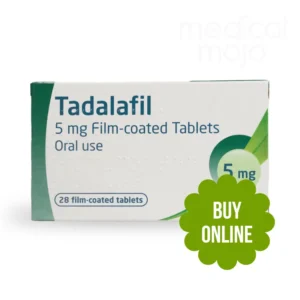 Tadalafil 5mg tabletsPrice range: £9.99 through £94.99
Key takeaways
- Tadalafil lasts up to 36 hours — far longer than sildenafil (Viagra) or vardenafil, which last about 4 to 6 hours. That long window is why it’s nicknamed “the weekend pill.”
- It starts working in 30 to 60 minutes, but give it time. A reliable erection can take up to 2 hours in most men, so don’t judge it on the first 15 minutes.
- Food and alcohol won’t reduce its effectiveness. Unlike sildenafil and vardenafil, tadalafil can be taken with a fatty meal or a drink without losing its effect.
- It still needs sexual arousal to work and won’t maintain an erection after ejaculation. The usual limit is one dose per 24 hours.
- The right dose and timing are personal. Your health, other medicines (especially nitrates, which must be separated by at least 48 hours), and lifestyle all affect how tadalafil works — which is why prescriber-guided, personalised treatment gives you the best fit.

What is erectile dysfunction?
Erectile dysfunction (ED) is defined as when a man cannot get a firm enough erection for satisfying sexual intercourse [1]. A study in 2000 found that about 150 million men worldwide had some form of erectile dysfunction [2], and it was projected that the number would exceed 300 million men worldwide over the following two decades [4]. The Massachusetts Male Aging Study reflects this steadily increasing rate, with an expected incidence of over 600,000 new cases per year in white men aged 40 to 69 alone [3].
Before we go any further, it’s worth stressing that a one-off poor performance is not usually a cause for concern. It’s when it starts to persist for over six months that it’s worth paying attention. When this happens, it is described as chronic erectile dysfunction. If that sounds like your experience, you’re not broken and you’re not alone — and there are options that can be tailored to you.

What causes erectile dysfunction?
The following long-term conditions are linked to increasing rates of erectile dysfunction [5]:
- Heart disease
- High cholesterol
- High blood pressure
This is part of why ED is sometimes called the canary in the mineshaft: it can be an early signal that something else in your health deserves a closer look.
Diabetes and erectile dysfunction
Diabetes is another long-term condition that plays a leading role in the development of erectile dysfunction [6]. The constant high blood sugar seen in diabetes can damage blood vessels and nerves, leading to a decreased ability to get and sustain an erection [7].
Tadalafil key facts
If you’ve been exploring erectile dysfunction treatments, you may have come across the “weekend pill”, or Cialis. Tadalafil is the generic version of Cialis, and its main advantage over its rivals is its long duration of action — around 36 hours for most men, compared to 4 to 6 hours for other erectile dysfunction treatments such as Viagra and Levitra.
What is tadalafil?
Tadalafil was originally developed as a heart medication. When it was found to improve blood flow to the penis, its focus switched from heart disease to erectile dysfunction.
Tadalafil works in a similar fashion to Viagra (sildenafil) by increasing the blood flow to the penis. More blood flow means a firmer, longer-lasting erection, but sexual arousal is still a prerequisite.
How does tadalafil work?
Tadalafil belongs to a class of drugs called PDE5 inhibitors, which work by increasing levels of cGMP, a chemical responsible for widening the blood vessels [8]. When there is more cGMP present, the blood vessels dilate, allowing more blood to flow into the penis to cause an erection.
Tadalafil increases cGMP levels by blocking the enzyme that breaks it down: phosphodiesterase type 5, or PDE5. By blocking PDE5, tadalafil maintains high cGMP levels, dilating the blood vessels and allowing more blood to flow into the penis to initiate an erection. However, tadalafil still requires sexual arousal in order to work [9].
How long does tadalafil last after taking it?
When talking about how long drugs last, a term that often crops up is half-life. What does the half-life of a drug mean? It’s the time it takes for the drug’s concentration to decrease by 50% in the blood. So, once we know the half-life of tadalafil, we can answer the question, “How long does tadalafil last after taking it?”
The half-life of tadalafil is 17.5 hours in healthy men, but it may increase to 21.6 hours in elderly men. In comparison, the half-life of two other popular erectile dysfunction treatments, sildenafil and vardenafil, is about 4 hours each [10]. This longer half-life for tadalafil means that the therapeutic window — the time during which an erection can be stimulated — is increased to around 36 hours [11].
The exact duration of tadalafil can vary depending on factors such as age, overall health, and the presence of other medications. This is exactly why we take the time to understand your situation rather than assuming one dose fits everyone.
One important point to remember is that the longer half-life means that, if a nitrate medication is prescribed under the supervision of a doctor, it must be deferred for at least 48 hours after taking tadalafil, compared with 24 hours for sildenafil and vardenafil [12].

Dosing of tadalafil
Tadalafil starts working within 30 to 60 minutes of taking it and can last up to 36 hours — hence its nickname, “the weekend pill.” For many men, one dose is enough to support sexual activity throughout an entire day or longer.
The most commonly prescribed dose for erectile dysfunction is 10 to 20 mg for on-demand dosing, with lower doses such as 2.5 to tadalafil 5 mg for once-daily dosing. The dose can be titrated up or down depending on your response and any side effects. Finding the right dose for you is part of getting treatment that genuinely fits your needs.
Bioavailability of tadalafil compared to sildenafil
Not all of a drug is absorbed when taken orally. This is because the drug has to pass through the stomach, small intestine, and liver before reaching the bloodstream.
First-pass metabolism occurs in the liver, which can reduce the amount of active drug that makes it into circulation. We measure this using a drug’s bioavailability — the proportion of the drug that reaches circulation.
Tadalafil is approximately 80% bioavailable, compared to 40% for sildenafil and 15% for vardenafil [10].
Absorption of tadalafil compared to sildenafil
When compared to other PDE5 inhibitors, tadalafil has the slowest absorption, taking a mean of 2 hours to reach its maximum concentration, while sildenafil and vardenafil reach their maximum concentrations after about 50 minutes [13].
How soon does tadalafil start to work?
The onset of action of tadalafil can be as early as 15 minutes after taking the oral dose, but studies have shown that successful erections occur in fewer than 40% of men at this point [14], [11].
So, even though some men may experience an erection within 15 minutes, it’s wise not to treat that as the rule. It’s more accurate to say that an erection may take up to 2 hours in the majority of men. Setting the expectation of an erection within two hours, rather than 15 minutes, is more realistic — because if an erection hasn’t occurred after 15 minutes, it can create performance anxiety or a loss of confidence in the treatment, which can lead to treatment failure [15].
Tadalafil and fatty meals
Another important difference between tadalafil and other erectile dysfunction treatments, such as sildenafil and vardenafil, is how their absorption is affected by a fatty meal [16].
Both sildenafil and vardenafil have decreased absorption when taken with a fatty meal, while the absorption of tadalafil is unaffected by fatty meals or alcohol consumption [10].
This unique pharmacokinetic trait of tadalafil comes from its slower absorption and longer half-life. It can, therefore, be taken with meals or alcohol without a decrease in effectiveness [15].
Factors that can affect how long tadalafil works
Several personal factors can affect how well, and how long, tadalafil works for you. This is where personalised guidance makes a real difference:
- Health conditions: Conditions like diabetes, heart disease, or kidney issues can affect blood flow and may impact tadalafil’s effectiveness. If you have health concerns, discuss these with your prescriber so you get the best results.
- Other medications: Certain medications, including antibiotics, antifungals, and anti-anxiety drugs, may interact with tadalafil. It’s important to tell your prescriber about any other medicines you take, so the dosage and timing can be adjusted safely.
- Alcohol intake: While moderate drinking is generally fine, excessive alcohol can reduce tadalafil’s effectiveness.
- Lifestyle habits: Smoking, lack of physical activity, and a poor diet can all affect blood flow, which may reduce the duration of tadalafil’s effects.

Can you combine sildenafil and tadalafil?
No — you should not take both tablets together. However, if you’d like an approach that brings together the short-acting effects of sildenafil and the long-acting effects of tadalafil, this is exactly the kind of situation where personalised, compounded treatment can help.
At Courier Pharmacy, we specialise in compounding: medicine tailored to your needs rather than off-the-shelf. If standard treatments aren’t quite working for you, our UK-regulated pharmacists and prescribers can review your situation and, where clinically appropriate, explore a personalised option. It’s healthcare built around you, not the other way round.
Common FAQs about tadalafil

How long does it take for tadalafil to wear off?
For most men, tadalafil’s effects last up to 36 hours, after which its presence in the body gradually diminishes over the following 48 hours.
Does tadalafil keep you hard after ejaculation?
No, tadalafil does not maintain an erection after ejaculation. Erections will only occur with sexual arousal.
Can I take tadalafil two days in a row?
Tadalafil is typically limited to one dose per 24 hours. Taking it more often can increase the risk of side effects.
Is tadalafil as strong as Viagra?
Both tadalafil and Viagra (sildenafil) are effective for erectile dysfunction. Tadalafil lasts longer — up to 36 hours — whereas Viagra typically works for about 4 to 6 hours.
Does eating a fatty meal delay the absorption of tadalafil?
No. Unlike sildenafil and vardenafil, eating a fatty meal does not delay the absorption of tadalafil.
Is vardenafil faster than tadalafil?
Yes — vardenafil is probably the PDE5 inhibitor that produces an erection the fastest.
Summary
Tadalafil offers a lasting option for erectile dysfunction, supporting erections for up to 36 hours in many men. It can start working within two hours, and food does not affect its absorption. Maintaining a healthy lifestyle can help you get the most from it.
But the right treatment is rarely the same for everyone. The best results come from a dose, a timing, and a treatment that fits your body, your health, and your life.
Men’s health, made personal
Men’s health is about more than ED. At Courier Pharmacy, we offer personalised, evidence-based care across testosterone, sexual health, and overall wellness — with compounded options, tailored protocols, and a discreet service from UK-regulated pharmacists and prescribers.
If you’d like to understand more about erectile dysfunction and the treatments available, our team is happy to talk it through and point you towards clear, evidence-based information.
Need to talk to someone about erectile dysfunction?

Don’t feel shy talking about erectile dysfunction. As we mentioned, think of it as the canary in the mineshaft — a signal worth paying attention to.
At Courier Pharmacy, we’re here to help. We can advise you on the right treatment, what to do when standard PDE5 inhibitors don’t work, and, where appropriate, compound a completely personalised solution. We also run free fortnightly drop-in talks for people living with long-term conditions — no cost, no pressure, just real support and guidance.
The first step is simply reaching out. If you have any questions, please don’t hesitate to contact us.
Also, if you live in the Derby area, why not come and see us at the Insomnia coffee shop at Burton Road, Derby for our FREE drop in clinic.
Disclaimer: This article is for informational purposes only and does not replace professional medical advice.
References
- Muneer A, Kalsi J, Nazareth I, Arya M. Erectile dysfunction. BMJ. 2014 Jan 27;348:g129.
- McKinlay JB. The worldwide prevalence and epidemiology of erectile dysfunction. Int J Impot Res. 2000;12:S6–S11. doi: 10.1038/sj.ijir.3900567.
- Johannes CB, Araujo AB, Feldman HA, et al. Incidence of erectile dysfunction in men 40–69 years old: longitudinal results from the Massachusetts Male Aging Study. J Urol. 2000;163:460–3.
- Ayta IA, McKinlay JB, Krane RJ. The likely worldwide increase in erectile dysfunction between 1995 and 2025 and some possible policy consequences. BJU Int. 1999 Jul;84(1):50–6.
- Orimoloye OA, Feldman DI, Blaha MJ. Erectile dysfunction links to cardiovascular disease — defining the clinical value. Trends Cardiovasc Med. 2019 Nov;29(8):458–465.
- Maiorino MI, Bellastella G, Esposito K. Diabetes and sexual dysfunction: current perspectives. Diabetes Metab Syndr Obes. 2014 Mar 6;7:95–105. doi: 10.2147/DMSO.S36455.
- Guay AT. ED2: erectile dysfunction = endothelial dysfunction. Endocrinol Metab Clin North Am. 2007;36(2):453–463.
- Corbin JD. Mechanisms of action of PDE5 inhibition in erectile dysfunction. Int J Impot Res. 2004 Jun;16(1) Suppl 1:S4–7. doi: 10.1038/sj.ijir.3901205.
- Andersson KE. PDE5 inhibitors – pharmacology and clinical applications 20 years after sildenafil discovery. Br J Pharmacol. 2018;175(13):2554–2565.
- Francis SH, Corbin JD. Molecular mechanisms and pharmacokinetics of phosphodiesterase-5 antagonists. Curr Urol Rep. 2003;4:457–65. doi: 10.1007/s11934-003-0027-x.
- Porst H, Padma-Nathan H, Giuliano F, et al. Efficacy of tadalafil for the treatment of erectile dysfunction at 24 and 36 hours after dosing: a randomized controlled trial. Urology. 2003;62:121–5. doi: 10.1016/s0090-4295(03)00359-5.
- Kloner RA, Hutter AM, Emmick JT. Time course of the interaction between tadalafil and nitrates. J Am Coll Cardiol. 2003;42:1855–60. doi: 10.1016/j.jacc.2003.09.023.
- Briganti A, Salonia A, Gallina A, et al. Drug Insight: oral phosphodiesterase type 5 inhibitors for erectile dysfunction. Nat Clin Pract Urol. 2005;2:239–47. doi: 10.1038/ncpuro0186.
- Brock GB, McMahon CG, Chen KK, et al. Efficacy and safety of tadalafil for the treatment of erectile dysfunction: results of integrated analyses. J Urol. 2002;168:1332–6. doi: 10.1016/S0022-5347(05)64442-4.
- Carson CC. Phosphodiesterase type 5 inhibitors: state of the therapeutic class. Urol Clin North Am. 2007;34:507–15. doi: 10.1016/j.ucl.2007.08.013.
- Corbin JD, Francis SH. Pharmacology of phosphodiesterase-5 inhibitors. Int J Clin Pract. 2002;56:453–9.