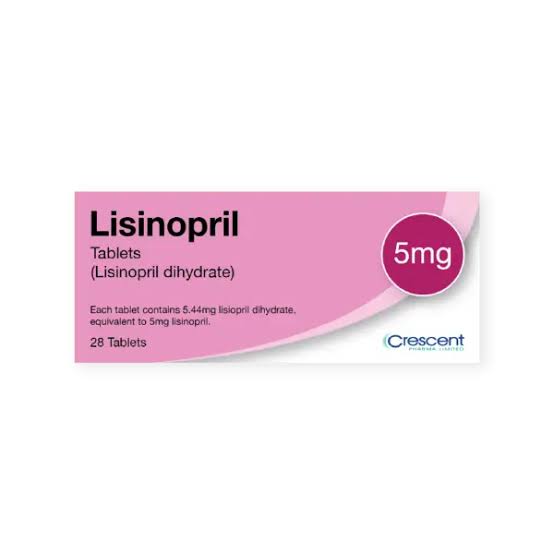
What are Lisinopril 5mg tablets?
Lisinopril is a direct ACE inhibitor. First, unlike ramipril or enalapril, it does not need liver conversion. As a result, it works in its own right from the moment it reaches the bloodstream.
In addition, lisinopril blocks angiotensin-converting enzyme (ACE). Therefore, less angiotensin II is formed and less aldosterone released. Blood vessels relax, salt and water retention eases, and blood pressure falls. Also, pressure inside the kidney filters drops, which protects kidney function in diabetes and heart failure.
Where Lisinopril 5mg Tablets sits among UK options
- Lisinopril (this product, POM), direct ACE inhibitor, generic.
- Ramipril (POM), alternative ACE inhibitor (prodrug), generic.
- Perindopril (POM), alternative ACE inhibitor with longer duration.
- Enalapril (POM), older ACE inhibitor (prodrug) option.
- Losartan (POM), ARB alternative if cough develops.
- Candesartan (POM), ARB alternative often used in heart failure.
- Amlodipine (POM), calcium channel blocker, first-line for over-55s and Afro-Caribbean patients.
- Indapamide (POM), thiazide-like diuretic, often added later.
- Bisoprolol (POM), beta blocker, used alongside in heart failure or post-MI.
Who is eligible for Lisinopril 5mg Tablets
- Adults 18 years and over.
- Heart failure, post-MI, renal, or hypertension indication.
- Not pregnant or planning pregnancy.
- Not breastfeeding.
- Baseline kidney function and electrolytes checked.
- No history of ACE-inhibitor angioedema.
- No bilateral renal artery stenosis.
- Willing to monitor BP at home or at the pharmacy.
Why choose Courier Pharmacy for your Lisinopril 5mg Tablets
Registered, independent, and patient-led
Courier Pharmacy is a UK-registered independent pharmacy. The General Pharmaceutical Council regulates us. Firstly, blood pressure and heart failure control need the right dose at the right time. Additionally, your age, ethnicity, kidney function, and other medicines all matter. As a result, our prescribers ask about those things. Getting your lisinopril dose right is about the fit.
Dr Ada Jex-Cori, our brand pharmacist
Our brand pharmacist is Dr Ada Jex-Cori. She represents the spirit of what we do. Named for Ada Lovelace, Sophia Jex-Blake, and Gerty Cori, she stands for evidence-led, unafraid-of-questions medicine. Her message is straightforward.
You’re not broken. The system is. We’re here to change that.

Care that keeps showing up
We don’t disappear after we’ve dispensed. Furthermore, if the dry cough or dizziness bothers you, we’re here. Additionally, if you need help with a home BP reading or planning the step up to 10mg or 20mg, we help you think it through.
For patients juggling lisinopril with diabetes medication, statins, or heart failure therapy, that continuity matters. In short, care that fits you means care that keeps showing up.
Buy Lisinopril 5mg Tablets (Prescription Only) from Courier Pharmacy
Lisinopril 5mg Tablets are a Prescription Only Medicine. You can request them at courierpharmacy.co.uk. Firstly, complete an online consultation. Then, a UK-qualified prescriber reviews your answers. If approved, we dispense and deliver discreetly.
- Complete a quick online consultation
- A UK prescriber reviews your answers
- If approved, a prescription is issued
- We dispense and deliver discreetly to your door
If it isn’t suitable for you, we’ll explain why and suggest the next best option.

How Lisinopril 5mg tablets work
How lisinopril blocks ACE
Lisinopril is not a prodrug. First, it is active in its own right. Therefore, no liver conversion is needed before it works. In addition, this makes lisinopril useful in patients with liver impairment.
Lisinopril binds angiotensin-converting enzyme (ACE), also called kininase II. In short, this is the same target as ramipril, perindopril, and enalapril. ACE converts angiotensin I to angiotensin II, a potent vasoconstrictor.
In addition, ACE breaks down bradykinin, a vasodilator. As a result, blocking ACE lowers angiotensin II and raises bradykinin.
Why lower angiotensin II means lower blood pressure
Angiotensin II has several roles. First, it constricts blood vessels. In addition, it triggers aldosterone release from the adrenal glands.
Aldosterone makes the kidneys retain sodium and water. As a result, blood volume rises and pressure climbs. Therefore, less angiotensin II means less constriction and less fluid retention.
Also, lisinopril reduces efferent arteriolar tone in the kidney. Specifically, pressure inside the glomerulus drops. This is why ACE inhibitors protect kidney function in diabetes and other renal disease.
The bradykinin side (cough and angioedema)
ACE normally breaks down bradykinin. First, when ACE is blocked, bradykinin accumulates. In addition, substance P levels rise. As a result, airway sensory nerves get irritated.
Therefore, around 10 to 20 percent of patients develop a dry persistent cough. It typically starts in weeks to months after starting. However, it is not dangerous. If troublesome, your prescriber may switch to an ARB like losartan or candesartan.
Rarely (0.1 to 0.5 percent), bradykinin accumulation causes angioedema, swelling of lips, tongue, or airway. This is a medical emergency. Afro-Caribbean patients are at higher risk.
Dosing, half-life, and renal clearance
Lisinopril reaches peak levels around 7 hours after a dose. In addition, its effective half-life is about 12 hours. However, the blood-pressure effect lasts around 24 hours, so once-daily dosing works.
The 5mg tablet is a step-up from 2.5mg in heart failure. In addition, it is the standard post-MI starting dose: 5mg within 24 hours of the heart attack, then 5mg at 24 hours, 10mg at 48 hours, and 10mg daily thereafter. However, in uncomplicated hypertension, 10mg remains the usual starting dose.
In plain terms
Your body has a system that controls blood pressure. In short, a hormone called angiotensin II tells blood vessels to tighten and the kidneys to hold on to salt and water.
Lisinopril blocks the enzyme that makes angiotensin II. As a result, blood vessels relax and the kidneys release more fluid. Then blood pressure drops.
In addition, lisinopril eases pressure inside the kidney filters. Therefore, it also protects kidneys in diabetes and other kidney disease.
There is one known quirk. First, around 1 in 10 users develop a dry persistent cough. However, the cough is not dangerous. If it bothers you, your prescriber can switch you to a similar drug called an ARB (losartan or candesartan) that does not cause the cough.
Finally, 5mg sits in the lower-middle of the dose range. First, your prescriber may step up to 10mg or 20mg if your blood pressure is still high after 2 to 4 weeks.

Frequently asked questions about Lisinopril 5mg tablets
What is lisinopril?
Lisinopril is a UK-licensed ACE inhibitor used for blood pressure, heart failure, post-heart-attack care, and kidney protection in diabetes. First, it is one of the most widely prescribed cardiovascular medicines in the UK. In addition, it is not a prodrug, so it works without liver conversion.
What is lisinopril used for?
Lisinopril treats several conditions. Firstly, high blood pressure (hypertension) is the most common use. In addition, it is used in heart failure, after a heart attack, and in diabetic nephropathy. Also, it is often combined with a diuretic or calcium channel blocker for better BP control.
What is lisinopril for?
Lisinopril is prescribed for high blood pressure, heart failure, early recovery after a heart attack, and kidney protection in type 2 diabetes. First, it relaxes blood vessels. In addition, it eases strain on the heart. Therefore, it treats a cluster of related cardiovascular problems.
What does lisinopril do?
Lisinopril blocks the enzyme that makes angiotensin II, a hormone that tightens blood vessels. As a result, blood vessels relax and blood pressure falls. In addition, kidney filtration pressure eases. Therefore, the heart works less hard and the kidneys are protected.
How does lisinopril work?
Lisinopril blocks angiotensin-converting enzyme (ACE). First, this means less angiotensin II is formed. In addition, bradykinin levels rise. As a result, blood vessels dilate and blood pressure falls. Unlike ramipril, lisinopril is active in its own right without liver conversion.
Is lisinopril a beta blocker?
No, lisinopril is not a beta blocker. First, lisinopril is an ACE inhibitor. However, beta blockers (bisoprolol, atenolol, propranolol) work differently, by blocking adrenaline receptors on the heart. Also, the two classes are often used together in heart failure or after a heart attack.
Is lisinopril a blood thinner?
No, lisinopril is not a blood thinner. First, it does not affect blood clotting. However, it does lower blood pressure. True blood thinners are drugs like warfarin, apixaban, rivaroxaban, or aspirin. Therefore, you may be prescribed both a blood thinner and lisinopril together.
Is lisinopril an ACE inhibitor?
Yes, lisinopril is an ACE inhibitor. In fact, it was one of the first long-acting ACE inhibitors on the market. Other ACE inhibitors include ramipril, perindopril, and enalapril. All of them end in “-pril” by naming convention.
Is lisinopril a diuretic?
No, lisinopril is not a diuretic. First, diuretics (water tablets) work directly on the kidney to increase urine output. However, lisinopril works on blood vessels and the renin-angiotensin system. Diuretics include bendroflumethiazide, indapamide, and furosemide. Lisinopril and a diuretic are often used together.
Is lisinopril a statin?
No, lisinopril is not a statin. Statins (atorvastatin, simvastatin, rosuvastatin) lower cholesterol. However, lisinopril lowers blood pressure and protects the heart and kidneys. The two are often prescribed together in patients with cardiovascular disease. They do different jobs.
How long does lisinopril take to work?
The blood-pressure-lowering effect starts within hours of the first dose. However, peak effect at a given dose builds over 2 to 4 weeks. Therefore, full response is assessed at 4 weeks. For heart or kidney protection, the benefits accrue over months to years.
How quickly does lisinopril work?
Lisinopril acts quickly in one sense, blood pressure falls within hours of the first dose. However, the full therapeutic effect at a given dose takes 2 to 4 weeks. In short, first-dose fall is often modest, with the real benefit building over weeks.
How long does lisinopril stay in your system?
Lisinopril has an effective half-life of around 12 hours. However, its blood pressure effect lasts around 24 hours, so once-daily dosing works. In addition, it is excreted unchanged by the kidneys. Full clearance takes 2 to 3 days after the last dose in normal kidney function.
When to take lisinopril?
Once a day, at a consistent time. First, many patients take lisinopril in the morning. However, evening dosing may reduce first-dose dizziness and improve overnight BP control. Therefore, choose a time you will stick to. Take with or without food.
Is 5mg of lisinopril a low dose?
5mg is the lower-middle of the lisinopril range. First, it is a step-up from 2.5mg in heart failure. In addition, it is the standard starting dose within 24 hours of a heart attack. However, in uncomplicated hypertension, 10mg is the usual starting dose, so 5mg is lower than most hypertension starts.
How much does lisinopril lower blood pressure?
At 10 to 20mg daily (typical maintenance doses), lisinopril lowers systolic BP by around 10 to 15 mmHg and diastolic by 5 to 10 mmHg. However, response varies widely. Therefore, home BP monitoring and a 4-week clinic review are the best guide to whether your dose is right.
What is the maximum dose of lisinopril?
The maximum licensed daily dose is 80mg for hypertension, though 40mg is more common in practice. For heart failure, the usual target is 20 to 35mg daily. However, dose depends on your kidney function and tolerance. Your prescriber titrates based on BP and side effects.
Can lisinopril cause a cough?
Yes, dry persistent cough is a well-known side effect of all ACE inhibitors. First, around 10 to 20 percent of users develop it. In addition, it is caused by bradykinin build-up in the airways. However, it is not dangerous. If troublesome, your prescriber can switch you to an ARB (losartan, candesartan).
Is lisinopril cough dangerous?
The cough itself is not dangerous. First, it is dry, non-productive, and tickly rather than chesty. However, it can be very disruptive to sleep and daily life. In addition, it does not improve with cough syrups. Therefore, if it bothers you, your prescriber can switch to an ARB that does not cause the cough.
How to get rid of lisinopril cough?
The only reliable way is to stop lisinopril and switch to a non-ACE class. First, your prescriber usually switches you to an ARB like losartan, candesartan, or irbesartan. In addition, the cough typically settles within 1 to 4 weeks of stopping. Cough suppressants rarely help while on lisinopril.
Does lisinopril make you tired?
Fatigue is a recognised side effect of lisinopril. First, it is more common in the first few weeks or after a dose increase. In addition, low blood pressure can cause tiredness. However, if fatigue is severe or persists past 4 weeks, speak to your prescriber about dose or BP review.
Does lisinopril cause weight gain?
No, lisinopril is not associated with weight gain. In fact, if anything, mild fluid loss early in treatment may cause a small weight drop. However, if you notice sudden weight gain with swelling of ankles or breathlessness, this could signal fluid retention or heart failure, review promptly.
Does lisinopril cause erectile dysfunction?
Yes, uncommonly. First, erectile dysfunction is listed as an uncommon side effect of ACE inhibitors. However, high blood pressure itself is a common cause of ED. Therefore, the medicine may not be the only driver. If you develop new ED on lisinopril, speak to your prescriber about options.
What are the side effects of lisinopril?
Common side effects include dry persistent cough, headache, dizziness, fatigue, raised potassium, and modest raised creatinine. In addition, uncommon effects include rash, taste disturbance, and erectile dysfunction. Rarely, angioedema (lip, tongue, or airway swelling) occurs, which is a medical emergency.
What are the common side effects of lisinopril?
Dry persistent cough is the most common (around 1 in 10). In addition, headache, dizziness (especially first-dose), fatigue, and mild dizziness on standing are frequent. Also, blood tests may show modest rises in potassium and creatinine in the first few weeks. Most settle or are tolerable.
What tablets should not be taken with lisinopril?
Avoid or review these: regular NSAIDs (ibuprofen, naproxen, diclofenac), potassium-sparing diuretics (spironolactone, amiloride), potassium supplements, aliskiren (in diabetes), lithium (needs monitoring), and other ACE inhibitors or ARBs together. Always tell your prescriber or pharmacist what you are taking.
What painkillers can I take with lisinopril?
Paracetamol is the safest first choice with lisinopril. First, it does not affect blood pressure or kidney function. However, avoid regular ibuprofen, naproxen, or diclofenac. In addition, for stronger pain, codeine-containing products (co-codamol) are usually safe short-term. For chronic pain, discuss options with your prescriber.
Can I take paracetamol with lisinopril?
Yes, paracetamol is safe to take with lisinopril. First, it does not interact with lisinopril or affect blood pressure. In addition, it does not stress the kidneys the way NSAIDs do. Therefore, paracetamol is the usual first-line painkiller for anyone taking lisinopril.
Can you take ibuprofen with lisinopril?
Occasional short-term ibuprofen (1 to 3 days) is usually fine. However, regular daily ibuprofen with lisinopril raises the risk of acute kidney injury and reduces blood pressure control. Therefore, avoid regular NSAID use. Use paracetamol first. If you need regular pain relief, speak to your prescriber.
Lisinopril vs ramipril, which is better?
Both are effective ACE inhibitors with similar clinical outcomes. First, lisinopril is not a prodrug, so it works without liver conversion. However, ramipril has stronger trial evidence in cardiovascular risk reduction (HOPE study). In addition, lisinopril is excreted unchanged by the kidneys, so dose adjustment is needed in reduced kidney function. The choice often comes down to prescriber preference and patient factors.
Can I switch from ramipril to lisinopril?
Yes, switching between ACE inhibitors is straightforward. First, your prescriber picks an equivalent dose (ramipril 2.5mg is roughly equivalent to lisinopril 5 to 10mg). In addition, if the cough was the reason to switch, lisinopril will likely cause the same cough. Therefore, switching ACE inhibitor rarely helps with cough, but switching to an ARB does.

Disclaimer and extra notes
Pregnancy is a hard no.
Lisinopril is contraindicated in all trimesters of pregnancy. First, it causes fetal kidney damage, lung underdevelopment, and skull defects. Therefore, if you plan a pregnancy or fall pregnant on lisinopril, stop immediately and speak to your prescriber. Use effective contraception if childbearing potential.
The dry cough is common but not dangerous.
Around 1 in 10 users develop a dry persistent cough on lisinopril. First, it reflects bradykinin build-up. However, it is not harmful. In addition, if it disrupts sleep or daily life, your prescriber can switch you to an ARB (losartan, candesartan) which does not cause the cough.
Angioedema is rare but a medical emergency.
Rarely, ACE inhibitors cause swelling of lips, tongue, or airway. First, this can appear hours or years after starting. In addition, it is more common in Afro-Caribbean patients. Therefore, if you develop facial, lip, or tongue swelling, stop lisinopril and seek urgent medical help, call 999 if airway affected.
Triple whammy warning.
Combining lisinopril with a diuretic and an NSAID (ibuprofen, naproxen, diclofenac) can cause acute kidney injury. First, each drug alone has modest renal effects. However, together they can tip the kidneys into failure, especially if dehydrated. Therefore, avoid regular NSAID use on lisinopril plus a diuretic.
Renal dosing matters.
Lisinopril is excreted unchanged by the kidneys. Therefore, if your kidney function is reduced, your dose needs reducing too. In addition, your prescriber will review kidney blood tests before and after any dose change.
This information is for UK patients. In short, it does not replace a consultation with your prescriber. For medical emergencies, call 999. For urgent but non-emergency advice, call NHS 111. For routine queries, contact Courier Pharmacy (Rapid Medical Solutions Ltd, GPhC 9010051, Derby) through courierpharmacy.co.uk.
References
- Electronic Medicines Compendium (accessed 2026). Lisinopril 5mg Tablets, Summary of Product Characteristics. https://www.medicines.org.uk/emc/product/10808/smpc
- Electronic Medicines Compendium (accessed 2026). Lisinopril 5mg Tablets, Patient Information Leaflet. https://www.medicines.org.uk/emc/product/10808/pil
- National Institute for Health and Care Excellence (updated 2023). Hypertension in adults, diagnosis and management. NG136. https://www.nice.org.uk/guidance/ng136
- National Institute for Health and Care Excellence (updated 2024). Chronic heart failure in adults, diagnosis and management. NG106. https://www.nice.org.uk/guidance/ng106
- British National Formulary (accessed 2026). Lisinopril. https://bnf.nice.org.uk/drugs/lisinopril/
- The GISSI-3 Investigators (1994). Effects of lisinopril and transdermal glyceryl trinitrate singly and together on 6-week mortality and ventricular function after acute myocardial infarction. Lancet 343(8906):1115-1122. https://doi.org/10.1016/S0140-6736(94)90232-1
- ATLAS Study Group (1999). Comparative effects of low and high doses of the angiotensin-converting enzyme inhibitor, lisinopril, on morbidity and mortality in chronic heart failure. Circulation 100(23):2312-2318. https://doi.org/10.1161/01.CIR.100.23.2312
- Medicines and Healthcare products Regulatory Agency (updated 2017). ACE inhibitors and angiotensin II receptor antagonists, not for use in pregnancy. Drug Safety Update. https://www.gov.uk/drug-safety-update/ace-inhibitors-and-angiotensin-ii-receptor-antagonists-not-for-use-in-pregnancy
- National Health Service (accessed 2026). Lisinopril. https://www.nhs.uk/medicines/lisinopril/
- NICE Clinical Knowledge Summaries (updated 2024). Hypertension, not diabetic. https://cks.nice.org.uk/topics/hypertension-not-diabetic/
- UK Legislation (2012). The Human Medicines Regulations 2012. https://www.legislation.gov.uk/uksi/2012/1916/contents/made
- Medicines and Healthcare products Regulatory Agency. Yellow Card scheme. https://yellowcard.mhra.gov.uk