

A long-term study of men with type 2 diabetes found that low testosterone was associated with higher all-cause mortality, while men with low testosterone who received testosterone therapy had fewer deaths than untreated men. The findings are striking—but they do not prove that testosterone treatment itself extended life.
Introduction
Testosterone and type 2 diabetes are closely connected. Obesity, insulin resistance and other chronic illnesses all go hand in hand with lower testosterone concentrations, and age, body mass index and comorbidities each influence the levels measured in clinic. [3] As a result, hypogonadism in type 2 diabetes is common, and it raises two practical questions for men and their clinicians. Does low testosterone signal a higher risk of dying? And would testosterone replacement therapy (TRT) reduce that risk?
The relationship between testosterone and type 2 diabetes attracted wide attention after a 2013 UK cohort study. It reported that men with low testosterone died at roughly twice the rate of men with normal levels, and that those who received testosterone therapy had fewer than half the deaths of untreated men. [1] Results like these are easy to read as proof that TRT and survival are directly linked. However, the study design does not allow that conclusion.
This article examines what the 2013 study found and how it fits with other evidence on low testosterone and mortality. It then looks at what large observational analyses and randomised trials, including TRAVERSE, add, and what conclusions about testosterone therapy in diabetes the evidence currently supports. [1], [2], [4], [5], [6]
Key takeaways
- In a 2013 cohort of men with type 2 diabetes followed for about 5.8 years, testosterone below 10.4 nmol/L carried roughly twice the hazard of death after adjustment (hazard ratio 2.02). [1]
- Among men with low testosterone, mortality was 8.4% in those treated and 19.2% in those untreated. Clinicians, not randomisation, decided who received treatment, so the difference cannot be attributed to testosterone itself. [1]
- A separate 12-year cohort of 550 men and a 2025 matched analysis of over 52,000 men point the same way, with low testosterone linked to higher mortality and treatment linked to lower mortality. Both, however, remain observational. [2], [4]
- Randomised evidence has not confirmed a survival benefit. A meta-analysis of 30 trials found no significant difference in all-cause mortality (odds ratio 0.94), and TRAVERSE showed cardiovascular non-inferiority alongside more atrial fibrillation, acute kidney injury and pulmonary embolism. [5], [6]
- Testosterone therapy should not be started solely to prevent death or simply because a man has diabetes. Instead, the evidence supports careful evaluation of men with possible deficiency and further long-term trials. [3], [5]
A clear association, with a treatment signal
The study followed men with type 2 diabetes for an average of about 5.8 years. Men whose testosterone was below 10.4 nmol/L had higher mortality than men with normal testosterone: 17.2% versus 9%. After statistical adjustment, low testosterone remained associated with roughly twice the hazard of death (hazard ratio 2.02; 95% confidence interval 1.2–3.4). Among the men with low testosterone, mortality was 8.4% in those treated with testosterone and 19.2% in those who were untreated. The treatment comparison involved 64 treated and 174 untreated men and was also observational: clinicians, not random assignment, determined who received therapy. [1]
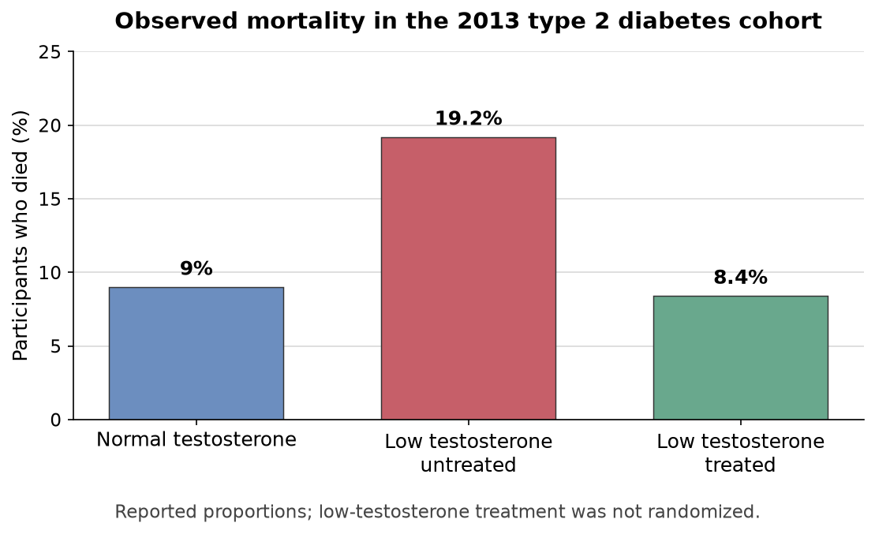
Figure 1. Reported mortality proportions from the 2013 cohort; treatment was not randomised. [1]
The distinction matters. The results show that low testosterone identified a group at higher risk, and that treatment was associated with better survival in this sample. They cannot establish that testosterone caused the difference. Even when researchers adjust for measured characteristics, people who accept, receive, and continue treatment can differ from those who do not—in health, healthcare access, treatment adherence, or other factors that are difficult to capture fully in a medical record.
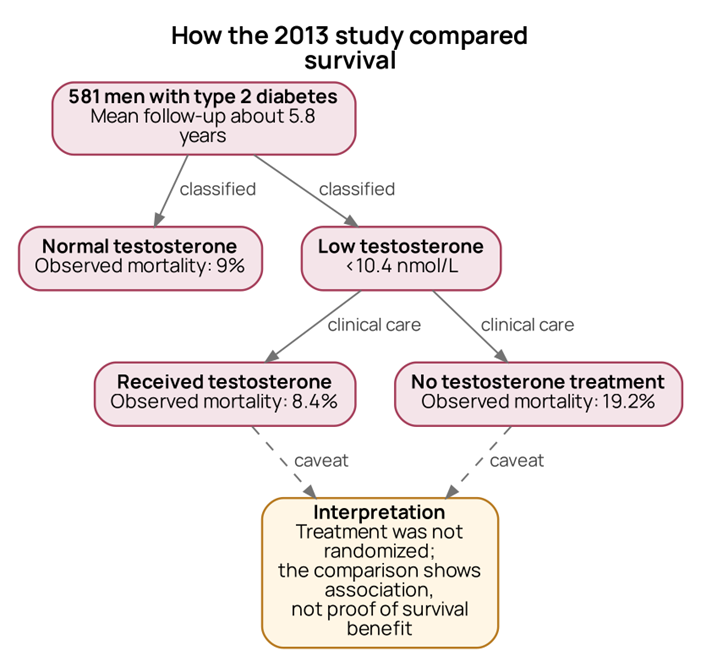
Figure 2. The study compared naturally occurring testosterone and treatment groups; the treatment contrast is observational, not a randomised estimate of therapy’s effect. [1]
The paper said the analysis adjusted for BMI, HbA1c, smoking, statin use, ACE inhibitor or ARB treatment, and pre-existing cardiovascular disease. Those factors are relevant because they may affect both health and survival. The published abstract confirms that the mortality comparisons were adjusted for covariates. [1]
Low testosterone may also be a marker of ill health
The association between low testosterone and mortality is not confined to this one report. In a separate prospective cohort of 550 men with type 2 diabetes followed for an average of 12.2 years, mortality was 55.8% among men with low baseline testosterone and 36.1% among those with normal levels. The age-adjusted hazard ratio was 1.54.[2] This supports low testosterone as a marker of elevated risk in men with diabetes, but it still does not show that raising testosterone reduces that risk.
The relationship may run in both directions. Obesity, diabetes, and other chronic illnesses commonly coexist with low testosterone, so a low measurement can reflect underlying metabolic or general health problems as well as contribute to symptoms. A recent review notes that age, higher body mass index, and comorbidities influence testosterone concentrations and that observational links with mortality do not by themselves settle whether testosterone deficiency is a cause or a marker of disease. [3]
There is further observational evidence for a treatment association. A 2025 study matched 26,027 testosterone-treated men with diabetes and hypogonadism to the same number of untreated men in a large health-record database. Over a mean 3.3 years, treatment was associated with lower all-cause mortality (hazard ratio 0.85, 95% CI 0.79–0.91), as well as modestly lower rates of several cardiovascular and kidney outcomes. [4] Its size is valuable, but matching cannot eliminate every difference between treated and untreated patients; it therefore strengthens the case for further testing rather than proving a survival benefit.
What randomised trials do—and do not—tell us
Randomised trials provide a better test of causality because treatment is assigned by chance. A 2024 meta-analysis of 30 randomised trials, involving 11,502 participants, found no statistically significant difference in all-cause mortality between testosterone and placebo (odds ratio 0.94, 95% CI 0.76–1.17).[5] That result does not demonstrate that testosterone reduces deaths; nor does it rule out a modest benefit or harm, because the confidence interval includes both possibilities.
The large TRAVERSE trial addressed cardiovascular safety rather than whether testosterone prolongs life. Among 5,246 men with hypogonadism who had existing or elevated cardiovascular risk, a major cardiovascular event occurred in 7.0% of the testosterone group and 7.3% of the placebo group over a mean follow-up of 33 months. Testosterone met the trial’s criterion for non-inferiority on that cardiovascular outcome, but atrial fibrillation, acute kidney injury, and pulmonary embolism were more frequent in the testosterone group. [6] These findings are reassuring about the measured major cardiovascular events under the trial conditions; they are not evidence that testosterone improves overall survival in men with type 2 diabetes.
The practical takeaway
The most defensible reading is that low testosterone can identify men with type 2 diabetes who have a higher risk of death, while observational studies repeatedly associate treatment with lower mortality. The treatment signal is important, but a survival benefit has not been established by randomised evidence. These data alone do not justify testosterone therapy solely to prevent death or because a man has diabetes. They support careful evaluation of men with possible testosterone deficiency and further long-term trials designed to test survival directly.
Disclaimer
This information is for education only and isn’t a substitute for personal medical advice. Always follow your prescriber’s instructions.
References
- V. Muraleedharan, H. Marsh, D. Kapoor, K. S. Channer, and T. H. Jones, “Testosterone deficiency is associated with increased risk of mortality and testosterone replacement improves survival in men with type 2 diabetes,” European journal of endocrinology, 2013
- N. S. Malipatil et al., “Male hypogonadism: 14-year prospective outcome in 550 men with type 2 diabetes,” Endocrinology, diabetes & metabolism, 2019
- B. Yeap and B. D. Anawalt, “Endogenous testosterone, testosterone treatment, and cardiovascular health outcomes in men,” Journal of Clinical Endocrinology and Metabolism, 2025
- F. Bonnet et al., “Testosterone therapy is associated with reduced risk of acute kidney injury, kidney failure with renal replacement therapy, and cardiovascular events in men with diabetes and hypogonadism,” Cardiovascular Diabetology, 2025
- V. Jaiswal et al., “Association between testosterone replacement therapy and cardiovascular outcomes: A meta-analysis of 30 randomized controlled trials.” Progress in cardiovascular diseases, 2024
- A. Lincoff et al., “Cardiovascular safety of testosterone-replacement therapy.” New England Journal of Medicine, 2023