
This guide explains tretinoin cream strengths in the UK, what 0.025%, 0.05% and 0.1% actually mean, how to choose a starting point, and how to step up without wrecking your skin.
Ever wondered why tretinoin comes in so many strengths, and which number you should pick? It’s one of the most common questions we hear. Lots of articles online are written for American readers, which can leave British readers chasing products they’ll never find on a UK shelf.
Let’s clear the fog. Here’s how tretinoin cream strengths work in the UK, who they suit, and why more isn’t always better.
Five key takeaways
- Tretinoin cream strengths are measured as a percentage, and 0.025%, 0.05% and 0.1% are the most commonly prescribed.
- Most people start at 0.025% or lower, using the cream two or three nights a week.
- Allow about three to four months at one strength before stepping up, and don’t jump straight from low to the highest.
- There’s no single best strength for wrinkles. The right one is the strongest you can tolerate consistently.
- Single-agent tretinoin has no UK licence, so strengths are chosen by a prescriber from imported or compounded options.
What does tretinoin strength actually mean?
When you see 0.05%, that means 0.05 grams of tretinoin in every 100 grams of cream. That sounds tiny, and it is. Yet retinoids are potent. A small change in concentration can mean a big change in how your skin feels.
Think of it as the volume dial on a stereo. 0.025% is a comfortable background level. Tretinoin 0.1% is concert volume. You wouldn’t turn the dial to maximum the first time you plug in your headphones, and your skin deserves the same courtesy.

Which tretinoin strengths are available in the UK?
This is where many articles go wrong. According to Courier Pharmacy’s strengths guide, Retin-A cream was withdrawn from the UK in 2008 and the gel in 2012, and American brands such as Renova and Altreno were never sold here. The licensed UK products are combinations. Treclin gel pairs tretinoin 0.025% with clindamycin 1%, and the emc entry confirms it’s licensed for acne in people aged 12 and over.
Plain, single-ingredient tretinoin has no UK licence. It’s supplied as an unlicensed import or as a compounded preparation. That’s legal when a prescriber is involved, but it means the MHRA hasn’t assessed it in the way it does licensed products. A good prescriber will explain that before you start.
The practical result is that UK prescribers most often use tretinoin 0.025%, 0.05% and tretinoin 0.1%. Compounding pharmacies can also make in-between strengths.
The tretinoin strength ladder

Figure 1: the tretinoin strength ladder
Here’s how the steps tend to be described.
- 0.01%: very mild, for very sensitive or first-time users
- 0.02%: mild
- 0.025%: the standard starting point
- 0.04%: intermediate, mainly through compounding
- 0.05%: standard maintenance
- 0.08%: strong
- 0.1%: strongest
These labels come from Courier Pharmacy’s own strengths guide. They’re general guidance, not rules. Your skin and your prescriber decide where you sit.
Tretinoin cream 0.025%: the usual starting point
If you’re new to prescription retinoids, 0.025% is a common first step. Courier’s 0.025% cream page describes it as a moderate strength sitting between the 0.01% starter and the 0.05% and tretinoin 0.1% higher steps, suited to people stepping up from over-the-counter retinols or first-time prescription retinoid users.
It’s often enough to improve acne, texture and early signs of sun damage, and it’s the strength most people tolerate best. Don’t see it as the weak option. See it as the sensible one.
Tretinoin cream 0.05%: the maintenance workhorse
Once your skin copes comfortably with 0.025%, your prescriber may suggest 0.05%. This is often called the standard maintenance strength. It gives a stronger signal to the skin, and many people use it long term.
The step up isn’t automatic. Some people stay at 0.025% for years and do well. Others move up because their skin has plateaued. Either path is fine.
Tretinoin cream 0.1%: the top rung
At 0.1%, you’re at the highest UK prescription strength. Courier’s tretinoin 0.1% page describes it as suited to adults with stubborn hyperpigmentation, established acne scars or advanced photoageing who’ve already tolerated lower-strength retinoids.
It’s not a beginner’s cream. It tends to bring more dryness, redness and peeling, and it’s easier to overdo. It’s also rarely necessary for a first-time user. Most people get good results from lower steps, and some never need to go higher.
What strength is best for wrinkles?
This is one of the most searched questions, and the honest answer is that there’s no single winner. Studies of tretinoin for photoageing have used a range of strengths. A meta-analysis of randomised trials found that topical tretinoin significantly improved facial photodamage compared with a plain vehicle cream, but it didn’t crown one perfect strength (Dermatology Practical & Conceptual, 2024). A systematic review of randomised trials reached a similar positive overall conclusion for photoageing (Sitohang et al., 2022).
In practice, the best strength for wrinkles is the highest one you can use consistently without ongoing irritation. A tretinoin 0.025% cream used five nights a week will usually beat a tretinoin 0.1% cream you can only tolerate once a fortnight.
What strength is best for acne?
For acne, the NHS describes tretinoin as a topical retinoid, usually applied once a day at bedtime on skin 20 minutes after washing. Prescribers usually start low and adjust according to response and comfort. Acne with lots of inflammation may need combination treatment in addition to tretinoin.
Because the licensed UK products combine tretinoin with an antibiotic, a prescriber may also consider whether a plain tretinoin cream or a combination product suits your type of acne.
What strength is best for dark marks?
Pigmentation usually needs patience. Many people begin at a gentle strength and increase gradually as their skin allows. Daily sunscreen is just as important as the strength. Courier Pharmacy’s hyperpigmentation page explains the stepped approach we follow.
How to step up safely
Think of stepping up as climbing a ladder, not jumping onto a rooftop.
- Start at a low strength and build up to a comfortable frequency, such as every other night.
- Stay there for about three to four months.
- Ask whether your skin is comfortable and your results have levelled out.
- If so, ask your prescriber about the next step.
- When you step up, go back to a lower frequency for a couple of weeks.
Courier’s strengths guide advises allowing three to four months at a strength before moving up, and never jumping straight from 0.025% to tretinoin 0.1%.

Compounding at Courier
When the standard option isn’t the right fit, we can make one to order
Courier is a compounding pharmacy. Where a prescriber decides it’s appropriate for you, we can prepare bespoke, made-to-order preparations — tailored to the individual, under full clinical governance. It’s the same principle that runs through everything we do.
Cream or gel: does the base change the strength?
Yes, in practice. The base affects how the same percentage feels. Creams are richer and tend to be gentler, while gels absorb faster and can feel harsher. The same number can feel different. A tretinoin 0.05% cream may be kinder than a tretinoin 0.025% gel. Our guide to tretinoin gel versus cream compares the two.
Strength or frequency: which dial should you turn?
You’ve got two dials, not one. The first is strength. The second is how often you apply it. Many people forget the second dial exists.
If your skin is irritated at tretinoin 0.05% nightly, you don’t always need to drop to tretinoin 0.025%. Sometimes the better move is to keep tretinoin 0.05% and apply it every other night. Equally, if tretinoin 0.025% twice a week feels like nothing, you might first raise the frequency before changing strength.
Your prescriber can help you pick which dial to adjust. Changing one at a time makes it easier to know what’s helping.
Why in-between strengths exist
You might wonder why anyone needs tretinoin 0.04% when tretinoin 0.025% and tretinoin 0.05% already exist. The answer is skin comfort. Some people find tretinoin 0.025% too gentle to notice, but tretinoin 0.05% too harsh. A tretinoin 0.04% cream offers a middle path. The same logic applies at the very low end. A 0.01% strength can be the difference between giving up in week two and keeping going.
Because these aren’t mass-produced shelf products, they’re made through compounding. The cream is prepared for one named patient, which is also why it has a short shelf life. Courier’s compounding service is described on our website.

A quick matching guide
This isn’t a prescription, and your prescriber has the final say. But it gives you a feel for how people are often matched.
- Very sensitive skin or first retinoid: a very mild or mild strength, applied a couple of nights a week
- Used over-the-counter retinol for a while: a standard starting strength such as 0.025%
- Comfortable at 0.025% for several months: possible step to 0.05%
- Stubborn pigmentation or scars, and already tolerating lower strengths: discussion about tretinoin 0.1%
- Dry, mature skin: cream base and slower build-up
Strength mistakes to avoid
- Choosing a strength because a stranger online uses it
- Starting at the highest strength to save time
- Stepping up when your skin is still irritated
- Forgetting to reduce frequency for a couple of weeks after stepping up
- Treating the percentage as a measure of how serious you are about skincare
Signs that your strength may be too high
- Persistent burning or stinging
- Peeling that doesn’t improve after a few weeks
- Redness that lasts all day
- Skin that feels raw or cracked
If this sounds like you, step back to a lower frequency or strength and tell your prescriber.
How to get tretinoin cream from Courier Pharmacy
Choosing a strength isn’t something you do alone, and that’s the point of the online consultation. Here’s the process.
- Visit our compounded tretinoin range and open the strength page that interests you, such as 0.01%, 0.025% or 0.1%. Press Begin Consultation. The strength you click is a starting point, and the prescriber can suggest a different one.
- Complete the online questionnaire. It covers your skin concern, medical history, current products, other medicines, any previous retinoid use and pregnancy or breastfeeding plans.
- Pay for your treatment. Orders over £50 qualify for free delivery.
- A UK prescriber reviews your answers. They may approve your chosen strength, suggest a gentler one, ask more questions or decline if tretinoin isn’t suitable.
- If approved, your prescription goes to the compounding lab, which prepares your cream as a named-patient medicine.
- Your cream is dispatched by Royal Mail Tracked 24. Its shelf life is roughly 30 to 35 days, so check the label.
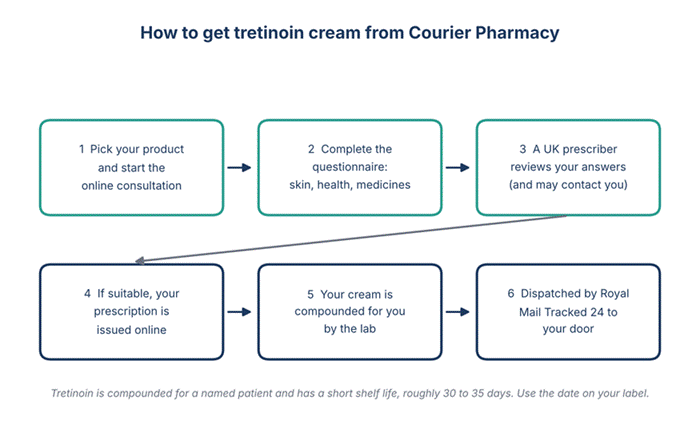
Figure 2: how to get tretinoin cream from Courier Pharmacy
Frequently asked questions
What strengths does tretinoin cream come in?
In the UK, the most prescribed strengths are 0.025%, 0.05% and 0.1%. Compounding can also provide strengths such as 0.01%, 0.02%, 0.04% and 0.08%.
Which tretinoin strength should a beginner use?
Most beginners start at 0.025% or lower, two or three nights a week. Your prescriber will choose based on your skin and previous retinoid use.
Is tretinoin 0.05% better than 0.025%?
Not automatically. It’s stronger, so it may bring faster change, but also more irritation. The best strength is the one you can use consistently.
Is tretinoin 0.1% too strong?
It’s the highest UK prescription strength. It’s usually for people who’ve tolerated lower strengths and need more, so it isn’t a typical starting point.
What is the best tretinoin strength for wrinkles?
There’s no single best. Trials show tretinoin improves photodamage, and prescribers usually recommend the highest strength you can tolerate with regular use.
Can I go straight to 0.1% tretinoin?
It’s not advisable. Courier’s guidance is to avoid jumping from 0.025% straight to 0.1%, and to allow three to four months at each step.
How long should I stay on one strength?
About three to four months is a common guide before stepping up, but your prescriber will tailor this to you.
Does tretinoin 0.025% work?
Yes, for many people. It’s an effective strength for acne, texture and early sun damage, and it’s easier to tolerate than higher steps.
Can I mix two strengths together?
Don’t mix creams yourself. If your prescriber wants an in-between strength, a compounding pharmacy can prepare it safely.
Why is Retin-A not available in the UK?
According to Courier Pharmacy’s guide, the cream was withdrawn in 2008 and the gel in 2012. Single-agent tretinoin now comes as unlicensed imports or compounded preparations.

Disclaimer
Disclaimer: This information is for education only and isn’t a substitute for personal medical advice. Always follow your prescriber’s instructions.
References
- Courier Pharmacy (n.d.a) Tretinoin strengths: which one is right for your skin. Available at: https://courierpharmacy.co.uk/tretinoin-strengths-which-one-is-right-for-your-skin/ (Accessed: 16 November 2026)
- Electronic Medicines Compendium (2026) Treclin 1%/0.025% w/w gel: summary of product characteristics. Available at: https://www.medicines.org.uk/emc/product/5371/smpc (Accessed: 16 November 2026)
- Courier Pharmacy (n.d.f) Tretinoin 0.025% topical cream. Available at: https://courierpharmacy.co.uk/product/tretinoin-0-025-topical-cream/ (Accessed: 16 November 2026)
- Courier Pharmacy (n.d.g) Tretinoin 0.1% cream. Available at: https://courierpharmacy.co.uk/product/tretinoin-0-1-cream/ (Accessed: 16 November 2026)
- Courier Pharmacy (n.d.e) Tretinoin 0.01% cream. Available at: https://courierpharmacy.co.uk/product/tretinoin-0-01-cream/ (Accessed: 16 November 2026)
- Dermatology Practical & Conceptual (2024) ‘Tretinoin for photodamaged facial skin: systematic review and meta-analysis of randomized controlled trials’. Available at: https://www.dpcj.org/index.php/dpc/article/view/5172 (Accessed: 16 November 2026)
- Sitohang, I.B.S., Makes, W.I., Sandora, N. and Suryanegara, J. (2022) ‘Topical tretinoin for treating photoaging: a systematic review of randomized controlled trials’, International Journal of Women’s Dermatology, 8(1), e003. Available at: https://pubmed.ncbi.nlm.nih.gov/35620028/ (Accessed: 16 November 2026)
- NHS (n.d.) Acne: treatment. Available at: https://www.nhs.uk/conditions/acne/treatment/ (Accessed: 16 November 2026)
- Courier Pharmacy (n.d.b) Hyperpigmentation. Available at: https://courierpharmacy.co.uk/conditions/hyperpigmentation/ (Accessed: 16 November 2026