

In this article we will discuss weight loss and testosterone and how shedding a few pounds can lift your levels
Ever wondered why your energy, drive and gym results seem to slide just as your belt notch creeps outwards? It isn’t only in your head. The link between weight loss and testosterone is one of the best-studied connections in men’s health, and the good news is that it works in both directions.
When researchers followed 2,736 men across Europe for more than four years, they found something encouraging. Men who lost weight tended to see their testosterone go up, and men who gained weight tended to see it go down. Across the wider research, losing around 10% of your body weight lines up with a testosterone rise of roughly 2.9 nmol/L (about 85 ng/dL). That’s a meaningful jump, especially if your levels are sitting near the borderline.
So, if you’ve been told your testosterone is “a bit low”, or you simply feel like a slightly faded copy of your old self, this guide is for you.
What this guide covers
We’ll explain what the big European study actually found, why extra body fat drags testosterone down, and how much weight you need to lose to notice a difference. You’ll also get practical, pharmacist-led tips for losing weight in a hormone-friendly way, plus clear advice on when it’s worth getting tested and speaking to a prescriber.
Five key takeaways
- Weight loss and testosterone move together: in the European Male Ageing Study, men who lost weight saw testosterone rise, and men who gained weight saw it fall.
- Across diet studies, losing around 10% of body weight is linked with a testosterone rise of roughly 2.9 nmol/L (about 85 ng/dL), and bigger losses bring bigger rises.
- Belly fat lowers testosterone by turning some of it into oestrogen, lowering its carrier protein (SHBG) and muting the brain’s “make more” signal.
- Slow, steady weight loss with enough protein, strength training, good sleep and less alcohol is the most hormone-friendly approach.
- If symptoms persist, a proper diagnosis needs two early-morning blood tests, and treatment is a conversation with a prescriber, not a guess.
What the research says about weight loss and testosterone
The short answer is that losing weight tends to raise testosterone, and gaining weight tends to lower it. That’s not a slogan from a supplement advert. It comes from some of the most respected research in men’s hormone health.
The European Male Ageing Study in a nutshell
The European Male Ageing Study (often shortened to EMAS) is a large, long-running project that tracks how men’s health changes as they get older. Men aged 40 to 79 were recruited from eight centres across Europe, including Manchester here in the UK.
In 2013, the EMAS team published a longitudinal survey of 2,736 men living in the community. Each man was assessed at the start, then checked again roughly four and a half years later. Paired testosterone results were available for 2,395 of them (Camacho et al., 2013).
This matters because a longitudinal study follows the same people over time. Instead of comparing heavier men with lighter men at a single moment, the researchers could see what happened to each man’s hormones as his own weight changed. That’s a much fairer test.
What changed as weight changed
Here’s what the team found:
- Weight loss was linked with a proportional rise in testosterone. In plain English, the more weight a man lost, the bigger the increase tended to be.
- Weight gain was linked with a proportional fall in testosterone.
- Sex hormone-binding globulin (SHBG), the protein that carries testosterone around the blood, followed the same pattern.
- Free testosterone, the small portion that’s unbound and ready to use, only shifted significantly in men who gained or lost 15% or more of their body weight.
Interestingly, testosterone barely dropped with age over the study period, falling by only about 0.1 nmol/L a year on average. Age on its own wasn’t the big villain. Lifestyle and body weight did far more of the heavy lifting, if you’ll pardon the pun.
The researchers’ conclusion was clear. Weight management appears to be important for keeping testosterone healthy in ageing men, and the hormone changes linked to obesity seem to be reversible once weight comes down (Camacho et al., 2013).
Where the 2.9 nmol/L figure comes from
You may have seen the headline that losing more than 10% of your weight lifts testosterone by about 2.9 nmol/L (85 ng/dL). This number fits neatly with a major review that pooled 24 studies on weight loss and testosterone.
In that review, men on low-calorie diets lost, on average, close to 10% of their body weight. Their total testosterone rose by about 2.87 nmol/L. Men who had weight loss surgery lost far more, around a third of their body weight on average, and their testosterone rose by about 8.7 nmol/L (Corona et al., 2013).

Figure 1. Average rise in total testosterone after diet-based and surgical weight loss (Corona et al., 2013).
The same review found that the amount of weight lost was the best predictor of how much testosterone went up. It’s a bit like a dimmer switch rather than an on/off button. Every chunk of weight you lose turns the dial a little further.
Why belly fat and low testosterone go hand in hand
Fat isn’t just a storage cupboard for spare calories. It’s active tissue that sends out its own chemical messages, and some of those messages interfere with testosterone. The diagram below shows the main routes, and we’ll walk through each one.

Figure 2. The three main ways belly fat lowers testosterone.
Fat turns testosterone into oestrogen
Fat tissue contains an enzyme called aromatase. Its job is to convert testosterone into oestradiol, a type of oestrogen. Men need a little oestrogen, so this isn’t a bad thing in itself. However, the more fat you carry, especially around your middle, the more aromatase you have working away.
Think of it as a leaky pipe. You’re producing testosterone at one end, but some of it is being diverted before it reaches where it’s needed.
Your brain gets the wrong message
Testosterone production is controlled by your brain. The pituitary gland releases luteinising hormone (LH), which tells the testes to make testosterone. When oestrogen levels rise, the brain reads this as a sign that there’s plenty of hormone around, so it eases off the accelerator.
That’s why doctors sometimes call obesity-related low testosterone “functional”. The testes usually work fine. They just aren’t being asked to work hard enough. The weight-loss review mentioned above backs this up, showing that losing weight lowered oestradiol and raised the brain’s signalling hormones (Corona et al., 2013).
Insulin resistance lowers SHBG
Carrying extra weight often makes the body less responsive to insulin. Higher insulin levels reduce how much SHBG the liver makes. Because most testosterone in the blood is attached to SHBG, lower SHBG means a lower total testosterone reading.
Poor sleep and sleep apnoea
Extra weight around the neck and chest raises the risk of obstructive sleep apnoea, where breathing stops and starts during the night. Much of your daily testosterone is made while you sleep, so broken, low-quality sleep can chip away at your levels. If your partner says you snore like a tractor, it’s worth mentioning to your GP.
The vicious circle, and how to reverse it
Here’s the frustrating part. Low testosterone itself makes it easier to store fat and harder to build muscle. So, more fat lowers testosterone, and lower testosterone encourages more fat. Experts sometimes describe this as the hypogonadal-obesity cycle (Grossmann and Matsumoto, 2017).
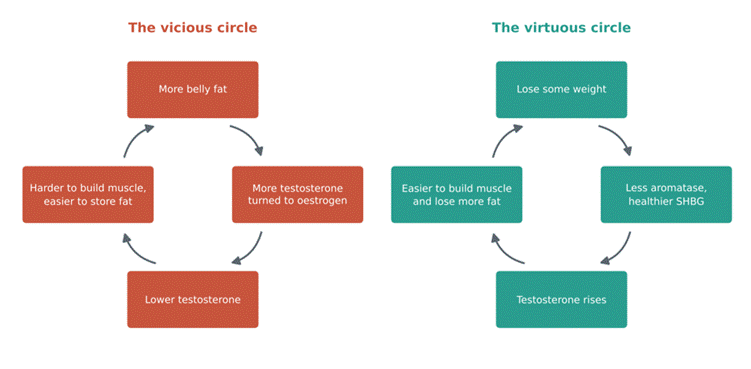
Figure 3. The same loop can work against you or for you.
The upside is that the circle can spin the other way, too. Lose some weight, testosterone nudges up, building muscle gets a bit easier, and the next few pounds come off more readily. That’s the cycle we want you on.
Does losing weight increase testosterone, and by how much?
Yes, for most men carrying extra weight, losing it does raise testosterone. The size of the rise depends mostly on how much weight you lose.
| Type of weight loss | Average weight lost | Average rise in total testosterone | Source |
| Low-calorie diet | About 10% | About 2.9 nmol/L (85 ng/dL) | Corona et al., 2013 |
| Weight loss surgery | About 32% | About 8.7 nmol/L (250 ng/dL) | Corona et al., 2013 |
| Very large loss, small study of 11 men | 26 to 129 kg | From 8.5 to 13.0 nmol/L | Strain et al., 1988 |
What 10% looks like in real life
Percentages can feel abstract, so let’s make it real. If you weigh 100 kg (about 15 st 10 lb), a 10% loss is 10 kg, or roughly a stone and a half. At a steady pace of 0.5 to 1 kg a week, that’s somewhere between three and five months of consistent effort.
Now picture the numbers on a blood test. UK guidance treats a total testosterone below 12 nmol/L as low or borderline (Hackett et al., 2023). A man sitting at 10.5 nmol/L who lifts his level by around 2.9 nmol/L could move to about 13.4 nmol/L. That could be the difference between “borderline” and “normal”. Everyone responds differently, of course, but it shows why a stone or two can matter.
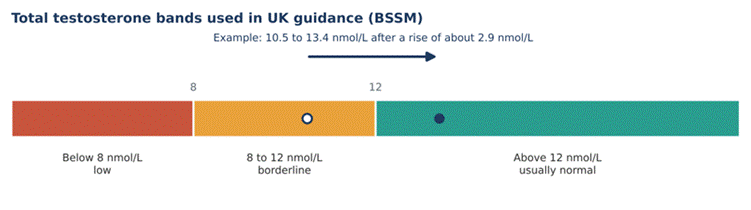
Figure 4. How a 2.9 nmol/L rise could move a borderline result into the normal range.
Who tends to see the biggest change?
The research suggests the rise is usually larger in men who:
- lose more weight overall
- are younger
- don’t have type 2 diabetes
- started with a higher degree of obesity (Corona et al., 2013)
If you have type 2 diabetes, please don’t be put off. Weight loss still improves your hormones, blood sugar and heart health. The testosterone bump may just be a little smaller.
Why your waist matters more than the scales
Not all fat behaves the same way. The deep fat packed around your organs, known as visceral fat, is the most hormonally active. That’s why your waist measurement is often a better guide than your weight alone. The NHS advises that men with a waist of 94 cm (37 inches) or more have a higher risk of weight-related health problems.
A handy at-home check is to measure your waist halfway between your lowest rib and the top of your hip bone. Do it once a month, at the same time of day, and track the trend.
How to lose weight in a testosterone-friendly way
The best plan for weight loss and testosterone is a boring one: steady, sustainable and built around habits you can keep. Here’s what we suggest to the men we speak to.
Aim for slow and steady
A loss of 0.5 to 1 kg a week is realistic for most people. Very aggressive crash diets can backfire. Severe calorie cuts can temporarily dampen hormone signals, sap your energy and eat into muscle, which is exactly what you want to keep. Slow progress is still progress.
Make protein your plate’s anchor
Protein keeps you fuller for longer and helps protect muscle while you lose fat. Try to include a palm-sized portion with each meal, such as eggs, Greek yoghurt, chicken, fish, beans, lentils or tofu. Fill half your plate with vegetables and keep starchy carbs to roughly a quarter.
Lift something heavy (ish)
Strength training two or three times a week helps you hold on to muscle as the weight comes off. You don’t need a fancy gym. Press-ups, squats, lunges and a couple of resistance bands are a solid start. Brisk walking, cycling or swimming on top of that will help burn calories and support your heart.
The NHS recommends adults do at least 150 minutes of moderate activity a week, plus muscle-strengthening activities on two or more days.
Protect your sleep
Aim for seven to nine hours. Keep a regular bedtime, dim the screens an hour before bed and keep your bedroom cool and dark. If you wake unrefreshed despite a full night, or you’ve been told you stop breathing in your sleep, speak to your GP about sleep apnoea.
Go easy on alcohol
Alcohol is calorie-dense, disrupts sleep and can affect testosterone production when intake is heavy. UK guidelines advise no more than 14 units a week, spread over three or more days. A pint of normal-strength lager is about two units, so it adds up quickly.
Keep stress in check
Long-term stress raises cortisol, which can nudge you towards snacking and belly fat. A daily walk, a hobby that gets you out of your head, or simply talking to someone can make more difference than you’d think.
Track the right things
Weigh yourself once a week, on the same day, at the same time. Measure your waist monthly. Also keep a simple note of your energy, mood and sex drive on a scale of one to ten. Hormone changes often show up in how you feel before they show up anywhere else.
A real-world example
Consider a typical scenario. A 52-year-old man weighing 108 kg feels tired, has lost interest in sex and has a borderline testosterone result. He swaps his nightly beers for a few alcohol-free evenings a week, adds three short strength sessions and builds meals around protein and veg. Six months later, he’s down 11 kg. His repeat blood test has improved, his sleep is better and, in his words, he feels “like the lights have come back on”.
Not every story ends like that, but many do. Weight loss is often the first, cheapest and most effective step.

When weight loss isn’t the whole story
Weight loss and testosterone are closely linked, but weight isn’t the only thing that affects your hormones. Sometimes low testosterone has another cause, and sometimes symptoms that look hormonal are really down to something else.
Common symptoms of low testosterone
Low testosterone symptoms in men can include:
- low sex drive
- fewer morning erections or erection problems
- tiredness and low energy
- low mood, irritability or poor concentration
- loss of muscle strength and more fat around the middle
These symptoms overlap with stress, depression, poor sleep and other health conditions. The NHS points out that the phrase “male menopause” can be misleading, because many of these problems aren’t caused by hormones at all. That’s exactly why testing matters.
How testosterone should be tested
A single random blood test isn’t enough. UK guidance from the British Society for Sexual Medicine (BSSM) recommends:
- testing in the morning, ideally between 7am and 11am, when levels are highest
- at least two separate tests, ideally fasting and a few weeks apart
- checking SHBG so free testosterone can be calculated if your total is borderline
- checking other hormones, such as LH, if your level is low, to help find the cause (Hackett et al., 2023)
In general, a total testosterone above 12 nmol/L is considered normal, 8 to 12 nmol/L is borderline, and below 8 nmol/L is low. Your symptoms matter just as much as the number.
Where testosterone replacement therapy fits
If tests confirm low testosterone and you have symptoms, a prescriber may discuss testosterone replacement therapy (TRT). UK guidelines are clear that lifestyle changes, including weight management, should go alongside treatment rather than being replaced by it (Hackett et al., 2023).
TRT isn’t a shortcut to weight loss, and it isn’t right for everyone. One important point: prescribed testosterone can reduce sperm production, so it’s usually not suitable if you’re trying for a baby. Treatment also needs regular monitoring, including blood counts and prostate checks.
At Courier Pharmacy, our testosterone replacement therapy service is led by UK-registered prescribers who follow BSSM guidance and look at the whole picture, not just one blood result.
Frequently asked questions about weight loss and testosterone

1. Does weight loss increase testosterone?
Yes. In men carrying extra weight, weight loss usually raises testosterone. The European Male Ageing Study found that the more weight men lost, the more their testosterone rose, and the opposite happened with weight gain.
2. How much weight do I need to lose to raise testosterone?
Every bit helps, but around 10% of your body weight is linked with a rise of roughly 2.9 nmol/L (about 85 ng/dL) in diet studies. Larger losses tend to bring larger rises.
3. How quickly will my testosterone go up after losing weight?
Research has measured changes over months to years, so think in seasons rather than weeks. Many men notice better energy and sleep before any blood test changes. A repeat test after three to six months of steady progress is reasonable.
4. Can belly fat cause low testosterone?
Belly fat is one of the most common causes of functional low testosterone. It converts testosterone into oestrogen, lowers SHBG and quietens the brain’s signal to make more.
5. Is the link between weight loss and testosterone the same at every age?
The EMAS study looked at men aged 40 to 79 and found the link held across that range. Weight changes seemed to matter more than age itself.
6. Will crash dieting boost my testosterone faster?
Probably not. Very severe calorie cuts can temporarily lower hormone signals and cost you muscle. Steady loss of 0.5 to 1 kg a week is kinder to your hormones.
7. Do testosterone booster supplements help?
There’s little good evidence that over-the-counter testosterone boosters work. Your money is usually better spent on good food, a gym membership or a proper blood test.
8. Can testosterone replacement therapy help me lose weight?
In men with confirmed low testosterone, treatment may improve energy and body composition. However, it isn’t a weight-loss treatment, and UK guidance recommends lifestyle changes alongside it.
9. Should I get my testosterone checked before trying to lose weight?
If you have symptoms such as low sex drive or ongoing tiredness, a baseline test is a good idea. It gives you a starting point and helps rule out other causes.
10. Does weight loss and testosterone research apply if I have type 2 diabetes?
Yes. Men with type 2 diabetes still see benefits from weight loss, although the testosterone rise may be a little smaller. Better blood sugar control is a big bonus in its own right.
Disclaimer
Disclaimer: This information is for education only and isn’t a substitute for personal medical advice. Always follow your prescriber’s instructions.
References
- Ahsan, S. (2026) The TRAVERSE Trial and the cardiovascular safety of testosterone therapy: a critical appraisal. Available at: https://courierpharmacy.co.uk/traverse-a/ (Accessed: 11 November 2026).
- Ahsan, S. (2026) Low testosterone and survival in men with type 2 diabetes: what the evidence shows. Available at: https://courierpharmacy.co.uk/low-testosterone-and-survival-in-men-with-type-2-diabetes-what-the-evidence-shows/ (Accessed: 11 November 2026).
- Ahsan, S. (2026) Subcutaneous injections of testosterone cypionate: what the evidence shows. Available at: https://courierpharmacy.co.uk/subcutaneous-injection-of-testosterone-cypionate-what-the-evidence-shows/ (Accessed: 11 November 2026).
- Ahsan, S. (2026) A comprehensive timeline: the development of testosterone replacement therapy. Available at: https://courierpharmacy.co.uk/a-comprehensive-timeline-the-development-of-testosterone-replacement-therapy/ (Accessed: 11 November 2026).
- Camacho, E.M., Huhtaniemi, I.T., O’Neill, T.W., Finn, J.D., Pye, S.R., Lee, D.M. et al. (2013) ‘Age-associated changes in hypothalamic-pituitary-testicular function in middle-aged and older men are modified by weight change and lifestyle factors: longitudinal results from the European Male Ageing Study’, European Journal of Endocrinology, 168(3), pp. 445-455. doi: 10.1530/EJE-12-0890.
- Corona, G., Rastrelli, G., Monami, M., Saad, F., Luconi, M., Lucchese, M. et al. (2013) ‘Body weight loss reverts obesity-associated hypogonadotropic hypogonadism: a systematic review and meta-analysis’, European Journal of Endocrinology, 168(6), pp. 829-843
- Courier Pharmacy (2026) Testosterone replacement therapy. Available at: https://courierpharmacy.co.uk/testosterone-replacement-therapy/ (Accessed: 6 November 2026).
- Grossmann, M. and Matsumoto, A.M. (2017) ‘A perspective on middle-aged and older men with functional hypogonadism: focus on holistic management’, Journal of Clinical Endocrinology and Metabolism, 102(3), pp. 1067-1075.
- Hackett, G., Kirby, M., Rees, R.W., Jones, T.H., Muneer, A., Livingston, M. et al. (2023) ‘The British Society for Sexual Medicine guidelines on male adult testosterone deficiency, with statements for practice’, World Journal of Men’s Health, 41(3), pp. 508-537.
- NHS (n.d.c) The ‘male menopause’. Available at: https://www.nhs.uk/conditions/male-menopause/ (Accessed: 6 November 2026).
- Strain, G.W. et al. (1988) ‘Effect of massive weight loss on hypothalamic-pituitary-gonadal function in obese men’, Journal of Clinical Endocrinology and Metabolism, 66(5), pp. 1019-1023.