
A friendly guide to how it works, how to use it and what to expect. This guide explains what tretinoin cream is, how it clears blocked pores and supports collagen, how to apply it without upsetting your skin, how long results take, the side effects to expect, who should avoid it, and how it compares with over-the-counter retinol.
Ever wondered why some people talk about tretinoin cream as if it’s the holy grail of skincare, while others mutter about peeling and redness? Both camps are telling the truth. Tretinoin is one of the most studied skin treatments there is, but it rewards patience and punishes impatience.
Think of it like starting a new fitness routine. Go too hard in week one and you’ll ache all over and want to quit. Build up gently and, a few months later, you’ll wonder why you didn’t start sooner.
In this guide, our pharmacy team walks you through what tretinoin cream is, who it suits, how it works and how to use it so your skin stays on side. We’ve also answered the questions we hear most often from customers.
Five key takeaways
- Tretinoin cream is a prescription-only retinoid made from vitamin A. It treats acne and helps improve sun damage, uneven tone and fine lines.
- It works by speeding up skin cell turnover and helping your skin build collagen. Results take time: early changes at three to six weeks, clearer gains at around 12 weeks and the best results after six months or more.
- Dryness, redness and peeling are common in the first few weeks. Starting slowly, using a gentle moisturiser and applying it at night all help.
- Daily sunscreen is a must, because tretinoin can make your skin more sensitive to sunlight.
- Tretinoin isn’t suitable during pregnancy, while trying for a baby or when breastfeeding. A prescriber should always check it’s right for you.
What is tretinoin cream?
Tretinoin is a topical retinoid. That’s a fancy way of saying it’s a medicine you put on your skin, and it belongs to the vitamin A family.
The retinoid family is a big one. Its members include retinol, retinaldehyde and adapalene, as well as tretinoin. They all aim to do the same job, but they work at different speeds and strengths.
Tretinoin is also called all-trans retinoic acid. Here’s why that matters. Retinoic acid is the form of vitamin A that your skin cells actually respond to. Weaker retinoids need to be converted into retinoic acid before they can do anything. Tretinoin skips that step.
As a Courier Pharmacy, we like to explain it this way. Retinol is a parcel that has to stop at two sorting depots before it reaches your door, and some parcels get lost along the way. Tretinoin is delivered straight to the right address.
In the UK, tretinoin is a prescription-only medicine. You can’t buy it over the counter in high street shops, and that’s for good reason, which we’ll cover below.
What forms does tretinoin come in?
Tretinoin comes as a cream or a gel, in several strengths. Creams tend to be kinder to dry or sensitive skin. Gels can suit oilier skin.
In the UK, one licensed option combines tretinoin with an antibiotic. Each gram of this gel contains 1% clindamycin and 0.025% tretinoin. Your prescriber will choose the type and strength that best fits your skin and your goals.
What is tretinoin cream used for?
Tretinoin is best known as an acne treatment, but it does more than clear spots. Here’s a quick rundown of what it can help with.
Acne
Acne starts with a blocked pore. Dead skin cells and oil clump together and form a tiny plug, which can grow into a blackhead, a whitehead or an angry red spot.
Tretinoin helps stop that plug from forming in the first place. That’s why it’s so useful for blackheads and whiteheads, and why it helps prevent new spots rather than just treating the ones you’ve got.
UK guidance backs this up. NICE lists a fixed combination of topical tretinoin with topical clindamycin, applied once each evening, as a first-line choice for acne of any severity.
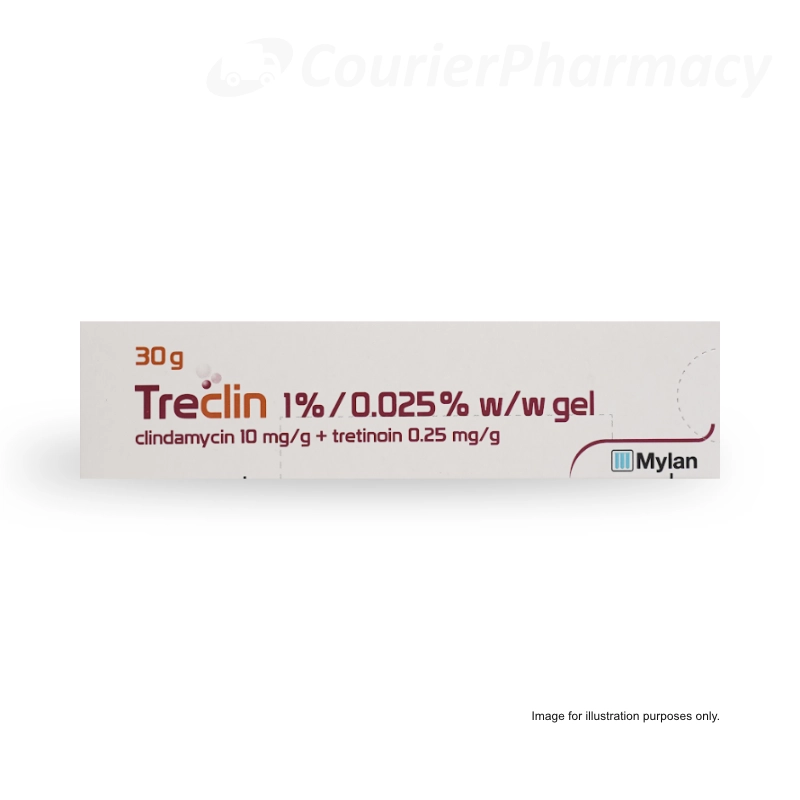
Treclin Gel
Sun damage and signs of ageing
Years of sunshine leave their mark: fine lines, rough texture, dark patches and a duller look. Dermatologists call this photoageing.
Tretinoin’s anti-ageing story started by accident. Adults using it for acne in the 1980s noticed their skin also looked smoother and less lined. Researchers took note, and the studies followed.
One well-known trial found that sun-damaged skin made 56% less collagen than sun-protected skin, and tretinoin treatment raised collagen formation by 80%, while the plain cream used for comparison saw a 14% drop.
It’s worth knowing that in the UK, using tretinoin for skin ageing is “off-label”. That means a prescriber can still recommend it, but they take on responsibility for deciding it’s right for you.
Pigmentation and texture
Tretinoin can help even out dark marks, including the marks some people get after spots have healed. It also smooths rough patches and can make pores look less obvious, simply because they’re less clogged.
How does tretinoin cream work?
Let’s make the science simple.
Your skin is constantly renewing itself. New cells form deep down and slowly travel up to the surface, where old cells flake away. Picture a conveyor belt. When it runs smoothly, all is well. When it slows down, dead cells pile up, pores block, and skin looks dull.
Tretinoin speeds that conveyor belt back up. It does this by attaching to retinoic acid receptors on your skin cells, which act like switches. Flip those switches and the cells change how they behave.
Here’s what happens next:
- Old cells shed more evenly, so pores stay clearer.
- New cells reach the surface faster, giving a fresher look.
- Pigment spreads out more evenly, so dark patches fade.
- Deeper down, cells called fibroblasts make more collagen.
Collagen is the scaffolding that holds your skin up. As we age, and especially with sun exposure, that scaffolding weakens. Tretinoin helps rebuild it, slowly and steadily.
Interestingly, this collagen boost isn’t just irritation in disguise. In an animal study, skin treated with tretinoin gained collagen, while skin treated with irritants and peeling agents looked no different from untreated skin. So a red face doesn’t mean it’s working harder.
Who is tretinoin cream for?
Tretinoin may suit you if you have:
- Mild to moderate acne, especially blackheads and whiteheads
- Spots that keep coming back despite good over-the-counter care
- Signs of sun damage, such as fine lines, rough skin or uneven tone
- Dark marks left behind after spots
It’s not for everyone, though. Tretinoin isn’t suitable if you’re pregnant, trying for a baby or breastfeeding. It also needs extra care if you have eczema, rosacea or very sensitive skin.
That’s the main reason it’s prescription only. A prescriber looks at your skin type, medical history, other medicines and goals before deciding whether it’s right, and at what strength.
How to apply tretinoin cream
This is where most people go wrong, so it’s worth getting right. Always follow the instructions from your prescriber and the leaflet in your pack first. These are the general steps most people follow.
Step-by-step routine
- Apply it in the evening. Light breaks tretinoin down, so night-time use makes sense.
- Wash your face with a gentle, non-foaming cleanser. Skip scrubs.
- Pat your skin dry and wait 20 to 30 minutes. Damp skin absorbs more, which raises the chance of stinging.
- Squeeze out a pea-sized amount. That’s for your whole face, not one cheek.
- Dot it on your forehead, cheeks and chin, then spread it thinly.
- Keep it away from your eyes, eyelids, lips and the corners of your nose.
- Wait a few minutes, then apply a plain, fragrance-free moisturiser.
The pea-sized rule surprises a lot of people. More cream doesn’t mean faster results. It just means more irritation.
Start low and go slow
When you first start, use it two or three nights a week. If your skin copes well after a couple of weeks, move to every other night, then nightly.
If your skin feels tight or sore, take a night or two off. That isn’t failure. It’s sensible skincare.
The moisturiser sandwich
If your skin is sensitive, try the sandwich method. Put on a thin layer of moisturiser, then your tretinoin, then another layer of moisturiser. This acts as a buffer and softens the effect without stopping it working.
It’s a handy trick in winter, when cold winds and central heating already leave skin feeling parched.
What to avoid while using tretinoin cream
Tretinoin makes your skin more open to other products. That’s useful in some ways, but it also means things that never bothered you before might suddenly sting. While your skin is adjusting, it’s best to avoid:
- Exfoliating acids such as AHAs and BHAs
- Scrubs, rough flannels and cleansing brushes
- Toners that contain alcohol
- Other strong actives, unless your prescriber has okayed them
- Waxing on treated areas, because skin can lift away
The licensed product information also warns that tretinoin gel shouldn’t go on at the same time as other topical products, including cosmetics, because of possible incompatibility. Your prescriber can help you plan when to reintroduce your favourite products.
How long does tretinoin cream take to work?
This is the question we hear more than any other, and the honest answer is: longer than you’d like.
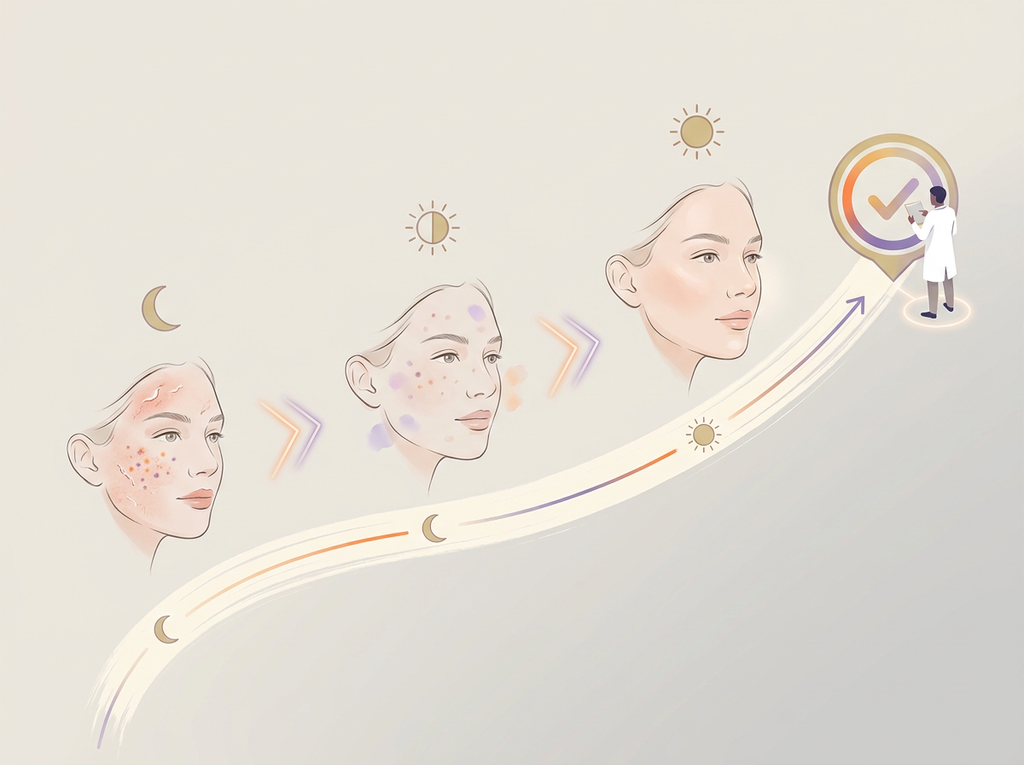
Here’s a rough timeline:
- Weeks one to four: Your skin adjusts. Expect some dryness and maybe a few extra spots.
- Weeks four to eight: Things start to settle. You may notice fewer new spots and a smoother feel.
- Around 12 weeks: Clearer, more visible improvement for most people.
- Six months and beyond: The best results for texture, tone and fine lines.
This fits with UK acne guidance. NICE advises reviewing first-line acne treatment at 12 weeks to see whether it has helped and whether there are side effects.
A practical tip: take a photo in the same spot, with the same light, every four weeks. Day to day, change is hard to see. Side by side over three months, it’s often obvious, and that can keep you going when you’re tempted to give up.
Side effects of tretinoin cream
Most side effects are mild, happen early and settle with time. The common ones include:
- Dryness and tightness
- Redness
- Flaking or peeling
- Stinging or a warm feeling when you apply it
- Increased sensitivity to the sun
Some people describe this early phase as “retinisation”. Your skin is getting used to a new way of working.
What about purging?
Some people notice more spots in the first few weeks. This is often called purging. Because tretinoin speeds up cell turnover, it can bring up blocked pores that were already forming under the surface.
Think of it as a spring clean. Things look messier before they look better.
Purging usually shows up where you normally get spots and settles within a few weeks. If you get spots in brand new places, severe soreness, swelling or blistering, stop using it and speak to your prescriber or pharmacist.
Sun sensitivity
Tretinoin can make your skin burn more easily, especially in the first few months. Wear a broad-spectrum sunscreen with SPF 30 or higher every day, even when it’s cloudy. And let’s be honest, in the UK, it’s usually cloudy.
Add a hat and some shade on brighter days. The product information is clear that if sunburn happens, treatment should pause until severe redness and peeling settle down.
If you’re off on a sunny holiday, chat to your prescriber beforehand. Some people choose to pause or cut back for the trip.
You can report suspected side effects through the MHRA Yellow Card scheme.
Who should avoid tretinoin cream?
Tretinoin isn’t safe for everyone. You shouldn’t use it if you are:
- Pregnant, trying to become pregnant or breastfeeding
- Allergic to tretinoin or any of the ingredients in the product
- Dealing with sunburn or broken skin on the area you’d treat
Pregnancy and contraception
This one is important. Retinoids taken by mouth are known to harm unborn babies. Very little tretinoin cream gets absorbed through the skin, but nobody can rule out a risk.
For that reason, UK guidance is cautious. NHS Scotland formulary advice states that females of childbearing age must use effective contraception when using topical retinoids. If you become pregnant while using tretinoin, stop it and speak to your doctor.
Many clinicians also suggest avoiding over-the-counter retinol during pregnancy as a precaution.
Extra care with some skin conditions
If you have eczema, rosacea or very reactive skin, tretinoin may still be an option. However, the flare-up usually needs to be calm first, and a lower strength is often a better starting point.
Combination products have their own cautions too. For example, products containing clindamycin may not suit people with a history of inflammatory bowel disease or antibiotic-related colitis. Your prescriber will check this with you.

Tretinoin vs retinol: what’s the difference?
Both come from vitamin A, but that’s where the similarity ends.
Strength
Retinol is the gentler cousin. Your skin has to convert it into retinoic acid through a couple of steps, and the process is slow and varies from person to person. By the time it’s converted, only a small amount is active.
Tretinoin is already retinoic acid, so it gets straight to work.
Availability
Retinol is sold over the counter in serums and creams. Tretinoin cream needs a prescription in the UK.
Who each one suits
Retinol can be a good first step if you want a light touch for early signs of ageing. Tretinoin is the better choice for acne, stubborn breakouts or more noticeable sun damage, as long as a prescriber agrees.
A simple way to picture it: retinol is a gentle jog, tretinoin is a proper training plan with a coach.
Is long-term use of tretinoin cream safe?
For most people, yes. Tretinoin has been used for decades, and long-term studies suggest the benefits keep building with steady use.
Many people move to a maintenance routine once their skin has improved. That might mean using it a few nights a week rather than every night. Stopping completely often means the old problems slowly return, because tretinoin manages skin rather than curing it.
A regular review with your prescriber keeps things on track and lets you adjust the strength if needed.
Our pharmacist’s top tips for success
Over the years, our team has spoken to plenty of people starting tretinoin. These are the tips that make the biggest difference:
- Be patient. Give it at least 12 weeks before judging it.
- Keep your routine simple: gentle cleanser, tretinoin, moisturiser and sunscreen.
- Don’t chase faster results with more cream.
- Use a fresh, plain moisturiser rather than one packed with actives.
- Store it as the leaflet says and check how long it lasts once opened.
- Write down any reactions, so your prescriber can help you fine-tune things.
FAQs about tretinoin cream
What is tretinoin cream used for?
Tretinoin cream treats acne by keeping pores clear and preventing new spots. It’s also used to improve signs of sun damage, such as fine lines, rough texture and uneven skin tone.
Can I buy tretinoin cream over the counter in the UK?
No. Tretinoin is a prescription-only medicine in the UK. You’ll need a consultation with a qualified prescriber, who will check it’s safe and suitable for you. You can start your Tretinoin consultation here.
How long does tretinoin take to work?
Most people see early changes after three to six weeks and clearer results at around 12 weeks. The best improvements in texture and fine lines often take six months or more.
Should I use tretinoin in the morning or at night?
At night. Sunlight breaks tretinoin down, and your skin is also more sensitive to the sun while you’re using it. Always wear sunscreen in the morning.
How much tretinoin cream should I use?
A pea-sized amount covers your whole face. Using more won’t speed up results, but it will raise your risk of dryness and irritation.
Is it normal for my skin to peel on tretinoin?
Yes, mild peeling and dryness are common in the first few weeks. Use a gentle moisturiser, apply it less often for a while, and speak to your prescriber if it doesn’t settle.
What is tretinoin purging?
Purging is a short-term increase in spots when you first start tretinoin. It happens because cell turnover speeds up and brings blocked pores to the surface. It usually settles within a few weeks.
Can I use tretinoin cream while pregnant?
No. Tretinoin shouldn’t be used during pregnancy, while trying for a baby or when breastfeeding. Speak to your doctor if you become pregnant while using it.
Can I use vitamin C or niacinamide with tretinoin?
Often, yes, but it’s best to wait until your skin has adjusted. Many people use vitamin C in the morning and tretinoin at night. Check with your prescriber before adding any new actives.
Is tretinoin better than retinol?
Tretinoin is stronger and works directly on skin cells, while retinol must first be converted. That makes tretinoin more effective for acne and sun damage, but it also needs a prescription and more care.

Disclaimer
Disclaimer: This information is for education only and isn’t a substitute for personal medical advice. Always follow your prescriber’s instructions.
References
- Courier Pharmacy (2026a) Skin hyperpigmentation, pathophysiology and treatments. Available at: https://courierpharmacy.co.uk/skin-hyperpigmentation-pathophysiology-and-treatments/ (Accessed: 23 October 2026).
- Courier Pharmacy (2026b) Pathophysiology of acanthosis nigricans and treatment with tretinoin 0.025%. Available at: https://courierpharmacy.co.uk/pathophysiology-of-acanthosis-nigricans-and-treatment-with-tretinoin-0-025/ (Accessed: 23 October 2026).
- Courier Pharmacy (2026c) Tretinoin strengths: which one is right for your skin?. Available at: https://courierpharmacy.co.uk/tretinoin-strengths-which-one-is-right-for-your-skin/ (Accessed: 23 October 2026).
- Courier Pharmacy (2026d) How tretinoin for scars works. Available at: https://courierpharmacy.co.uk/how-tretinoin-for-scars-works/ (Accessed: 23 October 2026).
- Courier Pharmacy (2026e) Which tretinoin strength shall I use for acne and wrinkles?. Available at: https://courierpharmacy.co.uk/which-tretinoin-strength-shall-i-use-for-acne-and-wrinkles/ (Accessed: 23 October 2026).
- Courier Pharmacy (2026f) How to apply tretinoin cream. Available at: https://courierpharmacy.co.uk/how-to-apply-tretinoin-cream/ (Accessed: 23 October 2026).
- Courier Pharmacy (2026g) How tretinoin fights the signs of ageing. Available at: https://courierpharmacy.co.uk/how-tretinoin-fights-the-signs-of-ageing/ (Accessed: 23 October 2026).
- Courier Pharmacy (2026h) What is the tretinoin purge?. Available at: https://courierpharmacy.co.uk/what-is-the-tretinoin-purge/ (Accessed: 23 October 2026).
- Courier Pharmacy (2026i) Adapalene vs tretinoin: what’s the difference. Available at: https://courierpharmacy.co.uk/adapalene-vs-tretinoin-whats-the-difference/ (Accessed: 23 October 2026).
- Courier Pharmacy (2026j) Adapalene and tretinoin: how receptor binding shapes their actions. Available at: https://courierpharmacy.co.uk/adapalene-and-tretinoin-how-receptor-binding-shapes-their-actions/ (Accessed: 23 October 2026).
- Courier Pharmacy (2026k) Tretinoin: discovery timeline and what it can treat. Available at: https://courierpharmacy.co.uk/tretinoin-discovery-timeline-and-what-it-can-treat/ (Accessed: 23 October 2026).
- Courier Pharmacy (2026l) Tretinoin and Holmesburg prison: the hidden history behind a skincare favourite. Available at: https://courierpharmacy.co.uk/tretinoin-and-holmesburg-prison-the-history-you-should-know/ (Accessed: 23 October 2026).
- Courier Pharmacy (2026m) How tretinoin works: the science behind a skin-care staple. Available at: https://courierpharmacy.co.uk/how-tretinoin-works-the-science-behind-a-skin-care-stable/ (Accessed: 23 October 2026).
- Courier Pharmacy (2026n) What is Treclin: from how it works to common side effects. Available at: https://courierpharmacy.co.uk/what-is-treclin-from-how-it-works-to-common-side-effects/ (Accessed: 23 October 2026).
- Electronic Medicines Compendium (2026) Treclin 1%/0.025% w/w gel: Summary of Product Characteristics. Viatris. Available at: https://www.medicines.org.uk/emc/product/5371/smpc (Accessed: 23 October 2026).
- Electronic Medicines Compendium (n.d.) Treclin 1%/0.025% w/w gel: Patient Information Leaflet. Viatris. Available at: https://www.medicines.org.uk/emc/files/pil.5371.pdf (Accessed: 23 October 2026).
- Griffiths, C.E.M., Russman, A.N., Majmudar, G., Singer, R.S., Hamilton, T.A. and Voorhees, J.J. (1993) ‘Restoration of collagen formation in photodamaged human skin by tretinoin (retinoic acid)’, New England Journal of Medicine, 329(8), pp. 530-535. Available at: https://www.nejm.org/doi/full/10.1056/NEJM199308193290803 (Accessed: 23 October 2026).
- Griffiths, C.E.M., Kang, S., Ellis, C.N., Kim, K.J., Finkel, L.J., Ortiz-Ferrer, L.C., White, G.M., Hamilton, T.A. and Voorhees, J.J. (1995) ‘Two concentrations of topical tretinoin (retinoic acid) cause similar improvement of photoaging but different degrees of irritation’, Archives of Dermatology, 131(9), pp. 1037-1044. Available at: https://pubmed.ncbi.nlm.nih.gov/?term=Two+concentrations+of+topical+tretinoin+cause+similar+improvement+of+photoaging+Griffiths+1995 (Accessed: 23 October 2026).
- Kligman, A.M., Grove, G.L., Hirose, R. and Leyden, J.J. (1986) ‘Topical tretinoin for photoaged skin’, Journal of the American Academy of Dermatology, 15(4 Pt 2), pp. 836-859. Available at: https://pubmed.ncbi.nlm.nih.gov/3771853/ (Accessed: 23 October 2026).
- Kligman, L.H., Duo, C.H. and Kligman, A.M. (1996) ‘Peeling agents and irritants, unlike tretinoin, do not stimulate collagen synthesis in the photoaged hairless mouse’, Archives of Dermatological Research, 288(10), pp. 615-620. Available at: https://pubmed.ncbi.nlm.nih.gov/8919045/ (Accessed: 23 October 2026).
- Krautheim, A. and Gollnick, H.P.M. (2004) ‘Acne: topical treatment’, Clinics in Dermatology, 22(5), pp. 398-407. Available at: https://pubmed.ncbi.nlm.nih.gov/?term=Krautheim+Gollnick+Acne+topical+treatment+2004 (Accessed: 23 October 2026).
- National Institute for Health and Care Excellence (2021, updated 2023) Acne vulgaris: management. NICE guideline NG198. Available at: https://www.nice.org.uk/guidance/ng198 (Accessed: 23 October 2026).
- National Institute for Health and Care Excellence (n.d.) Acne vulgaris: topical retinoids. Clinical Knowledge Summaries. Available at: https://cks.nice.org.uk/topics/acne-vulgaris/prescribing-information/topical-retinoids/ (Accessed: 23 October 2026).
- NHS (n.d.) Acne: treatment. Available at: https://www.nhs.uk/conditions/acne/treatment/ (Accessed: 23 October 2026).
- Thielitz, A., Abdel-Naser, M.B., Fluhr, J.W., Zouboulis, C.C. and Gollnick, H. (2008) ‘Topical retinoids in acne: an evidence-based overview’, Journal der Deutschen Dermatologischen Gesellschaft, 6(12), pp. 1023-1031. Available at: https://pubmed.ncbi.nlm.nih.gov/?term=Thielitz+Topical+retinoids+in+acne+evidence-based+overview+2008 (Accessed: 23 October 2026).
- Webster, G.F. (1998) ‘Topical tretinoin in acne therapy’, Journal of the American Academy of Dermatology, 39(2), pp. S38-S44. Available at: https://pubmed.ncbi.nlm.nih.gov/?term=Webster+Topical+tretinoin+in+acne+therapy+1998 (Accessed: 23 October 2026).